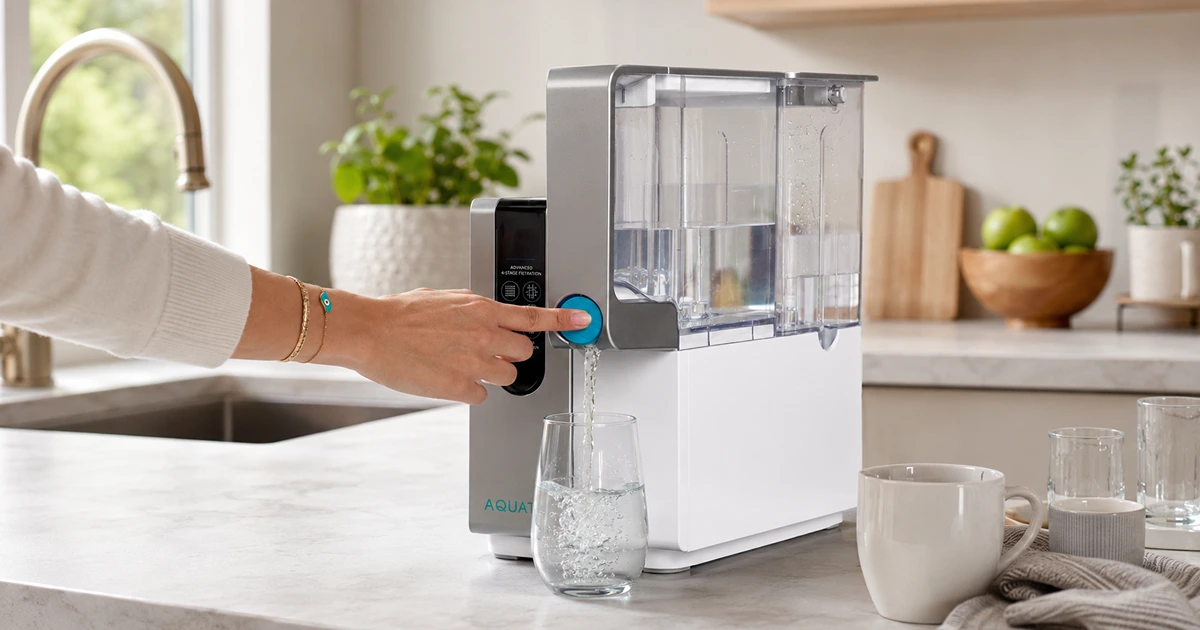

Countertop reverse osmosis systems are for people who want much cleaner drinking water without turning a kitchen cabinet into a plumbing project. They sit on the counter, plug into an outlet, and use a refillable tap-water tank instead of a permanent water line. That makes them especially useful for renters, apartments, offices, RVs, and households that want serious filtration without committing to an under-sink install.
Reverse osmosis is different from a basic pitcher or fridge filter. A good RO system pushes water through a fine membrane and supporting filters to reduce dissolved solids, heavy metals, chlorine taste, PFAS-related compounds, fluoride, nitrates, and other contaminants that simpler carbon filters may not fully address. The trade-off is that RO systems are slower, larger, and more maintenance-heavy than pitchers, and they usually create some reject water during filtration.
The best countertop models make those trade-offs easier to live with. They should be simple to fill, easy to clean, clear about filter life, efficient with water, and stable enough for daily use. Some prioritize verified contaminant reduction, while others add conveniences like UV sterilization, remineralization, glass storage, fast dispensing, or hot and cold water. The right choice depends on whether you care most about certification, taste, convenience, footprint, or extra features.
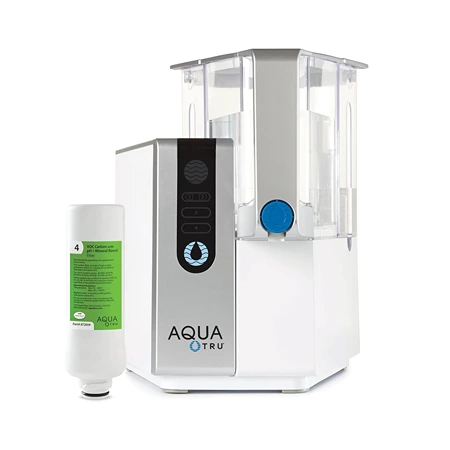
AquaTru Classic
Best Overall Option
This compact reverse osmosis system delivers ultra-purified water with a 4-stage filtration process, easy setup, and no plumbing required.
The AquaTru Classic is the best countertop reverse osmosis system for most people because it combines strong purification, simple operation, and unusually meaningful certification coverage. It is not the flashiest model here, but it focuses on the thing that matters most: turning ordinary tap water into consistently clean, better-tasting drinking water without permanent installation.
Its four-stage filtration setup uses a pre/carbon filter, reverse osmosis membrane, and final carbon filter to reduce a broad range of contaminants. The system is designed for substances that commonly drive people toward RO in the first place, including lead, fluoride, chlorine, PFAS-related chemicals, VOCs, microplastics, nitrates, and heavy metals. That makes it a stronger choice than a standard carbon pitcher when your goal is deeper contaminant reduction rather than only improving taste.
Certification is the biggest reason the AquaTru stands out. In a category where many countertop RO systems rely heavily on broad marketing claims, this model has stronger third-party testing support for its contaminant-reduction claims. That does not mean every home needs this exact system, but it does make the buying decision feel less speculative if you are filtering because of water-quality concerns.
The everyday experience is straightforward. You fill the tap-water tank, let the machine run, and dispense purified water from the clean tank. There is no faucet adapter, no drain saddle, and no under-sink drilling. The tanks are removable, the filters are easy to access, and the system is approachable enough for people who would never install a traditional RO system.
Subscribe to Product Bible
Stay updated with the latest product reviews, buying guides, and expert recommendations. Fresh advice on the best things we've researched, tested, and reviewed, sent to your inbox weekly.
Want to know more about how we handle your data or opt out of marketing emails? Check out our Privacy Policy. If you have any questions, we're always here to help.
The Classic is also relatively efficient for this type of product. Countertop RO systems always need somewhere for rejected water to go, and in this case that means periodically emptying the source tank. Still, its waste-to-clean-water balance is more reasonable than many older reverse osmosis setups, which helps if you plan to use it every day for drinking water, coffee, tea, and cooking.
The main drawbacks are size, plastic storage, and capacity. It takes up real counter space, the clean-water tank is not huge, and some buyers may prefer a glass carafe design. Larger households may find themselves refilling it often. For most kitchens, though, the AquaTru Classic offers the best mix of verified performance, ease of use, and long-term practicality.
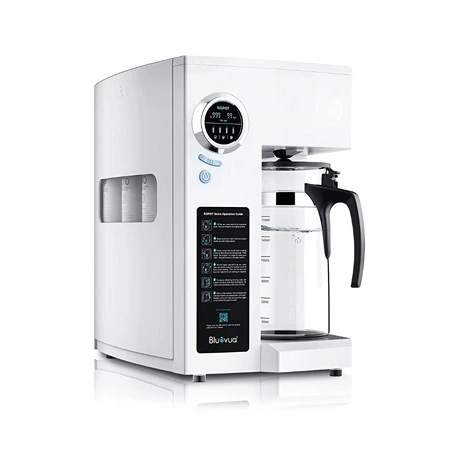
Bluevua ROPOT (UV)
Best for UV sterilization & remineralization
6-stage filtration with UV sterilization and remineralization, plugs in with no plumbing for easy setup.
The Bluevua ROPOT (UV) is the countertop RO system to consider if you want purified water stored in a glass carafe instead of a plastic tank. That detail matters to a lot of buyers, especially people choosing RO because they are already trying to reduce bottled-water waste or avoid unnecessary plastic contact with drinking water.
Filtration is handled through a multi-stage reverse osmosis process with UV sterilization and remineralization. The RO stage does the heavy lifting for dissolved solids and many contaminants, while the carbon stages help with taste and odor. The UV feature is mainly there to help control microbial growth inside the system, and the remineralization stage is meant to improve flavor and raise the finished water’s mineral character after RO filtration strips much of it out.
The water tends to taste smooth and clean, with a less flat profile than some RO systems that do not add minerals back. That is one of the main reasons to choose this model. Some people love ultra-neutral RO water, while others find it a little empty. The Bluevua is aimed at the second group: people who want deep filtration but still prefer water with a bit more body.
Usability is a strong point. It is plug-and-play, the carafe is easy to carry to a table or fridge, and the display gives useful feedback about filter life and system status. It feels more like a countertop appliance than a plumbing product, which makes it appealing for households that want better water without dealing with tools or tubing.
The system is not perfect. Its independent contaminant-reduction certification coverage is not as confidence-inspiring as the AquaTru’s, so buyers who are filtering for a specific known contaminant should read the performance data carefully. It also produces reject water, and the glass carafe setup means you may need to run multiple batches if several people are filling bottles at once.
Overall, the Bluevua ROPOT (UV) is a polished everyday choice for people who value glass storage, UV treatment, and remineralized taste. It is not the most certification-focused pick, but it is one of the most pleasant countertop RO systems to live with if convenience and drinking experience matter as much as raw filtration.
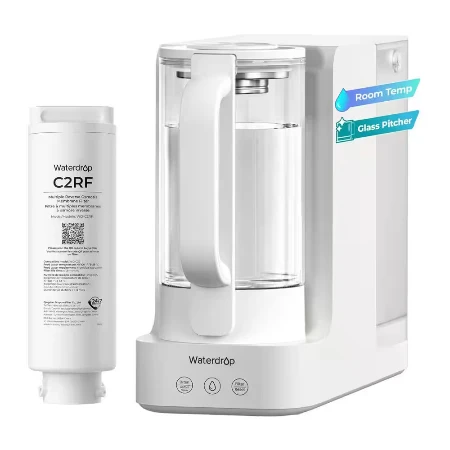
Waterdrop C2S
Best Budget Option
6-stage countertop RO in a slim 6-inch-wide body, with a 40 oz glass pitcher, smart alerts, and no installation.
The Waterdrop C2S is the best budget-friendly pick for people who want countertop reverse osmosis without paying for the most premium build or feature set. It costs well under half as much as the other systems in this guide and still delivers the core benefit of RO filtration in a plug-in appliance that needs no plumbing.
Its six-stage system is built around a 0.0001-micron RO membrane, and Waterdrop reports SGS lab testing for reductions in PFOA, PFOS, TDS, chlorine, lead, heavy metals, and VOCs. That makes it a major step up from a pitcher filter for reducing dissolved solids and improving taste, especially in homes where tap water has a noticeable mineral, chlorine, or metallic profile. A 3:1 pure-to-drain ratio also sends less water down the drain than many conventional RO systems.
The C2S’s slim footprint is one of its strongest qualities. At about 6 inches wide, 16 inches deep, and 11 inches tall, it fits beside a coffee maker, sink, or prep area where bulkier dispensers will not. Waterdrop sizes it for one or two people, so it works best in small households, apartments, and home offices; larger families will be refilling it often and may be better served by a bigger system.
Ease of use is also better than the budget label might suggest. You fill the feed tank, plug it in, and filtered water collects in a detachable 40 oz glass pitcher that can go straight into the fridge. A display and voice alerts flag low feed water and filter changes, a guided first rinse handles setup, and the single pre-installed filter is rated for up to 528 gallons before replacement.
Where it gives ground is validation. Its only listed certification is NSF/ANSI 372, which covers lead-free materials rather than filtration performance, so the contaminant-reduction claims rest on Waterdrop’s own commissioned lab testing, and the certification story is not as strong as the AquaTru’s. It also dispenses room-temperature water only, without the UV treatment or remineralization of the Bluevua. If you are filtering because of a specific lab-confirmed water issue, match the system’s documentation to that contaminant before buying.
For most everyday use, though, the Waterdrop C2S makes sense. It is a cleaner, more capable alternative to basic filters, with a smaller footprint and a lower price than any other countertop RO system here. It is the right pick when you want noticeably better water and reasonable convenience without overbuying.
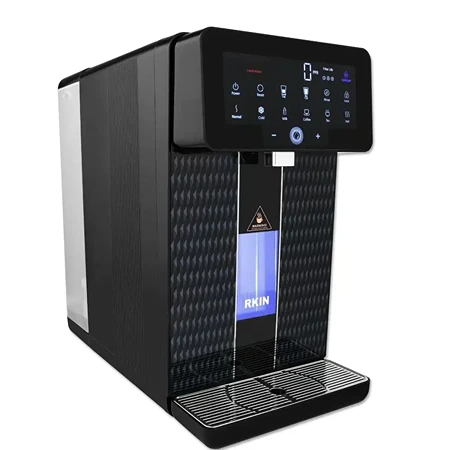
RKIN U1
Best High-End Option
Hot and cold RO water, UV treatment, and multi-stage filtration in a countertop system.
The RKIN U1 is the high-end countertop RO system for people who want a water station, not just a purifier. It combines reverse osmosis filtration with UV treatment, remineralization, and temperature-controlled dispensing, which makes it feel closer to a compact bottleless cooler than a standard countertop filter.
The main appeal is convenience. Instead of filtering water and then moving it to a kettle, fridge, or separate dispenser, the U1 can provide purified water at different temperatures from the same machine. That is useful for tea, coffee, instant oatmeal, cold drinking water, baby-formula prep workflows that require careful handling, and offices where several people use the same water source throughout the day.
Filtration performance is solid for the category. The reverse osmosis membrane targets dissolved solids and many common contaminants, while carbon filtration helps with taste and odor. UV treatment adds another layer of internal sanitation, and remineralization improves the finished-water taste so it does not feel as stripped down as plain RO water can.
The interface is a major part of why this model feels premium. Temperature options, dispensing controls, and maintenance indicators make it easier to use as an everyday appliance. The system is also more versatile than simpler pitcher-style RO units because it can replace multiple small kitchen devices or reduce how often you buy bottled water for different use cases.
The trade-offs are footprint, complexity, and certification confidence. The U1 is larger and more appliance-like than the simpler systems in this guide, and extra features mean more parts that need to work properly over time. It also does not have the same broad independent contaminant-reduction certification story as the top pick, so it is best for buyers who value convenience and versatility alongside filtration rather than certification above everything else.
If you want the simplest way to get RO water, the U1 is more machine than you need. If you want a countertop system that can serve hot, cold, mineralized, UV-treated purified water throughout the day, it is the most feature-rich option here. It makes the most sense for busy kitchens, offices, and households that will actually use its temperature controls.
A countertop reverse osmosis system is one of the most accessible ways to get deeper filtration without installing an under-sink unit. The key is choosing for your actual water habits. Certification matters most if you are targeting specific contaminants. Capacity matters most for families. Remineralization matters if you dislike the flat taste of plain RO water. UV treatment is useful for internal cleanliness, but it does not replace starting with potable tap water.
Before buying, check your local water report or use a home test to understand what you are trying to reduce. Then compare filter life, replacement cost, tank size, reject-water handling, and countertop footprint. The best system is the one you will actually keep filled, cleaned, and maintained, because even excellent filtration only helps when it fits naturally into your daily routine.