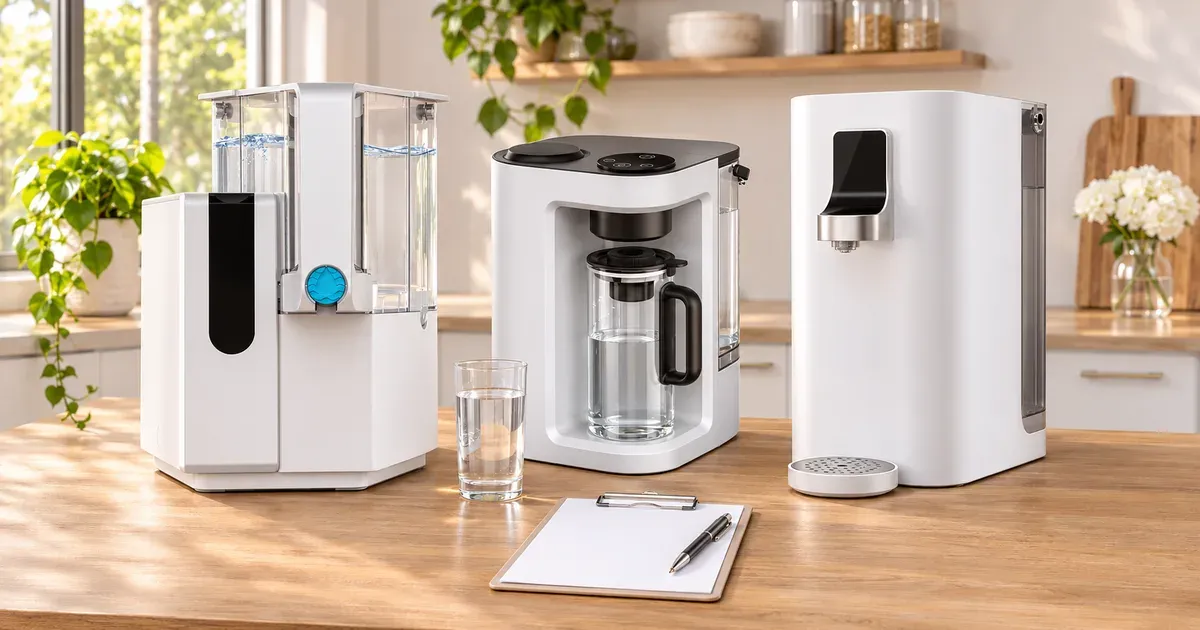
The short answer: the AquaTru Classic and AquaTru Carafe are the only countertop reverse osmosis systems certified for a long list of contaminants. IAPMO R&T lists both under NSF/ANSI 58 (file W-10194) for TDS, fluoride, lead, arsenic, nitrate/nitrite and seven more, under NSF/ANSI 53 (W-10193) for PFOA, PFOS and VOCs, and under NSF/ANSI 42 and 401. The Bluevua ROPOT-Lite (RO100ROPOT-LITE) is WQA-certified to NSF/ANSI 58 for TDS, lead, cadmium and trivalent chromium. The Waterdrop K19-H and M6 series are certified to NSF/ANSI 58 for TDS only. Everything else in this category is either certified only to NSF/ANSI 372, a lead-free materials standard, or “tested to” NSF 58 by a lab with no certification at all.
Listings were checked in the IAPMO R&T, WQA Gold Seal and NSF directories on November 15, 2026.
Every Countertop RO System and Its Certification
| System | Model number | Certifier and file | Standards | Certified to reduce | Claimed but not certified | Price, Nov. 15, 2026 |
|---|---|---|---|---|---|---|
| AquaTru Classic | AT2000 to AT2050 | IAPMO R&T W-10194, W-10193, W-10195, W-10188 | NSF/ANSI 58, 53, 401, 42 | TDS, fluoride, lead, arsenic (pentavalent), nitrate/nitrite, barium, chromium, copper, radium 226/228, selenium, cysts, perchlorate; PFOA, PFOS, VOCs; 15 emerging compounds; chlorine, chloramine | — | $380 (was $475) |
| AquaTru Carafe | AT100 to AT140 | IAPMO R&T W-10194, W-10193, W-10195, W-10188 | NSF/ANSI 58, 53, 401, 42 | Same as the Classic, plus hexavalent chromium | — | $300 (was $375) |
| Bluevua ROPOT-Lite | RO100ROPOT-LITE | WQA Gold Seal | NSF/ANSI 58, 372 | TDS, lead, cadmium, trivalent chromium | Fluoride, PFAS, microplastics and more | $209 in cart (was $349) |
| Bluevua ROPOT-Lite (UV) | RO100ROPOT-LITE(UV) | WQA Gold Seal | NSF/ANSI 58, 372 | TDS, cadmium, trivalent chromium (no lead claim) | Lead, fluoride, PFAS and more | $219 in cart (was $369) |
| Bluevua ROPOT (UV) | RO100ROPOT(UV) | WQA Gold Seal, NSF | NSF/ANSI 372 only | Nothing (materials standard) | Fluoride, lead, PFAS, microplastics and more | $317 in cart (was $454) |
| Bluevua ROPOT | RO100ROPOT | WQA Gold Seal, NSF | NSF/ANSI 372 only | Nothing | Same | $299 in cart (was $434) |
| Waterdrop K19-H | WD-K19-H-US | IAPMO R&T W-17249 | NSF/ANSI 58 | TDS only | Fluoride, lead, arsenic, nitrate, PFOA/PFOS and more, “tested by a third-party laboratory” | $279 with code WDK19H (was $379) |
| Waterdrop M6 series | WD-M6H, M6HG, M6CG, M6S, M6SL | IAPMO R&T W-17249 | NSF/ANSI 58 | TDS only | Same as K19-H | M6H $339 (was $419); M6SL $269 (was $329) |
| Waterdrop A1 | WD-A1-US | IAPMO R&T WC-13977 | NSF/ANSI 372 only | Nothing | Same as K19-H | $499 with code WDA1 (was $649) |
| Waterdrop K6 | WD-K6 | IAPMO R&T WC-13977 | NSF/ANSI 372 only | Nothing | Same | $599 with code WDK6 (was $799) |
| Waterdrop N1 | WD-N1-W | No listing | — | — | Lab-tested claims | $219 with code WDN1 (was $299) |
| SimPure Y7P-BW | Y7P-BW | No listing | — | — | “Against NSF/ANSI 58 Standards,” SGS test report | $269.99 with code SP100 (was $369.99) |
| SimPure Y11C | Y11C | No listing | — | — | “Tested by SGS - Against NSF/ANSI 58 Standards” | $449.99 |
| Frizzlife WB99-C | WB99-C | No listing | — | — | “NSF/ANSI 58 Certified RO Membrane” (a component, not the system) | $389.99 (was $449.99) |
| iSpring RCD100 | RCD100 | No listing | — | — | Comparison table says “NSF/ANSI 58 … full system certified” | $419.99 |
Prices are from each maker’s own store. Waterdrop’s Black Friday codes run to about November 19, and Bluevua’s sale ends November 30.
What NSF/ANSI 58 Actually Certifies
NSF/ANSI 58 is the standard for reverse osmosis drinking water systems. Every certified system has to reduce total dissolved solids (TDS) and pass structural, materials and efficiency checks. Every other contaminant is an optional claim that the maker pays to test, model by model. A system “certified to NSF/ANSI 58” may be certified for TDS and nothing else, and that’s exactly what Waterdrop’s listing shows.
The other standards on countertop RO boxes:
| Standard | What it covers |
|---|---|
| NSF/ANSI 58 | Reverse osmosis systems: TDS required; fluoride, lead, arsenic, nitrate, cysts and others optional |
| NSF/ANSI 53 | Health-effects reductions by filters: lead, VOCs, PFOA and PFOS |
| NSF/ANSI 42 | Aesthetic: chlorine, chloramine, taste and odor, particulates |
| NSF/ANSI 401 | Emerging compounds: some pharmaceuticals, pesticides, BPA and microplastics |
| NSF/ANSI 372 | Lead content of the materials that touch water. No contaminant reduction at all |
NSF, IAPMO R&T and WQA are all accredited to certify against these standards, so a listing from any of the three counts equally. “NSF certified” on a box doesn’t have to mean NSF itself did the work. It does have to mean one of them lists that exact model number.
Is AquaTru NSF Certified?
Yes, to four reduction standards. IAPMO R&T lists the AquaTru Classic (models AT2000 to AT2050), the Carafe (AT100 to AT140) and the Under Sink (ATU100, ATU200) under:
- NSF/ANSI 58-2022, file W-10194: TDS, fluoride, lead, pentavalent arsenic (to 50 ppb), nitrate/nitrite, barium, chromium, copper, radium 226/228, selenium, cysts and perchlorate. The listing gives the Classic 54 gallons a day and the Carafe 35.
- NSF/ANSI 53-2021, file W-10193: VOCs, PFOA and PFOS. The Classic’s VOC cartridge is rated for 600 gallons and the Carafe’s for 300.
- NSF/ANSI 401, file W-10195: 15 emerging compounds and microplastics.
- NSF/ANSI 42, file W-10188: chlorine and chloramine.
AquaTru’s PFOA and PFOS claim comes from its carbon VOC cartridge (NSF 53), not the RO membrane. No countertop RO system holds a listing for “total PFAS”. The AquaTru Freestanding Model 1 cooler is on a separate NSF 58 file (WC-30063).
Is Bluevua NSF Certified?
Only the ROPOT-Lite models are certified to NSF/ANSI 58. WQA’s Gold Seal directory lists:
- RO100ROPOT-LITE: NSF/ANSI 58 for TDS, lead, cadmium and trivalent chromium.
- RO100ROPOT-LITE(UV): NSF/ANSI 58 for TDS, cadmium and trivalent chromium. No lead claim, even though it costs more.
- RO100ROPOT-Travel and RO100ROPOT-YMT: NSF/ANSI 58 (the YMT isn’t sold on bluevua.com).
- RO100ROPOT and RO100ROPOT(UV): NSF/ANSI 372 only.
The full-size ROPOT and ROPOT (UV) pages say “NSF & WQA Certified”, but the certificates they link are for NSF/ANSI 372, the lead-free materials standard. No Bluevua model is certified for fluoride, nitrate, arsenic or PFAS. If certified lead reduction matters, buy the plain ROPOT-Lite. Our Bluevua ROPOT vs. ROPOT-Lite comparison covers the rest of the differences.
Is Waterdrop NSF Certified?
For TDS only, and only on some models. IAPMO R&T file W-17249 lists the K19-H (WD-K19-H-US), the discontinued K19-S, the K19-SFK and the M6 series (M6C, M6CG, M6H, M6HG, M6S, M6SL) under NSF/ANSI 58-2024. The only reduction claim on that listing is TDS, at 288 liters a day (about 76 gallons) for the K19 and 302 liters for the M6.
The A1 (hot and cold) and K6 (tankless, hot) are listed under IAPMO file WC-13977 for NSF/ANSI 372 only. The N1 and C2SL have no listing we could find. Waterdrop’s product pages list fluoride, lead, arsenic, nitrate and PFOA/PFOS reduction with an asterisk that reads “tested by a third-party laboratory”. That’s lab data the brand commissioned, not certification. Our Waterdrop K19-H vs. A1 vs. K6 comparison covers the line model by model.
Tested, Not Certified: SimPure, Frizzlife and iSpring
These brands use NSF language without a listing in any of the three directories:
- SimPure Y7P-BW and Y11C: the pages say “Against NSF/ANSI 58 Standards” and link an SGS test report. SGS tested the units against the standard’s method, but no certifier lists them, and the Y7P’s spec table still reads “Certification NSF/ANSI 58”.
- Frizzlife WB99-C: claims an “NSF/ANSI 58 Certified RO Membrane”. That’s a component claim. The membrane may be certified somewhere, but the system you buy isn’t.
- iSpring RCD100: a comparison table on the product page says “NSF/ANSI 58 … full system certified”. NSF’s iSpring listing covers only its under-sink systems (the RCC7 family and others), not the RCD100.
A lab report shows how one sample did in one test. Certification adds the full standard, audits of the factory, and retesting to keep the listing, which is why the EPA tells shoppers to verify certification in the certifier’s directory.
How to Check a Listing Yourself
It takes about two minutes:
- Find the exact model number on the box, the rating plate or the manual (for example RO100ROPOT-LITE, not “ROPOT-Lite”).
- Search the three directories: NSF, IAPMO R&T and WQA Gold Seal.
- Open the listing and read the standard number (58, 53, 42, 401 or only 372) and the reduction claims column for your model.
- Compare it with the box. Anything the box claims that isn’t in the listing is untested by a certifier, or tested only by the brand’s own lab.
The EPA’s home water filter fact sheet gives the same advice for PFAS: look for NSF/ANSI 53 or 58 PFAS claims and confirm them in the certifier’s database.
Which Certified System Should You Buy?
| If you need… | Buy | Why |
|---|---|---|
| Certified fluoride, arsenic or nitrate reduction | AquaTru Classic or Carafe | The only countertop units with those claims certified |
| Certified PFOA/PFOS reduction | AquaTru Classic or Carafe | NSF/ANSI 53 listing on the VOC cartridge |
| Certified lead reduction for less money | Bluevua ROPOT-Lite (RO100ROPOT-LITE) | WQA NSF 58 lead claim, $209 on sale |
| Hot water from an NSF 58 system | Waterdrop K19-H | NSF 58, but certified for TDS only |
| The most water per day | AquaTru Classic | 54 gal/day certified, 0.75 gal clean tank |
| A glass carafe | AquaTru Carafe or Bluevua ROPOT-Lite | Both certified to NSF 58; only the AquaTru covers fluoride |
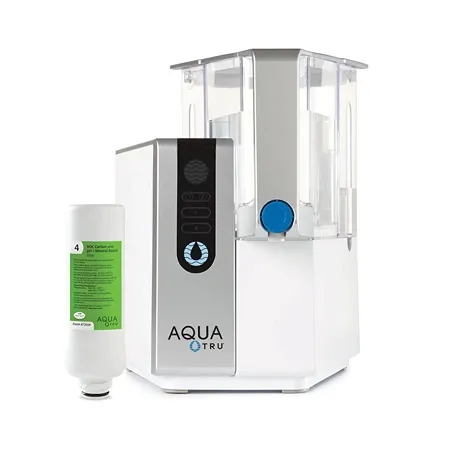
Most certified countertop RO
AquaTru Classic
IAPMO-certified to NSF/ANSI 58, 53, 42 and 401 for fluoride, lead, arsenic, nitrate, PFOA and PFOS.
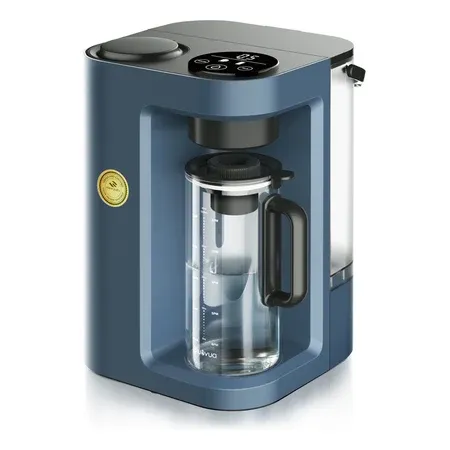
Cheapest with certified lead reduction
Bluevua ROPOT-Lite
WQA-certified to NSF/ANSI 58 for TDS, lead, cadmium and trivalent chromium, with a 40 oz glass carafe.
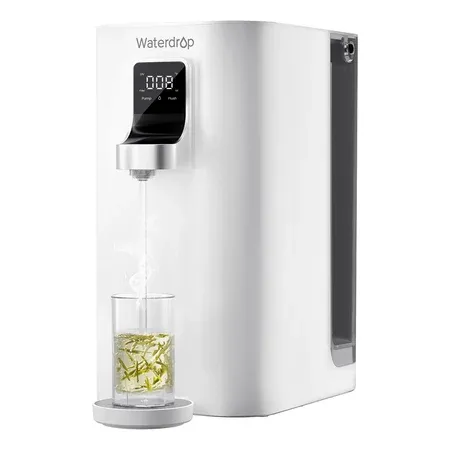
Certified RO with instant hot water
Waterdrop K19-H
IAPMO-certified to NSF/ANSI 58 for TDS, with hot water up to 203°F and a 3:1 pure-to-drain ratio.
For head-to-heads, see AquaTru Classic vs. Carafe, AquaTru vs. Bluevua and AquaTru vs. Waterdrop. What the filters cost each year is in our countertop RO filter cost guide, and our guide to the best countertop reverse osmosis systems has more picks.
Countertop Reverse Osmosis Certification FAQ
Which countertop reverse osmosis systems are NSF certified?
Certified to NSF/ANSI 58 as of November 15, 2026: the AquaTru Classic and Carafe (IAPMO W-10194, 12 or more reduction claims), the Bluevua RO100ROPOT-LITE, -LITE(UV), -Travel and -YMT (WQA), and the Waterdrop K19-H, K19-SFK and M6 series (IAPMO W-17249, TDS only). The Waterdrop A1 and K6 and the full-size Bluevua ROPOT and ROPOT (UV) are certified only to NSF/ANSI 372.
Is the AquaTru NSF certified?
Yes. IAPMO R&T certifies the AquaTru Classic and Carafe to NSF/ANSI 58 (file W-10194), 53 (W-10193), 401 (W-10195) and 42 (W-10188). Those listings cover TDS, fluoride, lead, arsenic, nitrate, PFOA, PFOS, VOCs, chlorine and chloramine, among others.
Is Bluevua NSF certified?
Only the ROPOT-Lite family is certified to NSF/ANSI 58, through WQA. The RO100ROPOT-LITE is certified for TDS, lead, cadmium and trivalent chromium, and the RO100ROPOT-LITE(UV) for the same minus lead. The full-size RO100ROPOT and RO100ROPOT(UV) are certified only to NSF/ANSI 372, which covers lead-free materials, not filtration.
Is Waterdrop NSF certified?
The Waterdrop K19-H and M6 series are certified to NSF/ANSI 58 by IAPMO R&T (file W-17249), for TDS reduction only. The A1 and K6 are certified only to NSF/ANSI 372. Waterdrop’s fluoride, lead and PFAS figures come from third-party lab tests, not certification.
What does NSF/ANSI 372 certified mean on a water filter?
It means the parts that touch your water meet the federal lead-free limit for materials. It says nothing about what the filter removes. A system certified only to NSF/ANSI 372 has no certified contaminant reduction.
Are any countertop RO systems certified to remove PFAS?
The AquaTru Classic and Carafe are certified under NSF/ANSI 53 to reduce PFOA and PFOS, the two PFAS with federal limits of 4 parts per trillion. No countertop RO system holds a certification for total PFAS. Other brands’ PFAS figures are lab-tested only.
What’s the difference between “certified” and “tested to NSF 58”?
“Certified” means a certifier (NSF, IAPMO R&T or WQA) tested that exact model, audits the factory and lists it publicly. “Tested to NSF 58” or “against NSF 58 standards” means a lab ran some of the standard’s tests for the brand. It isn’t certification and won’t appear in any directory.