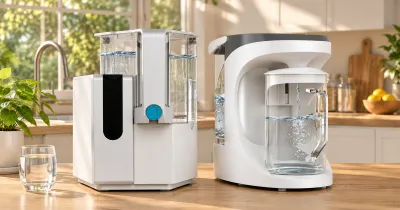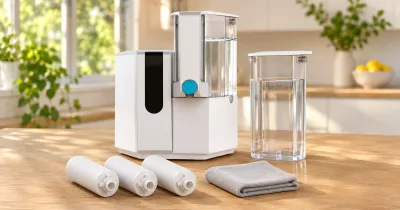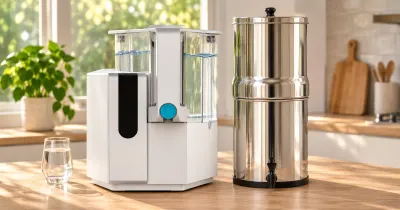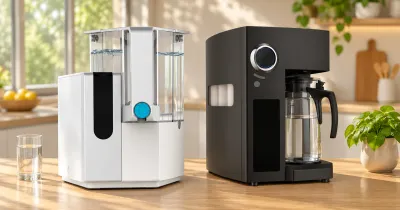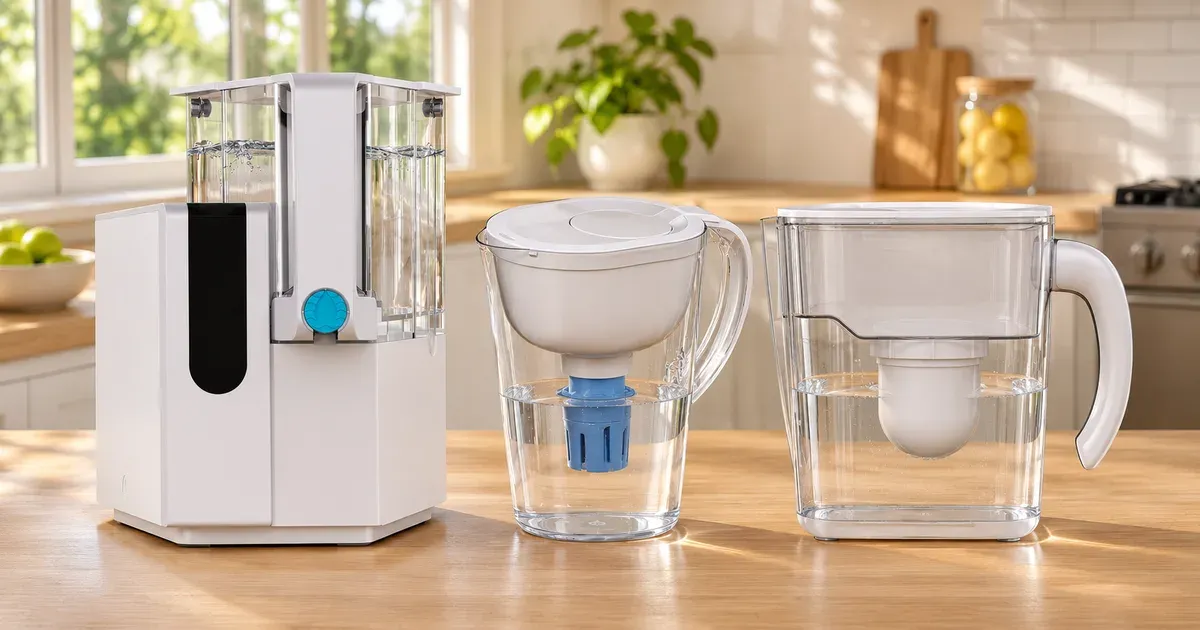
The short answer: yes, a certified reverse osmosis system removes much more than a Brita, but a Brita Elite is enough if your water only needs lead and taste fixed. The Brita Elite filter is certified for lead, mercury, cadmium, some pesticides and VOCs, and microplastics. The standard Brita filter isn’t certified for lead at all. A certified RO system like the AquaTru Classic adds fluoride, arsenic, nitrate, PFOA and PFOS, radium and TDS. The Clearly Filtered pitcher reports lab results for all of those, but its only certifications are NSF/ANSI 42 (chlorine, taste and odor) and 372 (lead-free materials).
Prices on November 15, 2026: a Brita Large 10-cup pitcher with an Elite filter was $31.44 on Amazon; the Clearly Filtered pitcher $109.99; the AquaTru Classic $380 on AquaTru’s Black Friday sale (was $475).
RO vs. Brita vs. Clearly Filtered at a Glance
| AquaTru Classic (RO) | Brita Elite filter | Brita Standard filter | Clearly Filtered pitcher | |
|---|---|---|---|---|
| Certified standards | NSF/ANSI 58, 53, 401, 42 (IAPMO) | NSF/ANSI 42, 53, 401 (IAPMO, NSF, WQA) | NSF/ANSI 42, 53 (WQA) | NSF/ANSI 42, 372 (NSF) |
| Certified: lead | Yes | Yes, 99.5% | No | No (lab-tested 99.34%) |
| Certified: fluoride | Yes | No | No | No (lab-tested >99.5%) |
| Certified: arsenic | Yes (pentavalent) | No | No | No (lab-tested 98%) |
| Certified: nitrate | Yes | No | No | No (lab-tested) |
| Certified: PFOA/PFOS | Yes (NSF/ANSI 53) | No | No | No (lab-tested >99.6%) |
| Certified: microplastics | Yes (NSF/ANSI 401) | Yes, 99.6% (0.5 to 1 μm) | No | No (lab-tested) |
| Other certified claims | TDS, radium, barium, chromium, copper, selenium, cysts, perchlorate, VOCs, chloramine | Mercury, cadmium, asbestos, benzene, atrazine and other VOCs, 15 emerging compounds | Chlorine, zinc, cadmium, copper, mercury | Chlorine, taste and odor |
| Filter life | 600 to 1,200 gal by stage | 120 gal (about 6 months) | 40 gal (about 2 months) | 100 gal |
| Filter cost per gallon | About $0.17 | About $0.14 | About $0.13 | About $0.60 to $0.65 |
| Waste water | About 1/3 gal per gallon | None | None | None |
| Price, Nov. 15, 2026 | $380 on sale (was $475) | $31.44 (10-cup pitcher + filter) | Filters $20.99 for 4 | $109.99 |
Sources: Brita’s Standard and Elite performance data, Clearly Filtered’s performance data and NSF listing, IAPMO R&T’s AquaTru listings. Filter costs use Amazon multipack prices on November 15 and AquaTru’s single-filter prices.
What Brita Is Certified For
Brita sells two pitcher filters, and they’re very different.
The Brita Standard filter (model OB03) is WQA certified under NSF/ANSI 42 for chlorine and zinc and under NSF/ANSI 53 for cadmium, copper and mercury. It is not certified for lead. It lasts 40 gallons, about two months.
The Brita Elite filter (OB06) is the one to buy. It’s certified under NSF/ANSI 53 for lead (99.5%), mercury, cadmium, asbestos, benzene, atrazine and several other VOCs and pesticides, and under NSF/ANSI 401 for microplastics (99.6% of 0.5 to 1 micron particles) and 15 emerging compounds such as BPA and ibuprofen. It lasts 120 gallons, about six months.
Neither Brita filter claims to reduce fluoride, arsenic, nitrate or PFAS, and Brita says its pitchers aren’t meant for microbiologically unsafe water.
What Reverse Osmosis Adds
An RO membrane removes dissolved substances that carbon can’t hold onto. The CDC says RO removes parasites, bacteria and viruses and chemicals including lead, copper, chromium and sodium, and may reduce arsenic, fluoride, radium and nitrate.
The AquaTru Classic is IAPMO certified under NSF/ANSI 58 for TDS, fluoride, lead, arsenic, nitrate/nitrite, barium, chromium, copper, radium, selenium, cysts and perchlorate; under NSF/ANSI 53 for PFOA, PFOS and VOCs; under NSF/ANSI 401 for microplastics and 15 emerging compounds; and under NSF/ANSI 42 for chlorine and chloramine. If your water report shows fluoride, arsenic, nitrate or PFAS you want gone, that’s the difference that matters. Our list of certified countertop RO systems shows that many RO units carry far fewer certified claims than this.
Clearly Filtered: Strong Lab Numbers, Narrow Certification
The Clearly Filtered pitcher publishes lab results from IAPMO’s New Jersey lab (formerly QFT) for hundreds of contaminants: fluoride above 99.5%, arsenic 98%, lead 99.34%, PFOA 99.64%, PFOS above 99.8% and nitrate above 99.9%. Those are better than any Brita claims.
But NSF’s listing for Clearly Filtered covers only NSF/ANSI 42 for chlorine and taste and odor reduction, plus NSF/ANSI 372, a lead-free materials standard that says nothing about removing lead from water. The rest are lab reports the company commissioned, without a certifier’s ongoing audits and re-testing. The filter is rated for 100 gallons and costs $65 at clearlyfiltered.com ($60 each in a three-pack), about $0.60 to $0.65 per gallon, roughly four times Brita Elite’s cost per gallon.
Cost, Speed and Waste
Brita is the cheapest to buy and run: about $0.13 to $0.14 per gallon in filters, about $31 to $34 a year at Brita’s suggested replacement schedule. The AquaTru Classic costs about $0.17 per gallon at its filters’ rated lives, about $130 a year, plus the $380 machine. Clearly Filtered is the most expensive per gallon. Our countertop RO filter cost comparison covers other RO brands.
Pitchers waste no water. The Classic’s 75% efficiency rating means about a third of a gallon of reject water per gallon purified (see our RO waste water guide). The Classic also removes most minerals, while pitchers leave them in.
Which Should You Buy?
| If you… | Best pick | Why |
|---|---|---|
| Need fluoride, arsenic, nitrate or PFOA/PFOS reduction you can verify | AquaTru Classic | The only one certified for them |
| Have older pipes and mainly worry about lead | Brita Elite | Certified 99.5% lead reduction, $31 |
| Just want better-tasting city water | Brita Standard or Elite | Certified for chlorine |
| Want broad reduction in a pitcher and accept lab data | Clearly Filtered | Best lab numbers of any pitcher here |
| Want no waste water and no outlet | Brita Elite or Clearly Filtered | Gravity pitchers |
| Drink a gallon or more a day | AquaTru Classic or Brita Elite | Clearly Filtered costs about $0.60+ per gallon |
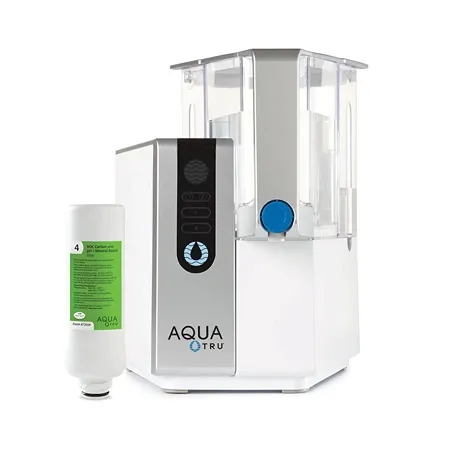
Best for certified filtration
AquaTru Classic
Certified for fluoride, arsenic, nitrate, lead, PFOA/PFOS and microplastics.
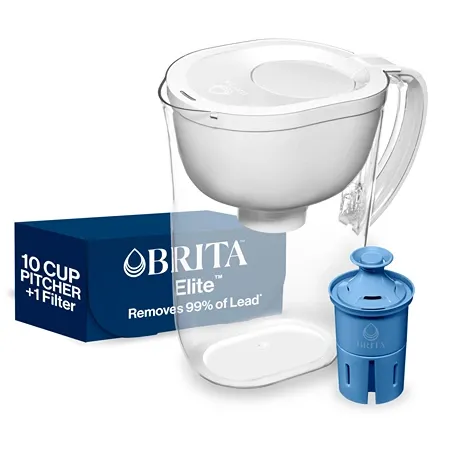
Best budget lead filter
Brita Large 10-Cup Elite Pitcher
Elite filter certified for 99.5% lead reduction, microplastics and VOCs; 120 gallons per filter.
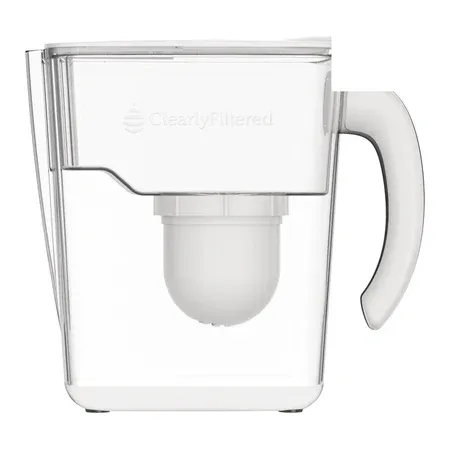
Best lab results in a pitcher
Clearly Filtered Pitcher
Lab-tested for fluoride, PFAS, lead and arsenic; NSF certified to 42 and 372.
For more pitchers, see our guide to the best water filter pitchers; for more RO systems, the best countertop reverse osmosis systems.
Reverse Osmosis vs. Brita FAQ
Is reverse osmosis better than Brita?
For contaminant removal, yes. A certified RO system like the AquaTru Classic is certified for fluoride, arsenic, nitrate, PFOA, PFOS, radium and TDS, which no Brita filter claims. The Brita Elite does cover lead, microplastics and several VOCs, and costs far less.
Does Brita remove lead?
The Brita Elite filter does: it’s certified under NSF/ANSI 53 for 99.5% lead reduction. The Brita Standard filter is not certified for lead.
Does Brita remove fluoride or PFAS?
No. Neither Brita pitcher filter is certified or claims to reduce fluoride or PFAS. For those, look for an NSF/ANSI 58 system with fluoride and NSF/ANSI 53 or 58 PFOA/PFOS claims.
Is Clearly Filtered better than reverse osmosis?
Its lab results are close to RO’s for fluoride, arsenic, lead and PFAS, but those aren’t certified claims. NSF certifies the Clearly Filtered pitcher only to NSF/ANSI 42 for chlorine and taste and to 372 for lead-free materials. A certified RO system has a certifier’s audits behind its claims.
Is Clearly Filtered NSF certified?
Only to NSF/ANSI 42 (chlorine, taste and odor) and NSF/ANSI 372 (lead-free materials). Its fluoride, lead, arsenic and PFAS figures come from lab testing, not certification.
How often do you change a Brita filter?
Every 40 gallons (about two months) for the Standard filter and every 120 gallons (about six months) for the Elite, according to Brita.