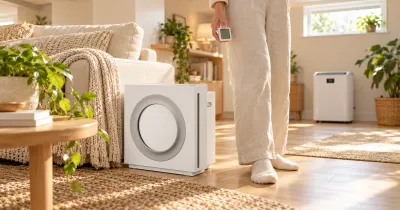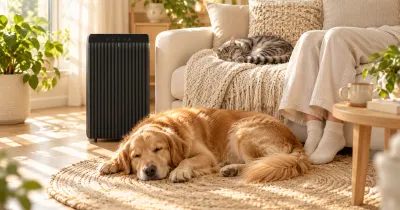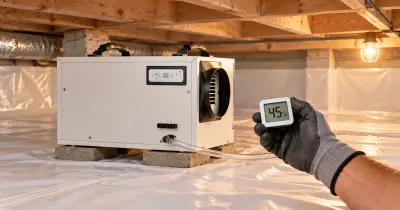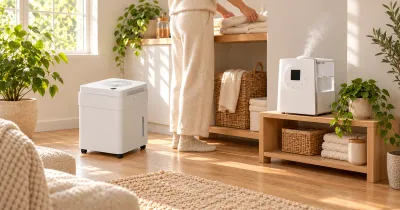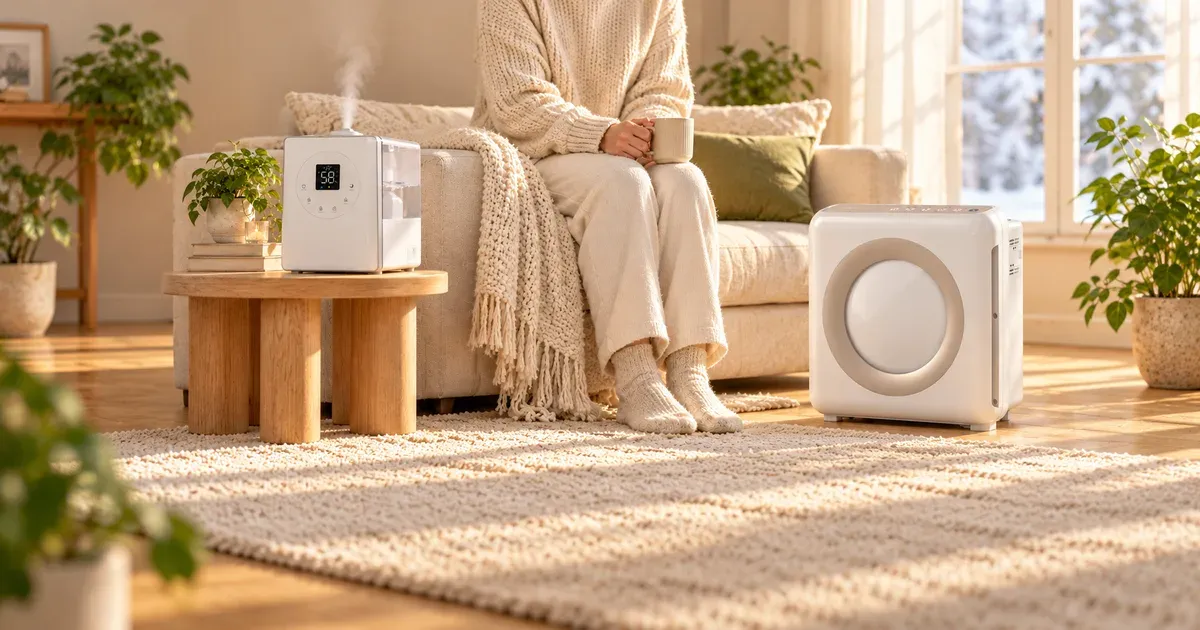
A humidifier adds water vapor to the air. An air purifier pulls air through a filter and removes particles like smoke, pollen, dust, and pet dander. One changes how wet the air is, the other changes how clean it is. Neither does the other’s job.
The short answer: get a humidifier if your problem is dry air: cracked lips, itchy skin, a scratchy throat or nosebleeds in winter, static shocks, or an indoor humidity reading below 30%. Get an air purifier if your problem is something in the air: allergies to pollen or pets, wildfire or cigarette smoke, or asthma. If you have both problems, run both, a few feet apart.
Humidifier vs. air purifier at a glance
| Spec | Humidifier | Air purifier |
|---|---|---|
| What it does | Adds moisture to the air | Filters particles out of the air |
| Fixes | Dry skin, lips, eyes, and sinuses; static; low humidity | Smoke, pollen, pet dander, airborne dust |
| Doesn’t fix | Allergens, smoke, or dust | Dry air (it doesn’t change humidity) |
| Best season | Winter, when heating dries the air | Year-round; spring pollen and summer wildfire smoke |
| Main risk | Too much humidity breeds mold and dust mites; dirty tanks breed germs | Ozone, but only from ozone generators and some ionizers |
| Upkeep | Refill daily, clean weekly | Change the filter every 6–12 months |
| Typical price | $40 to $160 | $80 to $350 |
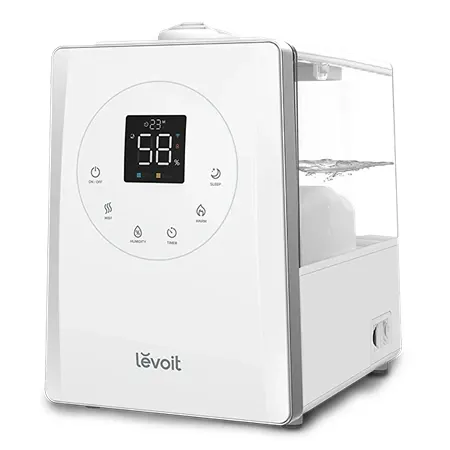
Best humidifier for most rooms
Levoit LV600S Humidifier
A 1.6-gallon ultrasonic humidifier with warm and cool mist and an auto mode that holds a target humidity.
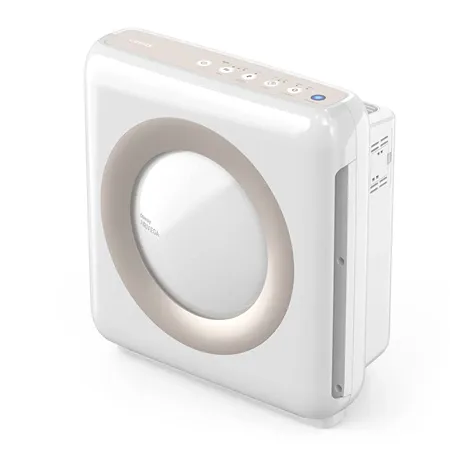
Best air purifier for most rooms
Coway Airmega AP-1512HH
A long-proven True HEPA purifier with a CADR in the low-to-mid 200s, auto mode, and roughly yearly filter changes.
What a Humidifier Does
A humidifier puts water into the air, either as steam, as an ultrasonic mist, or by blowing air through a wet wick. It raises the relative humidity of a room, which is how much moisture the air holds compared with the most it could hold at that temperature.
Cold outdoor air holds very little water. When your furnace heats that air, its relative humidity drops sharply, which is why indoor air in a heated home can fall to 20% or lower in January. That dry air pulls moisture from your skin, lips, eyes, and the lining of your nose. A humidifier brings it back up. It doesn’t remove anything from the air.
The types differ in safety, upkeep, and what else goes into the air with the water. Our warm vs. cool mist humidifier guide covers that in detail.
What an Air Purifier Does
An air purifier is a fan that pushes room air through a filter. A true HEPA filter captures at least 99.97% of particles 0.3 microns across, the hardest size to catch, and even more of larger and smaller ones. That covers smoke, pollen, pet dander, mold spores, and dust while it’s floating. A properly sized purifier in a closed room can filter all the air four or five times an hour.
In 83 field studies, portable air purifiers cut indoor fine-particle pollution by about half on average. They don’t add or remove moisture, and a thin carbon layer does little for gases and odors. Our guide to whether air purifiers are worth it covers what they can and can’t do.
Which One Do You Need?
Match the machine to the problem:
| If you have… | Get a… |
|---|---|
| Dry, itchy skin or cracked lips in winter | Humidifier |
| Nosebleeds or a dry, scratchy throat in the morning | Humidifier |
| Static shocks, or wood floors and guitars cracking | Humidifier |
| A cold, with a dry cough or stuffy nose | Humidifier (cool mist) |
| Pollen or pet allergies | Air purifier |
| Wildfire smoke, a smoker in the house, or a busy road outside | Air purifier |
| Asthma triggered by smoke, pollen, or dander | Air purifier |
| Dust mite allergy | Neither: lower humidity and wash bedding hot |
| Musty smell, condensation, or mold | Neither: a dehumidifier |
The cheapest way to decide is a hygrometer, a $10 to $15 humidity gauge. If your rooms read under 30% in winter, you need moisture. If they’re already at 40% to 50%, a humidifier won’t help, and your symptoms are more likely from something in the air.
The Right Indoor Humidity
The EPA recommends keeping indoor humidity between 30% and 50%, and below 60% at most. Both ends matter:
- Below 30%, air feels dry, static builds up, and skin, eyes, and sinuses dry out.
- Above 50%, dust mites multiply, and above 60%, mold can start growing on cold walls and windows.
That’s why a humidifier with a built-in humidistat and auto mode is worth paying for. It shuts off when the room reaches your target, instead of pumping out mist until the windows fog.
Humidity, Allergies, and Germs
Dust mites love humid air. Indoor humidity is the main factor deciding whether dust mites survive. Allergy guidelines recommend keeping it under 50%, and a lab study found that mite populations nearly stopped growing when the air sat at 35% most of the day, even with a few humid hours each day (Arlian et al., 1999). So if you’re allergic to dust mites, a humidifier can make things worse, and an air purifier won’t help much either, because mite allergens are heavy and settle out of the air within minutes. Hot-washing bedding and allergen-proof covers do more.
Moderate humidity may help against flu. Airborne flu virus seems to survive worst at middle humidity levels, roughly 40% to 60%, and best in very dry air, which is one reason flu season peaks when heated indoor air is driest (Marr et al., 2019). The evidence comes mostly from lab and animal studies, and not every study agrees, so treat it as a bonus rather than a reason to buy a humidifier. An air purifier can catch airborne virus particles too, but it doesn’t replace ventilation.
A dirty humidifier spreads germs. Bacteria and mold grow in standing water. Empty and refill the tank daily and clean it at least weekly, as the manual says.
Does a Humidifier Clean the Air?
No, and an ultrasonic one can make the air dirtier. Ultrasonic humidifiers turn water into a fine mist, so whatever is dissolved in the water goes into the air too. When that mist dries, the minerals are left floating as tiny particles. In a bedroom test, a 3-liter ultrasonic humidifier filled with tap water produced tens of thousands of particles per cubic centimeter, mostly between 0.1 and 0.3 microns, and the harder the water, the more particles it made (Sain et al., 2018). You see the bigger ones as white dust on furniture.
The fix is distilled water or a demineralization cartridge. Evaporative and steam humidifiers don’t have this problem, because the minerals stay behind in the wick or the tank.
Does an Air Purifier Dry Out the Air?
No. A HEPA purifier moves air through a filter and blows the same air back out, with the same moisture in it. The air can feel a little drier near the outlet because moving air speeds up evaporation from your skin, the same way a fan does, but the humidity reading doesn’t change. If you need to remove moisture, you need a dehumidifier; see dehumidifier vs. humidifier.
Can You Use a Humidifier and an Air Purifier Together?
Yes, and in winter many households should. A few rules keep them from working against each other:
- Keep them apart. Put them on opposite sides of the room, or at least several feet apart, with the humidifier’s mist pointed away from the purifier’s intake.
- Expect the purifier to react to an ultrasonic humidifier. Its particle sensor sees mineral mist as pollution, so auto mode ramps the fan up, and the filter clogs faster. Distilled water mostly solves this.
- Or use an evaporative humidifier. Evaporative models like the Vornado EVDC300 release invisible water vapor with almost no particles, so they don’t trip the purifier’s sensor at all.
- Don’t let the room go above 50%. A damp purifier filter can grow mold, and so can the room.
What About 2-in-1 Humidifier Purifiers?
Combination units exist, such as Dyson’s Purifier Humidify+Cool, which pairs a HEPA filter with an evaporative humidifier. They save floor space, but they cost several times more than a good humidifier and a good purifier bought separately, and you can’t put each one where it works best. Some “air washers,” like the Venta LW25, humidify by spinning discs through water and catch some large dust and pollen, but they aren’t HEPA purifiers and don’t do much for smoke or fine particles.
For most homes, two separate machines are cheaper and work better.
Running Costs
- Humidifier: cool mist ultrasonic and evaporative models draw about 25 to 40 watts. Warm mist and steam models use hundreds. Add distilled water if you use an ultrasonic model, and wick filters (about $10 to $20 every month or two) if you use an evaporative one.
- Air purifier: a few watts on low to 30 to 60 watts on high. Running one around the clock at about 30 watts costs roughly $45 a year at 17 cents per kWh, plus $30 to $100 a year in filters.
Which to Buy
For dry air, the Levoit LV600S is our top humidifier: a big 1.6-gallon tank, warm or cool mist, and an auto mode that holds a set humidity. For a purifier, the Coway Airmega AP-1512HH is the best choice for most bedrooms and living rooms. If you want both in one room, pair the Coway with the evaporative Vornado EVDC300, which won’t set off its particle sensor.
For more options, see our guides to the best humidifiers and the best air purifiers, and our Coway Airmega review.
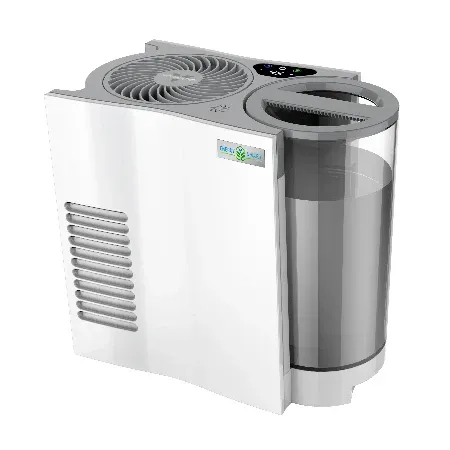
Best humidifier to run next to a purifier
Vornado EVDC300 Humidifier
An evaporative humidifier with no mist and no white dust, a humidistat, and a 1.5-gallon tank.
Humidifier vs. Air Purifier FAQ
Is a humidifier or an air purifier better for allergies?
An air purifier, for pollen and pet allergies, because it removes the allergens from the air. A humidifier can soothe a dry, irritated nose, but it doesn’t remove allergens, and pushing humidity above 50% feeds dust mites.
Is a humidifier or an air purifier better for a cold?
A humidifier. Moist air can ease a dry cough and stuffy nose. Health agencies recommend a cool mist humidifier, especially for children.
Is a humidifier or an air purifier better for a baby’s room?
Usually a cool mist humidifier in winter, kept out of reach, and an air purifier if there’s smoke, pets, or allergies in the home. Never use a warm mist humidifier in a child’s room.
Is a humidifier or an air purifier better for sleep?
Whichever fixes what’s waking you. If you wake up with a dry mouth, sore throat, or nosebleeds, try a humidifier. If you wake up congested from allergies, try an air purifier. Both can run quietly overnight.
Can an air purifier replace a humidifier?
No. An air purifier doesn’t add moisture. If your air is dry, only a humidifier will fix it.
Can a humidifier make allergies worse?
Yes, if it pushes humidity above 50%, which helps dust mites and mold grow, or if a dirty tank sprays bacteria and mold into the air. Keep humidity between 30% and 50% and clean the tank weekly.