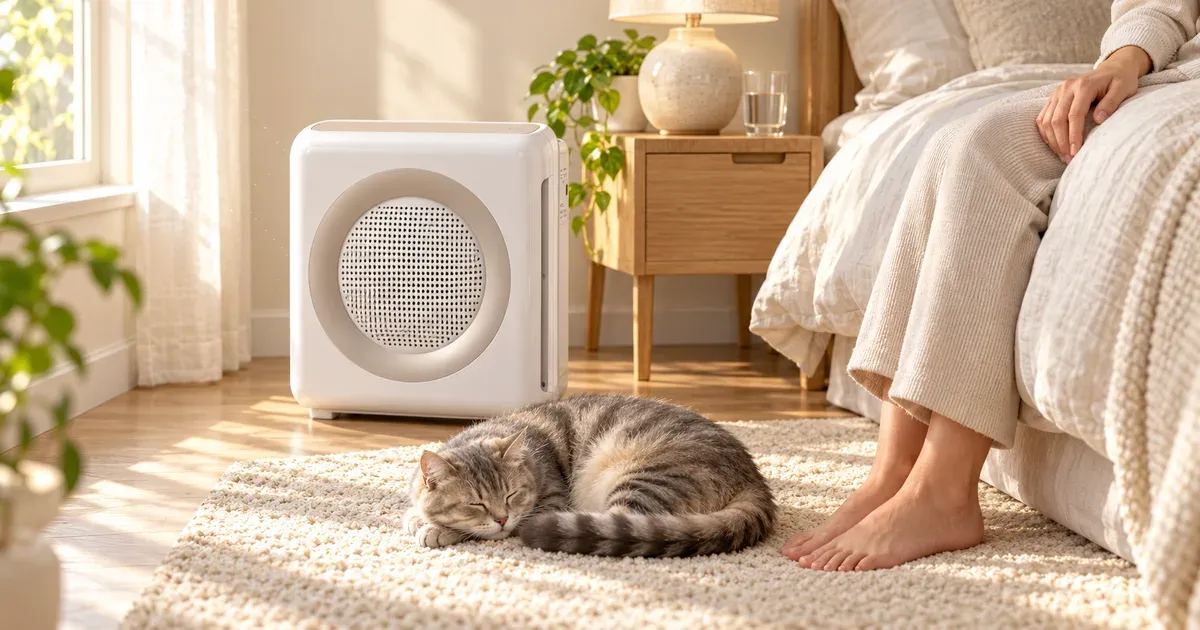
An air purifier is a fan that pulls room air through a filter. A good one with a true HEPA filter removes most of the fine particles floating in a room: smoke, pollen, pet dander, and dust. Across 83 field studies, portable air cleaners cut indoor fine-particle (PM2.5) levels by 49% on average. That’s a real, measurable improvement in the air you breathe.
The short answer: an air purifier is worth it if you live with wildfire smoke, a smoker, pollen or pet allergies, or asthma, or near a busy road. It’s not worth it if you’re hoping to fix dust mites, cooking odors, mold, or “stale” air, because a HEPA purifier doesn’t solve those. Buy one sized for the room you use most, usually the bedroom, and run it all the time on auto.
What an air purifier can and can't do
| Spec | Helps with | Doesn't help much with |
|---|---|---|
| Particles | Wildfire and cigarette smoke, pollen, pet dander, airborne dust | Dust that has already settled on floors and furniture |
| Allergies | Pet and pollen allergies (airborne allergens) | Dust mites, whose allergens are heavy and settle quickly |
| Gases and odors | Some odor reduction with a thick carbon filter | VOCs, cooking smells, and gases with a thin carbon sheet |
| Germs | Airborne virus particles, as part of ventilation | Surfaces, and germs passed by close contact |
| Other | Traffic pollution that gets indoors | Humidity, CO2, mold growth, radon |
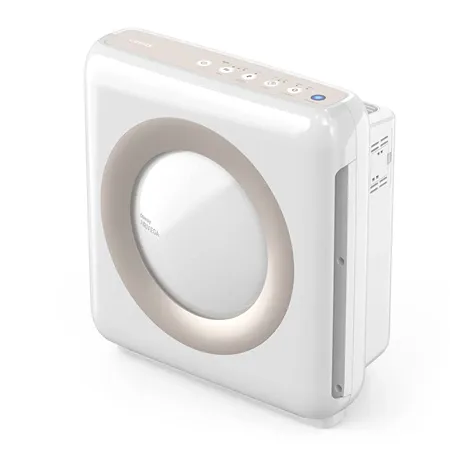
Best air purifier for most rooms
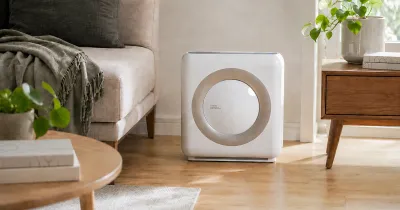
Coway Airmega AP-1512HH
A long-proven True HEPA purifier with a CADR in the low-to-mid 200s, auto mode, and roughly yearly filter changes.
How an Air Purifier Works
A fan draws air through a stack of filters and blows it back out. The HEPA filter does the important work: to be called true HEPA in the US, a filter must capture at least 99.97% of particles 0.3 microns in size, the size that’s hardest to catch. Larger and smaller particles are caught even more efficiently.
Most purifiers also have a washable prefilter for hair and lint and a thin activated carbon layer for odors. Some add an ionizer or UV light, which you usually don’t need.
How much a purifier helps depends mostly on its clean air delivery rate (CADR), the cubic feet per minute of filtered air it delivers. A small purifier in a big room barely moves the needle. A properly sized one in a closed room can filter all the air four or five times an hour.
What the Research Shows
It cleans the air. A 2024 systematic review of portable air cleaner field studies found that in 83 studies measuring fine particles, indoor PM2.5 fell by an average of 49%, ranging from no significant change to more than 90% (Ebrahimifakhar et al., 2024). Results vary that widely because rooms, purifiers, and habits vary: a unit that’s too small for the space, or one people switch off because of the noise, does much less.
It can modestly lower blood pressure. Breathing fine-particle pollution raises blood pressure over time. A 2023 meta-analysis of 17 studies compared real filtration with fake “sham” filtration. Real filtration cut indoor PM2.5 by about 60% and lowered systolic blood pressure by 2.4 mmHg on average, or 3.6 mmHg in the highest-quality studies (Faridi et al., 2023). That’s small for one person, but meaningful across a population, especially in polluted areas.
For asthma, it helps some people. An early review of 10 randomized trials found air filters were linked with fewer asthma symptoms and less sleep disturbance, but no change in medication use or lung function, and the trials were small (McDonald et al., 2002). A 2026 review of newer trials found the same pattern: HEPA filtration consistently cut indoor PM2.5, and several trials found better symptoms, peak flow, or quality of life, especially in people with more symptoms or more exposure. Lung-function changes were small or absent (Dai et al., 2026). In one well-designed trial of 225 children with asthma who lived with smokers, HEPA air cleaners cut unscheduled asthma visits but didn’t change parent-reported symptoms (Lanphear et al., 2011).
For allergies, it depends on the allergen. Pollen, pet dander, and smoke stay airborne long enough for a purifier to catch them. Dust mite allergens are heavier and settle within minutes, so washing bedding in hot water and using mite-proof covers does more than a purifier. US asthma guidelines recommend reducing indoor allergens with a combination of steps, for people with a confirmed allergy, rather than relying on any single product.
The bottom line: an air purifier reliably cleans the air. The health benefits are real but modest, and they’re largest for people with asthma, allergies, or high exposure to smoke and pollution.
When an Air Purifier Is Worth It
- Wildfire smoke. This is the clearest case. The EPA recommends portable air cleaners during smoke events, and a sized purifier in a closed room can keep smoke particles far below outdoor levels.
- Pet allergies. Pet dander is small and stays airborne, so a purifier in the bedroom (with the pet kept out) helps.
- Pollen allergies. Keep windows closed during pollen season and run the purifier in the bedroom.
- Asthma. Especially if you live near traffic, with a smoker, or in an area with poor outdoor air.
- A smoker in the house. A purifier catches smoke particles, though not the gases, so it reduces but doesn’t remove secondhand smoke.
- Illness season. CDC and EPA guidance includes portable HEPA cleaners as one way to lower airborne virus levels, alongside ventilation.
When It Isn’t
- Dust on surfaces. A purifier catches dust floating in the air, not dust that has settled. You’ll still need to vacuum and dust, ideally with a HEPA vacuum.
- Odors and chemicals. HEPA filters don’t capture gases. Thin carbon sheets in most purifiers saturate quickly. For odors and VOCs, fix the source and ventilate.
- Mold. A purifier can catch some airborne spores but won’t stop mold from growing. Fix the moisture problem; a dehumidifier helps in damp spaces.
- Stuffy air. Purifiers don’t add oxygen or remove carbon dioxide. Open a window or run a fan.
Avoid Ozone Generators
Skip any “air purifier” that works by producing ozone, often sold as an ozone generator or “activated oxygen” machine. Ozone irritates the lungs, and the EPA says ozone generators sold as air cleaners aren’t effective at levels that are safe to breathe. In California, air cleaners must be certified by the California Air Resources Board for low ozone emissions, so CARB certification is a good sign even if you live elsewhere. Ionizers on mainstream purifiers can usually be switched off, and filters work fine without them.
How to Size an Air Purifier
The EPA’s rule of thumb: choose a purifier whose smoke CADR is at least two-thirds of the room’s area in square feet, for rooms with 8-foot ceilings.
| Room size | Minimum smoke CADR |
|---|---|
| 150 sq. ft. (small bedroom) | 100 |
| 200 sq. ft. (bedroom) | 135 |
| 300 sq. ft. (large bedroom, office) | 200 |
| 450 sq. ft. (living room) | 300 |
Buy a little more CADR than you need, so the purifier does the job on a quieter fan setting. Run it continuously on auto, keep doors and windows closed when the outdoor air is bad, and don’t push it into a corner or behind furniture.
What Air Purifiers Cost
- To buy: about $80 to $150 for a good small-room purifier, and $200 to $350 for a medium or large room. Our top pick, the Coway Airmega AP-1512HH, costs about $230.
- Filters: about $30 to $100 a year, depending on the model and how dirty your air is. A genuine HEPA and carbon filter set for the Coway costs about $46 on Amazon and lasts roughly a year.
- Electricity: most purifiers draw a few watts on low and 30 to 60 watts on high. Running one around the clock at an average of 30 watts uses about 263 kWh a year, or about $45 at 17 cents per kWh.
So a typical bedroom purifier costs roughly $75 to $150 a year to run after you buy it.
A Cheaper Option: A Box Fan Filter
If you need clean air fast during a wildfire and can’t buy a purifier, the EPA describes a do-it-yourself air cleaner: a box fan with a MERV 13 furnace filter taped to it. The popular four-filter cube version is often called a Corsi-Rosenthal box. It’s noisy and bulky, but it filters a lot of air for about $50 to $100.
Which Air Purifier to Buy
The Coway Airmega AP-1512HH is the best choice for most bedrooms and medium rooms: proven performance, a true HEPA filter, auto mode, and reasonable filter costs. For small rooms on a budget, the Dreo 338 has an AHAM-verified 115 CFM CADR for under $100. For more picks, including large-room and smart options, see our guide to the best air purifiers.
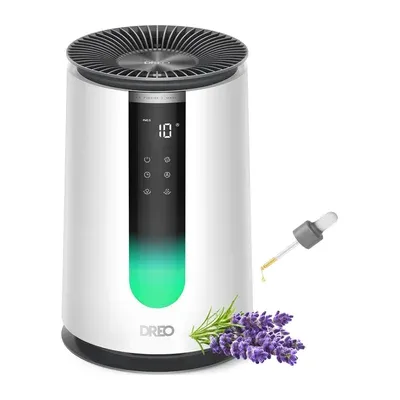
Best under $100
Dreo 338 Air Purifier
An AHAM-verified 115 CFM purifier for rooms up to about 178 square feet, with a PM2.5 sensor and Auto mode.
If you’re also fighting dry or damp air, see warm vs. cool mist humidifiers and our guide to the best dehumidifiers.
Are Air Purifiers Worth It? FAQ
Do air purifiers actually work?
Yes, at removing particles. Field studies show portable air cleaners cut indoor PM2.5 by about half on average, and by 90% or more in some studies. Health benefits are real but modest, and largest for people with asthma, allergies, or smoke exposure.
Do air purifiers help with allergies?
They help with airborne allergens like pollen and pet dander, especially in a closed bedroom. They do little for dust mite allergies, because those allergens settle quickly. Combine a purifier with other steps, like washing bedding and keeping pets out of the bedroom.
Do air purifiers help with dust?
Partly. They catch dust while it’s floating in the air, which means less settles on surfaces, but you’ll still need to vacuum and dust.
Should I run my air purifier all the time?
Yes. Particles come back within minutes of turning it off. Run it continuously on auto, or on a low, quiet setting while you sleep.
Where should I put an air purifier?
In the room where you spend the most time, usually the bedroom, with a foot or two of open space around it. Keep the door and windows closed when outdoor air is bad.
Can air purifiers be bad for you?
HEPA purifiers are safe. Avoid ozone generators and purifiers that emit ozone, which irritates the lungs. CARB certification shows a purifier meets California’s low-ozone limit.