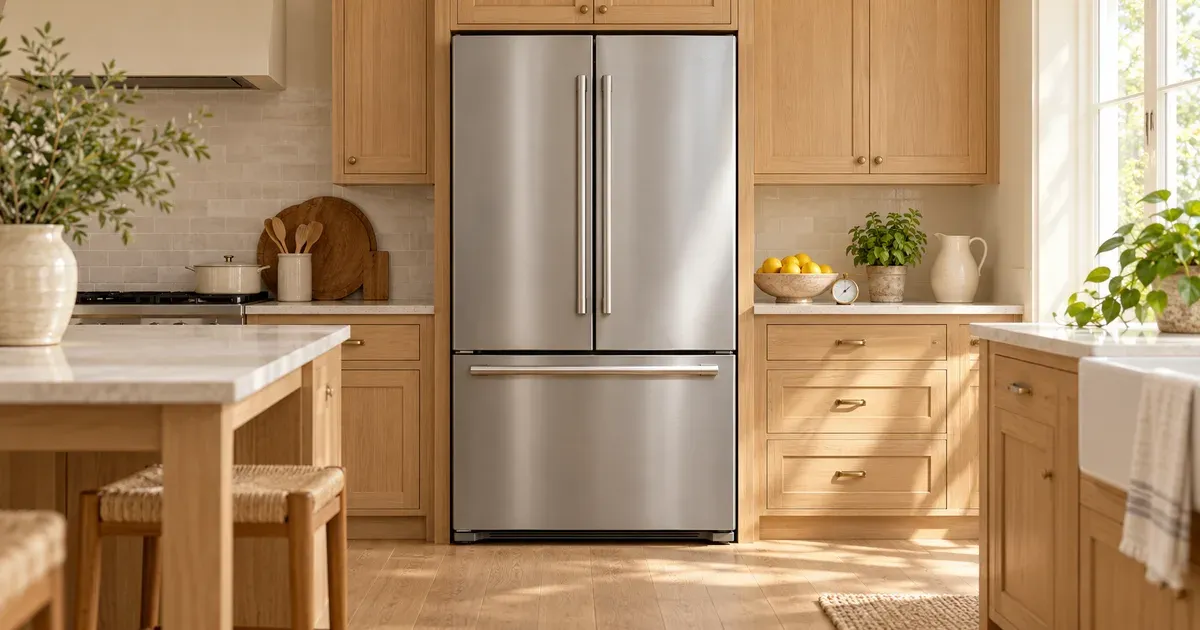
Most refrigerators last 10 to 13 years. The National Association of Home Builders’ life-expectancy study puts a standard refrigerator at 13 years and a compact refrigerator at 9 years. ENERGY STAR assumes a 12-year lifetime when it calculates savings, and home inspectors’ guidelines give a range of 9 to 13 years.
That’s an average, not a deadline. Plenty of fridges run 20 years, and some fail early, usually because of an ice maker, a dispenser, or a sealed-system leak. The bigger question for an old fridge is often cost: the Department of Energy says to replace a refrigerator or freezer that’s more than 15 years old as soon as possible, because it can cost up to a third more to run than a new ENERGY STAR model.
Refrigerator lifespan at a glance
| Spec | Typical lifespan | Source |
|---|---|---|
| Standard refrigerator | 13 years | NAHB life expectancy study |
| Compact (mini) fridge | 9 years | NAHB |
| Standalone freezer | 11 years | NAHB |
| Refrigerator, home inspector range | 9 to 13 years | InterNACHI |
| ENERGY STAR assumption | 12 years | ENERGY STAR |
| Replace regardless if older than | 15 years | US Department of Energy |
What Wears Out First
The parts that fail most often aren’t the expensive ones. In a large owner survey covering about 85,000 refrigerators bought over the past decade, icemakers and water and ice dispensers were the most common problems, and roughly 30% of fridges with an icemaker had an icemaker problem by the end of year five. Compressor and sealed-system failures were much rarer.
That has two practical lessons:
- A fridge without an icemaker or dispenser has fewer things to break, and the DOE notes it uses less energy, too. In ENERGY STAR’s data, the same GE top-freezer is rated at 359 kWh a year without an icemaker and 443 kWh with one.
- An icemaker or dispenser failure is usually a repair, not a replacement. A failed compressor or refrigerant leak on an older fridge is when replacing makes more sense.
Signs It’s Time to Replace Your Refrigerator
- It’s more than 15 years old. The DOE says to replace it as soon as possible. ENERGY STAR estimates a fridge that old could be costing about $95 a year to run, and that it uses about 20% more energy than an ENERGY STAR model.
- It can’t hold 40°F or below in the fridge or 0°F in the freezer, even after adjusting the controls. Food spoils faster above 40°F, and our food storage chart times all assume a fridge at 40°F or colder.
- The sealed system has failed (the compressor, a refrigerant leak) and it’s out of warranty.
- It runs constantly, sweats, or ices up inside, and repairs haven’t fixed it.
- It’s a second fridge in the garage. The DOE says an old second fridge often costs more than $100 a year to run.
A cheap fridge thermometer is the easiest way to check the first warning sign.
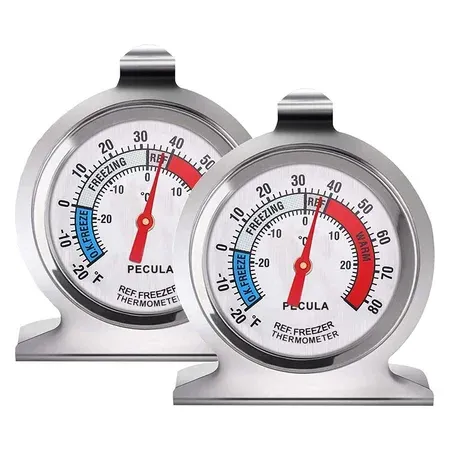
Check your fridge's real temperature
Pecula Refrigerator Thermometer (2-Pack)
Dial thermometers for the fridge and freezer, marked with safe zones. Over 32,000 Amazon ratings.
Refrigerator Warranties
Warranties tell you what the maker expects to last. Here’s the standard coverage on full-size refrigerators from the big brands:
| Brand | Whole fridge | Sealed system (compressor, coils, refrigerant) |
|---|---|---|
| GE | 1 year | 1 year on standard GE; 5 years on GE Profile and Café |
| Whirlpool | 1 year | 5 years, parts and labor |
| Samsung | 1 year | 5 years; digital inverter compressor 10 years (parts) |
| LG | 1 year | 5 years; compressor parts covered to 10 years on some models |
If your fridge is still inside its sealed-system warranty, a compressor failure is a repair. Outside it, on a fridge older than about 10 years, put the repair cost toward a new, more efficient fridge instead.
How Many Watts Does a Refrigerator Use?
A refrigerator cycles on and off all day, so its yearly energy use matters more than its wattage at any moment. Most new full-size fridges use 350 to 700 kWh a year, which averages out to about 40 to 80 watts around the clock. While the compressor is running, a fridge draws more: GE rates its 25 cu. ft. French-door model at 294 watts and its side-by-side at 330 watts.
Here are yearly energy use and running costs for current models, at the US average residential rate of 18.31 cents per kWh (EIA, July 2026):
| Refrigerator | kWh per year | Cost per year | Average watts |
|---|---|---|---|
| GE 17.5 cu. ft. top-freezer (GTE18GTNRWW) | 359 | $66 | 41 |
| GE 22.1 cu. ft. counter-depth French door (GYE22GYNFS) | 581 | $106 | 66 |
| GE 24.7 cu. ft. French door (GNE25JYKFS) | 609 | $112 | 70 |
| GE 25.3 cu. ft. side-by-side (GSE25GYPFS) | 646 | $118 | 74 |
| LG 31.7 cu. ft. French door (LRFLS3206S) | 682 | $125 | 78 |
| GE 4.4 cu. ft. compact (GME04GGKWW) | 227 | $42 | 26 |
kWh figures are from GE and LG spec sheets, which match ENERGY STAR’s data. Costs and average watts are our arithmetic.
Top-freezer refrigerators use the least energy of any style, ENERGY STAR says, and French doors and side-by-sides use the most, especially with an icemaker and dispenser.
Startup surge: a fridge’s compressor draws extra power for a moment when it starts. Generator maker Generac says starting watts are typically 2 to 3 times running watts, which matters if you’re sizing a generator or battery backup for a power outage. If the power goes out, a closed fridge keeps food safe for about 4 hours; our food storage chart covers what to throw out after that.
How Much Does a Refrigerator Weigh?
Most full-size refrigerators weigh 165 to 360 pounds. The two compact GE fridges below weigh under 60 pounds. Here are net (unboxed) weights from manufacturer spec sheets:
| Refrigerator | Net weight | Shipping weight |
|---|---|---|
| GE 17.5 cu. ft. top-freezer | 165 lb | 184 lb |
| GE 24.7 cu. ft. French door | 253 lb | 275 lb |
| LG 31.7 cu. ft. French door | 284 lb | 307 lb |
| GE 25.3 cu. ft. side-by-side | 320 lb | 340 lb |
| GE 22.1 cu. ft. counter-depth French door | 360 lb | 390 lb |
| GE 4.4 cu. ft. compact | 60 lb | 65 lb |
| GE 3.1 cu. ft. two-door compact | 56 lb | 63 lb |
Counter-depth and built-in-style models can be heavier than larger standard-depth fridges, so check the spec sheet before moving one up stairs. For dimensions and whether a fridge will fit your space, see our refrigerator size chart.
How Long Does a New Refrigerator Take to Get Cold?
Plan on about a day. Whirlpool says a new refrigerator takes about 8 to 12 hours to reach its operating temperature and up to 24 hours to fully stabilize. GE also says to allow 24 hours, though you should feel some cooling in the freezer within about an hour. Samsung suggests waiting two hours to make sure the fridge is cooling before you add food.
When to load groceries: Whirlpool says wait until the fridge is at 37°F or below and the freezer at 0°F or below. GE recommends those same settings, 37°F and 0°F, for everyday use. Ice takes longer: Whirlpool’s icemakers make a batch about every 3 hours, and the bin can take up to 3 days to fill.
If it was moved on its side, let it stand upright before plugging it in. LG says to wait at least 2 hours, and Whirlpool says at least 15 minutes for fridges using R-134a refrigerant (24 hours for very old R-12 models). Skipping the wait can damage the compressor.
How to Get Rid of an Old Refrigerator
Refrigerators contain refrigerant that has to be recovered before scrapping, and the EPA says the final disposer is responsible for that. Your easiest options:
- Have the retailer haul it away when your new one is delivered. Retailers often take the old unit.
- Check your electric utility for a fridge recycling rebate or bounty program.
- Use your city’s bulky-item pickup, which handles the refrigerant.
The EPA advises against reselling an old, inefficient fridge, since it keeps wasting energy in someone else’s home. ENERGY STAR notes that a 10-year-old fridge contains more than 120 pounds of recyclable steel.
Refrigerators Worth Buying
If you’re replacing an old fridge, these are our picks from our guide to the best refrigerators:
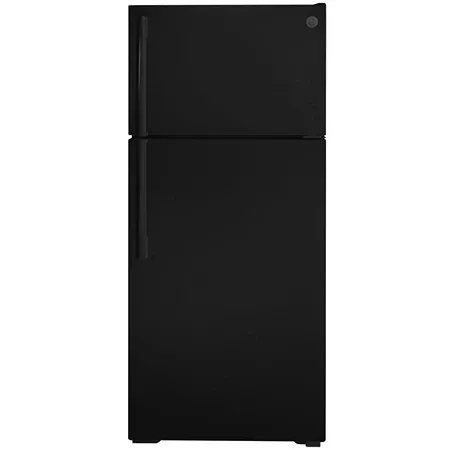
Best budget fridge
GE GTS17DTNRBB
An affordable top-freezer refrigerator with adjustable shelves, frost-free operation, and efficient performance.
A top-freezer like the GE GTS17DTNRBB is the cheapest style to buy and to run, and without a water or ice dispenser, it has fewer parts to fail.
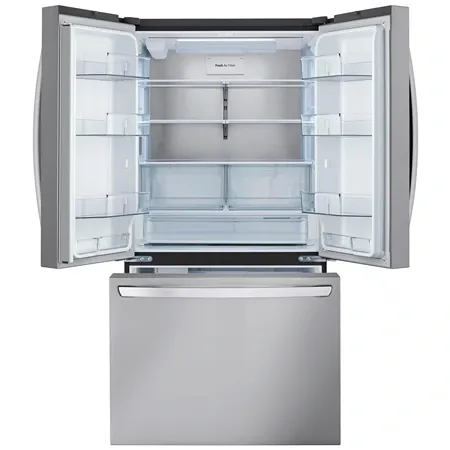
Best French-door fridge
LG LRFLC2706S
An energy-efficient counter-depth French-door refrigerator with smart features and flexible storage.
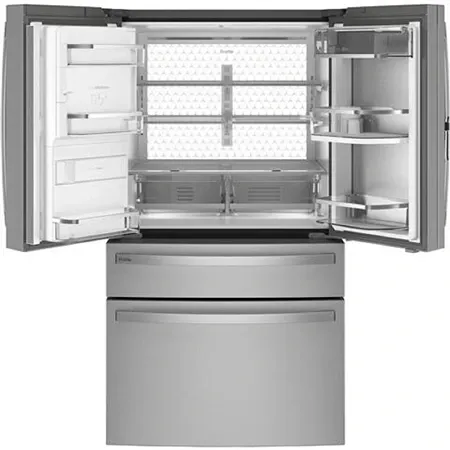
Best upgrade
GE Profile PVD28BYNFS
A French-door refrigerator with a custom-temperature drawer, smart-app control, and a hands-free autofill dispenser.
As a GE Profile model, the PVD28BYNFS gets GE’s 5-year sealed-system warranty instead of the 1-year coverage on standard GE fridges. See our full GE Profile PVD28BYNFS review.
Refrigerator Lifespan FAQ
How long do refrigerators last on average?
About 10 to 13 years. NAHB’s study puts a standard refrigerator at 13 years and a compact refrigerator at 9.
Is it worth repairing a 10-year-old refrigerator?
Usually yes for icemakers, dispensers, fans, and door gaskets. For a failed compressor or a refrigerant leak outside the warranty, replacement usually makes more sense, especially as the fridge approaches 15 years.
How long do French-door refrigerators last?
There’s no reliable lifespan data by style, but French-door models often include icemakers and dispensers, the parts that fail most. Expect the same 10 to 13 years for the fridge itself.
How long does a mini fridge last?
About 9 years, according to NAHB.
How much does it cost to run a refrigerator?
About $40 to $125 a year for a new model at the US average electricity rate, depending on size and style. An old fridge can cost much more.