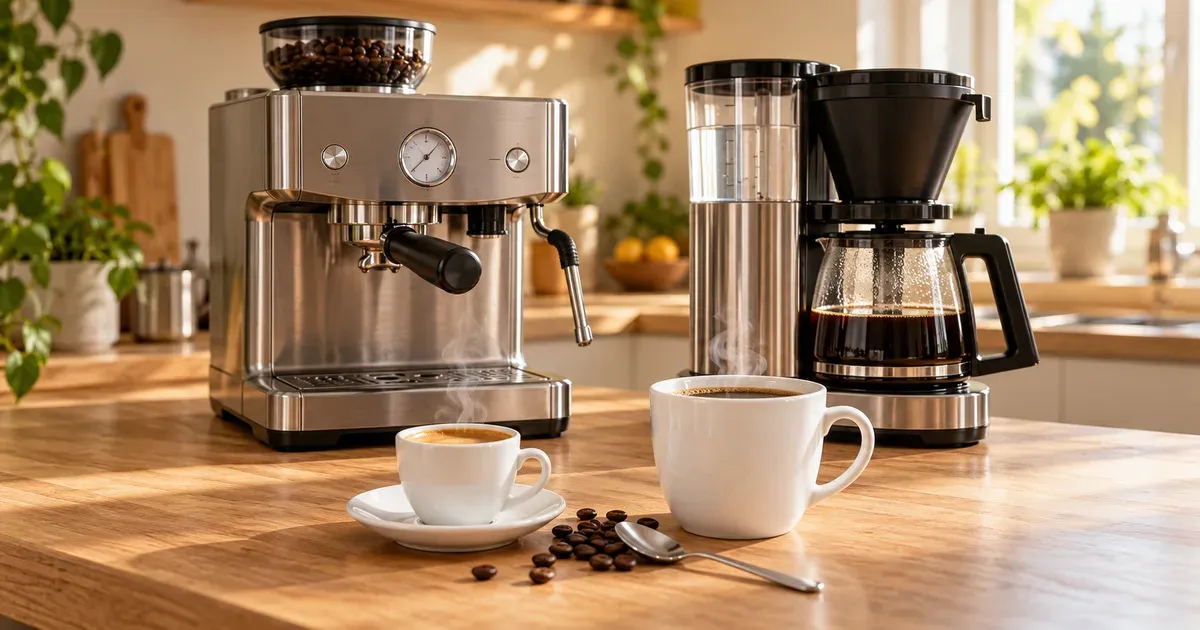
Espresso is coffee. The difference is how it’s brewed. Espresso forces hot water through finely ground, tightly packed coffee at high pressure in about 25 to 30 seconds, making a small, thick, concentrated shot topped with crema. Regular drip coffee lets water flow through coarser grounds by gravity over several minutes, making a larger, lighter cup. Any coffee bean can be used for either. As a Starbucks coffee master put it in 2026, espresso “is just another way of brewing coffee, not a type of bean.”
The short answer on caffeine: espresso has far more caffeine per ounce, but a typical cup of drip coffee has more caffeine overall. A 1-ounce shot of espresso has about 63 mg of caffeine, while an 8-ounce cup of brewed coffee has about 95 mg, according to USDA data. A double shot has about 126 mg, which is more than one 8-ounce cup.
Espresso vs. drip coffee at a glance
| Spec | Espresso | Drip coffee |
|---|---|---|
| Serving | 1 oz single, 2 oz double | 8 oz cup (often 12–16 oz) |
| Caffeine per serving | About 63 mg per 1-oz shot (USDA) | About 95 mg per 8-oz cup (USDA) |
| Caffeine per ounce | About 63 mg | About 12 mg |
| Grind | Fine, like table salt | Medium |
| Brew time | 25–30 seconds | Several minutes |
| How it brews | Pressure (about 9 bar) | Gravity |
| Coffee-to-water ratio | About 1:2 (by weight) | About 1:18 |
| Texture | Thick, syrupy, with crema | Thin and clean |
| Equipment | Espresso machine ($300+ for a good one) | Drip maker, pour-over, or French press |
How Much Caffeine Is in a Shot of Espresso?
About 63 mg in a 1-ounce shot, based on USDA FoodData Central, which lists restaurant-prepared espresso at 212 mg of caffeine per 100 grams. Mayo Clinic’s caffeine table gives the same 63 mg per ounce. Illy says an average 1-ounce shot of its espresso has about 60 mg.
Coffee shops can pull stronger shots. Starbucks lists:
| Starbucks espresso | Size | Caffeine |
|---|---|---|
| Solo (1 shot) | 0.75 oz | 75 mg |
| Doppio (2 shots) | 1.5 oz | 150 mg |
| Triple | 3 shots | 225 mg |
| Quad | 4 shots | 300 mg |
Decaf espresso has almost none: about 1 mg per ounce in USDA’s data and Mayo Clinic’s table.
Espresso vs. Coffee Caffeine, Drink by Drink
Per serving, brewed coffee usually wins, especially at coffee-shop sizes. Here’s what Starbucks lists for a grande (16 oz):
| Starbucks grande (16 oz) | Espresso shots | Caffeine |
|---|---|---|
| Pike Place brewed coffee | — | 315 mg |
| Caffè Americano | 3 | 225 mg |
| Cold Brew | — | 205 mg |
| Caffè Latte | 2 | 150 mg |
| Cappuccino | 2 | 150 mg |
| Decaf Pike Place | — | 25 mg |
A grande drip coffee has about twice the caffeine of a grande latte. If you want less caffeine but still want something strong-tasting, an espresso drink is the lower-caffeine choice. If you want the biggest jolt, order brewed coffee.
How much is too much? The FDA says 400 mg a day is not generally associated with negative effects in most healthy adults. That’s about six shots of espresso or four 8-ounce cups of drip coffee by USDA’s averages, but only a little more than one grande Pike Place. Pregnant people are generally advised to stay under 200 mg a day and should check with their doctor.
How Espresso and Drip Coffee Are Made
Espresso needs pressure. A machine pushes water at about 9 bar (roughly nine times atmospheric pressure) through a puck of finely ground coffee. Breville calls a 1:2 ratio the “golden standard”: for example, 18 grams of ground coffee in, 36 grams of espresso out, in 25 to 30 seconds. Illy’s bar standard for a single shot is 7 grams of coffee and about 25 mL in the cup. Too fast, and the shot tastes sour and thin; too slow, and it turns bitter.
Drip and pour-over coffee use gravity and a medium grind. The Specialty Coffee Association’s Golden Cup standard is 8.25 grams of coffee per 150 mL of water, about 1:18. Our coffee ratio calculator works out the grams, tablespoons, and scoops for any size pot or brew method.
Espresso beans vs. coffee beans. There’s no such thing as an espresso bean. “Espresso roast” is a roaster’s blend designed to taste good as espresso, usually darker and richer. Peet’s puts it simply: espresso “isn’t a roast level at all. It’s a brewing method.” You can pull espresso from a light roast or make drip coffee from an espresso roast.
Taste and Texture
Espresso is concentrated: more body, more intensity, and a layer of crema, the golden foam made of emulsified oils and gases from the pressure. Illy describes good crema as caramel to cocoa colored and 3 to 4 mm thick. Starbucks describes espresso as having “a heavier, more textured body than drip coffee.”
Drip coffee is cleaner and lighter, and it shows off a coffee’s more delicate flavors, especially with lighter roasts. The paper filter also removes most of the oils that give espresso its body.
Ristretto and lungo are variations on a shot. A ristretto uses the same coffee with about half the water, around a 1:1 ratio, for a sweeter, more intense shot. A lungo uses about twice the water, around 1:3, for a longer, more bitter one.
Is Espresso or Coffee Healthier?
They’re close, with two differences:
- Caffeine: a shot of espresso has less caffeine than a typical cup of coffee, so espresso drinkers often take in less overall.
- Cholesterol: coffee contains natural oils called diterpenes (mainly cafestol) that can raise LDL cholesterol. Paper filters remove almost all of them, so drip coffee has very little. Harvard’s Nutrition Source says espresso has moderate amounts, and unfiltered coffee like French press and Turkish coffee has the most. In Norway’s large Tromsø Study, drinking 3 to 5 espressos a day was linked to slightly higher total cholesterol, especially in men.
If your cholesterol is a concern, paper-filtered drip coffee is the safer daily habit. The milk and syrup in espresso drinks matter far more for calories than the coffee does.
Espresso Drinks, Decoded
| Drink | What’s in it |
|---|---|
| Americano | Espresso topped with hot water. Closest to drip coffee in strength and size |
| Latte | Espresso with plenty of steamed milk and a thin layer of foam (about 1 part espresso to 3 parts milk) |
| Cappuccino | Espresso with equal parts steamed milk and foam, in a smaller cup |
| Flat white | Like a cappuccino without the foam: espresso with thin, velvety milk |
| Cortado | Equal parts espresso and steamed milk |
| Macchiato | A shot of espresso “marked” with a little steamed milk and foam |
Which Should You Make at Home?
Make drip coffee if you want several cups at once, want the most caffeine for the least effort, or want a machine that costs $100 to $350 and needs no skill. It’s the better fit for households that drink a pot every morning.
Make espresso if you love lattes and cappuccinos and want café drinks without the café price. A good espresso setup costs more ($300 to $1,500) and takes practice, but a daily $5 latte habit pays for a mid-range machine in a few months.
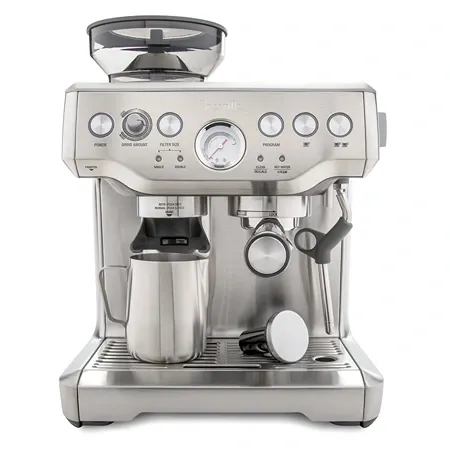
Best espresso machine to start with
Breville Barista Express
A built-in grinder, pressure gauge, and steam wand in one machine, so you can pull shots and steam milk from day one.
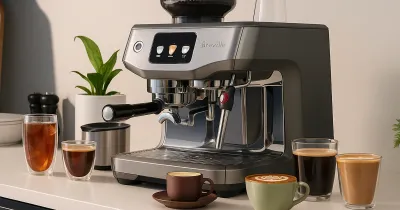
The Breville Barista Express is the classic first espresso machine because it includes a burr grinder, which you’d otherwise have to buy separately, plus a steam wand for milk drinks. See our full Breville Barista Express review, and how it compares with the Barista Pro and the Bambino Plus.
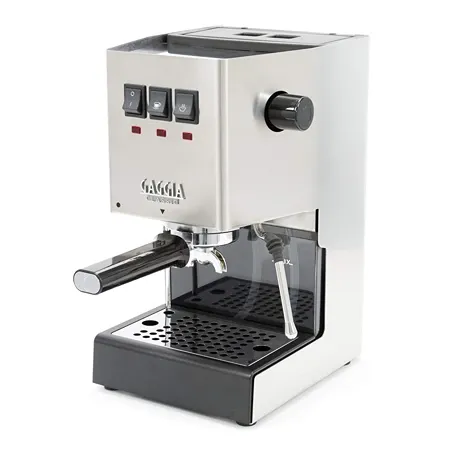
Best budget espresso machine
Gaggia Classic Pro
No-frills semi-automatic with commercial-grade components, fast heat-up, and reliable performance.
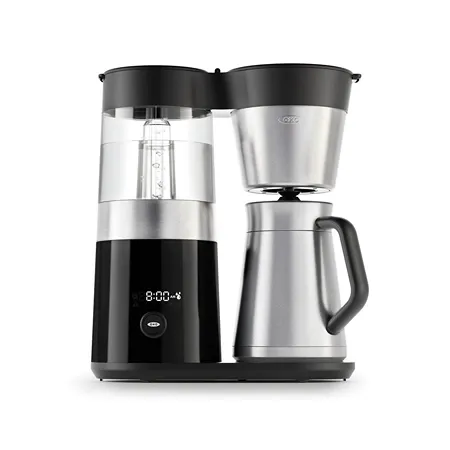
Best drip coffee maker
OXO Brew 9-Cup Coffee Maker
A programmable drip brewer with a thermal carafe, balanced brewing, and useful automation for most households.
The OXO Brew 9-Cup is our top drip pick: it’s programmable, brews a well-balanced pot, and keeps it hot in a thermal carafe instead of on a hot plate. For a handmade upgrade, the Technivorm Moccamaster is a long-lasting classic.
For more options, see our guides to the best home espresso machines and the best coffee makers.
Espresso vs. Coffee FAQ
Does espresso have more caffeine than coffee?
Per ounce, yes: about 63 mg vs. about 12 mg. Per serving, no: a 1-ounce shot has about 63 mg, while an 8-ounce cup of drip coffee has about 95 mg.
How much caffeine is in a double shot of espresso?
About 126 mg in a 2-ounce double, by USDA’s average. Starbucks lists 150 mg for its doppio.
How many ounces is a shot of espresso?
A single shot is about 1 ounce (30 mL) and a double about 2 ounces. Starbucks’ solo is 0.75 ounces.
Is espresso stronger than coffee?
It tastes stronger and has more caffeine per ounce, but a normal serving of drip coffee usually has more total caffeine.
Can I make espresso with regular coffee beans?
Yes. Espresso is a brewing method, not a bean. Grind the beans fine, like table salt, and use an espresso machine. “Espresso roast” just means a blend designed to taste good as espresso.
Is cold brew stronger than espresso?
Per serving, often yes. A grande Starbucks Cold Brew has 205 mg of caffeine, more than a doppio (150 mg) but less than a grande brewed coffee (315 mg).