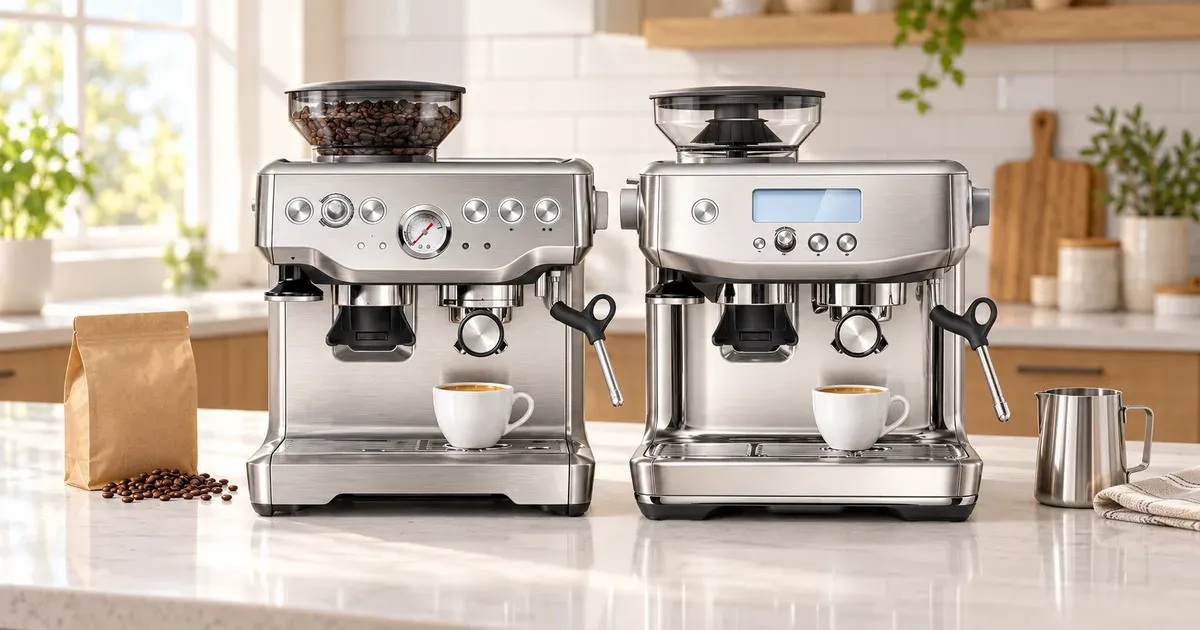
The Breville Barista Express and Barista Pro are two of the most popular home espresso machines with a built-in grinder. Both grind, dose, and brew in one unit, use the same 54 mm portafilter, and have a manual steam wand for milk. The Pro costs about $150 more and changes three things: how fast it heats up, how finely you can adjust the grinder, and how you control it.
The short answer: buy the Barista Pro if you want a faster machine. Its ThermoJet heater is ready in 3 seconds, its grinder has 30 settings instead of 16, and it comes with a two-year warranty. Buy the Barista Express if you want to save money or like learning with its analog pressure gauge. It makes the same style of espresso, and it has a much longer track record, with nearly 28,000 Amazon ratings.
Barista Express vs. Barista Pro specs
| Spec | Barista Express (BES870XL) | Barista Pro (BES878) |
|---|---|---|
| Price | $699.95 | $849.95 (about $825 on Amazon) |
| Heating system | Thermocoil | ThermoJet, ready in 3 seconds |
| Temperature control | PID | PID |
| Grinder | Steel conical burrs, 16 settings | Steel conical burrs, 30 settings |
| Controls | Buttons, dials, and an analog pressure gauge | LCD screen with buttons and a dial |
| Shot control | Single, double, or manual | 1 and 2 cup volumetric, or manual |
| Portafilter | 54 mm | 54 mm |
| Water tank / bean hopper | 67 oz / 1/2 lb | 67 oz / 1/2 lb |
| Size (W x D x H) | 15.9 x 13.1 x 12.4 in. | 16.1 x 13.8 x 13.1 in. |
| Weight | 22.1 lb | 20.9 lb |
| Warranty | 1 year | 2 years |
Specs and list prices are from Breville’s US site.
Best value
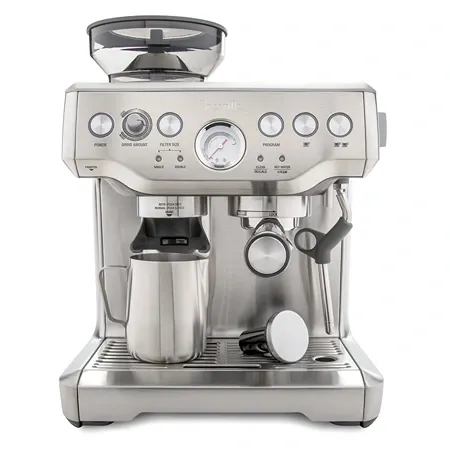
Breville Barista Express
Breville's classic grind-to-cup espresso machine, with a 16-setting grinder, PID temperature control, and a pressure gauge.
Best for speed
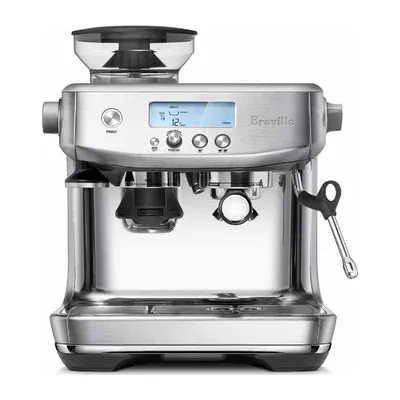
Breville Barista Pro
A faster Barista with 3-second ThermoJet heating, a 30-setting grinder, an LCD screen, and a two-year warranty.
Price: The Express Costs $150 Less
Breville lists the Barista Express at $699.95 and the Barista Pro at $849.95. On Amazon in October 2026, the Express sold for $699.95 from Amazon itself, and the Pro for about $825 from a third-party seller. Both often go on sale, so the gap can shrink.
Heat-Up and Speed: The Pro’s Biggest Advantage
The Pro’s ThermoJet heating system reaches brewing temperature in 3 seconds, according to Breville. That means you can turn it on and pull a shot almost right away, and it’s quicker to switch to steaming milk. The Express uses Breville’s older Thermocoil system, which needs more time to warm up before your first shot.
Both machines use PID temperature control to hold the water at a steady temperature during extraction, so once they’re warm, the shots themselves are similarly consistent. If you make one drink in the morning and don’t mind waiting, the Express’s slower start matters less. If you make several milk drinks in a row, the Pro saves real time.
Grinder: 30 Settings vs. 16
Both have built-in grinders with steel conical burrs and dose control. The Pro’s grinder has 30 grind settings, compared with 16 on the Express, and Breville says it uses Baratza European precision burrs. More settings means smaller steps between them, which makes it easier to fine-tune a shot when you switch beans.
That matters because grind size is the main thing you adjust to dial in espresso. A finer grind slows the shot down, and a coarser one speeds it up. With fewer, bigger steps, the Express can make it harder to land exactly where you want with some beans.
Controls: Pressure Gauge vs. LCD Screen
The Express uses physical buttons, a grind-amount dial, and an analog pressure gauge on the front. The gauge shows the pressure during each shot, which is useful feedback when you’re learning to dial in, since a shot that’s too low or too high pressure points to a grind that’s too coarse or too fine.
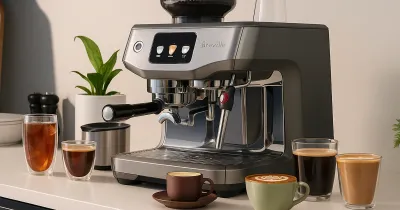
The Pro replaces the gauge with an LCD screen that shows your grind setting and shot settings and includes a shot timer. It also offers 1 and 2 cup volumetric control, so it can stop the shot automatically at a set volume. Some people prefer the gauge’s simple feedback, and others prefer the screen’s precise settings. Neither changes the espresso itself.
Milk Frothing
Both machines have a manual steam wand for texturing milk, so making lattes and cappuccinos takes the same practice on either one. The difference is speed: the Pro’s ThermoJet gets to steaming temperature faster, so you spend less time waiting between pulling a shot and steaming milk.
Size, Build, and Warranty
Both are brushed stainless steel machines with a 67-ounce water tank and a half-pound bean hopper. The Pro is slightly larger, at 16.1 by 13.8 by 13.1 inches, but a little lighter, at about 21 pounds to the Express’s 22.
The Pro comes with a two-year limited warranty, double the Express’s one year. For a machine with a grinder, pump, and heater, that extra year is worth having.
Where the Barista Express Impress Fits
Breville also sells the Barista Express Impress for $799.95, between the two. It keeps the Express’s Thermocoil heating and pressure gauge but adds assisted tamping with a lever that tamps and finishes with a 7-degree twist, a dose-level indicator, automatic dose correction for the next shot, and 25 grind settings. It also has a two-year warranty.
Choose the Impress if tamping is the part of espresso you find hardest or messiest. Choose the Pro if you care more about speed.
Which Should You Buy?
- Buy the Barista Pro if you want a machine that’s ready in seconds, finer grind adjustment, an LCD screen, and a two-year warranty.
- Buy the Barista Express if you want to save about $150, like the pressure gauge for learning, and don’t mind a slower warm-up.
- Buy the Barista Express Impress if you want help with tamping and dosing.
- Buy the Bambino Plus if you mostly make milk drinks and want automatic frothing in a smaller machine. See our Bambino Plus vs. Barista Express comparison.
For our take on the original, see our Breville Barista Express review, and for other options, including machines without a built-in grinder, see our guide to the best home espresso machines.