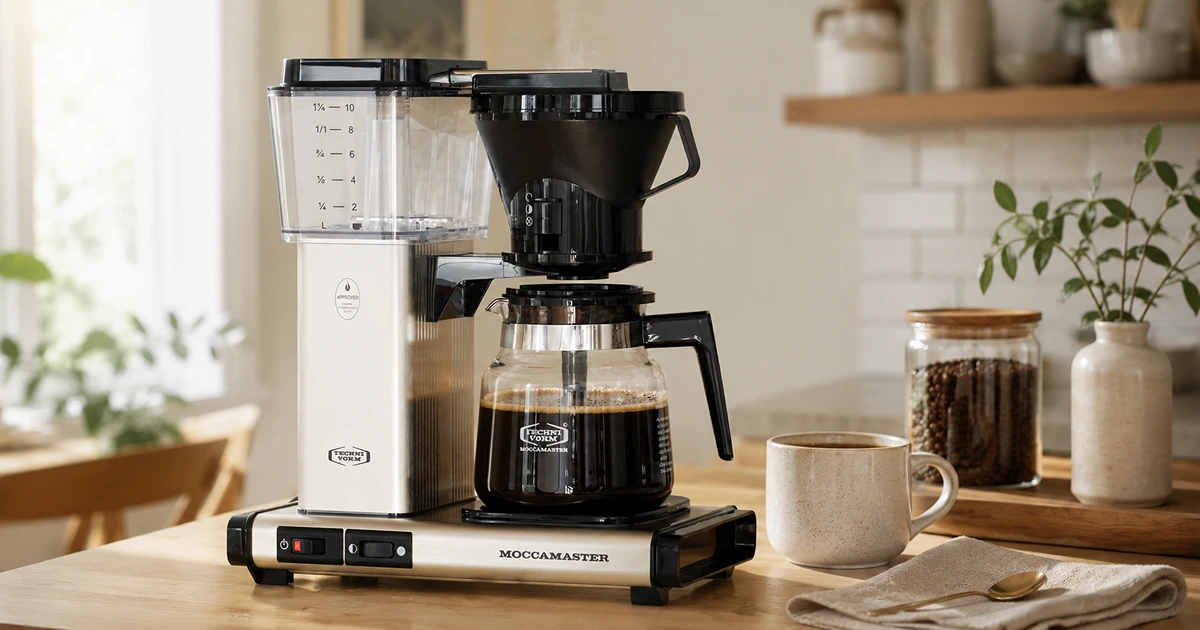

A coffee maker has to fit the way you actually drink coffee, not the routine you imagine adopting someday. A programmable drip machine makes sense when a full pot needs to be ready before breakfast. A French press rewards a few minutes of attention with a heavier cup, while a cold-brew maker trades speed for a batch of concentrate that can last through the week. Capsule machines prioritize consistency and cleanup, but every serving costs more and creates more waste than brewing with ground coffee.
The most useful points of comparison also change with the brewing method. For electric drip brewers, temperature control, water distribution, batch size, carafe design, and cleaning matter more than a long settings menu. Manual brewers should be judged by filtration, capacity, breakability, and how much work they add after the coffee is poured. Small reservoirs and limited cup sizes are acceptable on a compact capsule machine, but only if those limits suit the buyer’s routine.
We looked for coffee makers that brew well and make sense in everyday use. No single machine suits every routine, so each pick is meant for a particular way of making coffee. The tradeoffs matter too, whether that means giving up counter space, convenience, speed, or control.
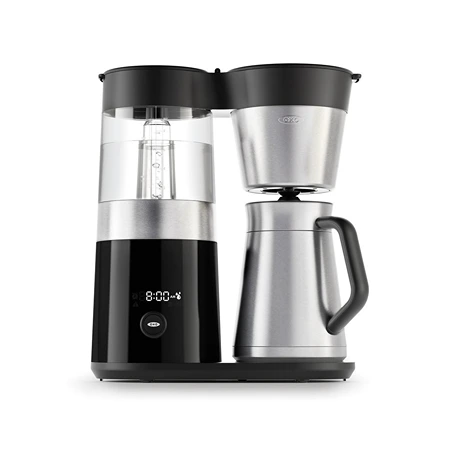
OXO Brew 9-Cup Coffee Maker
Best Overall Option
A programmable drip brewer with a thermal carafe, balanced brewing performance, and useful automation for most households.
The OXO Brew 9-Cup Coffee Maker earns the broadest recommendation because it combines capable brewing with features that make sense on an ordinary weekday. It can prepare a smaller two-to-four-cup batch or a full 40-ounce pot, and its wake-up timer handles the night-before setup that many buyers expect from an automatic machine. The double-wall thermal carafe keeps coffee warm without relying on a hot plate, which avoids continuously heating the finished brew.
Its brewing system is more deliberate than the simple heating tube in a basic drip machine. A cone-shaped basket takes standard number 4 paper filters, the showerhead spreads water across the grounds, and the machine adjusts the cycle for the selected batch size. The current 8710100 model is recognized by the Specialty Coffee Association and includes a short pause-and-pour window, a freshness timer, and a descaling indicator.
Professional evaluations consistently describe the coffee as balanced and full flavored, with stable brewing temperatures and good repeatability from one pot to the next. That consistency matters more than a choice of vaguely labeled strength modes. The OXO does not provide extensive manual control, but it gives most coffee drinkers a reliable starting point without asking them to manage temperature or bloom timing themselves.
Daily operation centers on one dial and display, though the interface takes a little familiarity when setting the clock or automatic start time. The carafe pours cleanly and feels secure in the hand. Removable pieces such as the brew basket and mixing tube are straightforward to rinse, and the machine signals when a deeper descale is due rather than leaving the schedule entirely to memory.
Subscribe to Product Bible
Stay updated with the latest product reviews, buying guides, and expert recommendations. Fresh advice on the best things we've researched, tested, and reviewed, sent to your inbox weekly.
Want to know more about how we handle your data or opt out of marketing emails? Check out our Privacy Policy. If you have any questions, we're always here to help.
Cleaning the carafe is the main ownership annoyance. Its narrow opening is too small for many hands, it is not dishwasher safe, and the lid and internal mixing tube need more attention than a quick rinse. The machine is also 17.2 inches tall, so opening the water-tank and basket lids beneath low cabinets may require pulling it forward. At 15 by 8.3 inches across the counter, it is narrow but not especially shallow.
Those drawbacks are reasonable for buyers who want a full-size programmable brewer and prefer a thermal carafe. The 9-Cup is not the least expensive choice here, nor does it offer the repairability and hands-on brew control of the Moccamaster. Its stronger balance of automation, coffee quality, batch flexibility, and everyday usability makes it the safest choice for households that brew drip coffee most mornings.
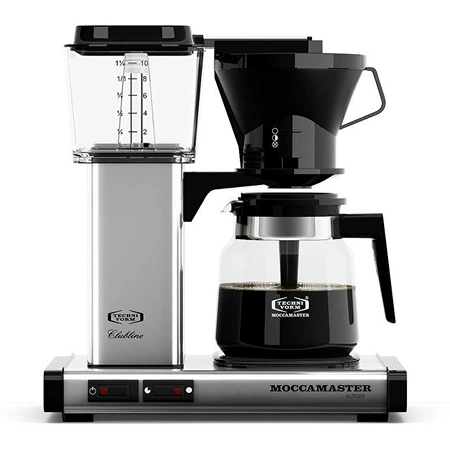
Technivorm Moccamaster KB
Best Upgrade Option
A fast, repairable 40-ounce brewer with manual flow control, stable brewing temperatures, and a five-year warranty.
Longevity and direct control, rather than automation, are the reasons to spend more on the Technivorm Moccamaster KB. This 40-ounce glass-carafe brewer is built around a copper boiling element and a manual-adjust brew basket. It forgoes a clock, scheduled brewing, strength presets, and completion alerts, so the higher price pays for a focused brewing system and a product designed to remain serviceable.
The KB heats water to the 196 to 205 degree Fahrenheit range specified by the manufacturer and can brew a full carafe in about four to six minutes. Its nine-hole outlet arm pulses water over a cone-shaped bed of coffee. A three-position switch on the basket lets the user keep the outlet open for a full batch, restrict the flow for a smaller amount, or close it to extend steeping and stop the drip.
That manual basket is useful, but it is not set-and-forget convenience. Leaving the outlet closed can overflow the filter, and removing the glass carafe does not automatically stop the coffee. Buyers willing to watch the first few brews can use the control to improve smaller batches or lengthen contact time. Anyone who wants to press a button and walk away will find the simpler automation on the OXO easier to live with.
The glass carafe sits on an independently heated plate with high and low settings that hold coffee between 175 and 185 degrees Fahrenheit. In the US version, the brewer and hot plate shut off after 100 minutes. A glass carafe is easy to see into and clean, but it is breakable, and coffee left on any hot plate will gradually lose freshness. The thermal-carafe KBT is the more suitable sibling for buyers who carry coffee away from the kitchen.
Repairability gives this upgrade a practical advantage over feature-heavy appliances that become disposable when a sensor or proprietary part fails. Moccamaster sells replacement reservoirs, outlet arms, brew baskets, lids, switches, and carafes, and it offers repair service beyond the warranty period. New brewers carry a five-year warranty, which is notably longer than the coverage on most electric coffee makers.
The KB is worthwhile for frequent drip-coffee drinkers who value fast brewing, accessible parts, and the ability to intervene in extraction. It is harder to justify for someone who mainly wants a programmable morning pot, because the added cost does not buy more convenience. Here, the upgrade is better construction and ownership support, not a longer feature list.
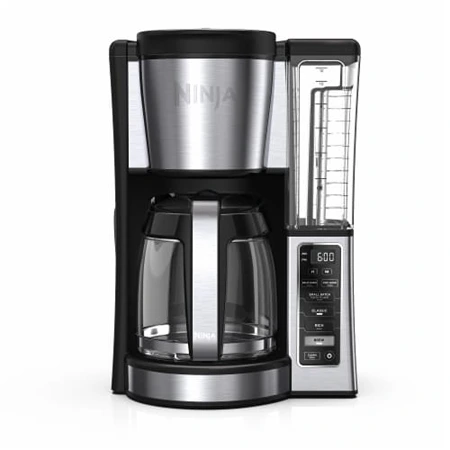
Ninja CE251 Coffee Maker
Best Budget Option
A practical 12-cup brewer with a removable reservoir, programmable start time, two brew styles, and an adjustable warming plate.
The Ninja CE251 12-Cup Programmable Coffee Brewer puts useful household features ahead of premium materials. Its 60-ounce removable water reservoir, 24-hour delay brew, Classic and Rich settings, and adjustable warming plate cover the needs of a family or shared kitchen at a lower price than the certified brewers above. It remains available through major retailers even though Ninja now sells newer, larger drip models as well.
A removable tank is a small design choice with a large effect on daily use. It can be carried to the sink and filled without pouring water past the open lid of the machine, and the clear markings make batch size easy to judge. The brew basket accepts a permanent filter or number 4 paper filters, while the glass carafe has a brew-through lid that stays in place during pouring.
The machine brews at two flavor settings rather than offering fine temperature or flow control. Classic is the straightforward choice for most pre-ground coffee, while Rich uses a more concentrated cycle that holds up better to milk. Professional testing places the CE251 in acceptable rather than exceptional territory for extraction, but it reliably produces hot coffee and handles a full household batch without complicated setup.
Speed is a compromise. Ninja’s manual allows roughly 12 to 15 minutes for a full carafe, so this is not the machine to buy when the shortest possible cycle matters. The programmable start time offsets that wait for predictable mornings, and a mid-brew pause allows a quick cup before the pot is finished. The warming plate can be set to keep the carafe hot for up to four hours, though flavor is better when coffee is consumed sooner.
Most removable brewing parts are dishwasher safe, which simplifies cleanup compared with a narrow thermal carafe. The glass pot is easier to scrub but can break, and it loses heat quickly once removed from the plate. Owners also have to accept more plastic in the body and brewing assembly than they would get from the metal-heavy Moccamaster.
This is a budget recommendation because it performs the essential job well and includes conveniences that are easy to use, not because it matches the flavor control or construction of a premium brewer. Buyers give up faster brewing, a thermal carafe, long warranty coverage, and stronger repair support. In return, they get a large, programmable machine that is easy to fill, clean, and operate every day.
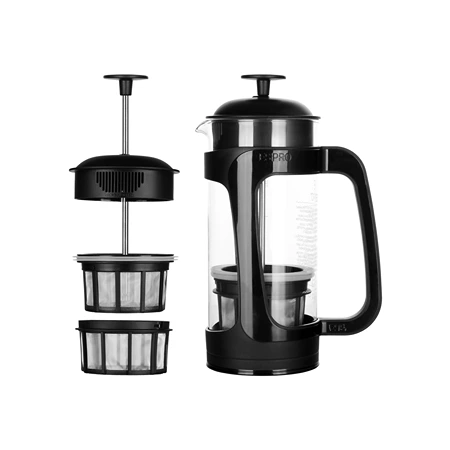
Espro P3 French Press
Best French Press
A glass French press whose dual micro-filter reduces sediment and separates brewed coffee from the grounds after plunging.
Sediment is the familiar cost of French press coffee, and the Espro P3 French Press addresses it more effectively than a standard single-screen plunger. Two nested micro-filters trap fine grounds while an air pocket created during plunging separates most of the brewed coffee from the coffee bed. The result retains the body associated with immersion brewing but leaves noticeably less sludge in the cup.
The linked 32-ounce version uses an extra-thick borosilicate glass beaker held inside a polypropylene frame. Its usable minimum batch is 24 ounces, so it is better suited to two or more mugs than to a small single serving. The filter assembly is stainless steel, and optional paper filters are available for people who want to remove more oils and fine particles.
Brewing remains simple: add coarse grounds, pour hot water, steep, and press. The advantage of the filter seal becomes clearer after plunging because extraction slows substantially instead of continuing unchecked while a second cup sits in the press. Professional reviewers consistently find the P3’s coffee cleaner than the brew from conventional French presses, though no reusable metal filter removes every trace of sediment.
The same filter that improves the cup adds work at the sink. Its two baskets need to be separated and rinsed so grounds do not remain trapped between them, and some liquid stays below the filter with the spent coffee. Cleanup is still manageable, but a basic press with one mesh screen has fewer crevices and wastes slightly less finished coffee.
Glass is the other clear compromise. The protective frame reduces exposed surface area, and replacement beakers and filters are sold separately, but the vessel can still crack if it is dropped or struck against a hard sink. A double-wall stainless steel press will hold heat longer and tolerate rough handling better, though it usually costs more and prevents you from seeing the brew.
Choose the P3 when you enjoy the weight and simplicity of immersion coffee but dislike the muddy final sips of a traditional press. It is not the right tool for a single small mug or for someone who wants an unbreakable travel brewer. For a household batch with cleaner texture, its filter design creates a meaningful improvement without complicating the brewing technique.
OXO Good Grips Cold Brew
Best Cold Brew Option
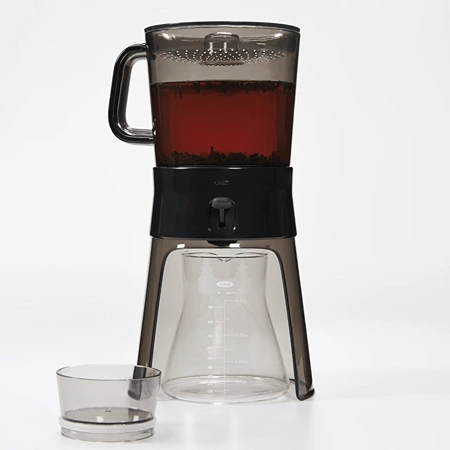
A full-size cold-brew system with a reusable mesh filter, controlled drain switch, and glass storage carafe for concentrate.
Batch preparation is where the OXO Good Grips Cold Brew Coffee Maker proves its value. Instead of balancing a filter bag over a pitcher or pouring a jar of grounds through a strainer, this system keeps steeping, draining, portioning, and refrigerator storage within one set of parts. It suits regular cold-brew drinkers who are willing to use substantial amounts of coffee in exchange for several servings of concentrate.
The brewing container holds 40 ounces of water and sits above a borosilicate glass carafe. OXO’s perforated Rainmaker lid distributes water across the grounds, while a reusable stainless steel mesh filter contains most of the sediment. After a 12-to-24-hour room-temperature steep, a lever releases the concentrate into the carafe and automatically stops the flow if the carafe is removed.
This is a concentrate brewer, not a 40-ounce ready-to-drink pitcher. The recommended recipe uses 10 ounces of coarse coffee with 40 ounces of water, and the grounds retain some of that liquid. OXO suggests diluting roughly two ounces of concentrate with four to six ounces of water or milk. Actual yield and strength vary with the beans, grind, steep time, and dilution, so buyers should expect to adjust the recipe rather than chase one fixed serving count.
Its glass carafe has measurement markings and a silicone-sealed stopper, which makes portioning and refrigerated storage convenient. The brewing assembly also nests for storage once it is clean. At 14.7 inches high and 9.5 inches wide and deep, however, the full-size model occupies meaningful counter space while steeping. OXO’s compact version is a better fit when cabinet and refrigerator room are tight.
Cleanup is more involved than the calm brewing process suggests. Wet coarse grounds are heavy, the mesh filter benefits from a prompt rinse, and most of the assembly requires hand washing. Owners also report that a grind that is too fine can slow or stall drainage. Paper filters can reduce sediment and ease cleanup, but they add an ongoing consumable.
The full-size OXO is a strong specialized choice for people who make cold brew every week and want a tidy way to drain and store concentrate. It does not replace a hot coffee maker, it takes half a day or more to produce a batch, and it uses much more ground coffee per prepared ounce than drip brewing. Those costs are reasonable when smooth, diluted concentrate is a regular part of the household routine.
Nespresso Essenza Mini
Best Pod Espresso Option
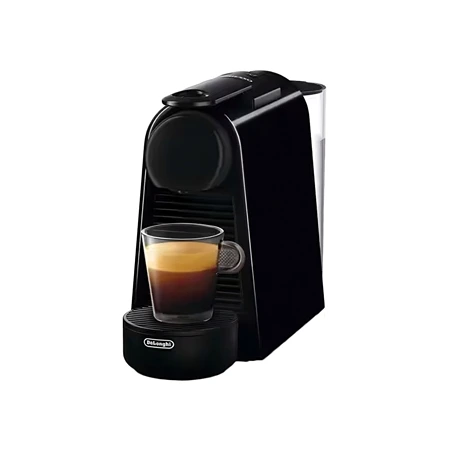
A narrow Original-line capsule machine with two programmable drink sizes, fast heat-up, and minimal daily cleanup.
A width of just 3.3 inches gives the Nespresso Essenza Mini a legitimate advantage in a crowded kitchen. The US C30 version makes 1.35-ounce espresso and 3.75-ounce lungo servings from Nespresso Original capsules, using two programmable buttons and a roughly 25-second heat-up. It is built for speed and consistency, not for reproducing the control or texture of a traditional espresso setup.
The Original capsule system offers a broad selection of Nespresso and compatible third-party coffees. Insert a capsule, select the volume, and the machine stops automatically. That repeatable process is useful in a dorm, office, or small apartment where a grinder, loose grounds, and several minutes of cleanup would discourage regular use.
Its small body creates equally small capacities. The removable tank holds 20.3 ounces, and the used-capsule bin fits about six capsules. Frequent drinkers will refill and empty both often. Taller cups may require removing the drip tray, which leaves less protection from stray drips, and the machine has no milk frother unless it is purchased as part of a separate bundle.
Maintenance is light but not nonexistent. The tank, capsule container, and drip tray should be emptied and rinsed regularly, while the coffee outlet needs an occasional wipe. Descaling takes about 15 minutes and becomes more important in hard-water areas. The machine shuts off after nine minutes of inactivity, and Nespresso covers the US model for two years.
Capsule cost is the more consequential tradeoff. Each drink costs more than a comparable serving made from beans, and every brew leaves an aluminum capsule to recycle or discard. The two programmed volumes also mean this is not a full-mug coffee maker. A lungo is larger than an espresso, but it remains far smaller than a typical cup of drip coffee.
The Essenza Mini makes sense for someone who wants a quick espresso-style base for an Americano or milk drink and has almost no counter space to spare. Buyers who routinely serve several people, want large coffees, or enjoy adjusting grind, dose, and extraction should choose another format. Within its narrow purpose, the Mini is easy to understand and unusually easy to accommodate.
Start with the drink you make most often, then work backward to the machine. A large drip brewer is wasted on one afternoon cup, while a compact capsule machine becomes frustrating when several people need coffee at once. Batch size, warm-holding method, reservoir access, and cleanup will affect the routine every day. Specialty certifications and advanced filters matter, but only after the format matches the household.
The less visible ownership details deserve equal attention. Glass carafes are easy to scrub but breakable. Thermal carafes preserve heat without a hot plate but usually need a bottle brush. Manual brewers have fewer electronic failure points, yet they demand more active preparation. Proprietary capsules remove mess from the counter while shifting cost and waste into every serving.
Before buying, measure the space with cabinet doors open and decide how long coffee normally sits before it is served. Choose the simplest brewer that handles that real routine well. A machine that is pleasant to fill and clean will do more for daily coffee than a long feature list that goes untouched.