Breville and De’Longhi sell more home espresso machines than almost anyone, and they overlap at nearly every price. Their strengths are different. Breville makes the best semi-automatic machines for people who want to learn to pull shots and steam milk themselves, with fast heat-up, precise temperature control, and well-designed all-in-one machines with grinders. De’Longhi owns the cheap end with its Stilosa and Dedica, and it’s the brand to buy for super-automatic machines that grind, tamp, and brew at the touch of a button.
The short answer: if you want to make espresso by hand and get better at it, buy a Breville: the Bambino ($299.95) without a grinder or the Barista Express ($699.95) with one. If you want espresso and coffee at the push of a button with no learning curve, buy a De’Longhi Magnifica Evo ($549.95). On a tight budget, the De’Longhi Stilosa ($149.95) is the cheapest decent way to start.
Breville vs. De'Longhi at each price
| Spec | Breville | De'Longhi |
|---|---|---|
| Under $200 | None | Stilosa, $149.95 |
| Compact, no grinder | Bambino $299.95, Bambino Plus $499.95 | Dedica Duo $249, Classic Signature about $226 |
| Built-in grinder | Barista Express $699.95 | La Specialista Arte Evo $599 |
| Grinder plus assisted tamping | Barista Express Impress $799.95 | La Specialista Opera $799.95 |
| Push-button, bean to cup | Oracle Jet (automated, still uses a portafilter) | Magnifica Evo $549.95, Rivelia, Eletta Explore |
| Heating | ThermoJet (3 seconds) on most models; PID control | Thermoblock on most models |
| Portafilter | 54 mm on most models, 58 mm on high-end | 51 mm on most semi-automatics |
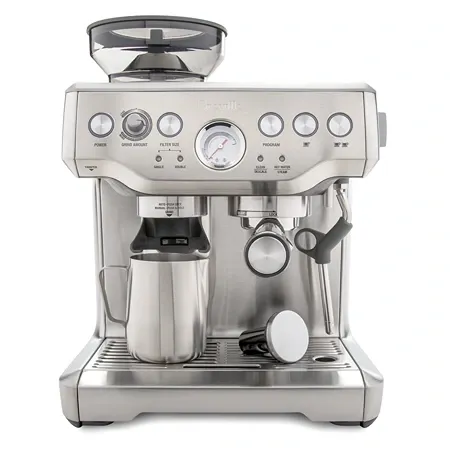
Best breville for most people
Breville Barista Express
Breville's classic grind-to-cup espresso machine, with a 16-setting grinder, PID temperature control, and a pressure gauge.
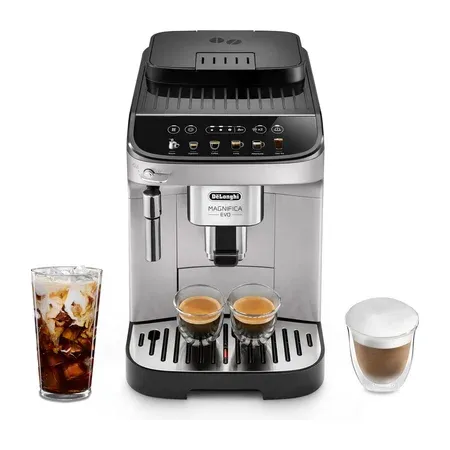
Best De'Longhi for most people
De'Longhi Magnifica Evo
A super-automatic machine with a 13-setting burr grinder, five one-touch drinks, and a manual milk frother.
Two Different Philosophies
Breville designs most of its machines around the classic café workflow: you grind, dose into a portafilter, tamp, lock it in, and pull the shot, then steam milk with a wand. Breville’s job is to make each step easier and more consistent. Its machines heat up fast, hold brew temperature with digital (PID) control, and many add guidance like pressure gauges, dosing help, and automatic milk frothing. You still make the drink, which means a learning curve and more control.
De’Longhi sells that kind of machine too, but its biggest strength is the super-automatic: you press a button, and the machine grinds beans, tamps, brews, and dumps the used puck into a bin. There’s no portafilter to handle and nothing to learn, which is why super-automatics are popular in offices and with people who just want a good latte every morning. The trade-off is less control and espresso that’s good rather than great.
Entry Level: Stilosa vs. Bambino
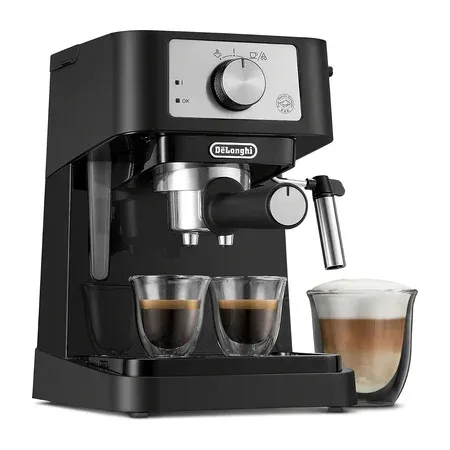
The De’Longhi Stilosa ($149.95) is the cheapest espresso machine worth considering. It has a 15-bar pump, a stainless steel boiler, a manual steam wand, and a 51 mm portafilter with pressurized baskets that make it forgiving with pre-ground coffee. With nearly 14,000 Amazon ratings, it’s a popular first machine. It takes longer to heat up and steam than a Breville, and its plastic tamper and pressurized baskets limit how good the espresso can get.
The Breville Bambino ($299.95) costs twice as much and is a big step up. Its ThermoJet heater is ready in about 3 seconds, PID temperature control keeps brew water steady, it uses low-pressure pre-infusion, and it has a 54 mm portafilter with both pressurized and standard baskets, so you can grow into it. The Bambino Plus ($499.95) adds an automatic steam wand that textures milk to the temperature and foam level you pick.
Winner: Breville, if you can spend $300. The Stilosa if you can’t.
Compact Machines: Dedica vs. Bambino Plus
De’Longhi’s Dedica line is famously slim, about 6 inches wide, and fits almost anywhere. The newer Dedica Duo ($249) adds a digital touch display and presets for espresso, double espresso, and a cold brew mode. Its steam wand is manual. The Classic Signature (about $226) is a similar compact machine with a two-setting steam wand.
The Bambino Plus is also compact but costs about twice as much. What you get is better heat-up, PID control, and the automatic milk wand, which is the easiest way for a beginner to make good latte foam.
Winner: Breville Bambino Plus for milk drinks, Dedica for the narrowest counter space and the lower price.
Built-In Grinder: La Specialista vs. Barista Express
This is the most direct matchup.
- Breville Barista Express ($699.95): a conical burr grinder with 16 settings that doses straight into the portafilter, PID temperature control, a pressure gauge, and a manual steam wand. It’s one of the best-selling espresso machines ever, with nearly 28,000 Amazon ratings. The Barista Express Impress ($799.95) adds assisted tamping and automatic dose adjustment.
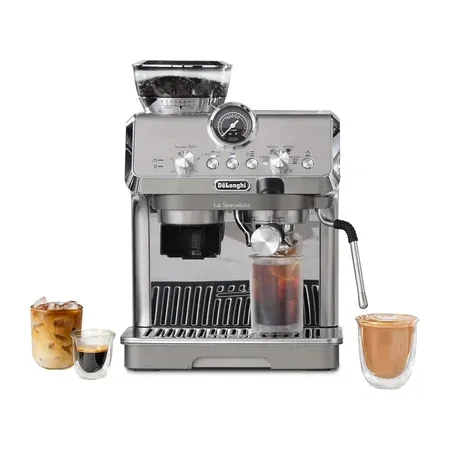
- De’Longhi La Specialista Arte Evo ($599): a conical burr grinder with 8 settings, a commercial-style steam wand, preset recipes, and Cold Extraction, De’Longhi’s cold brew mode, which makes cold brew in under 5 minutes. The La Specialista Opera ($799.95) has 15 grind settings and Smart Tamping, a lever that tamps for you.
The Barista Express gives you finer control over grind size, temperature, and extraction, plus a larger community of recipes and troubleshooting guides. The La Specialista Arte Evo costs $100 less, adds a cold brew mode, and has fewer grind steps, which makes dialing in a new coffee harder. Neither grinder rivals a good standalone grinder, but both are fine for most beans.
Winner: Breville Barista Express for espresso quality and control; La Specialista Arte Evo if you drink a lot of iced coffee and want to save $100. Our Bambino Plus vs. Barista Express and Barista Express vs. Barista Pro comparisons cover the Breville side in detail.
Push-Button Machines: Magnifica Evo vs. Oracle Jet
If you don’t want to handle a portafilter at all, De’Longhi wins outright, because Breville doesn’t make a true push-button super-automatic.
The De’Longhi Magnifica Evo ($549.95) grinds whole beans with a 13-setting conical burr grinder, brews espresso, coffee, Americano, iced coffee, or a long coffee at the touch of a button, and has a manual frother for milk. Its brewing unit is removable for rinsing, and most parts are dishwasher-safe. De’Longhi’s higher-end Rivelia and Eletta Explore add automatic milk systems and touchscreen menus.
Breville’s closest answer is the Oracle Jet, which automates grinding, dosing, tamping, and milk texturing but still has you move the portafilter from the grinder to the group head. It makes better espresso than a super-automatic and costs far more. Our best home espresso machines guide covers it.
Winner: De’Longhi for convenience and price.
Build, Reliability, and Support
Both brands make mostly plastic-and-stainless machines at the lower end and use more metal as prices rise. Neither is known for unusually high or low reliability across its whole lineup. A few practical differences:
- Portafilter size. Most Breville machines use 54 mm portafilters, and the high-end ones use the commercial-standard 58 mm. Most De’Longhi semi-automatics use 51 mm. Accessories exist for all three, but the 54 and 58 mm sizes have a larger selection of quality baskets and tampers.
- Super-automatic maintenance. De’Longhi’s push-button machines need regular descaling and brewing unit rinsing. Skipping it is the most common cause of problems.
- Community. The Barista Express and Bambino have enormous online communities, which makes it easy to find dial-in guides and fixes.
Which Should You Buy?
Buy a Breville if:
- You want to learn to make café-style espresso and milk drinks yourself
- You want fast heat-up and stable temperature for better shots
- You’re buying an all-in-one machine with a grinder in the $500 to $800 range
- You want an automatic milk wand that makes latte foam easy (Bambino Plus)
Buy a De’Longhi if:
- You want push-button espresso and coffee with no learning curve (Magnifica Evo)
- You’re spending under $250
- You need the slimmest machine for a small counter (Dedica)
- You drink a lot of iced coffee or cold brew (La Specialista Arte Evo, Dedica Duo)
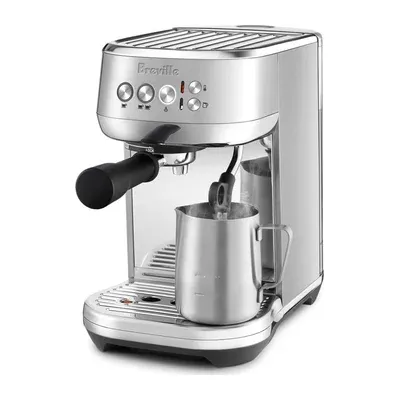
Best compact machine for milk drinks
Breville Bambino Plus
A compact espresso machine with 3-second ThermoJet heating, PID control, and an automatic milk-frothing wand.
Best De'Longhi with a grinder
De'Longhi La Specialista Arte Evo
An espresso machine with a built-in 8-setting burr grinder, a commercial-style steam wand, and a cold brew mode.
Best budget espresso machine
De'Longhi Stilosa
A simple manual espresso machine with a 15-bar pump, stainless boiler, and steam wand for about $150.
Still deciding whether you want espresso at all? See espresso vs. coffee and Nespresso vs. Keurig.
Breville vs. De’Longhi FAQ
Is Breville better than De’Longhi?
For semi-automatic espresso machines, where you pull the shot yourself, Breville is generally better at each price thanks to faster heat-up, PID temperature control, and better-designed all-in-one machines. De’Longhi is better for super-automatic push-button machines and for budget machines under $250.
Is the De’Longhi La Specialista better than the Breville Barista Express?
Not for espresso. The Barista Express has a grinder with more settings and more precise control. The La Specialista Arte Evo costs $100 less and adds a cold brew mode.
Which is easier to use, Breville or De’Longhi?
De’Longhi’s super-automatics, like the Magnifica Evo, are the easiest: press a button. Among semi-automatic machines, Breville’s Bambino Plus is the easiest for milk drinks because its steam wand is automatic.
Are Breville and De’Longhi the same company?
No. They’re separate companies. Breville is Australian and sells its machines as Sage in the UK and parts of Europe. De’Longhi is Italian and also owns Kenwood and makes Braun-branded household appliances.
What is the best cheap espresso machine?
The De’Longhi Stilosa, at about $150, is the best place to start on a tight budget. If you can spend about $300, the Breville Bambino makes noticeably better espresso.
Do De’Longhi machines last?
Yes, with regular care. Descale on schedule and, for super-automatics, rinse the brewing unit weekly. Skipping maintenance is the most common cause of problems.