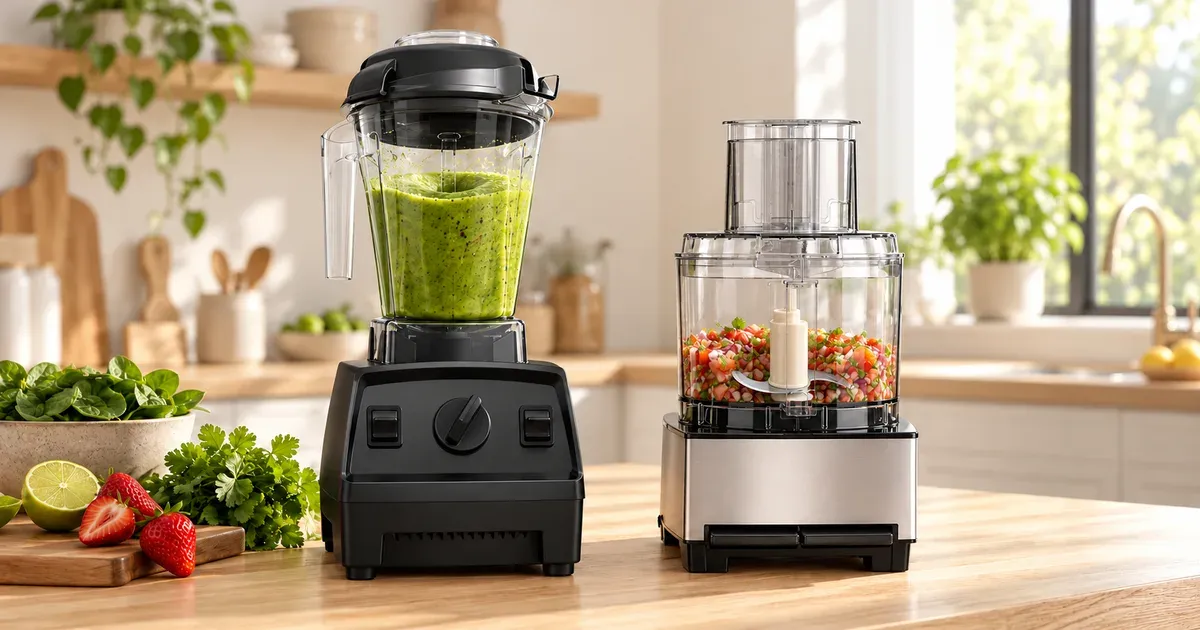
A blender and a food processor both spin a blade at the bottom of a container, but they’re built for opposite results. A blender’s tall, narrow jar and fast blades pull everything into a vortex and turn it smooth: smoothies, soups, sauces, frozen drinks. A food processor’s wide, flat bowl, slower S-shaped blade, and slicing and shredding discs are made to cut food into pieces you can still see: chopped onions, shredded cheese, sliced potatoes, pie dough.
The short answer: if you can drink it, drizzle it, or dip it, use a blender. If you eat it with a fork or spoon, use a food processor. Both Vitamix and KitchenAid use that rule of thumb. Buy a blender if you make smoothies, protein shakes, or pureed soups. Buy a food processor if you do a lot of chopping, shredding, or baking. If you want both, a combo kitchen system costs less than buying them separately.
Blender vs. food processor at a glance
| Spec | Blender | Food processor |
|---|---|---|
| Container | Tall, narrow jar | Wide, flat bowl with a feed tube in the lid |
| Blades | One fixed blade assembly, very fast | Removable S-blade and dough blade, plus slicing and shredding discs |
| Result | Smooth and pourable | Chopped, sliced, shredded, or mixed |
| Liquid | Usually needed to blend | Not needed; limited amount allowed |
| Best for | Smoothies, soups, sauces, frozen drinks, nut milk | Chopping, slicing, shredding, dough, pesto, chunky salsa |
| Can't do well | Slicing, shredding, chopping into even pieces, bread dough | Smooth drinks, crushing ice, large batches of liquid |
| Typical price | $90 to $550 | $70 to $500 |
How They Work
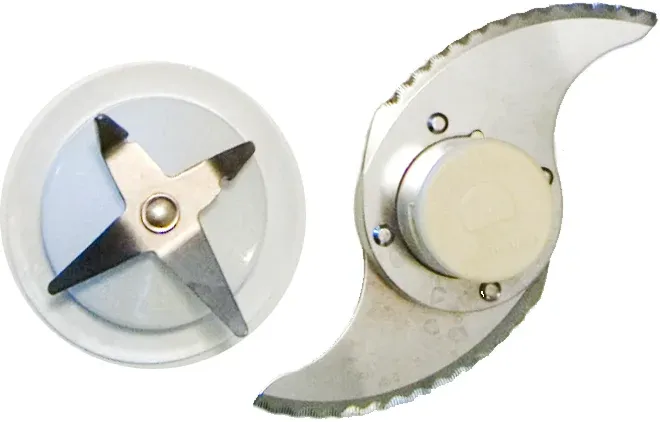
A blender’s blade sits at the bottom of a tall jar and spins very fast. With some liquid in the jar, the spinning creates a vortex that pulls ingredients down into the blade over and over until everything is uniformly smooth. That’s why blenders need liquid, and why they’re better at liquids than solids.
A food processor spins its blade more slowly in a wide bowl, so food gets cut rather than liquefied. Its big advantage is attachments. The S-blade (also called the chopping or multipurpose blade) chops, minces, and purees. A dough blade mixes and kneads. Discs sit at the top of the bowl, right under the feed tube, and slice or shred whatever you push down the tube. That’s how a food processor turns a block of cheese into shreds or a potato into even slices in seconds. A blender can’t do that.
What Each One Does Best
| Task | Blender | Food processor |
|---|---|---|
| Smoothies and shakes | Best choice | No: leaks and stays chunky |
| Crushing ice, frozen drinks | Best choice | No |
| Pureed soup | Smoothest result | Possible: puree the solids, then add a little liquid |
| Nut butter | Small batches, powerful motor only | Works well |
| Hummus | Smoother | Easier to scrape out |
| Pesto, tapenade | Possible | Best choice |
| Chunky salsa | No: turns to juice | Best choice (pulse) |
| Chopping onions, carrots, herbs | No: uneven | Best choice (pulse) |
| Slicing and shredding | No | Only a food processor can |
| Bread and pizza dough | No: can strain the motor | Best choice |
| Pie crust | No | Best choice |
| Grinding raw meat | No: wraps around the blade | Pulse in short bursts |
| Breadcrumbs, cauliflower rice | Possible | Best choice |
Some jobs work in either. Smooth salsa, hummus, and dips come out silkier in a high-powered blender and are easier to scoop out of a food processor.
The Limits in the Owner’s Manuals
The manuals are worth reading before you choose, because a few common uses are restricted.
Hot soup in a blender. Hot liquid makes steam, and steam builds pressure in a sealed jar. That can push the lid off and spray scalding soup. Manufacturers handle this differently:
- Vitamix allows hot liquids in its full-size containers, as long as you don’t fill to the maximum line, latch the lid, and start on the lowest speed before speeding up slowly. A Vitamix can also heat soup by friction: Vitamix says running cold ingredients on high makes them steaming hot in four to six minutes. Its small sealed 20-ounce cups must never hold hot liquid, because the pressure could make them burst.
- Ninja’s current manuals for the Mega Kitchen System and Professional Plus Kitchen System say not to blend hot liquids at all and to cool soups to room temperature first. That’s a real limit if you want to blend soup straight from the pot.
- For soup, an immersion blender is the easy fix: you blend right in the pot, so there’s no transfer and no sealed lid.
Dough in a blender. Vitamix says thick dough can damage its blades and strain the motor, and the narrow jar isn’t made for kneading. Use a food processor or a stand mixer.
Liquid in a food processor. Food processors leak from the center shaft if you overfill them with liquid. Cuisinart’s 14-cup manual allows no more than 3 cups of thin liquid or 6 cups of thick liquid. KitchenAid’s 9-cup manual says to fill no more than two-thirds of the way with liquid.
Dough capacity. Cuisinart’s 14-cup handles up to 5 cups of all-purpose flour (about 2½ pounds of bread dough). KitchenAid’s 9-cup takes up to 3 cups of flour. Ninja says its 8-cup kitchen-system bowls mix up to 2 pounds of dough.
Coffee and grain. KitchenAid says not to grind coffee beans, grains, or hard spices in its food processor. Vitamix sells a separate dry-grains container for grinding grain and coffee.
Can One Replace the Other?
A blender can’t replace a food processor if you slice, shred, chop, or bake. It has no discs, it turns vegetables to mush instead of chopping them evenly, and it struggles with dough.
A food processor can’t replace a blender for smoothies, shakes, frozen drinks, or large batches of soup. Its bowl can’t hold much liquid without leaking, and it doesn’t create the vortex that makes drinks smooth.
If you only want one, pick the one that matches what you cook most often. Smoothie every morning? Blender. Chopping vegetables for dinner every night? Food processor.
Combo Kitchen Systems
A kitchen system shares one motor base between a blender pitcher and a food processor bowl, and usually adds single-serve smoothie cups. The Ninja Mega Kitchen System (BL770) includes a 72-ounce pitcher, an 8-cup processor bowl with chopping and dough blades, and two 16-ounce cups, for about $160 on Amazon. That’s less than most standalone food processors.
The trade-offs: the processor bowl is smaller than a full-size food processor, the BL770 has no slicing or shredding disc, and Ninja’s kitchen systems aren’t meant for hot liquids. Ninja’s pricier Detect Kitchen System (TB401) adds a slice-and-shred disc.
Vitamix sells a 12-cup food processor attachment ($279.95) with slicing and shredding discs, but it only fits Ascent, Ascent X, and Venturist blenders. It doesn’t fit the Vitamix 5200 or the Explorian E310.
What About Mini Choppers and Immersion Blenders?
- A mini chopper is a small food processor, usually about 3 to 3.5 cups, with just a chopping blade. It’s great for one onion, a handful of herbs, garlic, or a small batch of pesto, and it costs $20 to $70. It can’t slice, shred, or make dough. The Hamilton Beach 3-Cup Chopper has more than 37,000 Amazon ratings and costs about $22.
- An immersion blender (or stick blender) is a handheld wand with a small blade at the end. You put it right into the pot or bowl, which makes it the easiest and safest way to puree hot soup. It won’t crush ice or make thick smoothies like a countertop blender.
Which Should You Buy?
Best blender
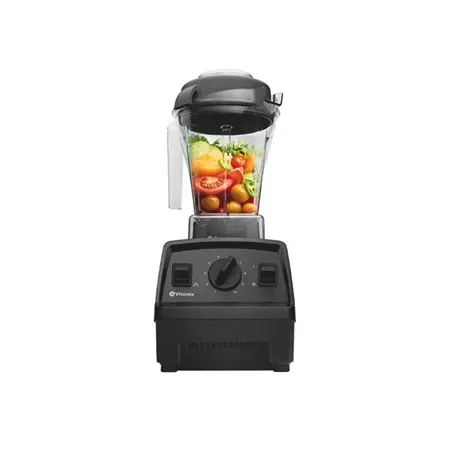
Vitamix Explorian E310
A 2-horsepower blender with a 48-ounce container, 10 speeds, pulse, and a five-year warranty.
The Vitamix E310 is the most affordable full-size Vitamix and the blender to buy if you make smoothies, soups, and sauces. It has a 2-horsepower motor, 10 variable speeds plus pulse, and a 48-ounce container sized for one to three people. Vitamix lists the container as dishwasher-safe, though blending warm water with a drop of soap for 30 to 60 seconds cleans it. Unlike Ninja’s blenders, it can handle hot soup with the precautions above, and it comes with a five-year warranty. Our Vitamix E310 review has more detail, and Ninja vs. Vitamix compares it with the cheaper option.
Best food processor
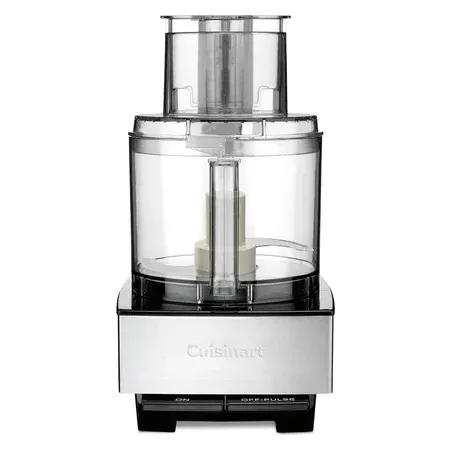
Cuisinart Custom 14-Cup Food Processor
A 720-watt, 14-cup food processor with a chopping blade, slicing and shredding discs, and an extra-large feed tube.
The Cuisinart Custom 14-Cup (DFP-14BCNY) is the classic full-size food processor, with more than 15,000 Amazon ratings at 4.6 stars. Its 14-cup bowl handles big batches of slaw, shredded cheese, or bread dough, and the extra-large feed tube takes whole potatoes and blocks of cheese. It comes with a chopping blade, a 4 mm slicing disc, and a medium shredding disc, and everything except the motor base goes in the dishwasher. Cuisinart covers the motor for five years. It costs about $230 on Amazon, well under its $299.95 list price.
Best budget food processor
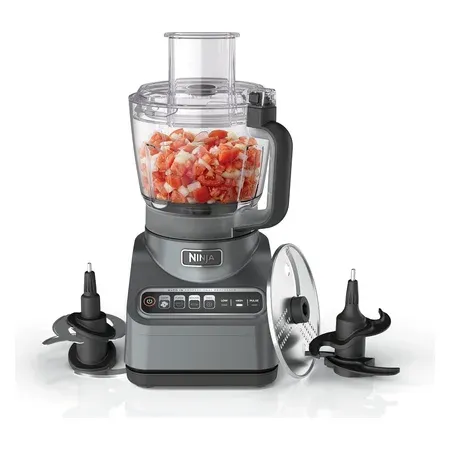
Ninja Professional Plus Food Processor (BN601)
A 9-cup food processor with a 1,000-peak-watt motor, a dough blade, a slicing disc, and four presets.
The Ninja BN601 costs about $100 and covers most of what the Cuisinart does in a 9-cup bowl. It has chopping and dough blades, a slicing disc, four one-touch presets for chopping, slicing, pureeing, and dough, and dishwasher-safe parts. It’s a good fit for smaller households or anyone who wants a food processor without spending $200.
Best blender and food processor combo
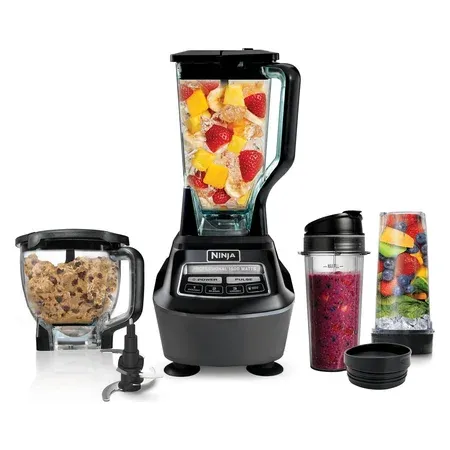
Ninja Mega Kitchen System (BL770)
A 1,500-watt base with a 72-ounce blender pitcher, an 8-cup processor bowl, a dough blade, and two to-go cups.
The Ninja BL770 is the best way to get both for one price. Its 1,500-watt base crushes ice for frozen drinks, the 8-cup bowl chops vegetables and mixes up to 2 pounds of dough, and the to-go cups handle single smoothies. It has more than 43,000 Amazon ratings at 4.7 stars. Skip it if you want to blend hot soup or need slicing and shredding discs.
For more blender picks, see our guide to the best blenders.
Blender vs. Food Processor FAQ
Can I use a blender instead of a food processor?
For smooth things, yes: hummus, dips, smooth salsa, and purees. For chopping, slicing, shredding, or dough, no. A blender turns vegetables into mush instead of even pieces and has no discs.
Can I make a smoothie in a food processor?
Not well. A food processor can’t hold much liquid without leaking from the center, and it doesn’t create a vortex, so frozen fruit stays chunky. Use a blender.
Which is better for hummus?
Both work. A high-powered blender makes it smoother. A food processor makes it easier to scrape out and needs less liquid.
Which is better for nut butter?
A food processor, for most people. A blender can make nut butter only in small batches with a powerful motor, and Vitamix says not to run it more than a minute after the mixture starts moving.
Do I need both?
Only if you regularly make both drinks and chopped or shredded foods. Otherwise, start with the one that matches how you cook, or get a combo kitchen system.