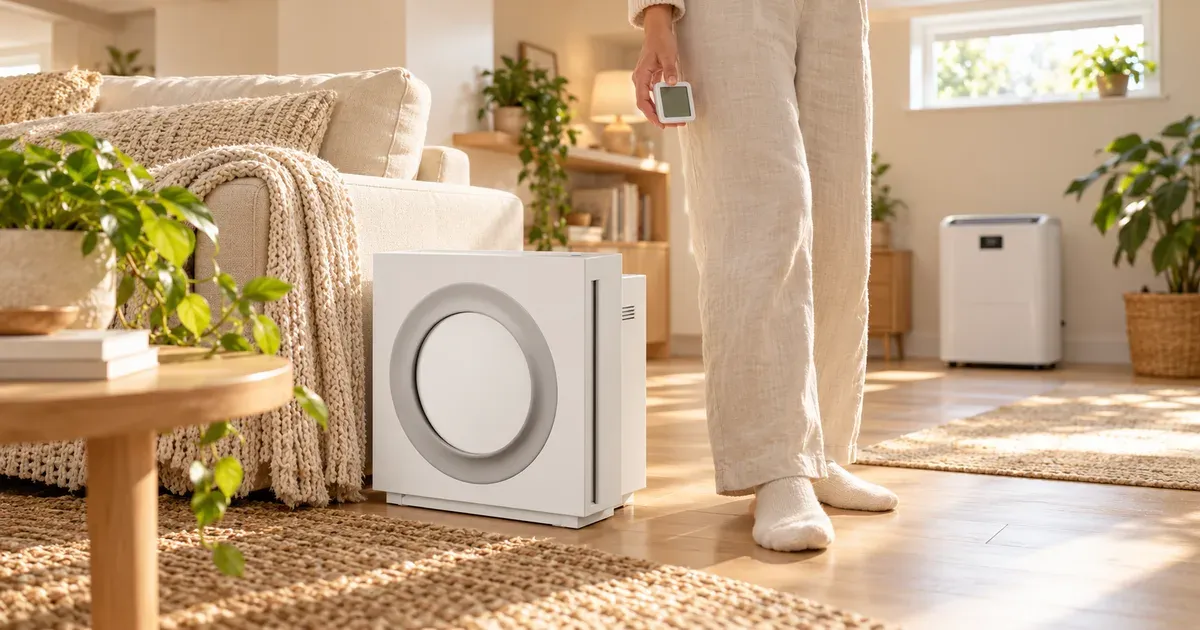
Start with the honest part: an air purifier won’t get rid of mold. Mold grows wherever there’s moisture, on drywall, wood, carpet, and the backs of furniture, and as long as it has water it keeps growing and releasing spores. The only real fix is to stop the moisture, from a leak, condensation, or humid air, and clean up the growth.
What a purifier can do is catch the mold spores floating in the air, along with other allergens, so you breathe fewer of them while you fix the problem and afterward. Mold spores are typically a few microns across, much larger than the 0.3-micron particles a true HEPA filter is tested against, so a HEPA purifier traps them very well. A purifier with plenty of activated carbon also reduces the musty smell.
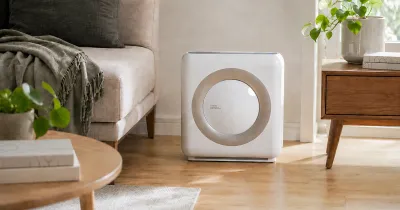
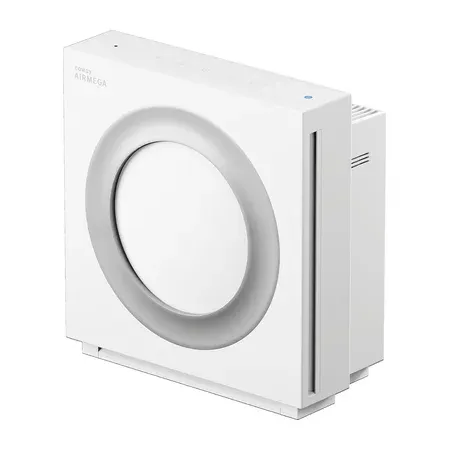
Our top pick is the Coway Airmega Mighty2 (about $270). It pairs a true HEPA filter with a thicker carbon layer than most purifiers its size, cleans a room of about 375 square feet five times an hour, and has a laser sensor that reports larger particles as well as fine ones. For a larger room or basement, the Medify MA-40 moves much more air. On a budget, the Levoit Vital 200S-P ($170) has a similar clean air rating to the Coway. And because moisture is the real problem, we also recommend a dehumidifier.
Our Picks at a Glance
| Product | Best for | Clean air delivery rate | Price |
|---|---|---|---|
| Coway Airmega Mighty2 | Bedrooms and living rooms | 240 CFM (smoke) | About $270 |
| Medify MA-40 | Large rooms, basements | 406 CFM (Medify’s rating) | About $250 |
| Levoit Vital 200S-P | Value | 250 CFM (smoke) | About $170 |
| Midea 50-Pint Cube | Damp rooms and basements | Dehumidifier, 50 pints/day | About $240 |
Best Overall: Coway Airmega Mighty2
Best overall
Coway Airmega Mighty2
True HEPA with a thicker activated carbon layer, a washable pre-filter, and a PM1/PM2.5/PM10 laser sensor.
Coway’s Airmega AP-1512HH was one of the most recommended air purifiers for years, and the Mighty2 is its replacement. It keeps what made the original good, a true HEPA filter, a washable pre-filter, and an automatic mode, and adds a combined HEPA and activated carbon “Max2” filter that Coway says removes more than 99.5% of volatile organic compounds, the gases behind musty and chemical smells.
Its new MegaScan laser sensor measures PM10 along with smaller PM1 and PM2.5 particles. Mold spores mostly fall in that larger range, so the purifier responds to them better than models that only sense fine particles. Its AHAM-verified CADR is about 240 CFM for smoke, dust, and pollen, enough for about 375 square feet at five air changes an hour. Smart mode raises the fan when the sensor detects particles, drops to an eco mode when the air is clean, and switches to quiet sleep mode when the room goes dark.
The display shows exact remaining life for both the pre-filter and the main filter. The original AP-1512HH is still sold for about $230 if you want to save a little.
Buy it if you want a reliable, quiet purifier for a bedroom or living room with a musty smell or mold allergies.
Best for Large Rooms: Medify MA-40
Best for large rooms
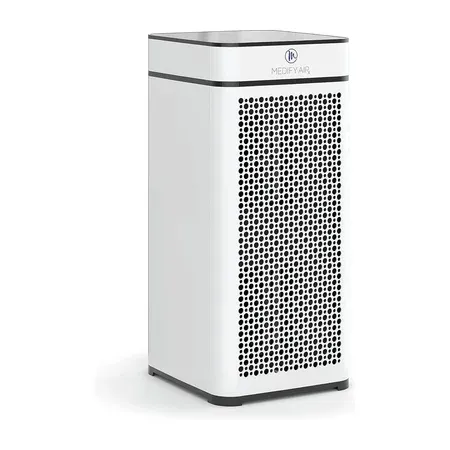
Medify MA-40
A tall, powerful purifier with an H13 HEPA filter and a 406 CFM rated CADR for big rooms and basements.
Basements, open-plan rooms, and finished attics need much more airflow. The Medify MA-40 is a tall tower with an H13-grade HEPA filter, a pre-filter, and a carbon layer, and Medify rates its CADR at 406 CFM, enough to clean about 600 square feet five times an hour. It has more than 13,000 Amazon ratings averaging 4.6 stars.
It’s simple to use, with three fan speeds, a timer, sleep mode, and a filter indicator, but no air-quality sensor or auto mode, so you choose the speed yourself. It’s loud on high, at up to 66 decibels. Filters cost about $40 and Medify rates them for about 3,000 hours, roughly six months of continuous use.
Buy it if you need to clean the air in a large room or basement.
Best Value: Levoit Vital 200S-P
Best value
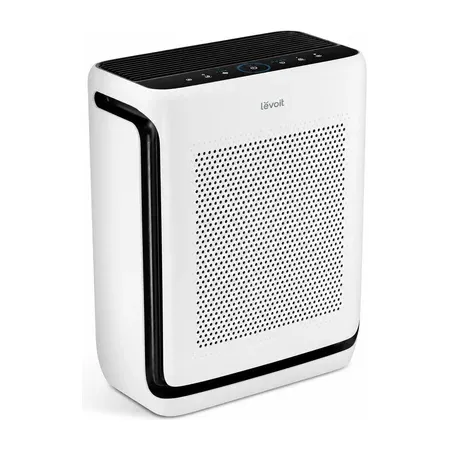
Levoit Vital 200S-P
An AHAM-verified 250 CFM HEPA purifier with carbon, a washable pre-filter, auto mode, and app control.
The Levoit Vital 200S-P matches the Coway’s cleaning power for about $100 less. Its AHAM-verified CADR is 250 CFM for smoke, 254 for dust, and 289 for pollen, which suits rooms of about 390 square feet. It has a washable pre-filter, a HEPA-grade main filter with activated carbon, an air-quality sensor with auto mode, and app and voice control. It has more than 15,000 Amazon ratings averaging 4.7 stars.
Its carbon layer is thinner than the Coway’s, so it’s better for spores and allergens than for strong odors.
Buy it if you want strong, sensor-driven purification for the money.
Fix the Moisture: Midea 50-Pint Cube
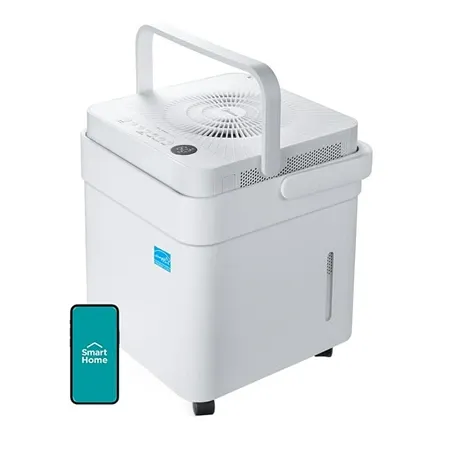
Best dehumidifier for mold
Midea 50 Pint Cube
A compact 50-pint dehumidifier with an expandable bucket, continuous drain option, and Wi-Fi control.
Mold needs moisture, and in many homes that comes from humid air rather than a leak, especially in basements, bathrooms, and closets on outside walls. The EPA recommends keeping indoor humidity below 60%, ideally 30% to 50%. A dehumidifier is what gets you there; an air purifier can’t.
The Midea Cube packs a 50-pint dehumidifier into a compact cube whose bucket expands when you use it and collapses for storage. You can also run a hose to a drain for continuous operation, which is handy in a basement. Set it to about 45% to 50% and let its humidistat do the rest. For more options and sizing, see our guide to the best dehumidifiers and dehumidifier vs. humidifier.
Buy it if your home or basement feels damp, smells musty, or reads above 60% on a humidity meter.
How to Deal With Mold, Step by Step
- Find and fix the water. Repair leaks, clear gutters, vent bathrooms and dryers outside, and insulate cold surfaces that collect condensation.
- Lower the humidity to below 60%, ideally 30% to 50%, with a dehumidifier or air conditioning. An inexpensive hygrometer tells you where you stand.
- Clean small areas. The EPA says you can usually clean up an area smaller than about 10 square feet (about 3 by 3 feet) yourself, using water and detergent on hard surfaces, and drying them completely. Wear gloves, goggles, and an N95 respirator.
- Throw out porous materials like ceiling tiles, carpet, and drywall that stay moldy after cleaning.
- Call a professional for larger areas, mold inside walls or ductwork, contamination from sewage or flood water, or if anyone in the home has asthma or a weakened immune system.
- Run an air purifier in the rooms you use most, during cleanup and after, to catch spores stirred into the air.
Sizing an Air Purifier
Look at the CADR, the clean air delivery rate in cubic feet per minute, measured by AHAM. For allergens like mold spores, aim for about five air changes an hour: multiply the smoke CADR by about 1.5 to get the room size in square feet for an 8-foot ceiling. A 240 CFM purifier suits a room of roughly 360 to 375 square feet, and a 400 CFM purifier about 600.
What to Avoid
- Ozone generators. Some “air purifiers” sold for mold produce ozone on purpose. The EPA warns that ozone at levels that don’t harm people doesn’t effectively kill mold, and ozone itself irritates the lungs.
- Ionizers and “plasma” features add little for mold and can produce small amounts of ozone. Choose a purifier that cleans with filters, or turn those features off.
- UV-C claims. A small UV lamp inside a purifier gets only seconds of contact with passing spores. It doesn’t replace a HEPA filter.
- Bleach. The EPA doesn’t recommend routinely using bleach to clean mold. Scrubbing with detergent and water and drying the surface works on hard surfaces, and bleach doesn’t fix porous materials.
Can an Air Purifier Help With Mold Allergies?
It can reduce your exposure. Mold allergy symptoms are similar to hay fever: sneezing, stuffy nose, itchy eyes, and wheezing in people with asthma. A HEPA purifier lowers the number of spores in the air of the room it’s in, especially with doors and windows closed. It won’t help much if the mold source is still active elsewhere in the house, or if spores are coming in from outdoors, where mold counts often peak in late summer and fall.
For a broader look at what purifiers do and don’t do, see are air purifiers worth it, and for every room size, our guide to the best air purifiers.
How We Chose
We compared air purifiers on true HEPA or HEPA-grade filtration, AHAM-verified or published CADR, the amount of activated carbon for musty odors, sensors and auto modes, noise, filter cost and lifespan, and owner ratings. We excluded ozone generators and models that rely on ionizers or UV for their claims, and added a dehumidifier because controlling moisture is the first step in fixing mold.
Air Purifiers for Mold FAQ
Do air purifiers help with mold?
They capture mold spores in the air and can reduce musty smells, but they don’t kill mold or stop it from growing. You also need to fix the moisture source and clean up the growth.
What type of air purifier is best for mold?
One with a true HEPA filter, a substantial activated carbon filter for odors, and enough CADR for the room. Avoid ozone generators.
Will an air purifier get rid of a musty smell?
It can reduce it if it has plenty of activated carbon. The smell will return unless you find and dry out the damp area causing it.
Should I use a dehumidifier or an air purifier for mold?
A dehumidifier first, because moisture is what lets mold grow. Add an air purifier to catch spores in the air, especially if you have allergies.
Where should I put an air purifier for mold?
In the room where you spend the most time, often the bedroom, or in the affected room during and after cleanup. Keep it away from walls and furniture so air can flow.
Can air purifiers remove black mold?
They can capture its spores in the air, as they do with any mold. They can’t remove mold growing on surfaces. Large areas of any mold should be cleaned up by a professional.