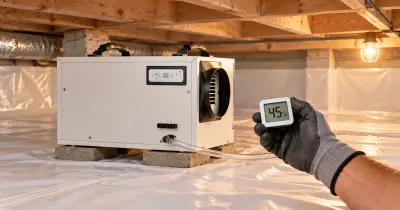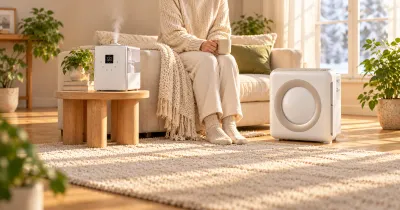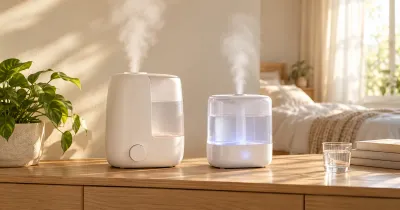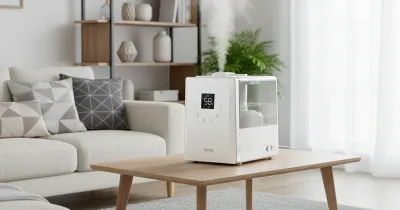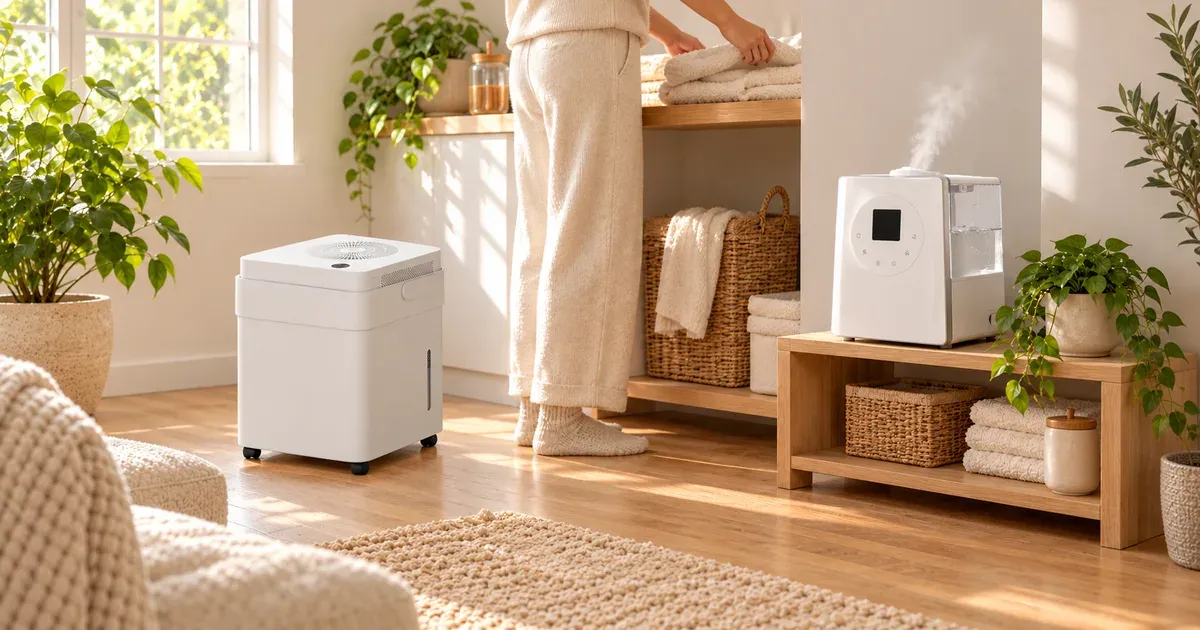
A dehumidifier removes moisture from the air. A humidifier adds it. They’re opposites, so the right one depends entirely on whether the air in your home is too damp or too dry, and that can change with the season and from one room to the next.
The short answer: get a dehumidifier if your home or basement feels damp or sticky, smells musty, has condensation on the windows, or reads above 50% to 60% humidity. Get a humidifier if you have dry skin, cracked lips, static shocks, or morning nosebleeds, usually in winter, and your humidity reads below 30%. A $10 to $15 hygrometer tells you which problem you have. Many homes need both: a humidifier in the bedroom in winter and a dehumidifier in the basement in summer.
Dehumidifier vs. humidifier at a glance
| Spec | Dehumidifier | Humidifier |
|---|---|---|
| What it does | Removes moisture from the air | Adds moisture to the air |
| Use when humidity is | Above 50% | Below 30% |
| Signs you need one | Musty smell, condensation, mold, sticky air | Dry skin and sinuses, static, nosebleeds |
| Typical place | Basement, bathroom, laundry room, humid climate | Bedroom or living room in winter |
| Helps with | Mold and dust mite allergies | Dry sinuses, colds, dry skin |
| How it works | Cold coils condense water into a bucket or drain | Steam, ultrasonic mist, or a fan through a wet wick |
| Power use | Hundreds of watts | About 25 to 40 watts (cool mist) |
| Typical price | $150 to $350 | $40 to $160 |
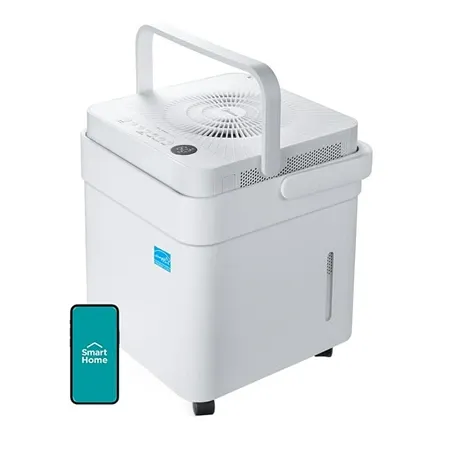
Best dehumidifier
Midea 50 Pint Cube
A 50-pint Energy Star dehumidifier with a big reservoir, Wi-Fi, and a compact cube shape for storage.
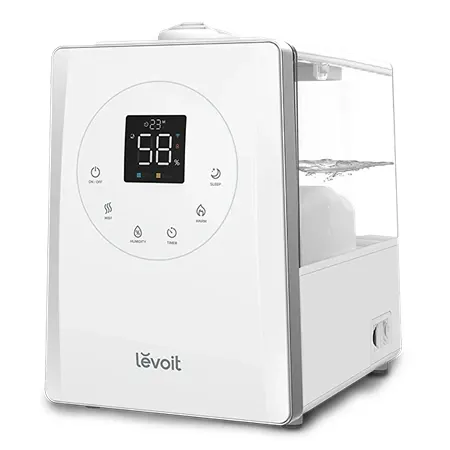
Best humidifier
Levoit LV600S Humidifier
A 1.6-gallon ultrasonic humidifier with warm and cool mist and an auto mode that holds a target humidity.
How a Dehumidifier Works
Most home dehumidifiers work like a small air conditioner. A fan pulls room air across cold coils, moisture condenses on them like water on a cold glass, and it drips into a bucket or out through a drain hose. The dried air passes over warm coils and back into the room slightly warmer than before. A built-in humidistat shuts the compressor off when the room reaches your target.
Desiccant dehumidifiers use a moisture-absorbing material instead of cold coils. They’re quieter and work better in cold spaces, but they use more electricity and remove less water.
How a Humidifier Works
A humidifier puts water into the air, either by boiling it into steam (warm mist), vibrating it into a fine mist (ultrasonic), or blowing air through a wet wick (evaporative). It needs refilling, often daily, and weekly cleaning to keep bacteria and mold out of the tank. Our warm vs. cool mist humidifier guide explains the types.
How to Tell Which One You Need
Your air is too damp if:
- Your hygrometer reads above 50% for long stretches, or above 60% at all
- The basement or closets smell musty
- Windows fog up or drip on the inside
- You see mold on walls, ceilings, window frames, or stored items
- Bedding and towels feel damp and take forever to dry
- Wood doors swell and stick
Your air is too dry if:
- Your hygrometer reads below 30%
- Your skin is itchy, your lips crack, or your eyes feel gritty
- You wake up with a dry throat or nosebleeds
- You get static shocks from doorknobs and blankets
- Wood floors gap and furniture joints loosen
Dry air is mostly a winter problem, because heating cold outdoor air drops its relative humidity sharply. Damp air is mostly a summer, basement, and humid-climate problem.
The Ideal Indoor Humidity
The EPA recommends keeping indoor humidity between 30% and 50%, and below 60% at most, to discourage mold. Use that range as your target for both machines: set a dehumidifier to about 45% to 50%, and a humidifier to about 40% to 45%, and let their humidistats do the rest.
Going too far either way causes problems. A humidifier pushing a bedroom to 60% in winter can leave condensation on cold windows and feed mold. A dehumidifier set to 30% in summer wastes electricity and can leave the air uncomfortably dry.
Allergies, Asthma, and Mold
For dust mite allergies, get a dehumidifier. Indoor humidity is the main factor deciding whether dust mites survive, and allergy guidelines recommend keeping it under 50%. In a lab study, mite populations nearly stopped growing when the air sat at 35% most of the day (Arlian et al., 1999). A humidifier does the opposite, so if you’re allergic to dust mites, keep humidifier use modest.
For mold, get a dehumidifier and fix the source. Mold needs moisture. The EPA’s core advice is to control humidity and fix leaks. A dehumidifier won’t remove mold that’s already growing, so clean it up too, and call a professional for large areas. An air purifier can catch the spores in the air meanwhile; see the best air purifiers for mold.
For dry, irritated sinuses and colds, get a humidifier. Moist air can soothe a dry nose and throat and ease a dry cough. Use a cool mist model, especially for kids.
Do You Need Both?
Many homes do, just not in the same room at the same time. A common setup:
- A dehumidifier running in the basement from spring through fall, draining to a floor drain or sump
- A humidifier in the bedroom during the heating season
Running both in the same room would just have them fight each other. If one room is damp and another is dry in the same season, treat each room separately and keep the doors closed.
Dehumidifier vs. Air Purifier
These are often confused, but they fix different things. A dehumidifier removes moisture and doesn’t filter particles beyond a basic dust filter. An air purifier with a HEPA filter removes smoke, pollen, pet dander, and airborne mold spores, but it doesn’t change the humidity at all.
For a damp, musty basement, a dehumidifier fixes the cause. For allergies to pollen or pets, or for smoke, an air purifier is the right tool. For mold allergies, the two work well together: the dehumidifier stops mold from growing, and the purifier catches spores in the air. Our humidifier vs. air purifier guide covers the other pairing.
How to Size a Dehumidifier
Dehumidifiers are rated in pints of water removed per day. Since 2019, US ratings use a tougher test at cooler, basement-like conditions, so a “35-pint” model today is roughly as strong as an older “50-pint” one.
- 20 to 22 pints: a small damp room, closet, or bathroom
- 30 to 35 pints: a bedroom or medium room that’s moderately damp
- 50 pints: a basement, a very damp space, or a large open area
Buy more capacity than you think you need. A bigger unit reaches your target faster, then cycles off. Look for a continuous drain option if you don’t want to empty a bucket every day, and a built-in pump if the water has to go up to a sink or out a window.
Cold Basements
Compressor dehumidifiers work best in warm, humid air. Below about 65°F, they remove less water, and their coils can frost over. Most good models have auto-defrost, which pauses the compressor to melt the ice, so they still work in a cool basement, just more slowly. For a garage or unheated space that gets close to freezing, a desiccant dehumidifier is the better fit.
Running Costs
Dehumidifiers use far more power. A 50-pint compressor dehumidifier typically draws a few hundred watts while it runs. Running one 8 hours a day at 450 watts uses about 3.6 kWh, or roughly 60 cents a day at 17 cents per kWh. An Energy Star model uses less for the same water removal, and once the room reaches your target, the compressor cycles off.
Humidifiers are cheap to run, except steam models. Ultrasonic and evaporative humidifiers draw about 25 to 40 watts, a few cents a day. Warm mist humidifiers boil water and use hundreds of watts.
Which to Buy
For a damp basement or large room, the Midea 50 Pint Cube is our top dehumidifier: Energy Star certified, with a big reservoir, Wi-Fi alerts, and a cube shape that stores small. For a small room or closet, the Midea 20 Pint Cube costs much less. See our guide to the best dehumidifiers for more options.
For dry winter air, the Levoit LV600S is our top humidifier, with an auto mode that holds a set humidity. If you’d rather avoid the white mineral dust ultrasonic humidifiers leave with tap water, the evaporative Vornado EVDC300 is a good alternative. See our guide to the best humidifiers.
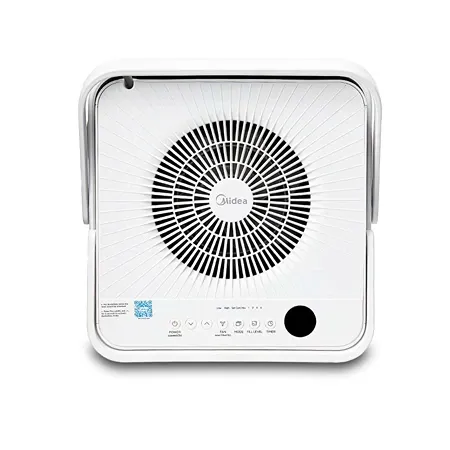
Best small-room dehumidifier
Midea 20 Pint Cube
A compact, stackable dehumidifier for closets, bathrooms, and small damp rooms.
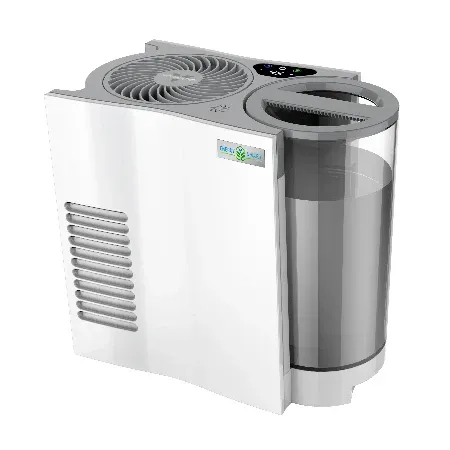
Best evaporative humidifier
Vornado EVDC300 Humidifier
An evaporative humidifier with no mist and no white dust, a humidistat, and a 1.5-gallon tank.
Dehumidifier vs. Humidifier FAQ
Is a dehumidifier or a humidifier better for allergies?
A dehumidifier, for dust mite and mold allergies, because both thrive in humid air. A humidifier can soothe dry, irritated sinuses but makes dust mite allergies worse if it pushes humidity above 50%. For pollen and pet allergies, an air purifier helps more than either.
Is a dehumidifier or a humidifier better for a cold or congestion?
A humidifier. Moist air can ease a dry cough and stuffy nose. Use a cool mist model and keep humidity under 50%.
Should I use a humidifier or a dehumidifier in winter?
Usually a humidifier, because heated winter air is dry. The exception is a damp basement or a home with condensation on the windows, which may still need a dehumidifier.
Should I use a humidifier or a dehumidifier in summer?
Usually a dehumidifier, especially in a basement or a humid climate. An air conditioner also removes some moisture.
Can a dehumidifier make the air too dry?
Yes, if you set it too low. Set it to about 45% to 50% and let the humidistat shut it off.
Does a dehumidifier help with mold?
It helps prevent mold by keeping humidity below 50% to 60%, but it won’t remove mold that’s already growing. Clean existing mold and fix leaks or other moisture sources.