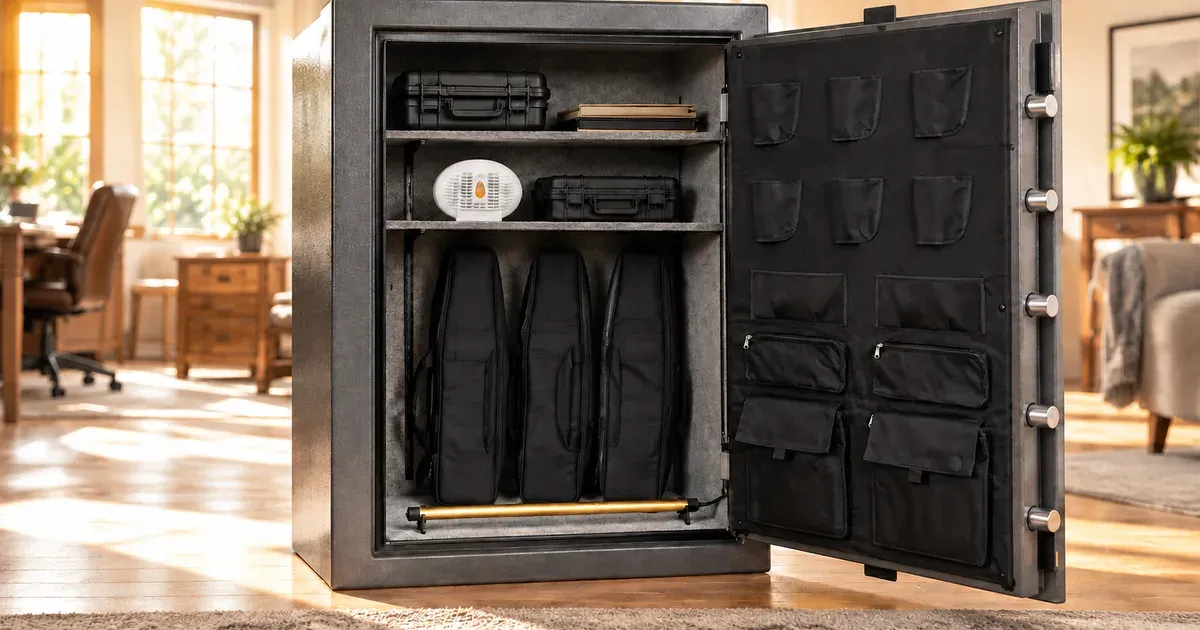
A gun safe keeps out thieves and fire, but it also traps air, and whatever moisture is in that air stays with your firearms. Most of the US lives with average humidity above 50%, and in a basement or garage it’s often much higher. Over months, that’s enough to start rust on bare steel and mildew on cases and documents.
A safe dehumidifier fixes it cheaply. There are two kinds:
- Electric rods stay plugged in and warm the air inside the safe all the time. They’re the set-and-forget option, but the cord has to reach an outlet.
- Rechargeable silica gel units absorb moisture with no power inside the safe. When they’re full, you take them out and dry them by plugging them in or heating them in the oven.
Our top pick is the Lockdown GoldenRod, a gold-colored electric rod that comes in four lengths and has thousands of 4.7-star ratings. If your safe has no way to run a cord, the Eva-Dry E-500 is the best cordless option. Whichever you choose, add a cheap hygrometer so you know the humidity is actually under control.
Our Picks at a Glance
| Dehumidifier | Type | Coverage | Power inside the safe | Best for |
|---|---|---|---|---|
| Lockdown GoldenRod | Electric rod | 12” to 36” models; 18” up to 200 cu. ft. | Yes, always on | Most safes with a power hole |
| Lockdown 12” Dehumidifier Rod | Electric rod | Up to 100 cu. ft. | Yes, always on | Budget, smaller safes |
| Eva-Dry E-500 | Rechargeable silica gel | Up to 500 cu. ft. | No | Safes with no outlet |
| Lockdown Silica Gel Canister | Rechargeable silica gel | Small safes and cabinets | No | Pistol safes, backup |
| TempPro TP50 Hygrometer | Humidity meter | — | Battery | Checking any safe |
What Humidity Should a Gun Safe Be?
The NRA recommends keeping a gun safe between 30% and 50% relative humidity, at around 60 to 70°F if possible, according to Liberty Safe’s guidance. Above 50%, rust and mildew become a risk. Liberty also suggests staying nearer 30% if you store papers or photos in the safe, since those keep best on the drier side.
You can’t tell humidity by feel, so put a small digital hygrometer inside the safe, close the door for a day, and check it. If it reads above 50%, you need a dehumidifier or a bigger one.
Electric Rod vs. Silica Gel: Which Kind to Buy
Electric rods are the standard choice for full-size safes. A rod doesn’t collect water. It stays slightly warm, and that warmth sets up a slow convection current that circulates air through the safe around the clock. Warmer air holds more moisture, so relative humidity drops, and the gentle expansion pushes damp air out through the gaps around the door. Liberty Safe says its Dry Rod runs at a touch-safe 100 to 120°F, and rods in general can reach 150°F. They use very little electricity.
The catch is the cord. Most safes have a small pre-drilled hole in the back for a power cord, or an outlet kit. If yours doesn’t, check your safe’s manual or ask the maker before drilling one.
Rechargeable silica gel units need no power while they’re working. Silica beads absorb moisture until they’re saturated, then a color indicator tells you to recharge them, either by plugging the unit into an outlet outside the safe or, for loose canisters, heating them in the oven. They’re ideal when you can’t run a cord, and they don’t produce any liquid that could corrode metal. The trade-off is maintenance: you have to remember to recharge them, and they stop working once full.
Avoid calcium chloride products such as DampRid inside a gun safe. They collect liquid brine, which is corrosive, and Liberty Safe recommends against them around firearms.
Best Overall: Lockdown GoldenRod
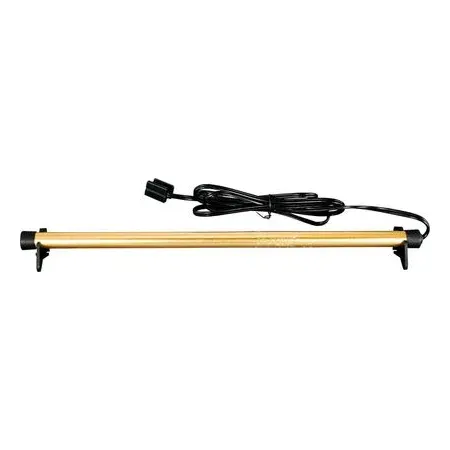
Best overall
Lockdown GoldenRod Dehumidifier
An always-on electric rod in 12, 18, 24 and 36-inch lengths, with mounting legs, a 6-foot cord with a quick plug, and a 1-year warranty.
The GoldenRod is the most common safe dehumidifier for good reason: it’s simple, made in the USA, and has more than 2,300 Amazon ratings averaging 4.7 stars. You plug it in, lay it across the bottom of the safe, and leave it.
It comes in 12, 18, 24 and 36-inch lengths. Lockdown rates the 18-inch rod for safes up to 200 cubic feet, which covers most home gun safes. Longer rods suit tall or very large safes; pick the longest one that fits across the floor of your safe.
The rod sits on small attachable legs so air flows underneath it. Its 6-foot cord has a quick plug, so you can pass the small connector through the power hole in the back of the safe and reconnect it outside. Lockdown backs it with a one-year warranty.
Buy it if your safe has a power hole or outlet kit and you want a dehumidifier you never have to think about.
Best Budget Rod: Lockdown 12” Dehumidifier Rod
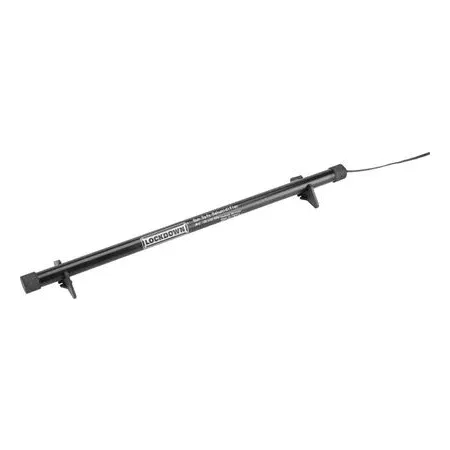
Best budget
Lockdown 12-Inch Dehumidifier Rod
A low-profile 12-inch electric rod with legs and a quick-plug cord, rated for safes up to 100 cubic feet.
Lockdown’s standard black rod works the same way as the GoldenRod for about half the price. The 12-inch version is rated for safes up to 100 cubic feet, more than enough for most small and mid-size gun safes, and it has the same attachable legs and quick-plug cord. It has more than 2,200 Amazon ratings averaging 4.7 stars, and it also comes in longer sizes.
Buy it if you have a small or mid-size safe and want the cheapest reliable rod.
Best Cordless: Eva-Dry E-500
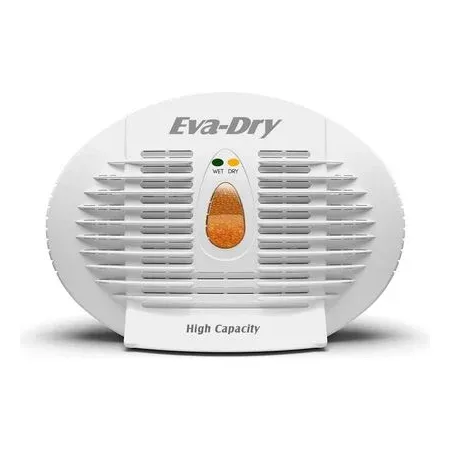
Best cordless
Eva-Dry E-500 Renewable Dehumidifier
A cordless silica gel dehumidifier for spaces up to 500 cubic feet, with a color indicator and plug-in renewal.
The Eva-Dry E-500 is a sealed case of silica gel that sits on a shelf in your safe with no cord. It absorbs 6 to 8 ounces of moisture and is rated for enclosed spaces up to 500 cubic feet. A window on the front turns from orange to green when it’s full.
To renew it, take it out of the safe and plug it in for 16 to 18 hours; its built-in heater dries the gel so you can use it again. Eva-Dry says to plug it into a power strip rather than straight into a wall outlet, since its weight can pull it loose, and to set it on a hard, heat-resistant surface because it gets hot while renewing. Don’t leave it plugged in inside the safe.
How often you renew it depends on how humid your room is and how often you open the safe; check the indicator every couple of weeks at first. It has more than 8,000 Amazon ratings averaging 4.4 stars, and multi-packs let you rotate a dry one in while another renews.
Buy it if your safe has no power hole, or you want a dehumidifier that works through a power outage.
Best for Small Safes: Lockdown Silica Gel Canister
Best for small safes
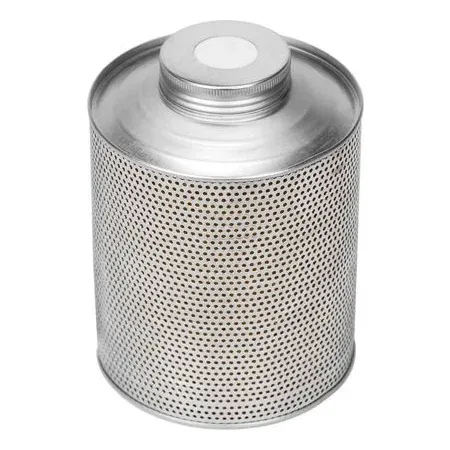
Lockdown Silica Gel Desiccant, 750 Grams
A 750-gram perforated canister of color-changing silica gel that recharges in the oven, with no power needed.
For pistol safes, small cabinets, or as a backup next to a rod, Lockdown’s 750-gram silica gel canister is a simple perforated tin of beads. The beads change color when they’re saturated, and you recharge them by heating the canister in the oven, following the instructions on the can. There’s nothing to plug in and nothing to break. It has more than 1,600 Amazon ratings averaging 4.5 stars.
Buy it if you have a small safe or want extra moisture control alongside a rod.
Check It Works: TempPro TP50 Hygrometer
Best humidity monitor
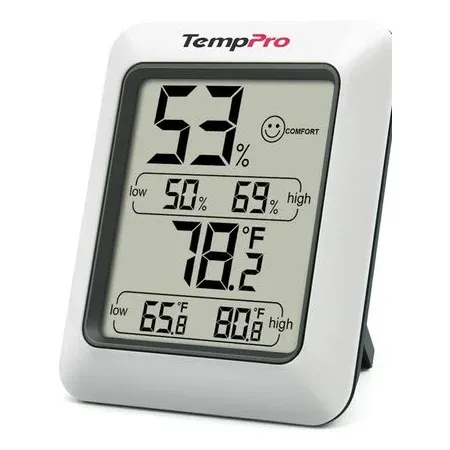
TempPro TP50 Digital Hygrometer
A small battery-powered humidity and temperature meter with high and low records, accurate to about 2 to 3% RH.
A dehumidifier is only useful if it keeps humidity under 50%, and a hygrometer is how you know. The TP50 is a small battery-powered display that shows humidity and temperature, updates every 10 seconds, and records the highs and lows, so you can open the safe and see whether humidity spiked since you last checked. Its listed accuracy is about ±2 to 3% relative humidity. With more than 150,000 Amazon ratings averaging 4.6 stars, it’s one of the most popular hygrometers sold.
Leave it on a shelf inside the safe. If it reads above 50% after a few days, add a second dehumidifier or move up to a longer rod.
How to Choose the Right Size
Dehumidifiers are rated by the cubic feet of space they cover. To find your safe’s interior volume, measure the inside height, width, and depth in inches, multiply them, and divide by 1,728. A safe that measures 55 by 25 by 18 inches inside holds about 14 cubic feet.
Most home gun safes are well under 100 cubic feet inside, so even a 12-inch rod is rated for them. Lockdown sells longer rods for bigger safes; choose one that fits across your safe’s floor. If your safe is in a damp basement or garage, size up, or pair a rod with a silica canister on an upper shelf.
How to Install a Safe Dehumidifier Rod
- Find the power hole. Most gun safes have a small pre-drilled hole in the back or floor, often behind the carpet, or a factory outlet kit. Don’t drill a new hole without checking your safe’s manual.
- Feed the cord through. Unplug the rod’s quick connector, pass the small end through the hole, and reconnect it outside the safe.
- Lay the rod flat at the bottom. Liberty Safe recommends mounting rods horizontally near the bottom of the safe, where warm air will rise and circulate.
- Keep things off it. The rod gets warm, so don’t let soft cases, papers, or fabric rest directly on it.
- Check the humidity with a hygrometer after a day or two.
FAQ
Does a gun safe need a dehumidifier?
If the humidity where your safe sits is regularly above 50%, yes. That’s true in much of the US and in most basements and garages. A climate-controlled room in a dry area may not need one, but a hygrometer will tell you for sure.
Can I use DampRid in a gun safe?
It’s not a good idea. DampRid and similar products use calcium chloride, which turns into a corrosive liquid brine as it absorbs water. Rechargeable silica gel is the safer choice around firearms.
Are dehumidifier rods a fire hazard?
Rods are designed to run continuously at low temperatures; Liberty Safe says its rod surface stays around 100 to 120°F and rods can reach about 150°F. Keep soft cases and papers from resting directly on the rod, use a cord in good condition, and plug it into a properly working outlet.
How do I keep guns from rusting in a safe?
Keep humidity between 30% and 50%, wipe guns down with a light coat of gun oil before storing them, and let guns that have been out in the cold warm up in their cases before putting them away so condensation doesn’t form on the steel.
More Dehumidifier Guides
For a basement or a whole room, see our guide to the best dehumidifiers. For crawl spaces, see the best crawl space dehumidifiers. Not sure which appliance you need? Read dehumidifier vs. humidifier.