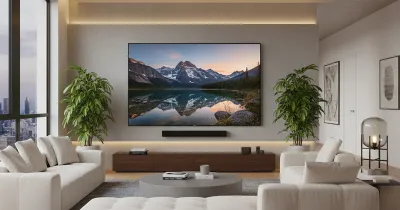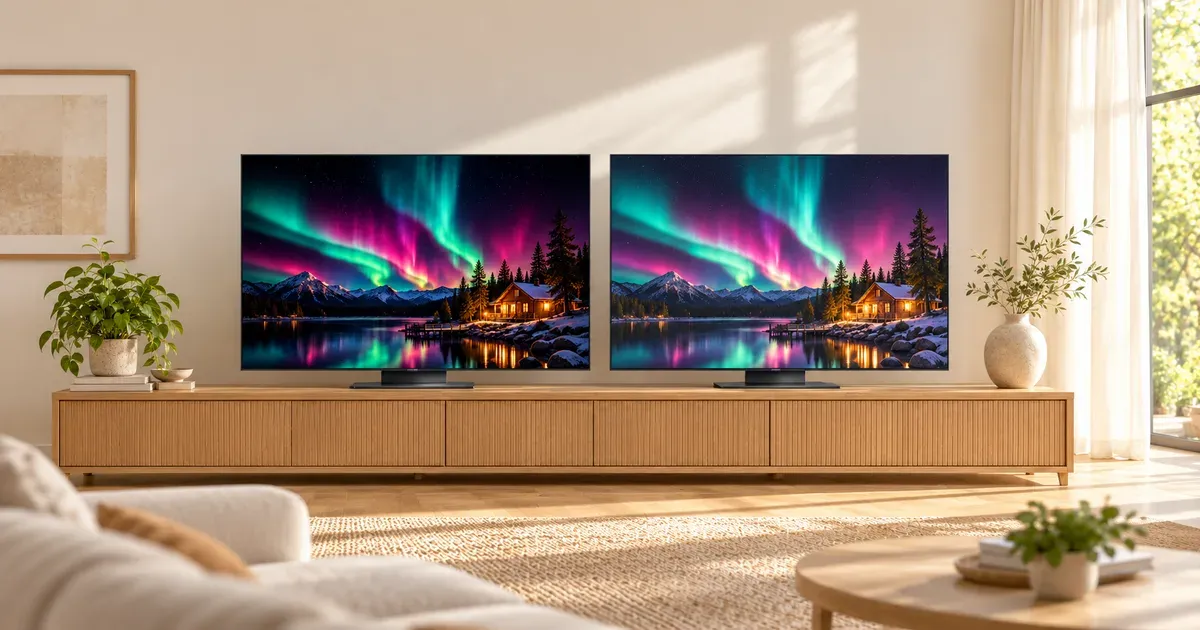
OLED and QLED sound like rival versions of the same thing, but they are two different kinds of TV. In an OLED TV, every pixel makes its own light and can switch off completely. A QLED TV is an LCD: a backlight shines through a layer of quantum dots and a liquid-crystal panel. Most good QLEDs now use a Mini-LED backlight made of thousands of tiny LEDs grouped into dimming zones.
The short answer: buy an OLED if you watch mostly movies and shows in a dim room, sit at wide angles, or want the best picture at 42 to 65 inches. Buy a Mini-LED QLED if your room gets a lot of daylight, you watch a lot of sports or news with static logos, or you want a 75-inch or bigger screen for less money. Skip basic QLEDs with no local dimming if picture quality is the priority.
OLED vs. QLED at a glance
| Spec | OLED | QLED / Mini-LED |
|---|---|---|
| How it makes light | Each pixel lights itself and can turn fully off | LCD panel lit by an LED backlight through a quantum-dot layer |
| Black levels | Perfect black, no halos | Very good with Mini-LED local dimming, but bright objects can bloom |
| HDR brightness (10% window) | About 1,350 to 2,700 nits on 2026 models | About 2,100 to 3,700 nits on 2025–2026 Mini-LEDs |
| Viewing angle | Wide | Usually narrower; colors and blacks fade off-center |
| Burn-in risk | Possible with static content over time | None |
| Gaming | Near-instant response, 120 to 165 Hz | 144 to 165 Hz on most Mini-LEDs, with slightly more motion blur |
| Sizes | 42 to 83 in., plus a $20,000 97 in. LG | 43 to 116 in. |
| 65 in. price (Oct. 2026) | $1,300 to $2,500 | $650 to $1,300 |
What OLED and QLED Actually Mean
OLED stands for organic light-emitting diode. Each pixel produces its own light, so a black pixel is simply off. There are two kinds of OLED panel in today’s TVs:
- WOLED, made by LG Display, uses a white OLED layer behind red, green, and blue color filters, plus a fourth unfiltered white subpixel for extra brightness. LG’s own OLEDs use it, and so do Samsung’s S85H and, in the US, every size of the S90H. Samsung still uses QD-OLED for the S90H in some other countries, but not in North America.
- QD-OLED, made by Samsung Display, uses a blue OLED layer with quantum dots that convert some of that light to red and green. It’s in the Samsung S95H (55, 65, and 77 inches) and the Sony BRAVIA 8 II. The practical difference is that WOLED filters out the light it doesn’t need, while QD-OLED converts it, which helps QD-OLED keep colors saturated at high brightness.
QLED is a marketing name rather than its own display type. It’s a regular LCD with an extra layer of quantum dots, tiny particles that glow a precise red or green when the blue backlight hits them. That widens the range of colors the TV can show, but it doesn’t change how the LCD controls light, so blacks still depend on the backlight. Brands use their own names for it: Samsung says QLED and Neo QLED, LG says QNED, Hisense says ULED and Hi-QLED, and TCL uses QLED and SQD-Mini LED.
What matters more than the name is the backlight:
- Basic QLEDs use a regular LED backlight. Samsung’s plain QLEDs use full-array or “Dual LED” backlights rather than Mini-LEDs, and cheap models like TCL’s Q651G have no local dimming at all. The whole backlight stays on behind dark scenes, so blacks look gray in a dark room.
- Mini-LED QLEDs use thousands of much smaller LEDs, grouped into zones that dim and brighten with the picture. Samsung’s Neo QLED name means a Mini-LED backlight. This is where nearly every good LCD TV now sits.
- RGB Mini-LED is the newest tier, using red, green, and blue backlight LEDs instead of blue LEDs and a quantum-dot film. The 2026 Sony BRAVIA 7 II, TCL’s RM9L, and Hisense’s UR8 and UR9 use it. It’s still mostly expensive and early.
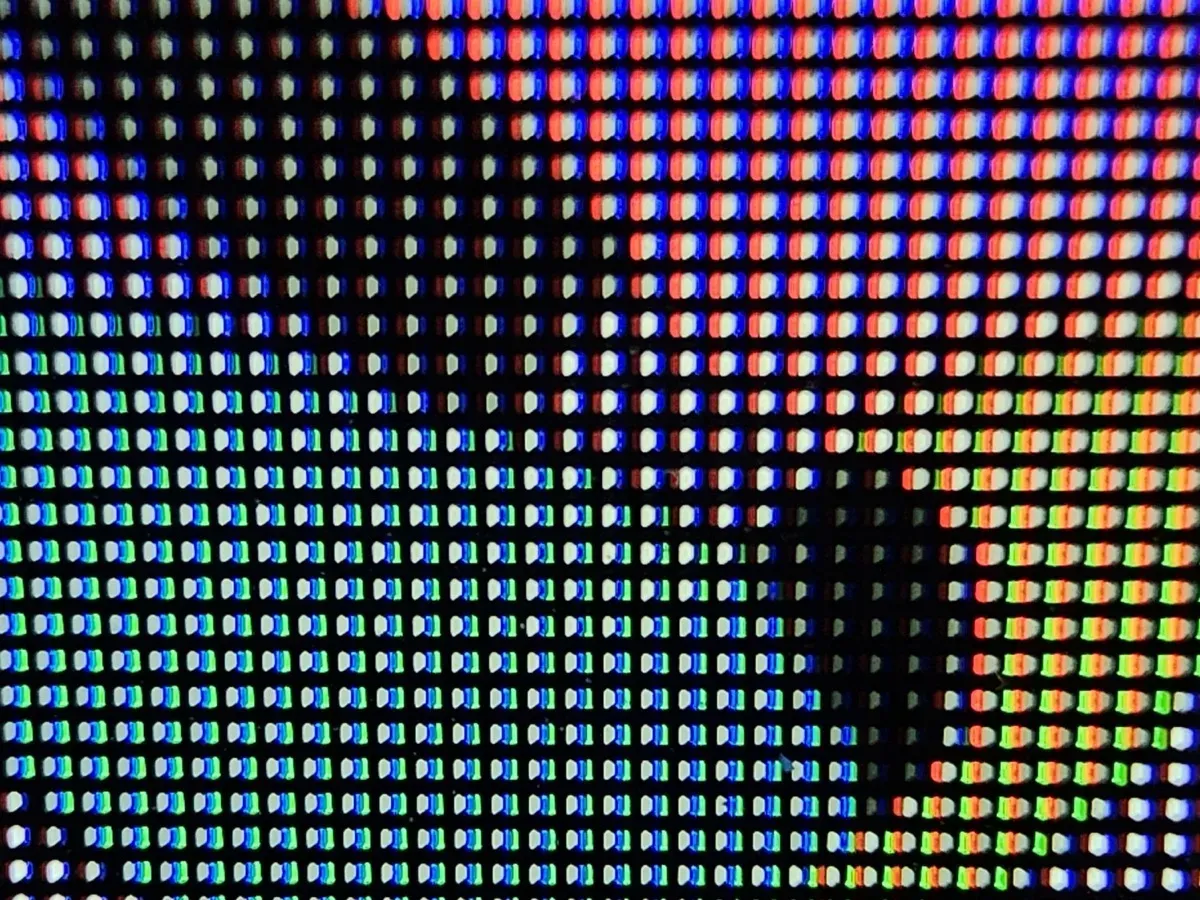
Contrast and Black Levels: OLED Wins
This is the biggest difference you’ll see. Because each OLED pixel switches off, a star field, a letterboxed movie, or a dark scene shows true black right next to bright detail. There’s no glow around subtitles or bright objects.
A Mini-LED TV gets close by dimming its backlight in zones, and the best ones look excellent from a centered seat. But each zone still covers many pixels, so a bright object on a black background can leave a faint halo, called blooming. To hide it, the TV sometimes dims small highlights or crushes shadow detail. Basic QLEDs with no local dimming can’t do any of this, so their blacks look dark gray at night.
Brightness: Mini-LED Wins
Mini-LED TVs get brighter, especially with large bright areas like a hockey rink, a snowy scene, or a sunny daytime show. Here’s how bright these TVs measure in HDR on a 10% window, a bright patch covering a tenth of the screen. It’s the standard way to compare how hard a TV can push highlights like sunlight, headlights, or explosions:
Measured HDR brightness (10% window)
| Spec | OLED | Mini-LED QLED |
|---|---|---|
| Budget-to-mid | LG C6: 1,355 nits | TCL QM7L (75 in.): 2,270 nits |
| Mid | Samsung S90H (55 in.): 1,497 nits | Hisense U7SG: 2,867 nits |
| Premium | Samsung S95H: 2,721 nits | TCL QM8L: 3,719 nits |
For scale, a typical non-HDR TV show is mastered for about 100 nits, so even the dimmest TV here has plenty of headroom. The extra brightness mostly shows up in HDR highlights and in how well the picture holds up against daylight.
The gap is larger than a small-window number suggests. OLEDs use automatic brightness limiting (ABL), which dims the whole picture when a big part of the screen is bright, to keep the panel from overheating. The S90H’s limiting is especially noticeable: a bright full-screen scene, like a snowy ski run, looks visibly dimmer than the same scene on a Mini-LED. LCDs don’t have that limit, so large bright areas stay bright. Premium OLEDs have closed the gap a lot, though. On small highlights, the S95H now lands between the TCL QM7L and the Hisense U7SG.
Glare and Viewing Angles
Brightness is only half of the bright-room story. Reflections matter too:
- Samsung’s S90H and S95H have a matte “Glare Free” screen. The matte coating diffuses lamps and windows into a soft haze instead of a sharp mirror image, and the S95H reflects very little light at all. That makes them the OLEDs to get for a sunny room.
- LG’s G6 uses a glossy screen with an anti-reflection layer that cuts reflections well, though bright lights can leave a faint rainbow pattern. The cheaper C6 and B6 are glossier.
- Mini-LEDs vary. TCL’s QM7L and QM8L are glossy. The Hisense U7SG has a matte screen that doesn’t handle reflections as well, so don’t put it directly across from a window.
On viewing angle, OLED is better. Colors and contrast hold up from the end of a sectional. Most Mini-LEDs use VA panels, which have deep blacks head-on but fade and lose contrast as you move to the side. TCL’s 2026 QM7L and QM8L use a wide-angle VA panel that narrows the gap.
Burn-In and Lifespan
Burn-in is OLED’s real weakness. If the same image stays on screen for a long time, like a news ticker, a scoreboard, or a game’s HUD, it can leave a permanent ghost. Modern OLEDs shift pixels and run cleaning cycles to prevent it, but the risk hasn’t gone away.
Independent long-term testing, with about 100 TVs left running cable news at full brightness for years, found that 2020 to 2023 OLEDs aren’t reliably more resistant to burn-in than a 2017 LG C7. The newer panels are much brighter, and that brightness used up most of the improvement. For mixed TV, movie, and game viewing the risk is low, but it’s real for anyone who leaves the same channel or logo on screen for hours a day. The same testing found that thin edge-lit LCDs failed early, so LCD isn’t automatically the longer-lasting choice.
Warranties don’t help much:
- LG’s standard US warranty on the B6 and C6 is one year and doesn’t mention burn-in. The G6 adds panel-only coverage for years two through five, but you pay for labor.
- Samsung’s US TV warranty is one year, and Samsung doesn’t advertise burn-in coverage for its 2026 OLEDs in the US.
If you leave a news channel on all day or use the TV as a PC monitor, a Mini-LED is the safer buy.
Gaming
Both are excellent for games, and the 2026 models have the features that matter for a PS5, Xbox Series X, or gaming PC: 4K at 120 Hz, variable refresh rate (VRR), and auto low-latency mode.
| TV | Type | Max refresh | HDMI 2.1 ports |
|---|---|---|---|
| LG C6 | OLED | 165 Hz VRR | 4 |
| Samsung S90H | OLED | 165 Hz | 4 |
| LG B6 | OLED | 120 Hz | 4 |
| Hisense U7SG | Mini-LED | 165 Hz (330 Hz at 1080p) | 4 |
| TCL QM8L | Mini-LED | 144 Hz | 4 |
| TCL QM7L | Mini-LED | 144 Hz | 2 |
| Sony BRAVIA 8 II | OLED | 120 Hz | 2 |
OLED’s pixels change almost instantly, so motion looks sharp with no smearing in dark scenes. That also means 24 fps movies can look a little choppy on slow pans. Mini-LEDs have a bit more blur but avoid burn-in from static HUDs, which matters if you play the same game for hours a day. If you have more than two consoles or a PC, look for four HDMI 2.1 ports.
Power Use
OLED isn’t the more efficient choice at 65 inches. These are on-mode watts from the US federal test, which ENERGY STAR publishes for certified models:
| 65-inch TV | Type | Watts | Per year at 5 hours a day |
|---|---|---|---|
| LG C6 | OLED | 141.6 W | 261 kWh, about $42 |
| Samsung QN90F | Mini-LED | 125.9 W | 235 kWh, about $38 |
| Samsung S90H | OLED | 118.7 W | 221 kWh, about $35 |
| LG QNED85A (2025) | LCD | 92.8 W | 172 kWh, about $28 |
Costs assume 16 cents per kWh. Our TV power consumption calculator works it out for your state’s electricity rate and more models. The difference between types is around $15 a year at most, so it shouldn’t decide your purchase.
Sizes and Price
Smaller screens favor OLED. The LG C6 comes in 42 and 48 inches ($999.99 and $1,099.99 at LG), and the Samsung S90H also comes in 42 and 48. TCL’s QM7L and Hisense’s U7 start at 55 inches.
Bigger screens favor Mini-LED. OLED mostly stops at 83 inches. LG’s 97-inch G6 costs $19,999.99. Mini-LEDs go much larger for less: a 98-inch TCL QM7L or QM8L, a 100-inch Hisense U7, and 115- and 116-inch models from TCL, LG, and Hisense.
At 65 inches, here’s where the October 2026 list prices sit at each maker’s store:
- OLED: LG B6 $1,299.99, LG C6 $1,499.99, LG G6 $2,499.99, Samsung S85H $1,299.99, S90H $1,499.99, S95H $2,499.99
- Mini-LED: TCL QM6K $649.99, LG QNED85B $799.99, Samsung QN70H $899.99, TCL QM7L $999.99, Samsung QN80H $1,099.99, TCL QM8L $1,299.99. The Hisense U7SG is about $1,000 on Amazon.
The cheapest current OLED costs about as much as the brightest Mini-LED. Our 65-inch TV page lists real dimensions, stand widths, and viewing distances for several of these.
Which Should You Buy?
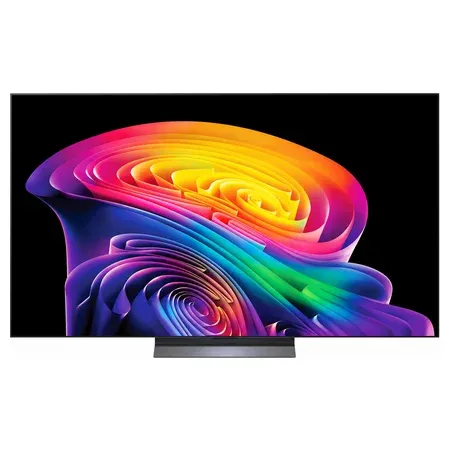
Best OLED for most people
LG C6 OLED (65-inch)
Perfect blacks, wide viewing angles, four HDMI 2.1 ports, and 165 Hz VRR, from 42 to 83 inches.
The LG C6 is the OLED to get for a living room you can darken. It measures 1,355 nits on a 10% HDR window, up from 1,165 on last year’s C5, which is enough for HDR highlights to look bright in a dim room. It has four HDMI 2.1 ports, supports Dolby Vision, and comes in six sizes from 42 to 83 inches. The 77- and 83-inch versions are sold as the C6H and use LG’s tandem panel.
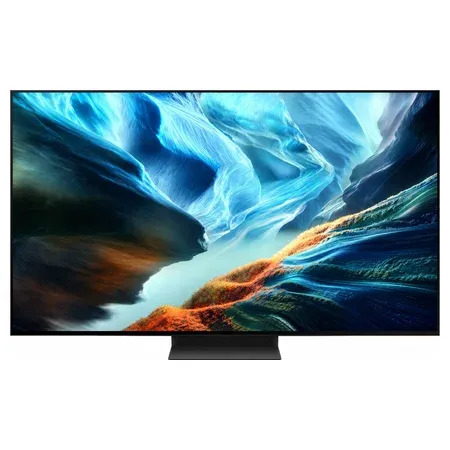
Best OLED for bright rooms
Samsung S90H OLED (65-inch)
An OLED with Samsung's matte Glare-Free screen, 165 Hz gaming, and four HDMI 2.1 ports.
The Samsung S90H costs about the same as the C6 and trades a little brightness consistency for a matte screen that kills reflections. If your TV faces a window but you still want OLED contrast, it’s the better fit. In the US it uses an LG Display WOLED panel, not QD-OLED.
Best Mini-LED value
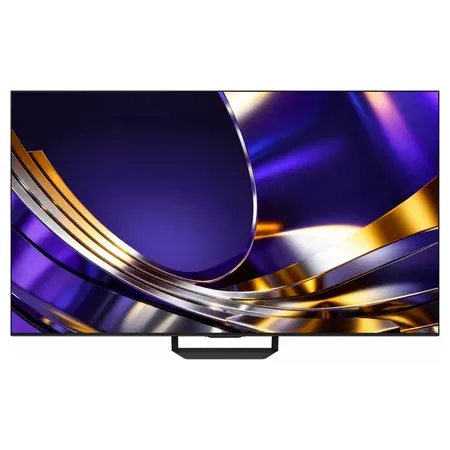
Hisense U7SG Mini-LED (65-inch)
Measured 2,867 nits in HDR, native 165 Hz, four HDMI 2.1 ports, and sizes up to 116 inches.
The Hisense U7SG is Hisense’s top mainstream Mini-LED for 2026 and costs about $400 to $500 less than a 65-inch C6. It’s more than twice as bright in HDR (2,867 nits on a 10% window) and runs games at up to 165 Hz. Its matte screen isn’t great with direct reflections, so keep it out of a window’s line.
Brightest for sunny rooms
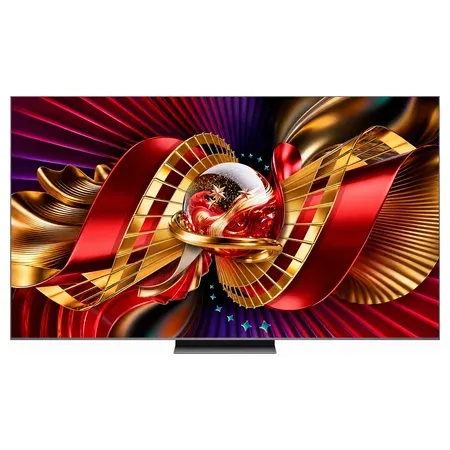
TCL QM8L Mini-LED (65-inch)
TCL's brightest 2026 Mini-LED: 3,719 nits on a 10% HDR window, with four HDMI 2.1 ports.
The TCL QM8L is the pick for a sunny room or a sports-heavy household. It measures 3,719 nits on a 10% HDR window and tops 6,000 nits on smaller highlights, more than any OLED. It costs about the same as LG’s entry B6 OLED.
For more picks, including budget and small TVs, see our guide to the best TVs. If you’re not sure about size, our TV size calculator finds the right range for your seating distance.
OLED vs. QLED FAQ
Is QLED better than OLED?
Not overall. OLED has better contrast and viewing angles, while QLED (especially Mini-LED) gets brighter, costs less per inch, and can’t burn in. QLED is the better pick for bright rooms, very large screens, and static content. OLED is better for movies in a dim room.
Is Mini-LED the same as QLED?
Mini-LED describes the backlight, and QLED describes the quantum-dot color layer. Most Mini-LED TVs are also QLEDs, but a basic QLED doesn’t have a Mini-LED backlight. In 2026 Samsung also sells M70H and M80H Mini-LED TVs without quantum dots.
Is QD-OLED better than OLED?
QD-OLED is a type of OLED. It tends to produce brighter, more saturated colors than LG’s WOLED panels. But brand matters less than model now: LG’s tandem WOLED panels are also very bright, and the US Samsung S90H uses WOLED rather than QD-OLED.
How long do OLED TVs last?
Most last for many years with varied viewing. The main risk is burn-in from content that stays on screen for hours every day, not the panel wearing out. If that describes how you watch, pick a Mini-LED.