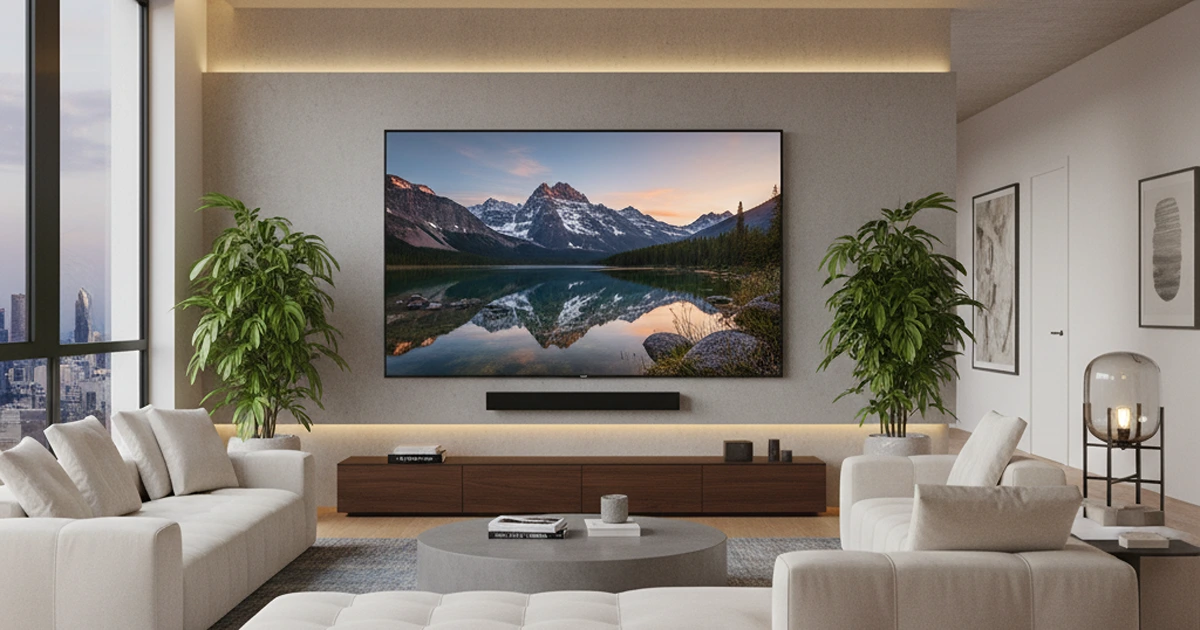

TV shopping becomes much simpler once the room takes priority over the specification sheet. Screen size and seating distance shape immersion, daylight determines how much brightness and reflection control matter, and the devices you connect decide whether 120Hz, variable refresh rate, or extra HDMI 2.1 inputs are worth paying for.
We evaluated current specifications alongside broad testing and ownership patterns, focusing on contrast, HDR brightness, processing, viewing angle, gaming support, software, and value at today’s street prices. Several picks are now previous-generation models, so they make the most sense when discounted and when the exact size and suffix match the capabilities described.
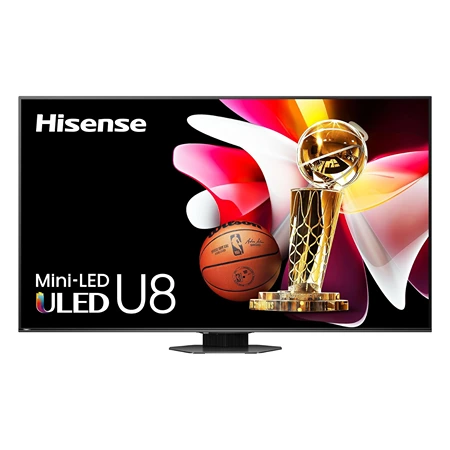
Hisense U8N Series
Best 4K LCD TV
The Hisense U8N Series delivers outstanding brightness, rich colors, and advanced gaming features at a price that undercuts premium rivals.
Sunlight is where the Hisense U8N Series makes its strongest case. Its quantum-dot color and dense mini-LED local dimming combine with unusually high brightness, allowing sports and daytime television to retain punch in a room that would flatten many OLED screens. HDR highlights can look spectacular without forcing the rest of the picture into an overbright presentation.
Local dimming also produces deep blacks for an LCD, especially from a centered seat. Small bright objects can still create halos, and aggressive dimming occasionally sacrifices a little shadow detail, but the overall contrast is excellent for the price. Picture behavior varies by screen size because not every U8N uses the same panel configuration, so reviews of one size should not automatically be applied to another.
Subscribe to Product Bible
Stay updated with the latest product reviews, buying guides, and expert recommendations. Fresh advice on the best things we've researched, tested, and reviewed, sent to your inbox weekly.
Want to know more about how we handle your data or opt out of marketing emails? Check out our Privacy Policy. If you have any questions, we're always here to help.
High-refresh gaming is another strength. Most sizes support up to 144Hz, variable refresh rate, and low-latency modes, while two HDMI 2.1 inputs accommodate current consoles or a gaming PC. One of those ports also handles eARC, so a soundbar can reduce the number of remaining full-bandwidth connections; an HDMI switch or receiver may be needed in a crowded setup.
Google TV offers broad app support and useful voice search, though Hisense’s processing is less polished than the best premium brands. Low-resolution cable, compressed streams, gradients, and fast motion can reveal rougher upscaling or artifacts. Off-axis contrast and color also fade, making a wide semicircle of seating a poor match despite the screen’s brightness.
The U8N is a 2024 series and has successors, which changes the buying calculation. At a meaningful clearance price it remains a formidable bright-room HDR and gaming display; near the price of a newer equivalent, improved processing and longer support make the current model more attractive. Confirm the exact screen size, refresh specification, return policy, and firmware availability before ordering older inventory.
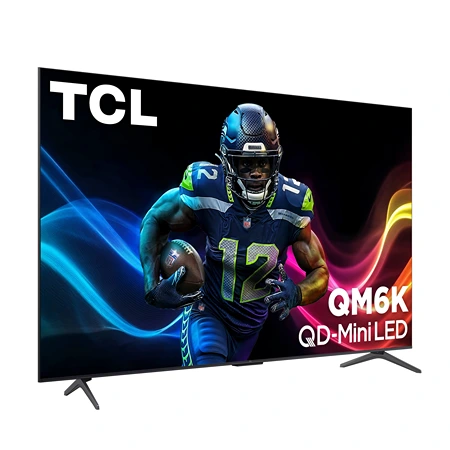
TCL QM6K Series
Best Budget 4K TV
The TCL QM6K Series delivers excellent brightness, strong contrast, and smooth motion at a price that makes premium performance more affordable.
Value is not merely a low sticker price on the TCL QM6K Series; it is getting quantum-dot color, mini-LED local dimming, and a native 144Hz panel in a tier where ordinary 60Hz LCDs remain common. Native 4K movies and games look vibrant, with convincing black levels and far better HDR impact than an edge-lit budget television.
Its brightness is respectable rather than class-leading. TCL’s marketing language can imply premium-mini-LED intensity, but sustained and measured highlights are more modest than the brightest high-end sets. The QM6K still works in a normally lit living room, while direct sun and strong reflections expose why much more expensive LCDs exist.
Gamers receive variable refresh rate, automatic low-latency mode, and two HDMI 2.1 connections for high-frame-rate sources. Fast play feels responsive, and 144Hz gives a compatible PC extra headroom beyond console standards. As usual, verify which port carries eARC when planning multiple consoles and external audio.
Google TV is familiar, app-rich, and easy to search, but image processing is the set’s clearest compromise. Low-bitrate streams and older broadcasts can appear coarse, and HDR tone mapping does not always preserve highlight detail as gracefully as more expensive processors. Narrow viewing angles also favor a sofa directly in front of the screen.
For someone feeding it good 4K sources, the QM6K delivers a great deal of modern display hardware for the money. It is less convincing as a rescue system for poor cable signals or a wall-mounted screen viewed from every corner of a room. Buy based on the tested performance of the exact size, not on zone-count or brightness slogans alone.
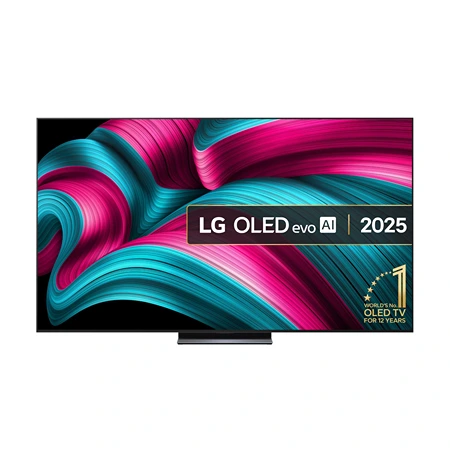
LG C5 Series
Best OLED TV
The LG C5 Series offers perfect blacks, rich colors, and advanced gaming features, making it one of the best all-around OLED TVs available.
Turn the lights down and the LG C5 Series immediately explains OLED’s appeal. Every pixel can shut off independently, so black bars disappear into a dark room and bright objects sit against true black without the halos produced by local-dimming backlights. Wide viewing angles keep that contrast intact across a broad seating arrangement.
The C5 improves brightness over its predecessor, making daytime viewing more practical, but a premium mini-LED still has more force against direct sunlight and in large full-screen highlights. The smaller 42- and 48-inch versions may not reach the same brightness as larger sizes. OLED’s strengths are contrast, pixel precision, and consistency rather than winning a raw-nits contest.
All four HDMI inputs support modern gaming bandwidth, so multiple consoles, a PC, and eARC audio can coexist without sacrificing a high-speed port. The panel can reach 144Hz with a compatible PC and supports variable refresh technologies with very low input lag. LG’s Game Optimizer collects the relevant settings without making players hunt through unrelated picture menus.
Dolby Vision is supported, but HDR10+ is not. WebOS covers the major streaming services and offers extensive controls, though its recommendations and promotional surface can feel busy. Motion interpolation, upscaling, and general processing are mature, making the C5 more forgiving of mixed sources than many value-focused televisions.
As with every OLED, cumulative exposure to static logos, scoreboards, or desktop elements carries some burn-in risk, even with built-in protection routines. Varied household viewing is a much easier use case than leaving a news channel or PC interface onscreen all day. Within that boundary, the C5 is a beautifully balanced movie, television, and gaming display rather than a specialist that excels at only one source.
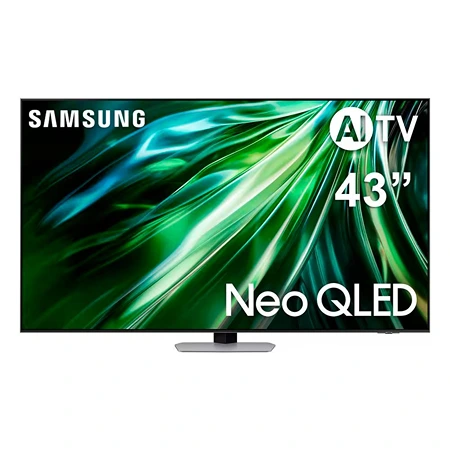
Samsung QN43QN90D
Best Midsize TV
The Samsung QN43QN90D combines powerful Mini-LED brightness, rich contrast, and advanced gaming features in a perfectly sized 43-inch display.
Forty-three-inch buyers are usually asked to settle for entry-level panels; the Samsung QN43QN90D puts flagship-style mini-LED hardware into that compact footprint. It becomes bright enough to resist lamps and windows, while local dimming creates far stronger contrast than the inexpensive small TVs commonly sold for bedrooms and offices.
The 43-inch version deserves to be judged separately from larger QN90D sizes. Its viewing angle is narrower, so color and black level deteriorate more from the side, and challenging subtitles or star fields can reveal blooming or crushed shadow detail. From a centered desk or bed, however, its punchy HDR and reflection control are rare at this size.
Subscribe to Product Bible
Stay updated with the latest product reviews, buying guides, and expert recommendations. Fresh advice on the best things we've researched, tested, and reviewed, sent to your inbox weekly.
Want to know more about how we handle your data or opt out of marketing emails? Check out our Privacy Policy. If you have any questions, we're always here to help.
Four HDMI 2.1 ports, low input lag, variable refresh rate, and support for high-frame-rate 4K make it an unusually capable compact gaming monitor substitute. Samsung’s game bar exposes status and aspect-ratio tools quickly. PC users should still account for television-style text rendering and the deep stand when planning a close desktop setup.
Tizen supplies the major apps and extensive smart-home integration, though its crowded interface is an acquired taste. HDR10+ is present, while Dolby Vision and DTS audio decoding are absent. Those format decisions matter most to owners with a Dolby Vision library or a DTS-dependent disc and receiver setup.
This 2024 model is now an older-stock proposition, and its original premium was substantial for 43 inches. A clearance price can make it the rare small screen that performs like a serious living-room TV; otherwise, compare it closely with a 42-inch OLED and newer mini-LED alternatives. The right choice turns on room brightness, static-content use, and how directly you will sit in front of it.
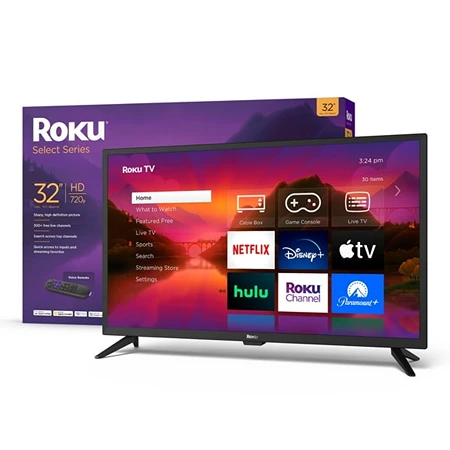
Roku Select Series HD 32R3B5
Best Small TV
The Roku Select Series HD 32R3B5 offers solid picture quality, built-in Roku smart TV features, and easy streaming in a compact 32-inch design.
Small kitchens, dorm rooms, and guest rooms need legibility and simple streaming more than cinematic HDR, which is the niche for the Roku Select Series HD 32R3B5. Its 32-inch, 1080p panel is sharp enough at ordinary small-room distances and avoids the visibly coarse 720p resolution still found in some inexpensive sets.
Roku’s interface is the main attraction. Apps and inputs appear in one understandable grid, universal search is useful, and the voice remote avoids the clutter of more elaborate smart-TV systems. Sponsored tiles and data collection remain part of the platform, but setup and everyday navigation are friendly to less technical viewers.
Three HDMI inputs and a USB port cover a streamer, console, disc player, or basic soundbar arrangement. One HDMI connection supports audio return, though shoppers should verify whether a listing specifies ARC or eARC because revisions and retailer suffixes can differ. The built-in speakers are intelligible for dialogue but thin, as expected from a compact cabinet.
The panel is limited to 60Hz and lacks meaningful HDR, high brightness, advanced local dimming, and wide-angle consistency. It is suitable for casual console play rather than competitive gaming, and strong daylight can wash out the image. Moving farther off center also reduces contrast.
Treat this as a convenient secondary screen, not a miniature premium television. Its low price, sensible resolution, and unusually approachable software are the advantages. Because the 32R3B5 designation is no longer the newest Roku suffix, confirm the actual model, included remote, input layout, and return terms rather than relying on a recycled marketplace title.
What size TV should you get?
Start from where you sit. A screen that fills 30° to 40° of your view feels right for most living rooms, which works out to roughly 6.5 to 9 feet for a 65-inch TV and 7.5 to 10 feet for a 75-inch. Our TV size calculator finds the range for your seating distance, and the size pages list real dimensions with and without the stand, so you can check a console or wall before ordering. To compare running costs, our TV power consumption calculator lists the measured wattage of these models and works out the yearly electricity cost.
How to choose
Measure the space, map the seating, count high-bandwidth devices, and check where windows reflect before choosing a display technology. A slightly larger screen or better glare control often changes everyday enjoyment more than an incremental processor or another headline brightness claim.
Finally, compare exact model numbers and screen sizes, particularly when shopping clearance inventory. Panel type, refresh rate, stand width, and even port capability can vary within a family. A seller with a sound return policy is valuable protection against both specification confusion and the panel-uniformity variation no review can predict for an individual unit.