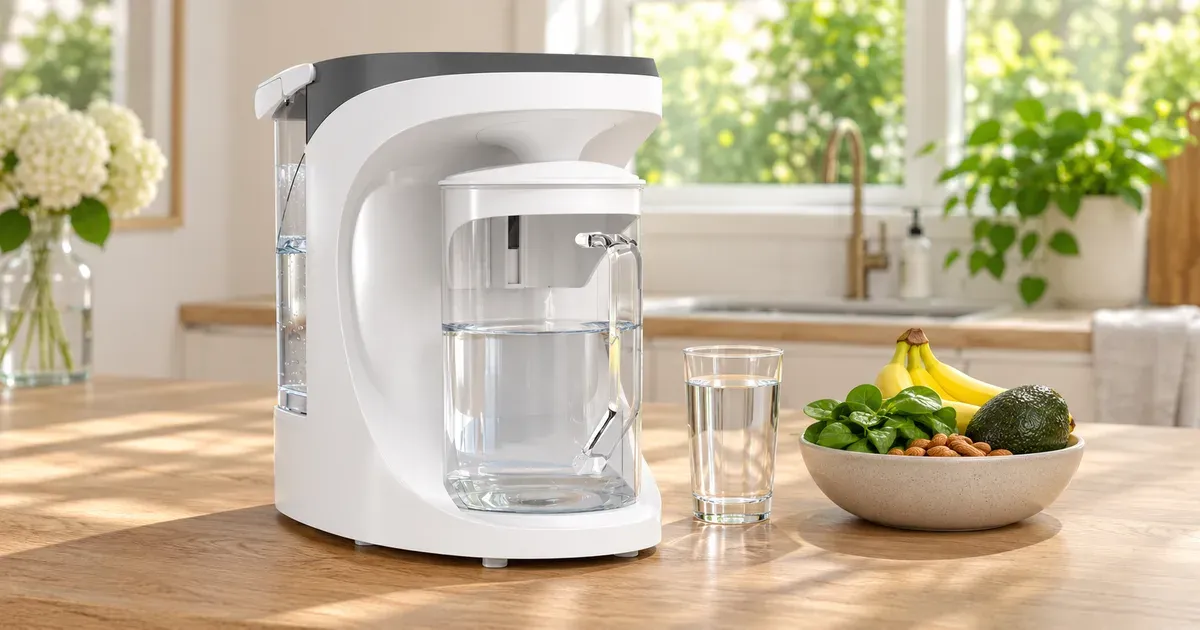
The short answer: yes, reverse osmosis water is safe to drink every day if you eat a normal diet. RO removes most of the calcium and magnesium in tap water along with the contaminants, but water supplies only a small share of those minerals; food supplies most of them. Germany’s Federal Institute for Risk Assessment found no adverse health effects from long-term drinking of very-low-mineral water alongside a balanced diet.
The honest caveat: observational studies link harder water, especially water with more magnesium, to slightly lower cardiovascular death rates. That evidence is low quality, and no study has looked at people drinking home RO water specifically. If it worries you, a remineralizing filter or a varied diet covers the gap.
What the Research Says About Minerals in Drinking Water
There are no randomized trials of drinking RO water. The evidence comes from observational studies comparing regions with harder and softer water, pooled in a few systematic reviews:
| Review | What it pooled | Finding | Evidence quality |
|---|---|---|---|
| Catling et al. 2008, J Water Health | 14 studies (9 case-control, 5 cohort) | More magnesium in drinking water: lower cardiovascular death, pooled OR 0.75 (95% CI 0.68 to 0.82). Calcium too inconsistent to pool. Cohort studies found no link between hardness and stroke or cardiovascular death. | Low: observational, case-control |
| Jiang et al. 2016, Nutrients | 10 studies, 77,821 coronary deaths | Higher water magnesium: lower coronary heart disease death, RR 0.89 (0.79 to 0.99), with high heterogeneity (I² 70.6%) | Low: observational, inconsistent results |
| Bykowska-Derda et al. 2023, Foods | 25 studies | 17 of 25 found harder water linked to lower cardiovascular death; the pooled effect was protective but heterogeneity was high. Authors note “many confounding factors.” | Low |
| Sunardi et al. 2024, Rev Environ Health | 10 studies of healthy people (4 on demineralized water) | No extra benefit from alkaline or oxygenated water vs. mineral water. Long-term demineralized water was linked to lower intake of some nutrients. | Low: few, small studies |
Three things keep this from meaning much for a home RO filter:
- The differences are small. In a Swedish cohort of 26,733 women (Helte et al. 2022), the low and high magnesium areas averaged about 5 and 10 mg/L. Two liters a day of the harder water supplies about 20 mg of magnesium, around 5% of the 310 to 420 mg adults need daily.
- Confounding is likely. Hard-water and soft-water regions differ in diet, income, smoking and climate, and these studies can only partly adjust for that.
- None of them studied RO drinkers. We found no systematic review on people drinking reverse osmosis water at home.
WHO and BfR on Low-Mineral Water
The World Health Organization’s 2005 report Nutrients in Drinking Water came from concern about populations drinking desalinated and membrane-treated water long term. It reviews the possible health risks of demineralized water, including a chapter on health risks from drinking it, and covers how such water should be remineralized.
Germany’s Federal Institute for Risk Assessment (BfR) assessed mineral water with very low mineral content in 2020. It concluded that long-term consumption doesn’t cause adverse health effects in people who eat a balanced diet and drink normal amounts, while noting that few studies exist (BfR).
Put together: low-mineral water isn’t harmful for people who eat normally. People on very restricted diets get a larger share of their minerals from water, so they lose a little more by switching to RO.
Is Reverse Osmosis Water Acidic?
Slightly, often. With the minerals gone, RO water has almost no buffering, so carbon dioxide from the air dissolves into it and forms a little carbonic acid. Freshly filtered RO water commonly tests around pH 6 to 7. That’s less acidic than coffee, juice or soda, and your stomach is far more acidic than any of them. The EPA’s pH range of 6.5 to 8.5 for public water is a non-enforceable guideline aimed at pipe corrosion and taste, not health.
Should You Add Minerals Back?
It’s optional. Remineralizing stages improve taste for many people, and they’re the simple fix if the mineral research above worries you. They make no proven health difference, and no countertop maker publishes how many milligrams of calcium or magnesium its mineral stage adds per liter, so you can’t count on it nutritionally.
- AquaTru sells a pH + Mineral Boost Alkaline VOC filter ($49.95) that adds calcium and magnesium and raises pH by 1 to 4 units, fading toward the end of its 600-gallon life.
- Bluevua’s ROPOT models include a mineral stage, and Waterdrop and SimPure sell alkaline or mineral versions of several units.
- Mineral drops added to a glass work too and let you control the dose.
Reverse Osmosis vs. Alkaline Water
Alkaline water’s health claims aren’t supported. The 2024 systematic review found no difference between alkaline water and ordinary mineral water in urine pH, blood measures, gut bacteria or fitness. If you like the taste, an alkaline post-filter is fine, but there’s no reason to pick it for health.
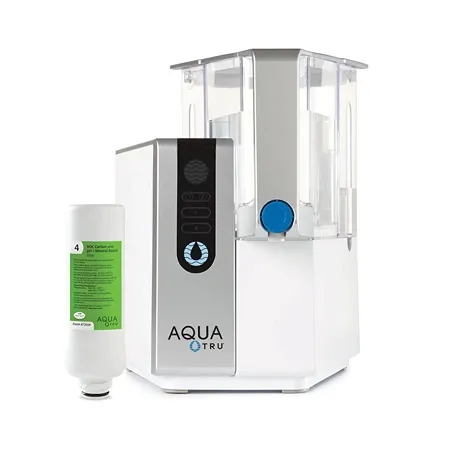
Certified for Fluoride, mineral filter
AquaTru Classic
Certified to cut fluoride 93.5% and lead 99.1%. Optional pH + Mineral Boost filter.
Can You Use Reverse Osmosis Water for Baby Formula?
Yes, for most babies, with one condition about germs.
- Most babies: The CDC says that most of the time it’s safe to mix powdered formula with tap water, “filtered or unfiltered,” as long as the water comes from a safe source (CDC). RO water qualifies.
- Babies under 2 months, born before 37 weeks, or with a weakened immune system: The CDC says to boil the water, then wait about five minutes before mixing, so the formula is hot enough to kill Cronobacter. That applies to RO water too. Countertop RO systems aren’t certified to kill germs, and their tanks hold water at room temperature.
- Fluoride: Mixing formula with fluoridated water can slightly raise the chance of mild dental fluorosis, faint white marks on teeth. The American Academy of Pediatrics calls fluoridated water safe for formula and says families who want to lower that risk can use purified water without fluoride (AAP). An RO system certified for fluoride reduction does that. The AquaTru Classic averages 93.5% fluoride reduction. Brands that only “tested” fluoride removal don’t give you that assurance.
Formula supplies the minerals a baby needs, so RO water’s low mineral content isn’t a concern for formula. Our list of the best countertop RO systems for fluoride covers the certified options.
Is Reverse Osmosis Water Good for Pets?
We found no systematic review or controlled study of pets drinking RO water. Dogs and cats on complete commercial diets get their minerals from food, as people do, so plain RO water is generally treated as fine for them. Ask your vet if your pet has urinary crystals, kidney disease or a prescription diet, because those plans sometimes depend on the water.
Fish are different. AquaTru’s manual says not to use its filtered water for aquarium water changes. Aquariums need minerals and stable pH added back, and aquarium keepers who use RO water remineralize it.
Is Reverse Osmosis Water Good for Plants?
Yes, and for some plants it’s better than tap water. Carnivorous plants and many orchids need low-mineral water, and RO water avoids the white salt crust that hard tap water leaves on soil and pots. Because RO water carries almost no nutrients, regular houseplants depend on fertilizer for calcium and magnesium.
Is Reverse Osmosis Water Healthy? FAQ
Is reverse osmosis water safe to drink every day?
Yes. Germany’s BfR found no adverse effects from long-term drinking of very-low-mineral water with a balanced diet. The minerals RO removes are mostly supplied by food.
Is reverse osmosis water bad for you because it removes minerals?
Not for people who eat a normal diet. Observational studies link more magnesium in drinking water to slightly lower cardiovascular death rates (OR 0.75 in a 2008 review), but the evidence is low quality and water provides only a small share of daily magnesium.
Is there a systematic review on drinking reverse osmosis water?
No. Reviews cover drinking-water hardness and magnesium, and one 2024 review covers demineralized water in four small studies. None studied people using home RO systems.
Should you add minerals back to reverse osmosis water?
You can, for taste or peace of mind, with a mineral cartridge or drops. No study shows a health benefit, and makers don’t publish how many minerals their cartridges add.
Is reverse osmosis water acidic?
Mildly. It often reads around pH 6 to 7 because carbon dioxide dissolves into unbuffered water. That isn’t a health concern.
Can you use reverse osmosis water for baby formula?
Yes. For babies under 2 months, preemies or babies with weak immune systems, boil the water and let it cool about five minutes before mixing, as the CDC advises for any water. A fluoride-certified RO system lowers fluorosis risk.
Is RO water better than alkaline water?
Neither has proven health benefits over ordinary water. RO removes contaminants; alkaline filters only change pH and minerals. The 2024 systematic review found no health differences from alkaline water.