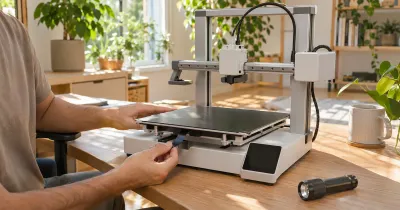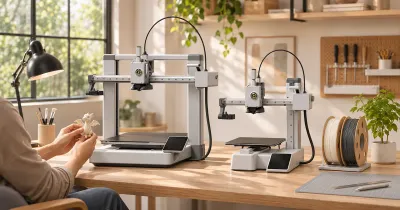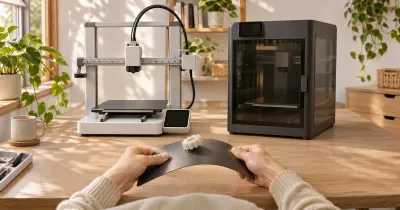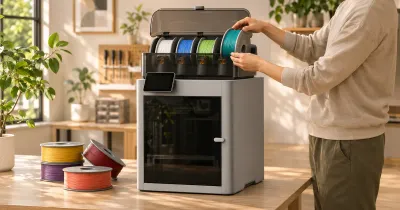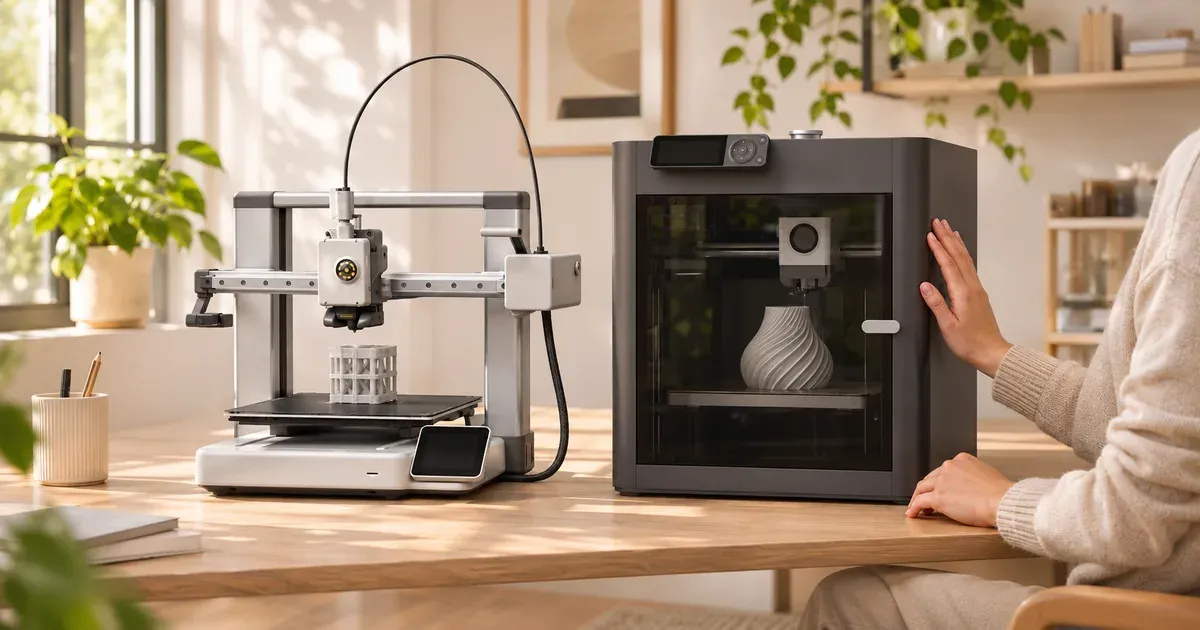
You need an enclosed 3D printer if you want to print ABS, ASA, nylon or polycarbonate. You don’t need one for PLA, PETG or TPU, which print as well or better on an open-frame printer. An enclosure keeps warm air around the part so tougher plastics don’t warp and crack, contains some of the fumes, and keeps hands and pets away from the hot nozzle. It doesn’t replace ventilation, and it doesn’t make a printer quiet. Matched open and enclosed printers from the same brand now differ by only $75 to $90.
Open vs. Enclosed at a Glance
| Open-frame | Enclosed | |
|---|---|---|
| PLA, PETG, TPU | Excellent | Excellent (open the door or lid for PLA) |
| ABS, ASA | Small parts only; large parts warp | Good; best with a heated chamber |
| Nylon, polycarbonate | Not recommended | Good, ideally with a heated chamber and dry filament |
| Fumes and particles | Released straight into the room | Partly contained; filtered on many models |
| Hot nozzle and moving parts | Exposed | Behind a door |
| Noise | Depends on the printer | Depends on the printer; fans often run harder |
| Typical price gap | $75 to $90 more for a matched model | |
| Examples | Bambu Lab A1 ($259), Elegoo Centauri 2 ($244) | Bambu Lab P1S ($349), Elegoo Centauri Carbon 2 ($319) |
Which Filaments Need an Enclosure
PLA doesn’t, and prefers fresh air. It softens at about 55 to 60°C, so it needs strong cooling to hold its shape. In a warm, closed chamber the heat can creep up the filament path and cause clogs. On enclosed printers, Bambu Lab and others suggest opening the door or lifting the lid for PLA.
PETG and TPU are fine either way.
ABS and ASA need one. They shrink noticeably as they cool. If the air around the part is cool or drafty, the lower layers contract while the upper ones are still hot, so corners lift off the bed and layers split. An enclosure holds the air around the part at 40 to 60°C and keeps drafts out.
Nylon and polycarbonate need one, ideally heated. They warp even more, and nylon also absorbs moisture fast. These print best on printers that actively heat the chamber, such as the Bambu Lab X2D and H2 series (65°C), the Creality K2 Plus and K2 Pro (60°C) and the Prusa CORE One+ (55°C).
Passive vs. Heated Chambers
Most affordable enclosed printers, including the Bambu Lab P1S and P2S, the Creality K2 and the Elegoo Centauri Carbon 2, are passively heated: the enclosure traps heat from the bed. That’s enough for small and medium ABS and ASA parts. Actively heated chambers add a heater and fan to hold the air at a set temperature. They cost more but make large ABS, nylon and polycarbonate parts far more reliable. See Bambu Lab P2S vs. X2D for what the upgrade buys.
Enclosures and Fumes
All filaments release ultrafine particles while printing, and some release volatile organic compounds. ABS releases more particles than PLA. NIOSH’s guide to safe 3D printing ranks the options:
- Use PLA where it does the job, at the lowest nozzle temperature that works.
- Prefer a ventilated or filtered enclosure. Filtered enclosures with HEPA and activated carbon filters cut particle emissions by 97 to 99 percent in the studies NIOSH cites. Built-in, manufacturer-designed filtration is preferred over retrofits.
- Vent larger enclosed printers outdoors where possible, or ventilate the room well. One study NIOSH cites recommends at least six air changes per hour or a portable HEPA air cleaner.
- Wait about 20 minutes after a print finishes before opening the enclosure.
- Keep your distance from running printers and check on them remotely.
So an enclosure helps, especially one with a filter, but an open window or an air purifier still matters, and an enclosure isn’t a reason to print ABS in a bedroom. Our best air purifiers guide covers HEPA purifiers.
Noise, Safety and Space
Noise. An enclosure muffles motor noise, but enclosed printers run their fans harder to move heat out, so they aren’t automatically quieter. Several open printers have lower published noise ratings than enclosed ones. See the quietest 3D printers.
Kids and pets. An enclosure puts the 200 to 300°C nozzle and moving parts behind a door, which is a real advantage in a family room. See our best 3D printers for kids.
Space. An enclosed CoreXY printer keeps everything inside its box. An open bed slinger needs clear space in front of and behind it for the bed to travel.
Can You Add an Enclosure Later?
Sometimes. Prusa sells an enclosure for its open MK4S, Snapmaker sells a top cover for the U1, and generic tent-style enclosures fit many open printers. Add-ons trap heat for ABS and keep dust off, but they rarely include the filtration and controlled exhaust that built-in enclosures have, and an enclosure around a printer not designed for one can overheat its electronics or PLA filament path. If you think you’ll want ABS or ASA, buying an enclosed printer is usually cheaper and simpler than enclosing an open one.
Which Should You Buy?
| If you… | Buy | Example |
|---|---|---|
| Will print only PLA and PETG | Open-frame | Bambu Lab A1, $259 |
| Want ABS or ASA for outdoor or car parts | Enclosed | Bambu Lab P1S, $349 |
| Want nylon or polycarbonate | Enclosed with active heating | Bambu Lab X2D, $589 |
| Have small kids or pets | Enclosed | Elegoo Centauri Carbon 2, $319 |
| Want the most flexibility for the money | Enclosed | Elegoo Centauri Carbon 2 Combo, $369 with four colors |
The A1 and P1S are compared in detail in Bambu Lab A1 vs. P1S.
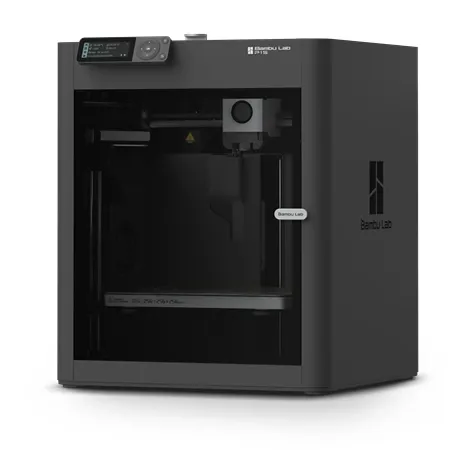
Best value enclosed printer
Bambu Lab P1S
An enclosed 256 mm CoreXY printer with a filtered exhaust fan, built for ABS and ASA as well as PLA.
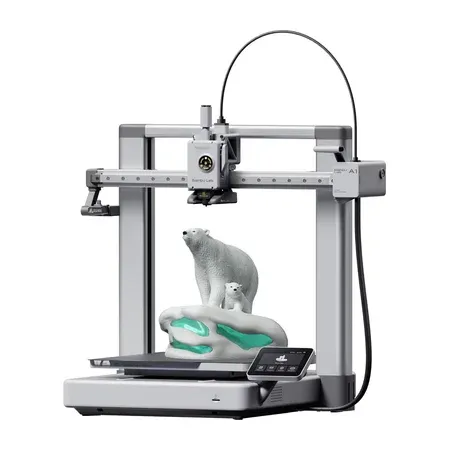
Best Open-Frame printer
Bambu Lab A1
A quiet, self-calibrating 256 mm printer for PLA, PETG and TPU, for $90 less than the P1S.
Enclosed vs. Open 3D Printer FAQ
Do I need an enclosure for PLA?
No. PLA prints best with plenty of cooling, and a closed, warm chamber can cause clogs. On an enclosed printer, open the door or lid for PLA.
Do I need an enclosure for PETG?
No. PETG prints well on open and enclosed printers.
Can you print ABS without an enclosure?
Small ABS parts sometimes work, but larger parts tend to warp and crack. ABS also gives off more particles and fumes than PLA, so an enclosed printer with filtration and good room ventilation is the safer setup.
Do enclosed 3D printers remove fumes?
Partly. Enclosures with HEPA and activated carbon filters greatly reduce particle emissions, and some vent outdoors. Room ventilation or an air purifier is still recommended, especially for ABS, ASA and resin.
Are enclosed 3D printers quieter?
Not necessarily. The panels muffle motor noise, but the fans often work harder. Compare published noise ratings rather than assuming.
Is an enclosed 3D printer safer for kids?
Yes. The door keeps fingers away from the hot nozzle and moving parts. Children should still print under supervision.