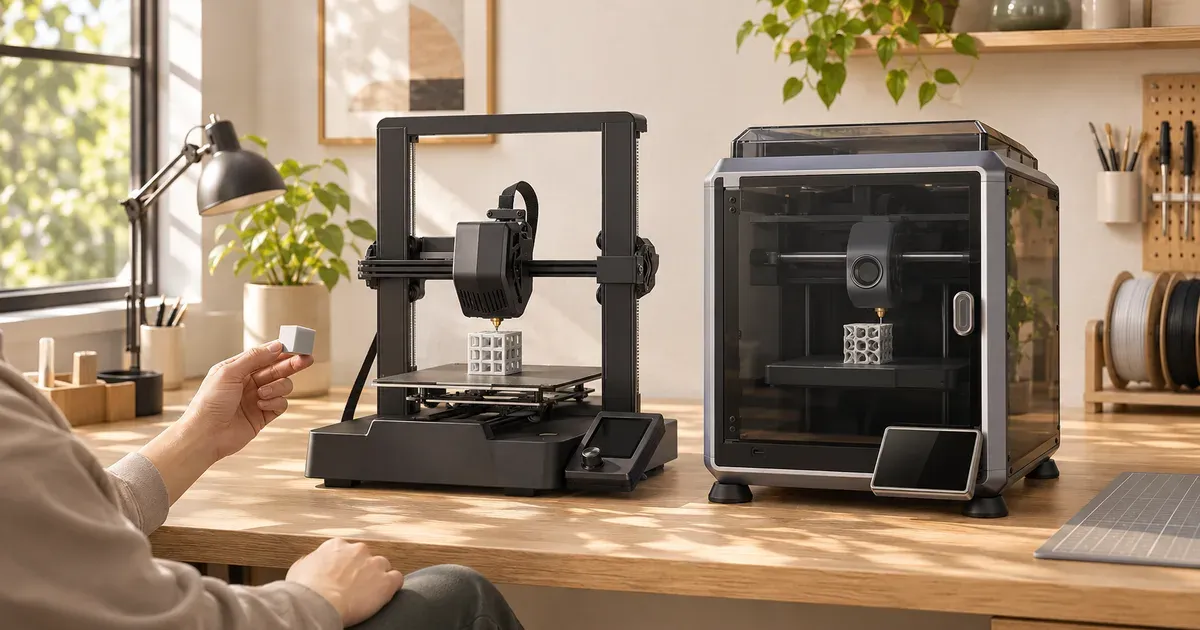
The short answer: CoreXY is the better design for speed, tall parts and enclosed printing; a bed slinger is the better value for PLA on a budget. A CoreXY printer moves only the light print head left, right, forward and back, and lowers the bed one layer at a time, so it can accelerate about twice as hard as a good bed slinger and keep tall parts steady. A bed slinger moves the whole bed, and the print on it, back and forth for one axis. That’s simpler and cheaper, and with modern vibration compensation, bed slingers like the Bambu Lab A1 print PLA almost as fast as CoreXY machines.
CoreXY vs. Bed Slinger at a Glance
| Bed slinger | CoreXY | |
|---|---|---|
| What moves front to back | The bed and the print | The print head |
| What moves up and down | The print head and gantry | The bed |
| Typical acceleration (current printers) | 2,500 to 10,000 mm/s² | 20,000 to 40,000 mm/s² |
| Tall, thin parts | Can wobble as the bed moves | Steady |
| Footprint | Needs space for the bed to travel | Stays inside its frame |
| Enclosure | Rare; add-on only | Common, built in (some are open, like the Elegoo Centauri 2) |
| Price | From about $199 | From about $244 (open), $319 (enclosed) |
| Repairs | Simple belts, easy access | Longer belts, more parts inside a box |
| Examples | Bambu Lab A1, A1 mini, A2L; Creality Ender-3 V3 SE; Prusa MK4S | Bambu Lab P1S, P2S, X2D, H2 series; Creality K1C and K2; Elegoo Centauri Carbon 2; Prusa CORE One+ |
How Each Design Moves
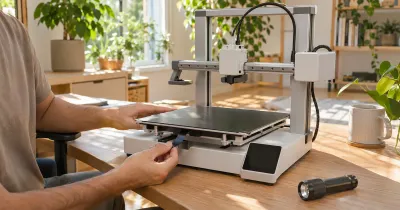
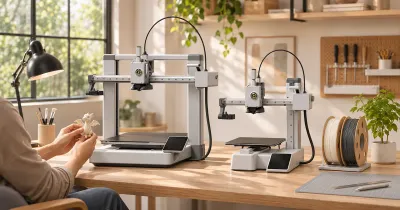
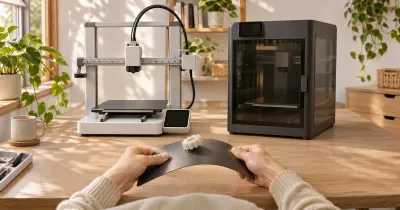
Bed slinger. Also called a Cartesian or “i3-style” printer. A gantry carries the print head left and right and moves up one layer at a time. The bed moves forward and back underneath it. The name comes from the bed slinging the print back and forth.
CoreXY. Two long belts, each driven by its own motor, work together to move the print head in both horizontal directions. Turning both motors the same way moves the head along one axis; turning them opposite ways moves it along the other. The bed only drops one layer at a time. Because the motors stay fixed to the frame, the moving mass is just the print head.
What the Difference Changes
Acceleration and speed
Moving a light print head instead of a heavy bed lets CoreXY printers change direction much harder. The published figures show it: the Bambu Lab A1 bed slinger is rated at 10,000 mm/s² and the CoreXY P1S at 20,000, with the same 500 mm/s top speed. The cheapest bed slinger here, the Creality Ender-3 V3 SE, is rated at 2,500. Among CoreXY printers, the Creality K2 Plus is rated at 30,000 and the Sovol SV08 at 40,000.
Acceleration matters more than top speed for real prints, because most moves are short. Our fastest 3D printers ranking has the full list.
Tall and heavy prints
On a bed slinger, the part moves with the bed. A tall, thin part, like a vase or a figure’s raised arm, sways as the bed changes direction, which can leave ripples or knock it loose. On a CoreXY printer the part stays still, so tall prints are more reliable.
Input shaping narrowed the gap
Modern printers measure their own vibrations and shape their movements to cancel them, a feature usually called input shaping or vibration compensation. It’s why the A1, the A2L and the Prusa MK4S, all bed slingers, print much faster and cleaner than bed slingers did a few years ago. For PLA toys, gifts and household parts, a good bed slinger now produces the same quality in nearly the same time.
Enclosures
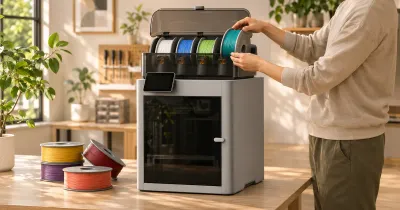
A CoreXY printer is a box with a print head on top and a bed that moves down, which makes it easy to enclose. That’s why nearly every enclosed consumer printer is CoreXY. Bed slingers need a large enclosure to fit the bed’s travel, so they’re almost always open. If you want to print ABS, ASA or nylon, which need an enclosure, you’ll end up with a CoreXY printer. See enclosed vs. open-frame 3D printers.
Footprint
A bed slinger needs clear space in front of and behind it for the bed to travel, roughly twice the bed depth. A CoreXY printer of the same build volume stays inside its own frame.
Cost and repairs
Bed slingers have fewer parts and shorter belts, so they cost less to build and are easier to fix. The cheapest current printers, such as the $199 Ender-3 V3 SE and the $199 Bambu A1 mini on sale, are bed slingers. CoreXY printers have long belts that must be tensioned evenly, and the mechanics sit inside an enclosure, which makes some repairs more involved.
Other Designs
- Flying gantry CoreXY (Voron 2.4 and the Sovol SV08): the bed stays fixed and the whole gantry moves up, with four motors keeping it level. Good for large build volumes.
- IDEX (independent dual extruders, such as the Rat Rig V-Core 4.1 IDEX option): two print heads on separate carriages for two materials or two copies at once.
- Toolchangers (Bambu Lab H3C, Snapmaker U1, Prusa INDX): printers that swap between several print heads.
Which Should You Buy?
| If you… | Better design | Example |
|---|---|---|
| Print PLA and PETG on a budget | Bed slinger | Bambu Lab A1, $259 |
| Want the quietest small printer | Bed slinger | Bambu Lab A1 mini, $199 (under 48 dB in Silent Mode) |
| Print tall parts or want the fastest prints | CoreXY | Bambu Lab P1S, $349 |
| Want ABS, ASA or nylon | CoreXY with enclosure | Elegoo Centauri Carbon 2, $319 |
| Like to tinker and repair | Bed slinger | Prusa MK4S kit, $709 |
The A1 and P1S, Bambu’s examples of each design at nearby prices, are compared in Bambu Lab A1 vs. P1S.
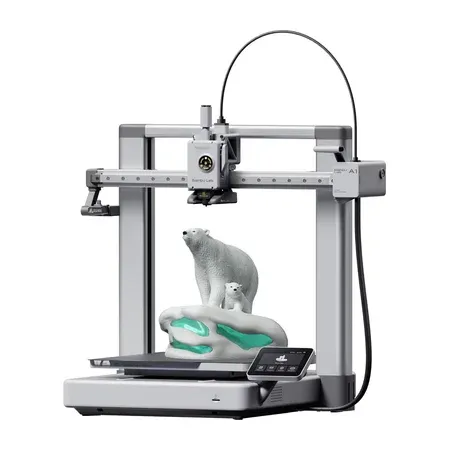
Best bed slinger
Bambu Lab A1
A 256 mm bed slinger with automatic vibration compensation, rated at 10,000 mm/s² acceleration.
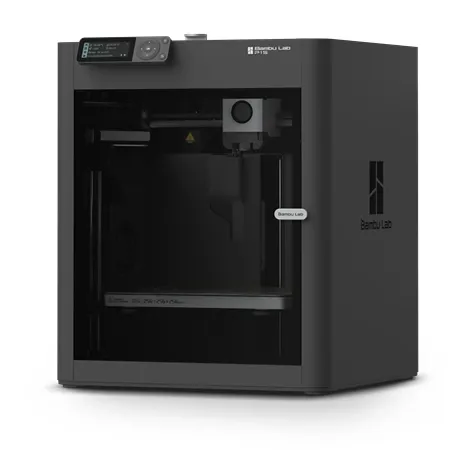
Best value CoreXY
Bambu Lab P1S
An enclosed 256 mm CoreXY printer rated at 20,000 mm/s², twice the A1's acceleration.
CoreXY vs. Bed Slinger FAQ
Is CoreXY better than a bed slinger?
For speed, tall parts and enclosed printing, yes. For PLA on a budget, a modern bed slinger with vibration compensation is just as good and costs less.
Is the Bambu Lab A1 CoreXY?
No. The A1, A1 mini and A2L are bed slingers. Bambu describes the A1 mini as a bed slinger “with CoreXY speed” because of its vibration compensation. The P1S, P2S, X2D and H2 series are CoreXY.
Why are bed slingers cheaper?
They have fewer and shorter belts, simpler frames and no enclosure, so they cost less to build.
Are CoreXY printers harder to maintain?
Somewhat. Their long belts need even tension, and the mechanics sit inside an enclosure. Current CoreXY printers calibrate themselves, so routine maintenance is similar: clean the bed, check the nozzle and lubricate the rods or rails occasionally.
Can a bed slinger print ABS?
Small ABS parts, sometimes. Larger parts warp without an enclosure, and bed slingers rarely have one.