
Layout and switch feel matter more than the label “mechanical.” A full-size board preserves every key, a 96% layout compresses the number pad, and a 75% board frees mouse space; linear, tactile, and clicky switches then change how each of those layouts feels and sounds.
We compared current specifications with extensive typing, gaming, and ownership reports, focusing on stabilizers, acoustics, latency, wireless behavior, software, keycaps, hot-swap support, and repairability. Variant names are critical because lighting, switches, connectivity, and programmability can differ inside the same family.
Keychron V6 Max
Best Overall Option
An affordable full-size mechanical keyboard with hot-swappable switches and wired/wireless connectivity.
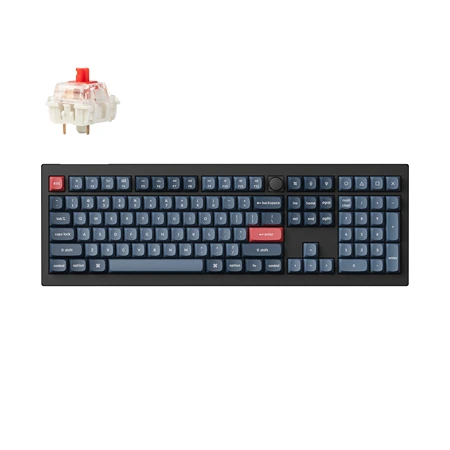
Few full-size boards combine enthusiast features and ordinary office practicality as coherently as the Keychron V6 Max. Its gasket-mounted polycarbonate plate, dampening layers, and screw-in stabilizers produce a softer, more controlled bottom-out than the hollow plastic case suggests.
The 108-key layout retains a number pad and adds a knob plus programmable controls, but the result is nearly 18 inches wide and about 2.45 pounds. Double-shot PBT OSA keycaps resist shine and feel substantial, though their legends do not transmit the south-facing RGB light. A wrist rest may help users sensitive to the relatively tall front edge.
Hot-swap sockets accept three- and five-pin MX-style switches, making the stock Gateron Jupiter Red, Brown, or Banana choice reversible. Keychron’s screw-in stabilizers are serviceable and large keys sound comparatively composed. The plastic chassis lacks aluminum luxury but is easier to justify at this price and does not meaningfully flex in normal use.
Subscribe to Product Bible
Stay updated with the latest product reviews, buying guides, and expert recommendations. Fresh advice on the best things we've researched, tested, and reviewed, sent to your inbox weekly.
Want to know more about how we handle your data or opt out of marketing emails? Check out our Privacy Policy. If you have any questions, we're always here to help.
Wired and 2.4GHz modes poll at 1,000Hz, while Bluetooth favors battery life and multi-device convenience at 90Hz. Both USB-A and USB-C receivers are included and store in the case. The 4,000mAh battery is rated for long operation, with RGB brightness and connection mode strongly affecting the result.
QMK/VIA and Keychron Launcher support deep remapping, macros, layers, and knob behavior, generally through a wired browser connection. Mac and Windows keycaps and a physical layout switch are included. Keychron’s limited one-year warranty is the weak point, but replaceable switches, keycaps, stabilizers, and firmware make the board unusually maintainable.
LOFREE Flow84
Best Upgrade Option
This high-end keyboard combines a slim aluminum build with Kailh Full POM low-profile switches, a gasket mount design, and vibrant RGB sidelighting.
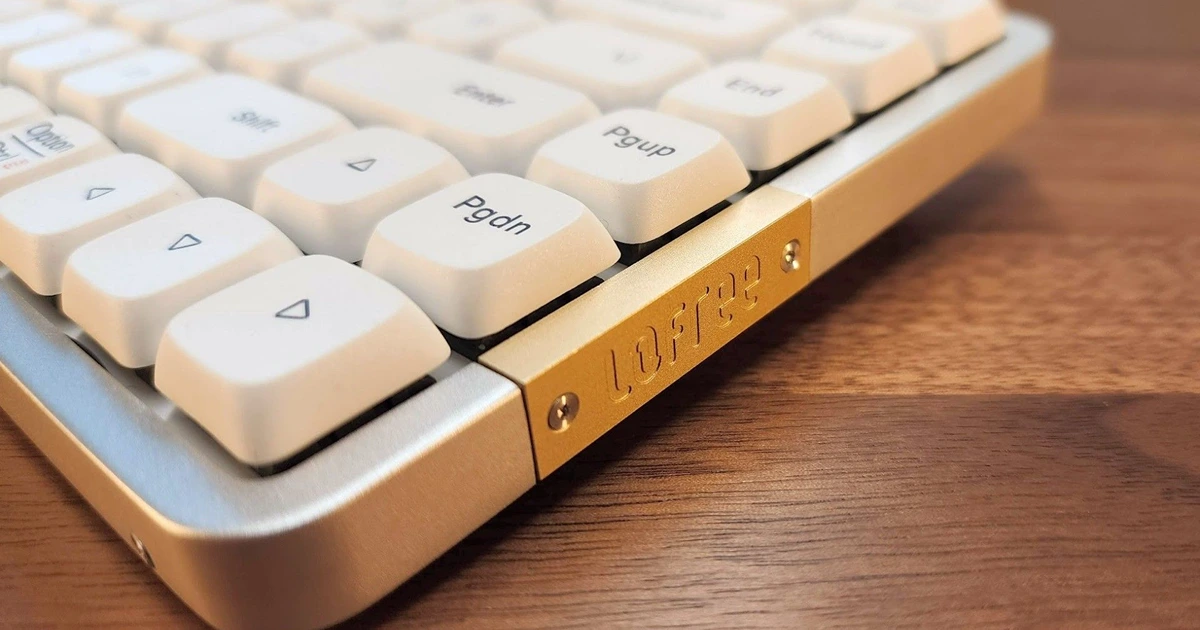
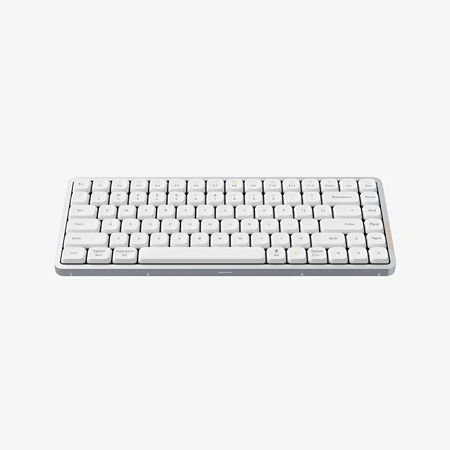
Slim keyboards rarely sound this deliberate, which explains the appeal of the LOFREE Flow84. Its 84-key aluminum chassis uses a low-profile gasket mount and Kailh full-POM switches to create a smooth, cushioned stroke without the height of a conventional custom board.
Ghost linear and Phantom tactile configurations provide distinct feel, and compatible low-profile switches can be swapped without soldering. The hot-swap ecosystem is narrower than standard MX, so “customizable” does not mean every desktop switch will fit. Dye-sublimated PBT keycaps feel durable, but unusual low-profile sizes also constrain replacement sets.
White key backlighting and colored side lighting suit the restrained design, while the fixed 3.9-degree angle keeps the front low. There are no flip-out feet, 2.4GHz receiver, extensive software suite, or conventional RGB legends. Its strengths are physical typing and construction rather than feature density.
Bluetooth can pair with three devices and USB-C supplies a wired mode. The 2,000mAh battery is rated up to 40 hours, with real use varying by lighting and sleep behavior; this is modest beside newer wireless boards. Bluetooth latency is fine for writing and casual play but not the reason to buy a premium gaming keyboard.
The Flow84 first came to our attention through David Heinemeier Hansson, the Basecamp co-founder and Ruby on Rails creator, who publicly praised its sound and longer-travel feel after years of defending very low-profile Apple keyboards. That anecdote captures the product well: it can make typing feel newly satisfying, but buyers pay for that sensory experience while accepting limited software and connectivity.
Keychron V5 Max
Best Compact Option
A 96% layout with rotary knob, hot-swappable switches, and multi-device wireless support in a space-saving design.
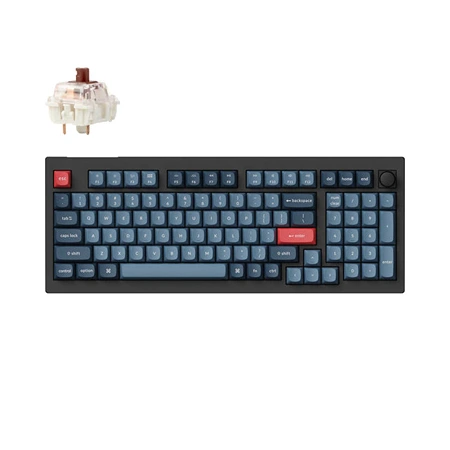
The Keychron V5 Max squeezes arrows, navigation keys, and a number pad into a 96% footprint that leaves more room for a mouse than a conventional full-size board. That density is productive once learned and initially disorienting because familiar gaps no longer guide the hand.
Its gasket mount, polycarbonate plate, foam, pre-lubed switches, and screw-in stabilizers mirror the V6 Max’s value-focused construction. Stock Gateron Jupiter options cover linear and tactile preferences, while hot-swap sockets accept three- and five-pin MX switches. Double-shot PBT OSA caps feel good, though several compressed-layout keys use nonstandard sizes.
Wired USB-C and 2.4GHz modes deliver 1,000Hz polling for responsive gaming, while Bluetooth connects several everyday devices. USB-A and USB-C receivers store onboard, and the 4,000mAh battery prioritizes useful endurance. Wireless reliability still depends on receiver placement and avoiding a congested hub behind a metal desktop.
QMK/VIA and Keychron’s browser launcher allow key, layer, macro, lighting, and knob changes. A hardware switch and replacement caps support macOS and Windows. Programming is powerful but less approachable than mainstream peripheral software, and browser recognition sometimes requires the correct definition or wired connection.
The compact number pad is the reason to choose this model and its largest compromise. Touch typists who rely on a standard zero, Shift, or navigation cluster should study the layout first. For spreadsheet work and gaming on the same desk, it preserves nearly every function without the width of the V6.
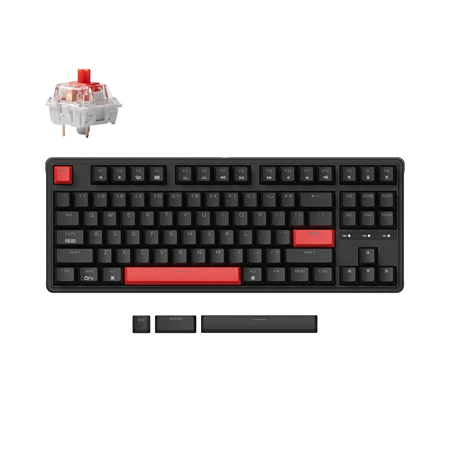
Keychron C3 Pro
Best Budget Option
Excellent value with a solid build, smooth stabilizers, and VIA support for budget-conscious typists and gamers.
The Keychron C3 Pro demonstrates how much a wired tenkeyless board can offer when wireless radios, a battery, and an aluminum case are removed. Its 80% layout keeps dedicated arrows and navigation keys while reclaiming the number pad’s desk width.
Configuration must be checked carefully. The base red-backlit C3 Pro may use soldered switches, while higher-priced RGB versions can add hot-swap sockets; the newer C3 Pro 8K is another distinct model. Retail pages often combine reviews across them, so a buyer should confirm the exact SKU rather than assume every listed feature applies.
Gasket-style construction and internal foam tame the hollow sound common to inexpensive boards, and stabilizers are better than the price implies. ABS keycaps eventually shine, but the standard layout accepts broad aftermarket replacements. The case is tall enough that some users will want a wrist rest.
QMK/VIA support enables remapping and macros, and a 1,000Hz wired polling rate on the common version is sufficient for mainstream gaming. There is no Bluetooth or 2.4GHz mode to troubleshoot and no battery to age. Mac and Windows behavior is switched by a shortcut, with shared legends rather than a complete extra keycap set.
Its compromises are materials, switch choice, and configuration ambiguity, not a poor typing foundation. Spending more is worthwhile for wireless use or effortless switch experimentation. As a permanently wired first mechanical keyboard, the C3 Pro is unusually capable and inexpensive.
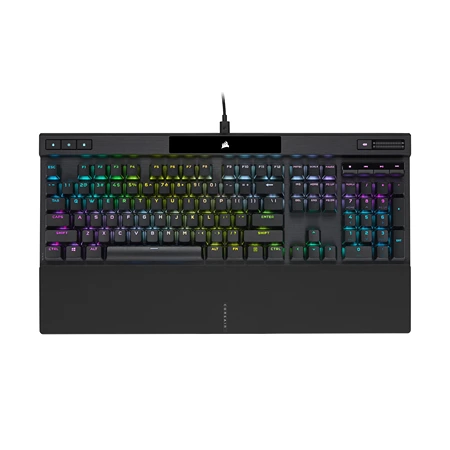
Corsair K70 RGB PRO
Best for Gaming
Fast Cherry MX mechanical switches, a durable aluminum frame, dedicated media controls, and deep iCUE customization.
Tournament-friendly controls and immediate software integration define the Corsair K70 RGB PRO. Its full-size layout includes dedicated media keys, a metal volume roller, per-key lighting, onboard profiles, and a detachable USB-C cable in a rigid aluminum-topped chassis.
The standard K70 RGB PRO uses conventional Cherry MX mechanical switches with a fixed actuation point, and the board is not hot-swappable. Buyers who want adjustable magnetic switches or dual-action keys should look specifically for the K70 MAX, since the two models have meaningfully different hardware despite their similar names.
AXON processing supports very high USB polling, although the real advantage over 1,000Hz is small for most players and can add system overhead. Latency is excellent, full rollover is expected, and a tournament switch disables macros and changes lighting for competitive environments. The board remains wired-only.
Corsair’s iCUE software provides deep lighting, remapping, macros, profiles, and integrations, but it is a large background application. Hardware profiles preserve selected settings without keeping iCUE open. PBT double-shot keycaps and the aluminum top improve durability, while the detachable wrist rest is comfortable but not truly memory foam on every regional bundle.
This is now an older mainstream gaming design competing with Hall-effect boards and quieter enthusiast models. It makes sense at a discount for users already invested in iCUE and wanting dedicated controls. Adjustable actuation should never be the purchase reason for this exact RGB PRO model.
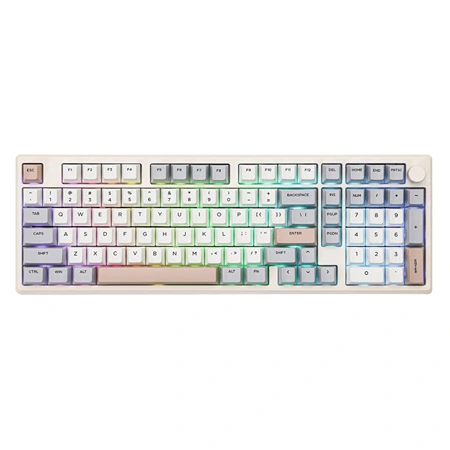
Epomaker Galaxy100
Another Great Option
A compact 96% keyboard with vibrant RGB, hot-swappable switches, and wireless performance in white or black.
An aluminum case at a relatively accessible price gives the Epomaker Galaxy100 its immediate presence. The 96% layout preserves a number pad, the gasket mount and internal dampening produce a deep sound, and the finished board is heavy enough to stay planted.
Hot-swap sockets accept three- and five-pin MX switches, while factory-lubed linear options and stabilizers provide a smooth stock experience. Thick PBT keycaps reinforce the muted acoustic character. The compressed bottom row and number pad can complicate replacement sets, and stock switch names vary among revisions and sellers.
USB-C, 2.4GHz, and Bluetooth support work, gaming, and multi-device use, with a large battery rated for exceptionally long unlit operation. RGB and 2.4GHz reduce that headline endurance substantially. Receiver placement matters, and firmware or sleep behavior has generated more mixed owner feedback than on mature mainstream boards.
Subscribe to Product Bible
Stay updated with the latest product reviews, buying guides, and expert recommendations. Fresh advice on the best things we've researched, tested, and reviewed, sent to your inbox weekly.
Want to know more about how we handle your data or opt out of marketing emails? Check out our Privacy Policy. If you have any questions, we're always here to help.
Programmability is another revision trap. Newer Galaxy100 QMK/VIA versions and older proprietary-software versions coexist, and Epomaker publishes different JSON files based on purchase date. Confirm the actual PCB and software before buying if browser-based VIA remapping is essential.
The fixed typing angle lacks adjustable feet, there are no macOS-specific replacement caps in every bundle, and support quality is less predictable than the hardware specification suggests. It is compelling for someone who values aluminum weight, a number pad, and a polished stock sound. Buyers prioritizing documentation and long-term firmware support may prefer Keychron’s plainer chassis.
Choose the physical layout first, then try switch types before buying a large set. Our keyboard size guide draws full size, 96%, TKL, 75%, 65% and 60% to scale and shows how much mouse room each one frees. Hot-swap support makes switch changes easier but does not standardize low-profile parts, keycap sizes, firmware, or stabilizers. Sound samples are also highly dependent on the desk, room, microphone, and selected switch.
For wireless boards, test every mode and update firmware while the return window is open. Store receivers away from interference, keep configuration files, and verify that remaps persist without software. A keyboard with replaceable switches and standard keycaps can evolve for years if its controller and configuration tools remain supported.