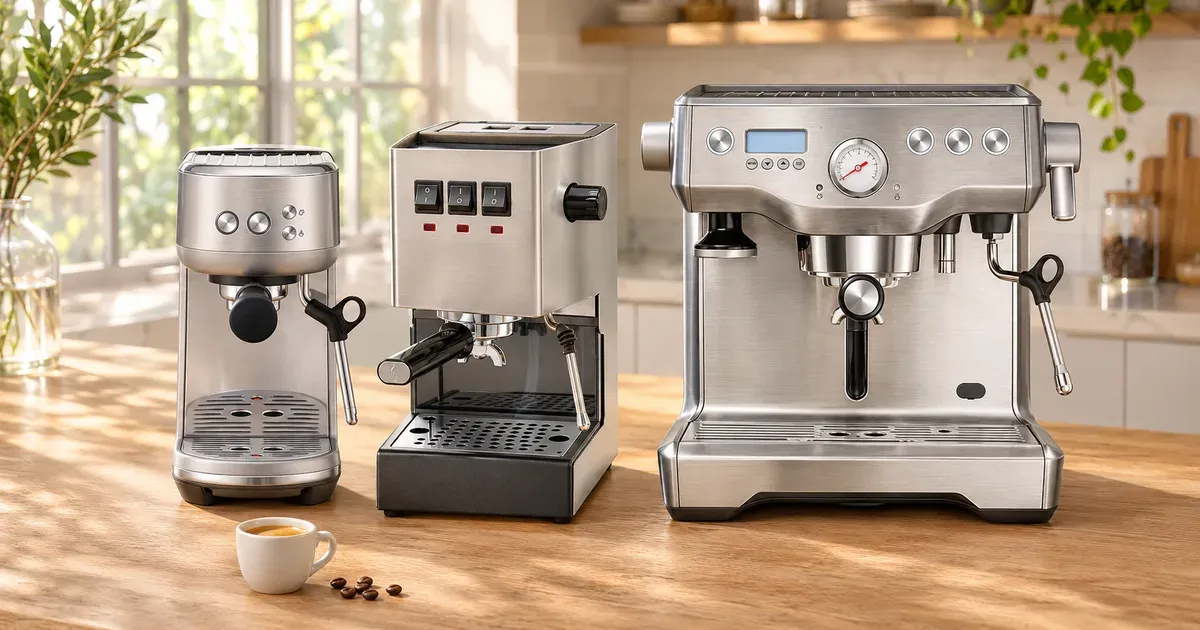
The short answer: a single boiler is fine if you mostly drink espresso, a heat exchanger or dual boiler is worth it if you make milk drinks back to back, and a thermoblock machine is the cheap, fast-heating option for one or two drinks a day. The difference is how a machine makes water at two temperatures: about 195 to 205°F for brewing and much hotter, pressurized steam for milk. A single boiler does both jobs in turn, a heat exchanger runs one hot boiler with a separate brew line through it, a dual boiler has a dedicated boiler for each job, and a thermoblock heats water on demand as it flows.
Example prices on November 16, 2026: thermoblock machines start at $299.95 (Breville Bambino), single boilers at $149.95 (De’Longhi Stilosa) and $449.76 for a 58 mm Gaggia Classic Pro E24, heat exchangers at $1,699.95 (Lelit Mara X), and dual boilers at $1,599.95 (Breville Dual Boiler).
The Four Heating Systems at a Glance
| Thermoblock / ThermoJet | Single boiler | Heat exchanger (HX) | Dual boiler | |
|---|---|---|---|---|
| How it heats | Heats water as it flows through a heated block or coil | One boiler, switched between brew and steam temperature | One boiler held at steam temperature; brew water runs through a tube inside it | Separate brew and steam boilers |
| Brew and steam at once | Usually no | No | Yes | Yes |
| Brew temperature control | Often PID (Breville) | Thermostat on most | Indirect, set by boiler pressure and flushing | PID on the brew boiler, often both |
| Steam power | Modest | Good for one drink, then recovers | Strong, continuous | Strong, continuous |
| Warm-up | Seconds (Breville rates ThermoJet at 3 s) | Not published by Gaggia or Rancilio | Under 24 min (Lelit Mara X) | Under 15 min (Lelit Elizabeth) to under 24 min (Lelit Bianca) |
| Example prices below | $249.95 to $849.95 | $149.95 to $995 | $1,699.95 | $1,599.95 to $2,999.95 |
| Best for | Fast, easy drinks; small kitchens | Espresso first, the odd latte | Several milk drinks in a row | Milk drinks plus precise espresso |
Warm-up figures are maker ratings from Breville and Lelit.
Example Machines of Each Type
| Machine | Type | Boiler(s) | Temperature control | Price, Nov. 16, 2026 |
|---|---|---|---|---|
| Breville Bambino (BES450) | ThermoJet | None | PID | $299.95 |
| Breville Bambino Plus (BES500) | ThermoJet | None | PID | $499.95 |
| Breville Barista Express (BES870) | Thermocoil | None | PID | $699.95 |
| Breville Barista Pro (BES878) | ThermoJet | None | PID | $849.95 |
| De’Longhi Dedica Maestro Plus (EC950M) | Thermoblock | None | Not stated | $249.95 (was $499.95) |
| De’Longhi Stilosa (EC260BK) | Single boiler | Stainless steel | No setting | $149.95 |
| Gaggia Classic Pro E24 | Single boiler | 3.5 oz brass | Thermostat | $449.76 Amazon, $549 Gaggia |
| Rancilio Silvia | Single boiler | 0.3 liter | Thermostat | $995 Amazon |
| Lelit Mara X | Heat exchanger | 1.8 liter | Lelit’s brew-temperature control, 3 settings | $1,699.95 |
| Breville Dual Boiler (BES920) | Dual boiler | PID brew boiler, 950 ml steam boiler | PID | $1,599.95 |
| Lelit Elizabeth | Dual boiler | 0.3 L brass coffee, 0.6 L stainless steam | Adjustable both | $1,799.95 |
| Rancilio Silvia Pro X | Dual boiler | 0.3 L coffee, 1 L steam | 2 PIDs | $2,195 Amazon |
| Lelit Bianca | Dual boiler | 800 ml coffee, 1.5 L steam | LCC controller, flow paddle | $2,999.95 |
| Breville Oracle Dual Boiler (BES995) | Dual boiler, automatic | Dual stainless | PID | $2,999.95 |
Prices are from each maker’s US site unless marked Amazon. Specs are from Breville, De’Longhi, Gaggia, Rancilio and Lelit product pages.
Single Boiler: One Boiler, Two Jobs
A single-boiler machine has one boiler that sits at brew temperature. To steam milk, you flip a switch and the boiler heats until it makes steam. After steaming, the boiler is too hot to brew, so you wait for it to cool or run water through the group to bring the temperature down. That makes it slow for two lattes in a row, but simple, compact and cheap.
Boiler size matters. The Gaggia Classic Pro E24’s 3.5 oz brass boiler is enough steam for one drink’s milk; the Rancilio Silvia’s 0.3-liter boiler holds about three times as much and steams longer. We compare the two in Gaggia Classic Pro vs. Rancilio Silvia. Most single boilers in this price range use a thermostat, not a PID, so brew temperature swings within a range.
Heat Exchanger: One Boiler at Steam Temperature
A heat-exchanger machine keeps its single boiler at steam temperature all the time, so steam is always ready. Fresh brew water doesn’t come from the boiler; it runs through a separate tube (the heat exchanger) that passes through the hot boiler, picking up heat on the way to the group. You can brew and steam at the same time.
The trade-off is brew temperature. Because the boiler is hotter than brewing water should be, water sitting in the exchanger can overheat between shots, and owners of traditional HX machines flush some water before brewing. Newer designs control this electronically: Lelit says its Mara X keeps the brew temperature constant and avoids “the overheating typical of classical HX systems,” with three temperature settings. The Mara X has a 1.8-liter boiler, and Lelit rates its warm-up at under 24 minutes.
Dual Boiler: A Boiler for Each Job
A dual-boiler machine has a brew boiler held at brew temperature, usually by a PID, and a separate steam boiler. You get stable, adjustable brew temperature and full steam at the same time, which is why it’s the choice for people who want precise espresso and several milk drinks. The cost is price, size and warm-up. The Breville Dual Boiler is the cheapest common example at $1,599.95; Lelit’s Elizabeth ($1,799.95) and Bianca ($2,999.95) and Rancilio’s Silvia Pro X ($2,195) are the usual Italian alternatives.
Thermoblock, Thermocoil and ThermoJet: No Boiler at All
Many espresso machines, including every Breville in the table above except the two dual boilers, heat water on demand instead of storing it. A thermoblock is a heated metal block with a water channel through it; a thermocoil is a heated coil; ThermoJet is Breville’s name for its fast version, rated at 3 seconds to heat up. With a PID, as on every Breville listed above, brew temperature is steady. Steam usually comes from the same heater, so you steam after brewing rather than at the same time, and steam power is usually lower than from a boiler. For one or two drinks a day, a thermoblock machine is faster to use than any boiler machine.
Which Should You Buy?
- Mostly espresso, the occasional milk drink: a single boiler (Gaggia Classic Pro E24) or a thermoblock with PID (Breville Bambino).
- One latte a day, fast: a thermoblock machine. The Bambino Plus even textures milk for you; see Bambino Plus vs. Gaggia Classic Pro.
- Several milk drinks in a row: a heat exchanger or dual boiler.
- Milk drinks plus control over brew temperature: a dual boiler with PID, starting with the Breville Dual Boiler.
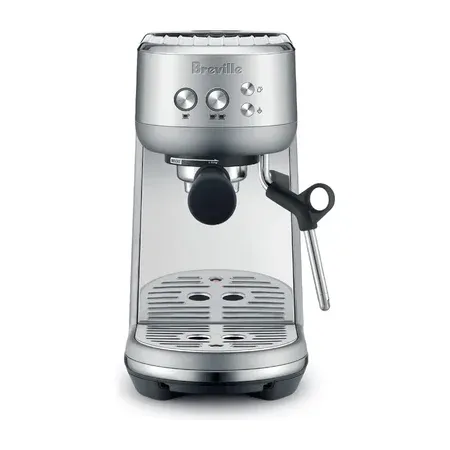
Best thermoblock machine
Breville Bambino
ThermoJet heating ready in 3 seconds, PID, pre-infusion and a 54 mm portafilter.
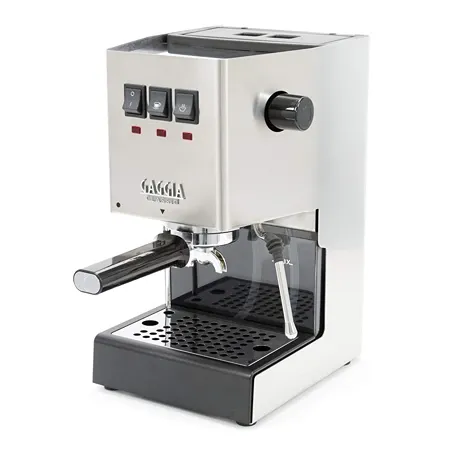
Best single boiler
Gaggia Classic Pro E24
3.5 oz lead-free brass boiler, 58 mm portafilter, 9-bar OPV and a commercial-style steam wand.
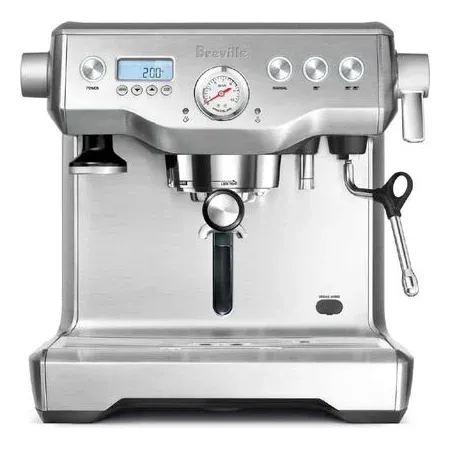
Most affordable dual boiler
Breville Dual Boiler
PID brew boiler, 950 ml steam boiler, heated group and 58 mm portafilter. Brew and steam at once.
For full picks by budget, see our guides to the best home espresso machines and the best cheap espresso machines.
Espresso Machine Boiler Types FAQ
What is the difference between a single boiler and a dual boiler espresso machine?
A single boiler does brewing and steaming in turn, so you wait between the shot and the milk. A dual boiler has a separate brew boiler and steam boiler, so you can brew and steam at the same time with stable brew temperature.
Is a dual boiler espresso machine worth it?
It’s worth it if you make several milk drinks in a row or want to adjust brew temperature precisely. If you mostly drink espresso, a single boiler or a thermoblock machine with PID makes comparable shots for much less; the cheapest common dual boiler, the Breville Dual Boiler, is $1,599.95.
What is a heat exchanger espresso machine?
It has one large boiler kept at steam temperature, with a separate tube carrying brew water through it. Steam is always ready and you can brew and steam at once, but brew temperature is harder to control than with a dual boiler’s PID brew boiler.
Which is better, a thermoblock or a boiler espresso machine?
A thermoblock is faster (Breville rates its ThermoJet at 3 seconds), smaller and cheaper, and with a PID it brews at a steady temperature. A boiler machine has more steam power and thermal mass, and heat-exchanger and dual-boiler machines can steam while brewing. For one or two drinks a day, a thermoblock is the practical choice.
Can a single boiler espresso machine brew and steam at the same time?
No. The boiler has to heat up to steam temperature after you brew, and cool down again before the next shot. Heat-exchanger and dual-boiler machines can do both at once.
How long do dual boiler espresso machines take to heat up?
Lelit rates its Elizabeth at under 15 minutes and its Bianca at under 24 minutes. Machines with large boilers and heavy groups take longer than thermoblock machines, which heat in seconds.