Retinol, retinal and tretinoin are all forms of vitamin A, and they all end up doing the same job in your skin. The difference is how many steps each one needs before skin can use it. Tretinoin is the active form, retinoic acid, so it works immediately. Retinal (short for retinaldehyde) is one step away, and retinol is two. Each extra step makes a retinoid gentler and slower.
The short answer: if you’re new to retinoids, start with an over-the-counter retinol or retinal a few nights a week. Retinal works a little faster and is still gentle. For acne, try adapalene (Differin), the one acne retinoid you can buy without a prescription. For the strongest anti-aging and acne results, ask a doctor about tretinoin, which is prescription-only in the US and the most studied retinoid by far. Whatever you pick, consistency matters more than strength.
The Retinoid Ladder
| Retinoid | Steps to retinoic acid | Prescription? | Typical strengths | Strength and irritation |
|---|---|---|---|---|
| Retinyl esters (retinyl palmitate) | 3 | No | Varies, often unlisted | Weakest, gentlest |
| Retinol | 2 | No | 0.1% to 1% | Mild to moderate |
| Retinal (retinaldehyde) | 1 | No | 0.03% to 0.1% | Moderate; faster than retinol |
| Adapalene | None (binds receptors directly) | No at 0.1%; yes at 0.3% | 0.1%, 0.3% | Moderate; well tolerated for acne |
| Tretinoin (retinoic acid) | None | Yes | 0.025% to 0.1% | Strongest; most irritating |
| Tazarotene, trifarotene | None | Yes | 0.005% to 0.1% | Strong; mostly for acne and psoriasis |
Skin converts retinol to retinal, and retinal to retinoic acid, using enzymes. Only a fraction of what you apply makes it through, so percentages don’t compare across types. A 1% retinol isn’t ten times stronger than 0.1% tretinoin. Many dermatologists treat retinol as roughly ten times weaker than tretinoin at the same percentage, a rule of thumb rather than a measured conversion.
Retinol vs. Tretinoin
Tretinoin is the gold standard. It was first approved by the FDA for acne in 1971 (as Retin-A) and, in an emollient cream, for fine wrinkles from sun damage in 1995. Decades of trials show it softens fine lines, fades sun spots, smooths texture and helps clear acne. It works directly on the retinoic acid receptors in skin, so it’s also the most likely to cause dryness, peeling, redness and stinging, especially in the first month. That irritation is the main reason people quit.
Retinol is the over-the-counter workhorse. Skin has to convert it twice, which makes it gentler and slower. In a 1995 study, retinol caused changes in skin similar to retinoic acid’s but without the redness (Kang et al., Journal of Investigative Dermatology, 1995).
Head-to-head trials suggest a well-made retinol can get closer to tretinoin than its reputation implies:
- In a 2015 split-face study of 65 people with moderate to severe sun damage, 0.25%, 0.5% and 1% retinol creams produced improvements statistically similar to 0.025%, 0.05% and 0.1% tretinoin over 12 weeks (Babcock et al., Journal of Drugs in Dermatology, 2015).
- In a 2012 trial, a 1.1% retinol blend matched 0.025% tretinoin on wrinkles, tone and roughness after 12 weeks, among 34 women who finished (Ho et al., Journal of Drugs in Dermatology, 2012).
Treat these results with some caution: both studies were small, short and funded by companies that sell retinol products. Tretinoin’s advantage is decades of longer-term evidence and a known, consistent dose. Over-the-counter retinol varies a lot in strength, stability and packaging.
Bottom line: tretinoin is stronger and better proven. Retinol is easier to tolerate and, used consistently in a good formula, gives real results.
Retinol vs. Retinal (Retinaldehyde)
Retinal sits one step closer to retinoic acid than retinol, so it acts faster without jumping to prescription strength. Note the spelling: retinal here means retinaldehyde, not the retina of the eye.
Retinal also has good clinical support for its strength. In a 44-week trial of 125 people with sun-damaged skin, 0.05% retinaldehyde reduced wrinkles and roughness about as well as 0.05% retinoic acid, and it was much better tolerated. Retinoic acid caused more irritation and affected how consistently people used it (Creidi et al., Journal of the American Academy of Dermatology, 1998). Retinal also has some antibacterial activity, which may help with acne-prone skin.
Retinal used to be rare because it’s unstable and hard to formulate, but newer encapsulated serums from brands like Medik8, Geek & Gorgeous and Avène have made it easy to find. Searches for it have more than doubled over the past year.
Bottom line: retinal is a good middle step if retinol isn’t doing enough or you want faster results without a prescription. It can be a little more irritating than retinol, so start slowly.
Where Adapalene Fits
Adapalene is a synthetic retinoid designed for acne. It binds directly to some retinoid receptors, so it doesn’t need converting, and it’s generally less irritating than tretinoin. In 2016, the FDA approved Differin Gel 0.1% for over-the-counter use, making it the first prescription-strength acne retinoid you can buy off the shelf. The 0.3% strength still requires a prescription.
It isn’t marketed for wrinkles, but it helps there too. In a 24-week trial in Brazil, adapalene 0.3% gel was non-inferior to tretinoin 0.05% cream for photoaging, with similar side effects (Bagatin et al., European Journal of Dermatology, 2018). The over-the-counter 0.1% gel wasn’t tested in that study.
Which One Should You Use?
- New to retinoids, or have sensitive or dry skin: start with a low-strength retinol (0.2% to 0.3%) or a beginner retinal (0.03% to 0.05%).
- Already using retinol and want more: move up to retinal or a stronger retinol, or ask a doctor about tretinoin.
- Acne, blackheads or clogged pores: adapalene 0.1%. See a dermatologist for moderate to severe acne.
- Want the strongest proven anti-aging results: tretinoin, through a dermatologist, primary care doctor or telehealth service.
- Pregnant, trying to conceive or breastfeeding: skip retinoids and talk to your doctor. Tazarotene and oral isotretinoin are known to cause birth defects, and doctors generally advise avoiding all retinoids, topical included, during pregnancy. Azelaic acid is a common substitute.
Retinoids We Recommend
Best beginner retinol
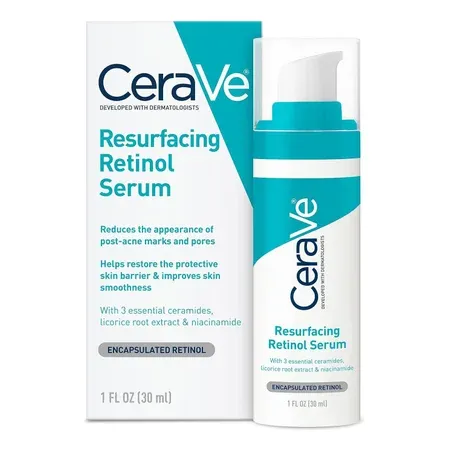
CeraVe Resurfacing Retinol Serum
An inexpensive encapsulated retinol serum with niacinamide and ceramides for first-time users.
CeraVe Resurfacing Retinol Serum is an easy first retinol. Its encapsulated retinol releases slowly, and niacinamide, licorice root extract and three ceramides help offset dryness. CeraVe doesn’t disclose the retinol percentage, but it’s gentle enough for most beginners, fragrance-free and about $16. If you want a disclosed strength, The Ordinary sells retinol in squalane at 0.2%, 0.5% and 1%; our review of the 1% version covers the formula.
Best budget retinal
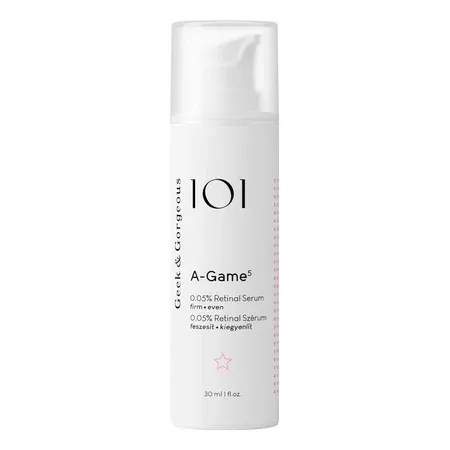
Geek & Gorgeous A-Game 5
A fragrance-free 0.05% retinal serum with panthenol and allantoin, for about $17.
Geek & Gorgeous A-Game 5 is the cheapest well-formulated retinal we know of: 0.05% retinaldehyde, the same strength used in the 44-week trial above, in a light, fragrance-free emulsion with panthenol and allantoin. Start a few nights a week. If you want a gentler start or a larger range of strengths, Medik8’s Crystal Retinal line starts at 0.01%; see our best retinol products guide.
Best for acne
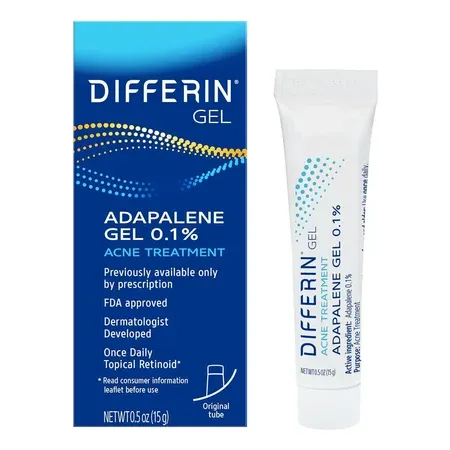
Differin Adapalene Gel 0.1%
The only prescription-strength acne retinoid sold over the counter, in a fragrance-free, oil-free gel.
Differin Gel contains 0.1% adapalene in a simple water-based gel. Apply a thin layer once a day to the whole area where you break out, not just to individual spots. Acne often looks worse during the first few weeks before it improves, and full results take about 12 weeks. A 15-gram tube lasts about a month for the face.
How to Start Any Retinoid
- Start two or three nights a week. Increase to nightly over a few weeks as your skin adjusts.
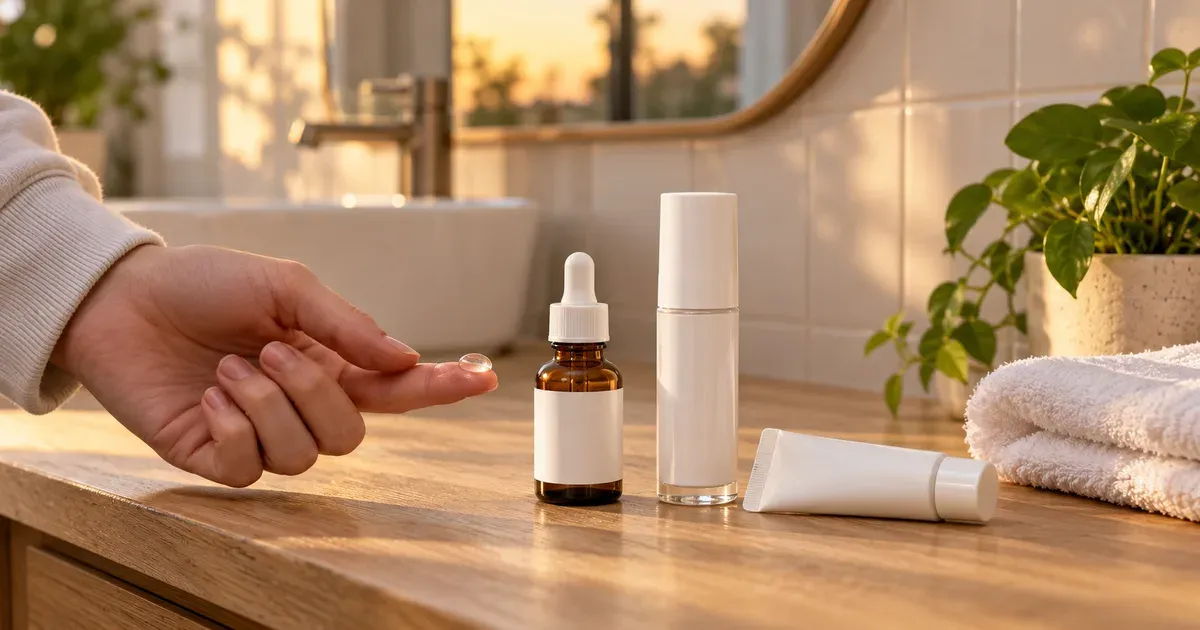
- Use a pea-sized amount for your whole face. More doesn’t work faster.
- Apply to dry skin after cleansing. Waiting 10 to 20 minutes after washing reduces stinging. If your skin is sensitive, apply moisturizer first (the “sandwich” method).
- Avoid the corners of the eyes, nose and mouth, where skin is thin and irritates easily.
- Don’t stack strong actives. Use exfoliating acids, benzoyl peroxide and vitamin C on different nights or in the morning, at least at first.
- Wear sunscreen every day. Retinoids make skin more sensitive to the sun, and sun exposure undoes much of what they do.
- Give it time. Acne usually improves in 8 to 12 weeks; fine lines and sun spots take 3 to 6 months.
Some dryness and flaking in the first month is normal and called “retinization.” Burning, swelling or a rash isn’t; stop and see a doctor if it happens.
How We Researched This
We reviewed randomized trials comparing retinol, retinaldehyde, adapalene and tretinoin, FDA approval history and labeling, and dermatology guidance on starting retinoids and using them during pregnancy. Product picks are based on disclosed ingredients and strengths, formulation and packaging, price, and owner feedback. This article is general information, not medical advice. A dermatologist can tell you which retinoid suits your skin.
For more, see our best retinol products, our review of The Ordinary Retinol 1% in Squalane, and our best facial cleansers for a gentle wash to pair with a retinoid.