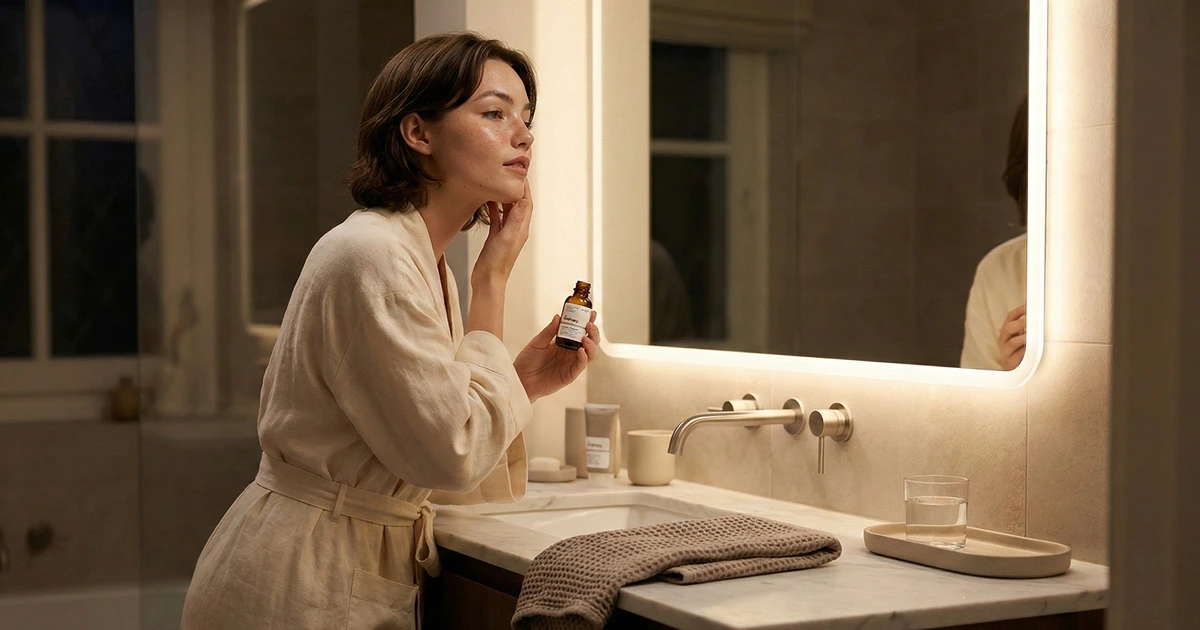

Topical retinoids have meaningful evidence for acne and photoaging, but over-the-counter cosmetics vary in active form, concentration, stability, and supporting ingredients. Retinaldehyde and retinol must be converted in skin, so a higher-looking percentage does not create a simple cross-product potency ranking.
We reviewed ingredient lists, manufacturer directions, clinical evidence, dermatologist guidance, packaging, texture, and patterns of irritation. Begin slowly at night, use a pea-size amount for the entire face, moisturize as needed, and wear broad-spectrum SPF 30 or higher daily. Retinoids should be avoided during pregnancy; anyone pregnant, breastfeeding, treating significant acne, or managing a skin condition should consult a qualified clinician.
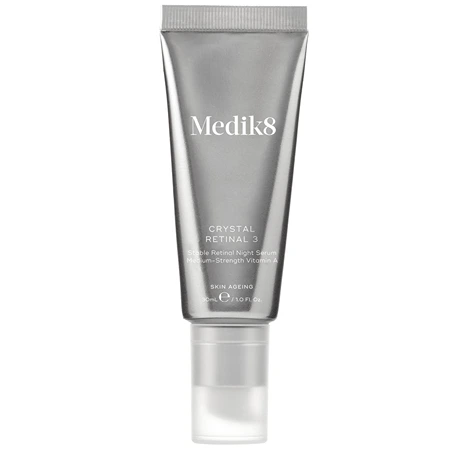
Medik8 Crystal Retinal 3
Best Beginner Option
A silky 0.03% retinaldehyde formula that absorbs beautifully, delivers visible results fast, and is gentle for new users.
The numbered ladder on Medik8 Crystal Retinal 3 makes progression unusually understandable. Level 3 contains 0.03% retinaldehyde and sits above the gentlest levels while remaining the brand’s common entry point for someone new to vitamin A. “Beginner” does not mean irritation-proof.
Retinaldehyde requires one conversion step to become retinoic acid, compared with two for retinol, but final performance depends on delivery and stability rather than that chemistry alone. Medik8 uses an encapsulated system intended to protect the active and moderate release. Published evidence supports retinaldehyde as a cosmetic retinoid, though the finished product’s dramatic timing claims should be treated as marketing.
Glycerin and hyaluronic-acid-related hydration, vitamin E, and a lightweight cream texture make the formula easier to layer than a loose oil. It spreads evenly and usually settles without the greasy film associated with squalane-heavy products. The vanilla-like scent and fragrance components may still be unwelcome for highly reactive skin.
Subscribe to Product Bible
Stay updated with the latest product reviews, buying guides, and expert recommendations. Fresh advice on the best things we've researched, tested, and reviewed, sent to your inbox weekly.
Want to know more about how we handle your data or opt out of marketing emails? Check out our Privacy Policy. If you have any questions, we're always here to help.
An air-restrictive pump protects the light- and oxygen-sensitive formula better than a dropper, though inconsistent dispensing and an opaque container make remaining quantity hard to judge. The price per 30mL is high, and progressing through several strengths creates a costly routine. There is no requirement to move up if a tolerated level is working.
Start once or twice weekly on dry skin and increase only when redness, burning, and peeling remain controlled. Avoid stacking it immediately with other retinoids or aggressive exfoliants. Crystal Retinal 3 is compelling because its texture and progression encourage consistency, which is the factor most likely to matter over months, not because it guarantees rapid transformation.
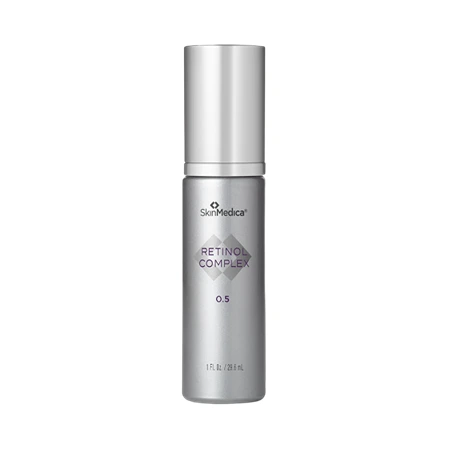
SkinMedica Retinol Complex
Most Potent Option
Encapsulated retinol with barrier-supporting niacinamide and ceramides, available in 0.25%, 0.5%, and 1.0% strengths.
Three disclosed concentrations give SkinMedica Retinol Complex a rational escalation path: 0.25, 0.5, and 1.0. The lower version is the appropriate starting conversation for a retinol newcomer; the 1.0 formula is for established tolerance, not faster results at any cost.
Encapsulated retinol sits in a cream containing niacinamide, squalane, ceramide NP, bisabolol, glycerin, antioxidants, and emollient oils. Those ingredients support texture and barrier comfort, but they cannot neutralize retinoid irritation completely. Soy-derived ingredients and the richer base also deserve attention from users with relevant sensitivities or acne-prone preferences.
One pump in the evening is the manufacturer’s direction, beginning about twice weekly and advancing gradually as tolerated. Apply after cleansing to dry skin, then add moisturizer if needed. Redness and peeling are signals to reduce frequency, not proof that the product is “working harder.”
The opaque pump limits light and air exposure and provides a repeatable dose. At one fluid ounce, however, this is an expensive cosmetic, and manufacturer before-and-after material does not establish how an individual will respond. A dermatologist can often offer better value and evidence when acne, pigment changes, or pronounced photoaging are the real treatment target.
SkinMedica explicitly advises against use during pregnancy, lactation, or when planning pregnancy and calls for SPF 30 or higher. That caution should govern every strength. This line works best for someone who values a cosmetically elegant cream and measured progression, not a first-time buyer tempted directly by the 1.0 label.
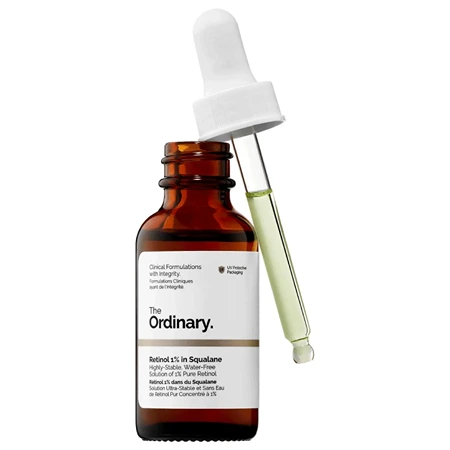
The Ordinary Retinol 1% in Squalane
Best Budget Option
A high-strength 1% retinol serum buffered with squalane for hydration and barrier support, offering visible anti-aging results at an unbeatable price.
Low price should not obscure the strength of The Ordinary Retinol 1% in Squalane. One percent is the brand’s highest traditional retinol concentration and is poorly suited to a first exposure. The less expensive formula is useful for experienced users who already know their skin tolerates retinol.
The water-free squalane base reduces formulation complexity and leaves a distinctly oily finish. It can soften dry skin but does not “buffer” irritation in the clinical sense or make one percent gentle. A few drops spread widely, and excess product adds grease without improving efficacy.
Retinol is unstable in light, heat, and air, and the dropper exposes the formula each time it opens. The manufacturer directs refrigeration after opening and disposal after the specified use period, commonly three months. Buying the small bottle only makes sense if it will be used consistently and stored correctly.
Subscribe to Product Bible
Stay updated with the latest product reviews, buying guides, and expert recommendations. Fresh advice on the best things we've researched, tested, and reviewed, sent to your inbox weekly.
Want to know more about how we handle your data or opt out of marketing emails? Check out our Privacy Policy. If you have any questions, we're always here to help.
Begin far below nightly use, avoid the eye area and compromised skin, and separate it from other retinoids and irritating actives until tolerance is understood. Peeling, burning, and persistent redness call for a pause and a simpler routine. Daily sun protection is essential, and pregnancy avoidance applies despite the over-the-counter status.
This is an economical active, not automatically the best value for sensitive skin. A lower concentration used consistently can outperform a strong bottle repeatedly abandoned because it hurts. Experienced users who enjoy an oil texture and will follow storage directions get the clearest benefit from its transparency and price.
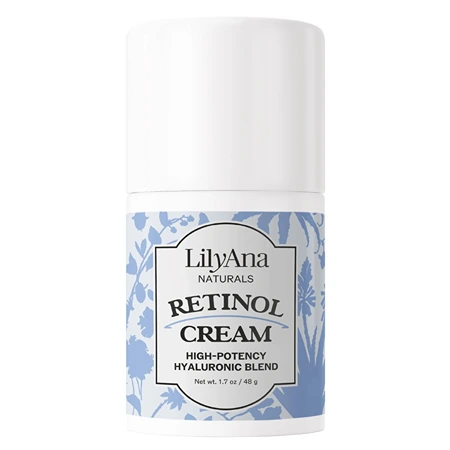
LilyAna Naturals Retinol Cream
Best for Dry Skin
A rich retinol cream with aloe, glycerin, and botanical extracts for people who prefer a more moisturizing formula.
Moisturizer-like texture is the selling point of LilyAna Naturals Retinol Cream. Aloe, glycerin, shea butter, oils, and other emollients create a richer finish than a serum, which can feel more comfortable on dry skin and may eliminate a separate cream for some users.
Concentration and formula claims for this cream have varied across listings and reformulations, so verify the current manufacturer’s package and ingredient list rather than relying on old marketplace copy. A stated retinol percentage is only meaningful when the active remains stable through the product’s shelf life.
Botanical extracts make the label look soothing without guaranteeing low irritation. Plant ingredients, preservatives, and fragrance-related components can themselves trouble reactive skin, while retinol can still cause dryness and peeling beneath a nourishing base. Patch testing and a slow schedule remain appropriate.
An airless-style pump is cleaner and more protective than an open jar, and the cream spreads easily across face and neck. The relatively generous container can encourage overapplication, but more retinol does not accelerate safe results. One small evening dose is enough, followed by additional bland moisturizer only if the skin needs it.
This formula suits someone who dislikes oils and wants retinol in a comfortable cream, but evidence for the exact finished product is limited. Persistent acne, eczema, pigment changes, or irritation should be discussed with a dermatologist. Dry-skin friendliness comes from the base; it does not exempt the product from retinoid precautions, pregnancy avoidance, or daily sunscreen.
Retinoid routines are measured in months, and tolerability is part of efficacy. Introduce one active at a time, keep cleansing and moisturizing gentle, and take consistent photographs in the same light if you want to judge change. Stop and seek care for severe swelling, blistering, pain, or persistent dermatitis.
Sunscreen remains the more foundational photoaging product, and no cosmetic replaces medical evaluation of a changing lesion or significant acne. Choose a concentration and texture you can use consistently, buy from an authorized seller to reduce counterfeit and storage risk, and follow the current package rather than generalized online routines.