If sunscreen makes your skin sting, turn red or break out, the fix is usually a mineral sunscreen: one whose only active ingredients are zinc oxide and titanium dioxide. They’re the two sunscreen filters the FDA has proposed recognizing as safe and effective, and they’re far less likely to irritate sensitive skin, eczema or rosacea than chemical filters like oxybenzone and avobenzone. Their old downside, a chalky white cast, is much smaller in newer formulas.
Our top pick is La Roche-Posay Anthelios Mineral SPF 50 (about $30), a light, matte fluid with SPF 50 and 40 minutes of water resistance. For a tinted option that hides white cast, get EltaMD UV Physical. The best value is CeraVe Invisible Mineral Sunscreen SPF 50 (about $14), which goes on clear. For the most reactive skin, Vanicream Facial Moisturizer SPF 30 skips almost every common irritant.
Our Picks at a Glance
| Sunscreen | Best for | Active ingredients | SPF / water resistance | Price |
|---|---|---|---|---|
| La Roche-Posay Anthelios Mineral SPF 50 | Best overall | Titanium dioxide 6%, zinc oxide 5% | 50 / 40 min | About $30 for 1.7 oz |
| EltaMD UV Physical | Tinted | Zinc oxide 9%, titanium dioxide 7% | 40 / 40 min | About $43 |
| CeraVe Invisible Mineral SPF 50 | Value, no white cast | Zinc oxide 15.3%, titanium dioxide 2.7% | 50 | About $14 for 1.6 oz |
| Vanicream Facial Moisturizer SPF 30 | Very sensitive skin, eczema | Zinc oxide | 30 | About $14 for 2.5 oz |
| Cetaphil Sheer Mineral SPF 50 | Oily skin, sweat | Zinc oxide 12% | 50 / 80 min | About $13 for 1.7 oz |
| Blue Lizard Sensitive SPF 50 | Body and family | Zinc oxide, titanium dioxide | 50 / 80 min | About $13 for 5 oz |
Best Overall: La Roche-Posay Anthelios Mineral SPF 50
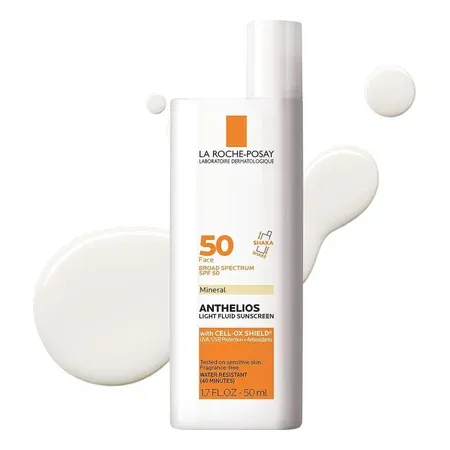
Best overall
La Roche-Posay Anthelios Mineral SPF 50
A light, matte mineral fluid with titanium dioxide and zinc oxide, SPF 50 and 40-minute water resistance.
La Roche-Posay Anthelios Mineral SPF 50 is one of the most widely recommended mineral sunscreens, and it fixes the two main complaints about mineral formulas: thickness and greasiness. It’s a thin, shakeable fluid that spreads easily and dries down to a matte finish, which also makes it a good base under makeup.
Its actives are 6% titanium dioxide and 5% zinc oxide, with an antioxidant complex La Roche-Posay calls Cell-Ox Shield. It’s fragrance-free, non-comedogenic, tested on sensitive skin, recommended by the Skin Cancer Foundation and water resistant for 40 minutes.
On fair to medium skin it leaves little to no white cast once rubbed in. On deeper skin tones it can look slightly gray, in which case a tinted pick like EltaMD UV Physical works better. Shake it well before every use, since the minerals settle.
Buy it if you want one reliable everyday mineral sunscreen for the face.
Best Tinted: EltaMD UV Physical
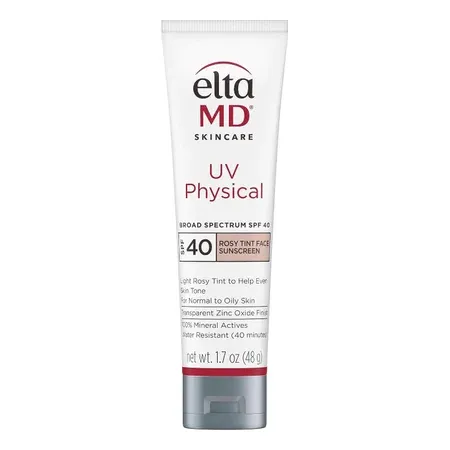
Best tinted
EltaMD UV Physical Tinted Mineral Sunscreen
A sheer-tinted mineral sunscreen with 9% zinc oxide and 7% titanium dioxide that hides white cast.
EltaMD UV Physical is a dermatologist favorite and the best option if white cast is your problem. It combines 9% zinc oxide and 7% titanium dioxide, among the highest mineral concentrations here, in a sheer, universal tint that cancels the white cast and evens skin tone like a light tinted moisturizer. It’s fragrance-free, paraben-free, non-comedogenic and water resistant for 40 minutes.
The tint suits fair to medium skin best; it can look ashy on very deep skin. Be careful with the brand’s other popular sunscreen, EltaMD UV Clear: it isn’t mineral-only. It pairs zinc oxide with the chemical filter octinoxate, as does EltaMD UV Daily.
Buy it if you want a mineral sunscreen that also gives you light coverage.
Best Value: CeraVe Invisible Mineral Sunscreen SPF 50
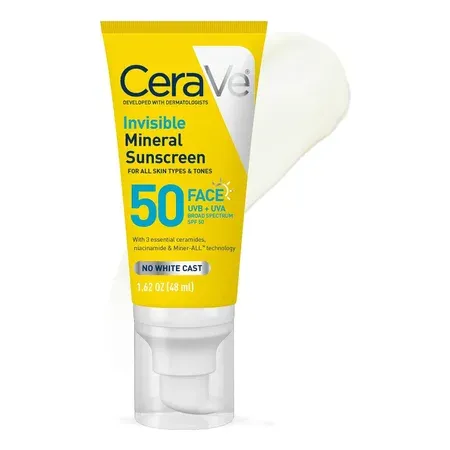
Best value
CeraVe Invisible Mineral Sunscreen SPF 50
A $14 mineral face sunscreen with 15.3% zinc oxide and ceramides that goes on without a white cast.
CeraVe Invisible Mineral Sunscreen SPF 50 is one of CeraVe’s newer sunscreens, and it goes on far more sheer than the brand’s older mineral formulas. It uses 15.3% zinc oxide and 2.7% titanium dioxide in a fluid CeraVe says leaves no white cast on any skin tone, plus its usual three ceramides and niacinamide for barrier support. It’s fragrance-free, alcohol-free, non-comedogenic and suitable for sensitive and acne-prone skin.
At about $14 for 1.6 ounces, it costs less than half as much as La Roche-Posay. It has fewer owner reviews than the others here. Shake it well and apply it generously.
Buy it if you want a cheap, clear mineral sunscreen for daily wear.
Best for Very Sensitive Skin: Vanicream Facial Moisturizer SPF 30
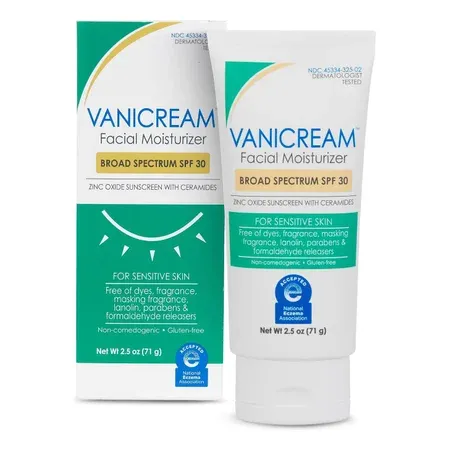
Best for very sensitive skin
Vanicream Facial Moisturizer SPF 30
A zinc oxide moisturizer with SPF 30 and ceramides, free of fragrance, dyes, botanicals and lanolin.
Vanicream Facial Moisturizer SPF 30 is the pick for skin that reacts to almost everything. Its only active is zinc oxide, and Vanicream leaves out fragrance, dyes, lanolin, parabens, formaldehyde releasers, botanical extracts and essential oils. It carries the National Eczema Association Seal of Acceptance. Five ceramides and squalane make it a real moisturizer, so one product covers both steps in the morning.
The trade-offs: SPF 30 is the minimum dermatologists recommend, not the highest here, and it isn’t labeled water resistant, so it’s for everyday wear rather than the beach. It’s richer than a fluid and can leave a slight white cast on deeper skin.
Buy it if you have eczema, rosacea or reactive skin and want the shortest possible ingredient list. See our Vanicream vs. CeraVe comparison for more from the brand.
Best for Oily Skin: Cetaphil Sheer Mineral SPF 50
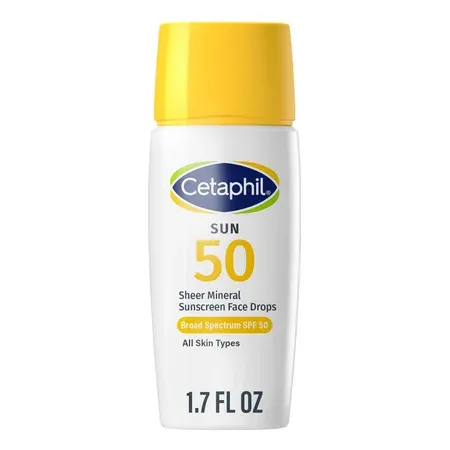
Best for oily skin
Cetaphil Sheer Mineral Face Sunscreen SPF 50
A 12% zinc oxide fluid with a dry, matte finish and 80 minutes of water resistance.
Cetaphil Sheer Mineral SPF 50 uses 12% zinc oxide alone in a lightweight liquid that dries to a dry, matte finish, which suits oily and combination skin. Niacinamide, allantoin and bisabolol help calm redness. It’s non-comedogenic, tested by dermatologists and ophthalmologists, and water resistant for 80 minutes, the longest of our face picks, so it holds up to sweat and workouts.
It costs about $13, and like other zinc-only formulas, it can leave a faint cast on deeper skin. Shake well before using.
Buy it if you have oily skin or need a face sunscreen that lasts through sweat.
Best for Body: Blue Lizard Sensitive Mineral SPF 50
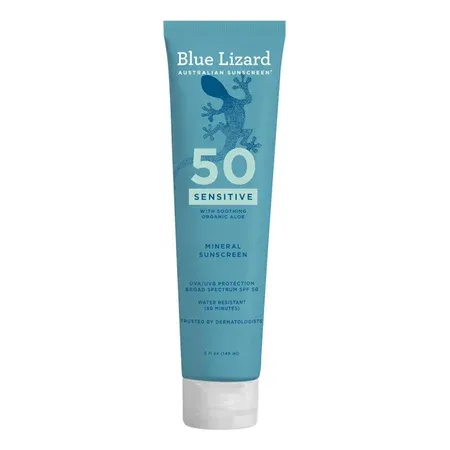
Best for body
Blue Lizard Sensitive Mineral Sunscreen SPF 50
A 5-ounce zinc oxide and titanium dioxide lotion for face and body, water resistant for 80 minutes.
Face sunscreens come in tiny bottles, and you need about an ounce, a shot glass full, to cover your whole body. Blue Lizard Sensitive SPF 50 is the affordable way to do that. A 5-ounce tube of zinc oxide and titanium dioxide lotion costs about $13. It’s fragrance-free and paraben-free, includes aloe, and is water resistant for 80 minutes, so it works for the beach, the pool and kids.
It’s thicker than the face picks and takes some rubbing in, which is typical for body mineral sunscreens. Many people use it on their face, too.
Buy it if you need one mineral sunscreen for the whole family or the whole body.
Mineral vs. Chemical Sunscreen
| Mineral (physical) | Chemical (organic) | |
|---|---|---|
| Active ingredients | Zinc oxide, titanium dioxide | Avobenzone, homosalate, octisalate, octocrylene, oxybenzone, octinoxate and others |
| FDA status | Proposed as safe and effective (2019) | FDA asked for more safety data on most |
| Sensitive skin | Rarely irritating or allergenic | More likely to sting, especially around the eyes |
| Feel and finish | Can be thicker; may leave a white cast | Usually thinner, clear |
| Works | Immediately | Immediately |
| Reef laws | Allowed | Hawaii and the US Virgin Islands ban oxybenzone and octinoxate |
How they work. Both kinds mostly absorb UV light. The old idea that mineral filters “reflect” UV like tiny mirrors is mostly a myth; zinc oxide and titanium dioxide absorb most of the UV they block and scatter only a little. Zinc oxide covers the widest range of UVA and UVB on its own.
Why mineral is gentler. Zinc oxide and titanium dioxide rarely cause allergic reactions, and zinc is even soothing. Chemical filters are a common reason sunscreens sting, and benzophenones (the family that includes oxybenzone) were named Allergen of the Year by the American Contact Dermatitis Society in 2014.
What the FDA said. In 2019, the FDA proposed that only zinc oxide and titanium dioxide had enough data to be considered generally safe and effective, and asked manufacturers for more data on 12 chemical filters. FDA-run studies later found that six common chemical filters are absorbed into the bloodstream above the level that triggers further safety testing (Matta et al., JAMA, 2020). That doesn’t mean they’re harmful, and the FDA and dermatologists stress that people should keep using sunscreen. It’s simply why some people choose mineral formulas.
The bottom line: a chemical sunscreen you’ll wear every day is better than a mineral one you won’t. But if your skin reacts to sunscreen, or you want the most conservative option, go mineral.
How to Apply Sunscreen
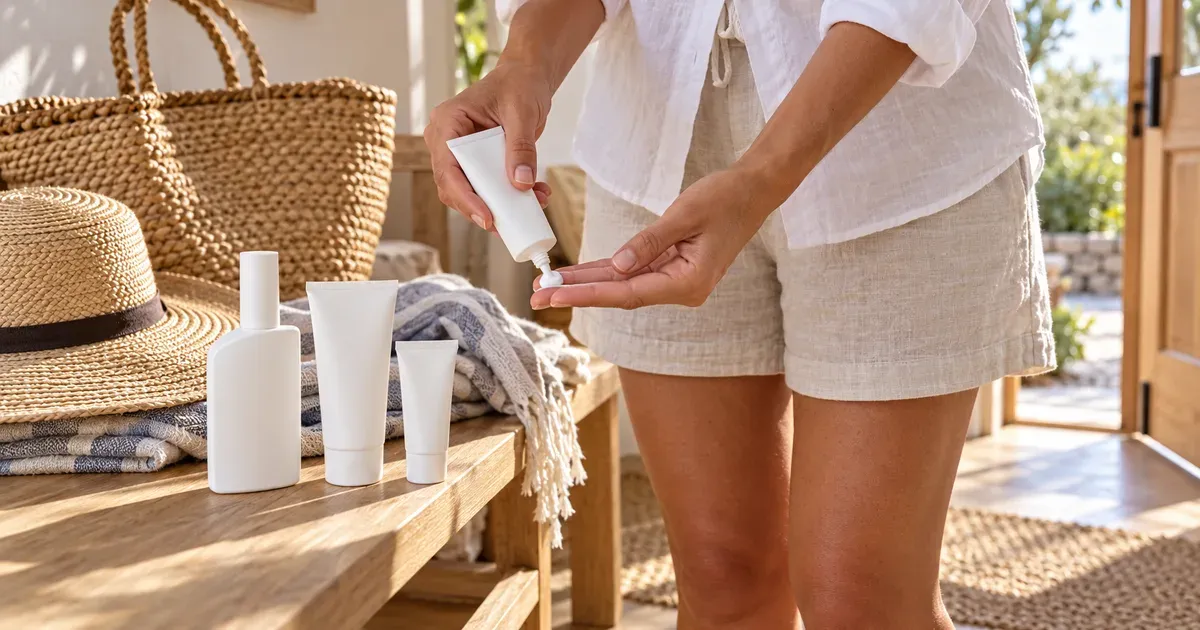
- Use enough. For the face and neck, about 1/4 teaspoon, or two finger-lengths of lotion. For the whole body, about 1 ounce. Most people use half that, and get roughly half the SPF.
- Apply as the last step of your morning skin care, before makeup.
- Reapply every two hours outdoors, and after swimming or sweating, at the time the label’s water resistance gives (40 or 80 minutes).
- Shake mineral fluids well; zinc and titanium settle.
- Don’t miss ears, the back of the neck, hairline and the tops of feet.
- Check the date. Sunscreen loses strength over time and in heat. See does sunscreen expire? for how long a bottle lasts.
How We Chose
We started with sunscreens whose only active ingredients are zinc oxide and titanium dioxide, then compared active concentrations, SPF and water resistance, finish and white cast, fragrance and common irritants, eczema and sensitive-skin certifications, owner ratings and price per ounce. We excluded hybrid formulas sold as mineral that also contain chemical filters.
For the rest of a sensitive-skin routine, see our best facial cleansers and CeraVe vs. Cetaphil guides.