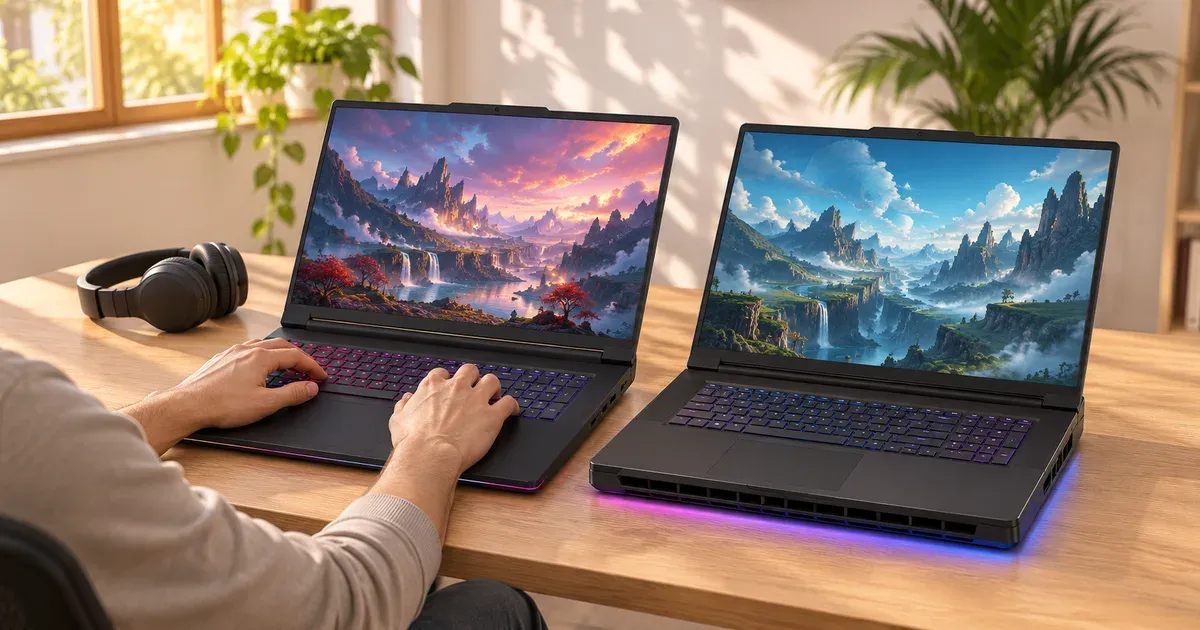
The short answer: the Lenovo Legion Pro 7i is the better all-rounder at the same price, and the ASUS ROG Strix Scar 16 is the better buy when it’s $300 or more cheaper, which it was on November 20, 2026. They’re equally fast: both are 16-inch Intel HX laptops that run an RTX 5080 or RTX 5090 at 175 W, with two RAM slots and two SSD slots. So choose by screen, weight and price. The Legion has a 240 Hz OLED, is half a pound lighter and can take a 99.9 Wh battery. The Scar has a brighter 240 Hz mini-LED that can’t burn in, tool-less access to its RAM and SSDs, and it cost $300 less with an RTX 5080 ($3,299.99 against $3,599.99).
Two naming notes: the current Legion Pro 7i is still Gen 10 (model 16IAX10H), now also sold with the Core Ultra 9 290HX Plus; there’s no Gen 11. And the current Scar 16 is the 2025 model (G635): ASUS released a 2026 Scar 18 but no 2026 Scar 16.
Specs from Lenovo PSREF and ASUS spec pages; prices checked November 20, 2026.
Side by Side
| Lenovo Legion Pro 7i Gen 10 | ASUS ROG Strix Scar 16 (2025) | |
|---|---|---|
| CPU | Core Ultra 7 255HX, Ultra 9 275HX or Ultra 9 290HX Plus | Core Ultra 9 275HX |
| GPU options (max power) | RTX 5070 Ti 140 W, 5080 175 W, 5090 175 W | RTX 5070 Ti 140 W, 5080 175 W, 5090 175 W |
| Display | 16” 2560×1600 OLED, 240 Hz, 500 nits typical, 1,100 peak | 16” 2560×1600 mini-LED, 240 Hz |
| RAM | 2× DDR5-6400 CSODIMM, up to 64 GB offered | 2× DDR5-5600 SO-DIMM |
| SSD slots | 2× M.2 2280 (one PCIe 5.0) | 2× M.2 (RAID 0 builds) |
| Battery | 80 Wh or 99.9 Wh | 90 Wh |
| Charger | 400 W; USB-C up to 100 W | 380 W; USB-C 100 W |
| Display peak brightness | 1,100 nits (HDR) | 1,200 nits, 2,000+ dimming zones |
| GPU switching | Advanced Optimus | MUX switch + Advanced Optimus |
| Upgrade access | Bottom panel, screws | Tool-less bottom panel, Q-Latch SSD slots |
| Weight | From 5.67 lb (2.57 kg) | 6.17 lb (2.80 kg) |
| Lighting | Per-key RGB, RGB lid logo, front and rear RGB lenses | Per-key RGB, light bar, AniMe Vision LED lid (810 LEDs) |
| Warranty (US) | 1 year courier or carry-in | 1 year, plus 1 year free accidental damage protection if registered within 60 days |
| Amazon price, Nov 20, 2026 (RTX 5080) | $3,599.99 (Ultra 9 290HX Plus, 32 GB, 1 TB; EXCaliberPC) | $3,299.99 (Ultra 9 275HX, 32 GB, 2 TB; sold by Amazon) |
Performance Is a Tie
Both laptops run the RTX 5080 and RTX 5090 at 175 W, the highest figure any laptop maker quotes for these GPUs (150 W plus 25 W of Dynamic Boost). The RTX 5070 Ti tops out at 140 W in both. With the same GPU at the same power, frame rates land close together. In independent same-GPU (RTX 5080) testing, the Legion came out slightly ahead, by a margin you won’t notice in games. Cooling and fan tuning decide the small differences. Both are loud at full power, and both have quieter performance modes that trade some speed for less noise.
A Scar 16 with an RTX 5090 beats a Legion Pro 7i with an RTX 5080 by much more than either chassis beats the other. So if the price gap between those two configurations is small, the GPU matters more than the brand.
The Legion’s CPU options are newer: the Core Ultra 9 290HX Plus is a 2026 refresh of the 275HX that the Scar 16 uses. It matters more for CPU-heavy work (compiling, rendering, streaming) than for gaming.
OLED vs. Mini-LED
- Legion Pro 7i (OLED): perfect blacks and very fast pixel response. OLED can suffer burn-in with static elements over years of use.
- Scar 16 (mini-LED): very bright HDR (ASUS rates it at 1,200 nits peak with over 2,000 dimming zones) and no burn-in risk, with some blooming around bright objects on dark backgrounds. It also handles bright rooms better.
If you play dark, cinematic games and watch movies, the OLED is the better screen. If you leave static HUDs and desktop windows up for hours, mini-LED is the safer long-term choice. More in OLED vs. mini-LED vs. IPS.
Battery, Charging and Weight
The Legion is offered with a 99.9 Wh battery, the largest you can carry on a plane without airline approval, and Lenovo’s Super Rapid Charge claims 30% in 10 minutes. The Scar 16 has 90 Wh. Both charge at up to 100 W over USB-C for light use; full gaming needs the 400 W (Legion) or 380 W (Scar) brick.
The Legion is about half a pound lighter. Neither is light: add the charger and you’re carrying 7 to 8 lb. Both are desktop replacements, so plan to game plugged in. Battery life at light loads is short on the Legion and somewhat better on the Scar in independent tests, despite the Legion’s larger battery option.
Upgrades: Both Have Slots, the Scar Is Easier
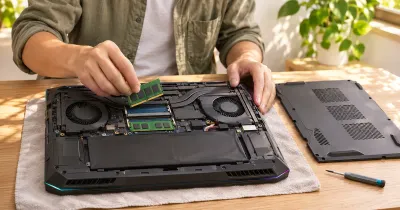
Both take two DDR5 sticks and two M.2 SSDs. The difference is getting inside. ASUS’s tool-less design on the Scar 16 gives you the RAM, SSDs and fans without a screwdriver, and its Q-Latch SSD mounts replace the tiny M.2 screw. On the Legion, you remove the bottom panel’s screws first, which is routine but slower.
Price on November 20, 2026
| Config | Price |
|---|---|
| Scar 16, RTX 5080, Ultra 9 275HX, 32 GB, 2 TB | $3,299.99 (sold by Amazon) |
| Scar 16, RTX 5090, Ultra 9 275HX, 32 GB, 2 TB | $4,149.99 (sold by Amazon) |
| Legion Pro 7i, RTX 5080, Ultra 9 290HX Plus, 32 GB, 1 TB | $3,599.99 (EXCaliberPC on Amazon) |
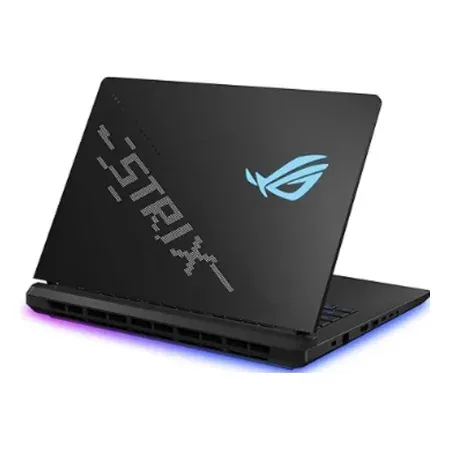
Best price for a 175 W RTX 5080
ASUS ROG Strix Scar 16 (2025), RTX 5080
Core Ultra 9 275HX, RTX 5080, 32 GB DDR5, 2 TB, 16-inch 2.5K 240 Hz mini-LED. $3,299.99 sold by Amazon on Nov 20.
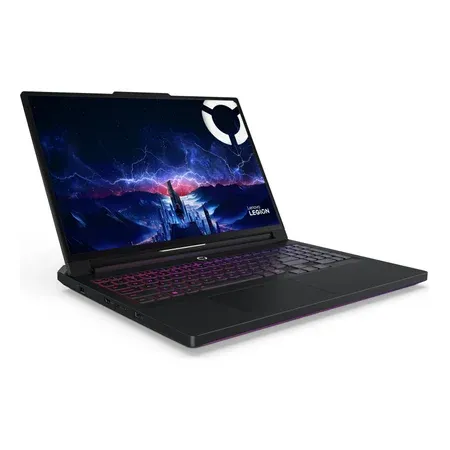
Best screen: 240 hz OLED
Lenovo Legion Pro 7i Gen 10, RTX 5080
Core Ultra 9 290HX Plus, RTX 5080, 32 GB, 1 TB, 16-inch 240 Hz OLED. $3,599.99 from EXCaliberPC on Amazon on Nov 20.
Which Should You Buy?
- Same GPU, similar price: the Legion Pro 7i, for the OLED, the lighter chassis, the newer 290HX Plus and the 99.9 Wh battery option.
- The Scar is $300 or more cheaper with the same specs (as on November 20): the Strix Scar 16.
- Gaming plus programming, video editing or office work: the Legion, for its more understated look and OLED colors.
- Bright rooms, HDR and long static sessions: the Scar’s mini-LED, which can’t burn in.
- Upgrading RAM and storage yourself: the Scar, for tool-less access. If you want RGB, the Scar is also the flashier laptop, with an AniMe Vision LED lid.
If you want a bigger screen, the 2026 Strix Scar 18 and Legion Pro 7i compete at 18 vs. 16 inches. For the brands overall, see Lenovo Legion vs. ASUS ROG and is the Legion Pro 7i worth it?
Legion Pro 7i vs. Scar 16 FAQ
Is the Legion Pro 7i faster than the ROG Strix Scar 16?
Not meaningfully. Both run the RTX 5080 and 5090 at 175 W and the RTX 5070 Ti at 140 W. The Legion offers a newer Core Ultra 9 290HX Plus, which helps more in CPU-heavy work than in games.
Is there a Legion Pro 7i Gen 11 or a 2026 Scar 16?
Not as of November 20, 2026. The Legion Pro 7i is Gen 10 (16IAX10H) with a 290HX Plus option, and the newest Scar 16 is the 2025 G635. ASUS’s 2026 refresh went to the Scar 18.
Which is easier to upgrade?
The Scar 16. Its bottom panel comes off without tools, and its SSD slots use Q-Latch mounts. The Legion has the same number of slots behind a screwed panel.
Should I buy a Scar 16 with an RTX 5090 or a Legion Pro 7i with an RTX 5080?
The Scar with the RTX 5090, if the price gap is a few hundred dollars. The GPU difference is far bigger than the difference between the two chassis. On November 20, the RTX 5090 Scar 16 was $4,149.99, sold by Amazon.
Which has the better screen?
It depends on use: the Legion’s OLED has perfect blacks; the Scar’s mini-LED is brighter in HDR and can’t burn in.
Can you upgrade the RAM and SSD?
Yes, in both. Each has two RAM slots and two M.2 SSD slots.
Which is easier to travel with?
The Legion, slightly: it starts at 5.67 lb vs. 6.17 lb, and its 99.9 Wh battery option is still under the FAA’s 100 Wh carry-on limit.
Sources
- Lenovo PSREF: Legion Pro 7 16IAX10H (PDF)
- ASUS ROG Strix Scar 16 (2025) specifications
- ASUS ROG Strix Scar 16 (2025) overview: tool-less access and AniMe Vision
- Lenovo: Legion Pro 7i Gen 10 product page
- ASUS ROG Strix Scar 18 (2026) specifications
- Nvidia GeForce RTX 50 Series laptop GPU specs
- FAA: lithium batteries in baggage