Choose a walking pad on four specs, in this order: belt length, weight rating, motor type, and height. Get those right and almost any pad from an established brand will do the job. Incline, noise ratings, and apps are worth paying for only after the first four fit you.
Walking Pad Buying Checklist
| Spec | What to look for |
|---|---|
| Belt length | 35 to 38 in if you are under 5’8”; 39 to 42 in up to 6’0”; 43 in or more over 6’0” |
| Belt width | 15 in minimum; 16.5 in if you are tall or broad |
| Weight rating | At least 50 lb above your weight |
| Motor | Brushless if you walk an hour or more a day; a continuous rating if the maker publishes one |
| Height | 4 to 6.5 in; check it against your desk’s top setting |
| Incline | Motorized if you want harder walks; skip it to save $100 or more |
| Noise rating | 35 to 40 dB for brushless pads; about 45 dB for the rest |
| Warranty | 1 year is standard; register for any free extension |
| Price | $100 to $150 basic; $200 to $300 with motorized incline; $400 to $500 for the quietest |
1. Belt Length
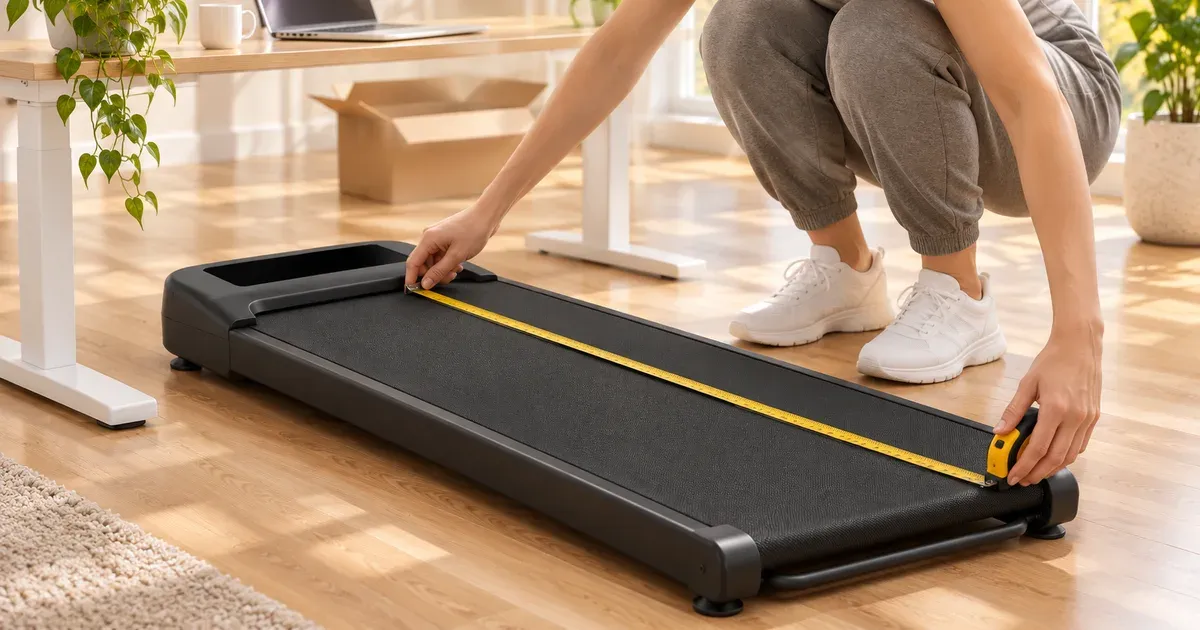
The belt is the part you use, and it is where cheap pads cut the most. Belts on the pads we cover range from 34.8 inches to 47.6 inches. A short belt forces you to shorten your stride, and you notice it more as you speed up.
UREVO and WalkingPad both recommend 43 to 47 inches for people from 6’0” to 6’2” and 47 inches or more above that. Measure the belt, not the machine. Our guide to walking pads for tall people has a height-by-height chart.
2. Weight Rating
Pick a pad rated at least 50 pounds above your weight. Ratings on the pads we cover run from 220 to 450 pounds, and most cheap pads sit at 265.
Read the fine print. Eight of the pads we cover list two different ratings across the maker’s site, the manual, and Amazon. Our guide to walking pad weight limits lists them.
3. Motor: Ignore Peak Horsepower
Walking pad listings advertise 2.25 to 3.5 HP. Those are peak figures, and they tell you little. Three makers publish numbers that show what the motors really deliver:
| Walking pad | Advertised | Continuous or rated power |
|---|---|---|
| UREVO Strol 2E | 2.25 HP peak | 550 watts rated, about 0.74 HP |
| UPLIFT Inclining Walking Pad | 0.75 HP | 0.75 HP |
| Merach NovaWalk W50 | 3.5 HP peak | 1.25 HP continuous |
So a walking pad needs roughly 0.75 to 1.25 HP of continuous power, and that is what a “2.25 HP” or “3.5 HP” pad actually has. Compare continuous ratings when makers publish them, and don’t pay more for a bigger peak number.
Motor type matters more than horsepower. A brushed motor has carbon brushes that wear down over the years. A brushless motor doesn’t, and it tends to run cooler and quieter. Brushless pads start at about $255. If you plan to walk an hour or more on most days, a brushless motor is worth it. Our guide to how long walking pads last explains why.
4. Height and Desk Fit
A walking pad raises you by its deck height, so your desk has to rise by the same amount. Pads range from 3.9 inches to 8.7 inches tall. Most flat pads are about 4 to 4.5 inches, and most incline pads are about 6 inches.
Check your desk’s maximum height before you buy an incline pad. Our desk height calculator does the math, and the best standing desks for walking pads lists desks with the range to spare. Also measure the gap between your desk’s legs: pads are 18 to 24 inches wide.
5. Incline
Incline makes a slow walk harder without making you go faster, which is useful when you are typing.
- Motorized (auto) incline changes from the remote while you walk. It starts at about $200 with the DeerRun Z10 and reaches 12 to 15% on the pads we cover.
- Manual incline means propping up the front by hand before you start. It is cheaper, and most people set it once and leave it.
See the best walking pads with incline.
6. Noise
Makers rate brushless pads at 35 to 40 dB and most others at about 45 dB. Those figures describe the motor. In an apartment, your footsteps are what carry, and a mat does more than a quieter motor. See the quietest walking pads.
7. Speed
Under-desk pads top out at 3.7 to 4 mph, which is a brisk walk. Most people work at 1.5 to 2.5 mph. If you want to jog, buy a 2-in-1 with a handrail, such as the UREVO Strol 2E, which reaches 6.2 mph with its handlebar up. Check the minimum speed too if the pad is for an older adult: most start at 0.6 mph.
8. Size, Weight, and Storage
Flat pads weigh 32 to 50 pounds and most motorized-incline pads 50 to 77 pounds. If you will put the pad away after each walk, buy a light one with wheels, or a WalkingPad that folds in half. If it will stay under the desk, weight doesn’t matter. Our walking pad comparison chart lists the size and weight of all 28 pads.
9. Controls and Apps
Most pads we cover come with a remote, so you don’t need an app to walk. Apps add workout history and guided programs. If you want your steps in Apple Health, check before you buy: KingSmith’s KS Fit app syncs with Apple Health and has an Apple Watch app, and UREVO’s app syncs with Apple Health and Google Fit.
10. Safety and Warranty
- Buy an established brand with a published manual. In April 2026 the CPSC warned owners to stop using Sperax walking pads because of fall, burn, and fire hazards. See our Sperax walking pad warning.
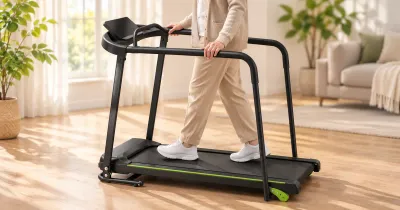
- Want a handrail? Flat pads have none. 2-in-1 pads have a front bar, and walking treadmills for seniors have side rails. See walking pads for seniors.
- Expect a one-year warranty, and register the pad if the maker offers a free extension. UREVO adds 180 days and Merach adds a year.
What Each Price Buys
| Price | What you get | Example |
|---|---|---|
| $100 to $150 | A flat pad with a 35 to 38-inch belt, a brushed motor, and a 265 lb rating | UREVO SpaceWalk E1L, Yagud |
| $180 to $250 | Motorized incline or a longer belt, still a brushed motor | DeerRun Z10, UREVO SpaceWalk 3S |
| $255 to $350 | A brushless motor, 9 to 12% auto incline, and a 350 to 400 lb rating | UREVO SpaceWalk 5L, Merach NovaWalk W50 |
| $390 to $500 | The quietest motors, 14% incline, or a 47-inch folding belt | UREVO CyberPad, WalkingPad A1 Pro |
Our Pick for Most People
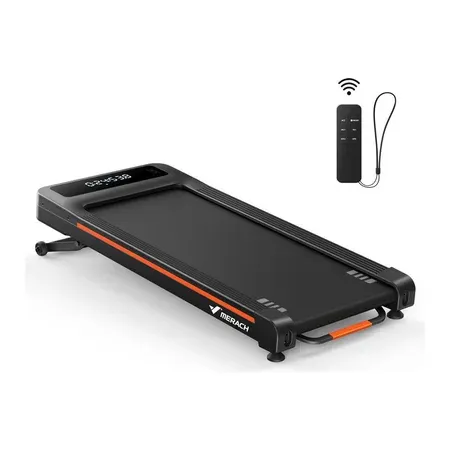
Best for most people
Merach NovaWalk W50
A brushless walking pad with a 12% motorized incline, a 400 lb rating, and a 41.3-inch belt.
The Merach NovaWalk W50 passes every check on this list for about $300: a 41.3-inch belt, a 400-pound rating, a brushless motor with a continuous rating, a 12% motorized incline, and a 6.1-inch frame. If you want to spend half that, the UREVO SpaceWalk E1L is the best basic pad, and our guide to walking pads under $200 has more.
Walking Pad Buying FAQ
What should I look for when buying a walking pad?
A belt long enough for your height, a weight rating at least 50 pounds above your weight, a brushless motor if you will walk daily, and a deck height your desk can accommodate. Then decide whether you want incline.
How much horsepower does a walking pad motor need?
About 0.75 to 1.25 HP of continuous power. Advertised figures of 2.25 to 3.5 HP are peak ratings. UREVO’s 2.25 HP Strol 2E is rated at 550 watts, about 0.74 HP, and Merach’s 3.5 HP peak NovaWalk W50 is 1.25 HP continuous.
Is a brushless motor worth it on a walking pad?
Yes, if you walk an hour or more on most days. Brushless motors have no brushes to wear out and tend to run quieter. They start at about $255.
Do I need incline on a walking pad?
No, but it helps if you want more exercise at a slow speed. Motorized incline starts at about $200.
What size walking pad do I need?
Match the belt to your height: 35 to 38 inches if you are under 5’8”, 39 to 42 inches up to 6’0”, and 43 inches or more if you are taller.
How much should I spend on a walking pad?
About $100 to $150 for occasional slow walking, and about $270 to $300 for a brushless pad with incline that you will use daily.
Do walking pads need an app?
No. Most pads come with a remote that handles speed and incline. Apps add workout tracking and, on some brands, syncing with Apple Health or Google Fit.