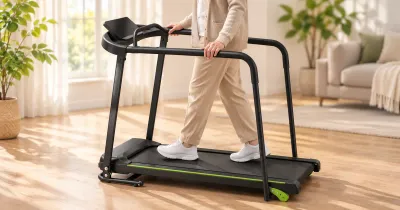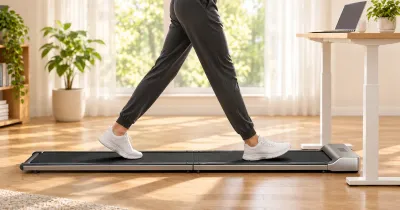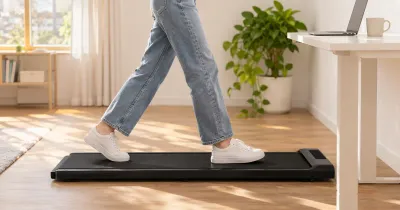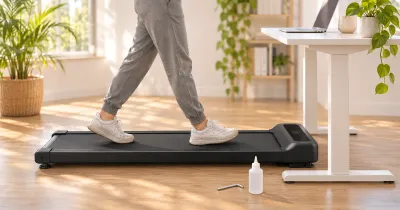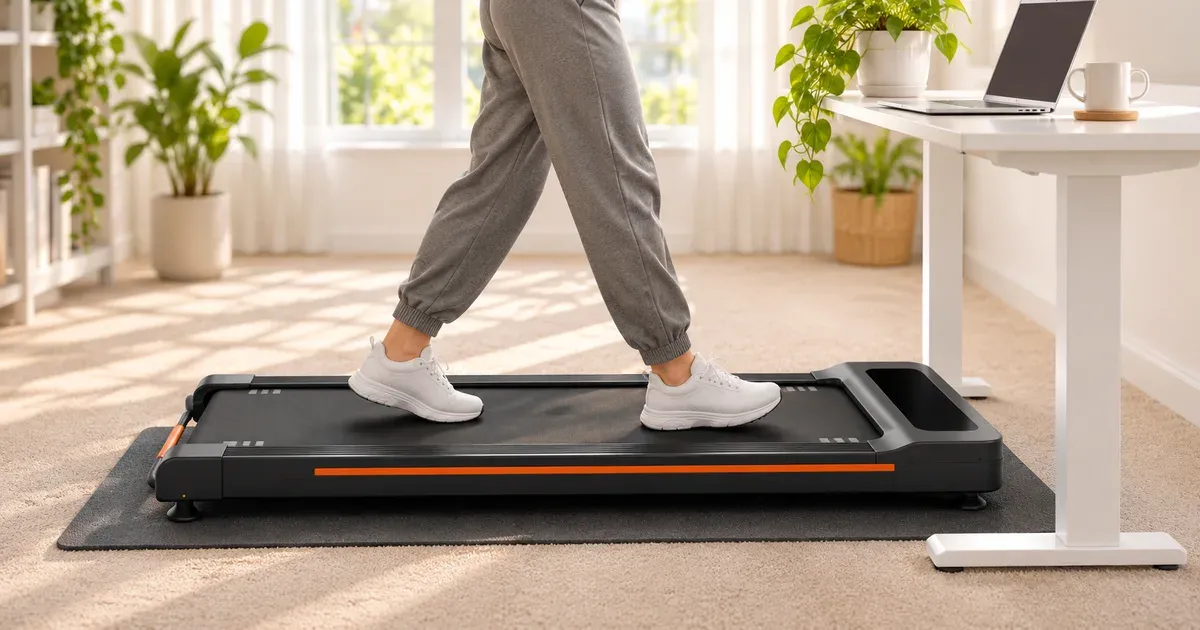
Yes, you can use a walking pad on carpet, as long as the carpet is low-pile and you put a firm equipment mat under the pad. Thick or plush carpet is the problem. It presses against the vents under the motor, sheds fibers into the belt, and lets the frame rock. On that kind of carpet you need a rigid board under the mat, or a hard floor.
That is also what the companies that make walking pads say. UREVO and WalkingPad both publish carpet guides that allow carpet with a firm mat, and UPLIFT’s manual advises against running its pad on thick carpet.
Walking Pads on Carpet at a Glance
| Carpet type | Can you use a walking pad on it? | What to put under the pad |
|---|---|---|
| Low-pile or commercial carpet | Yes | A firm, high-density equipment mat |
| Medium-pile carpet | Usually | A firm mat; stop if the pad rocks or the mat sinks |
| High-pile, plush, or shag carpet | Not directly | A rigid board (plywood or MDF) with a mat on top, or move to a hard floor |
| Area rug on a hard floor | Yes, if the rug is thin and flat | A firm mat, or roll the rug back and use the floor |
What Walking Pad Makers Say About Carpet
- UREVO says a walking pad can be used on carpet, with conditions. Low-pile carpet is “generally safe.” On shag or plush carpet, UREVO says not to put the pad directly on the floor, because it sinks in and the carpet covers the cooling vents. Its fix is a high-density equipment mat, with a sheet of plywood or MDF under the mat on very thick carpet.
- WalkingPad (KingSmith) says yes, with a firm equipment mat. It rates low-pile carpet as the best carpet for a treadmill, says medium-pile can work if the mat stays firm, and calls high-pile or plush carpet “not a good treadmill base.” It also notes that some walking pads have pressure sensors in the deck that work best on a level surface.
- UPLIFT’s manual for the Inclining Walking Pad advises against operating it on thick carpet because carpet can affect airflow and stability.
None of the three says carpet is off limits. All three say the pad has to sit flat, stay level, and keep its vents clear.
Why Thick Carpet Is a Problem
A walking pad sits much lower than a full treadmill, usually 4 to 6 inches tall with the motor at the front, right above the floor. That is what makes carpet matter more for a walking pad than for a big treadmill.
- Heat. The motor pulls cooling air from underneath. When the pad sinks into deep pile, the carpet presses against the vents and the motor runs hotter. An overheated pad can shut down in the middle of a walk, and repeated overheating is hard on the motor.
- Dust and fibers. A moving belt builds static and pulls in lint, pet hair, and carpet fibers. They collect under the belt and around the motor, which adds friction and noise.
- Rocking and belt drift. Carpet compresses unevenly under the feet. If one side sinks more than the other, the frame rocks and the belt drifts off center.
- Dents. The pad’s weight and yours rest on a few small feet and wheels. Left in one spot, they leave dents in the carpet pad.
How to Tell if Your Carpet Is Too Thick
UREVO suggests a simple clearance test. Set the pad on the carpet and slide your hand under the motor cover at the front. If your fingers fit without touching carpet fibers, the pad has room to breathe. If the carpet rubs the underside of the cover, it is too thick to use as it is.
Then stand on the pad and shift your weight from side to side. If the frame rocks or one corner sinks, add a firmer base before you walk on it.
What to Put Under a Walking Pad on Carpet
- Use a high-density equipment mat. Look for dense rubber, PVC, or high-density EVA sold for treadmills or exercise equipment. It should be a few inches longer and wider than the pad, so every foot and wheel sits on it.
- Skip yoga mats and foam tiles. They are too soft. The pad’s feet sink into them, which brings back the rocking and airflow problems the mat was supposed to fix.
- Add a board on plush carpet. On thick carpet, even a good mat bends under your weight. A sheet of plywood or MDF under the mat spreads the load and gives the pad a flat, rigid base.
- Level the pad. If your pad has adjustable feet, turn them until it sits flat and doesn’t wobble. A level deck keeps the belt centered.
- Keep the cord and vents clear. Don’t let the mat edge or carpet cover the vents, and plug the pad straight into a wall outlet.
A mat adds a little height. If your standing desk is already near the top of its range, check the numbers with our desk height calculator.
Walking Pads That Suit Carpeted Rooms
No maker certifies a pad for carpet, and the advice above applies to every model. A few traits make carpet easier to live with, though.
- A pad you can leave in place. Rolling a pad across carpet on small wheels every day is a chore, and each move drags fibers under the frame. Heavier pads that stay on their mat work better in carpeted rooms than light ones you stow daily.
- A taller frame. Pads around 6 inches tall keep their motor housing farther from the pile than 4-inch pads do.
- A self-lubricating belt. Lubricating a belt means squeezing silicone oil under it. On carpet, drips are hard to clean up. A belt that doesn’t need oil avoids the problem.
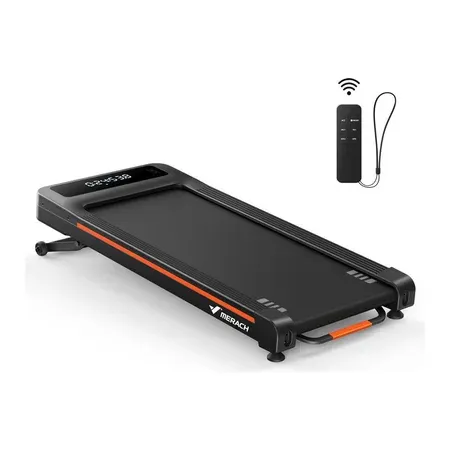
Best for carpeted rooms
Merach NovaWalk W50
A 68 lb brushless pad with a self-lubricating belt, 12% auto incline, and a 400 lb rating.
The Merach NovaWalk W50 fits all three. It weighs about 68 pounds, so it stays put on a mat. It stands 6.1 inches tall, and its belt is self-lubricating, so there is no oil to drip. It also has a brushless motor, a 12% motorized incline, a 41.3-inch belt, and a 400-pound rating for about $300. Our Merach walking pad review has the full specs.
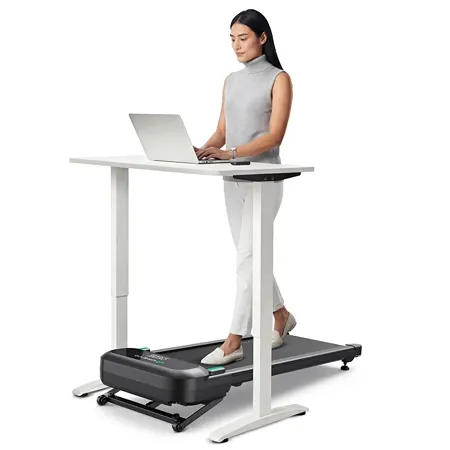
Runner-up
UREVO SpaceWalk 5L
A 6.1-inch walking pad with a brushless motor, 9% auto incline, and 400 lb rating for about $270.
The UREVO SpaceWalk 5L is a similar shape for a little less: 6.1 inches tall, with a brushless motor, a 9% auto incline, and a 400-pound rating for about $270. UREVO also sells a foldable treadmill mat. See our UREVO SpaceWalk 5L review.
If you need to store the pad after every session, a hard floor is the better home for it. Our walking pad comparison chart lists the weight and height of every pad we cover.
Upkeep on Carpet
- Vacuum under and around the pad every week. It removes the lint and hair the belt would otherwise pull in.
- Check the motor cover for heat. UREVO recommends walking for 20 to 30 minutes the first few times, then touching the motor cover. Warm is normal. If it is too hot to keep your hand on, the pad needs a firmer base.
- Watch the belt. If it drifts to one side, the pad probably isn’t level. Re-level it first, then adjust the rear roller screws as your manual describes. UREVO’s Strol 2E manual, for example, calls for a quarter turn at a time.
- Lubricate on schedule. Follow the interval in your manual, and put a towel down first if the pad sits on carpet.
- Move the pad now and then. Shifting it a few inches every few weeks keeps dents from setting in the carpet.
Is Carpet Quieter Than a Hard Floor?
Usually, yes, for the people below you. Carpet and its padding absorb some of the footstep impact that a hard floor passes straight through, which is the sound downstairs neighbors hear. A mat is still worth using on carpet, because it keeps the frame steady and the vents clear. Our guide to the quietest walking pads covers motor noise ratings and other ways to cut footstep noise.
Walking Pad on Carpet FAQ
Can you use a walking pad on carpet?
Yes, on low-pile carpet with a firm equipment mat under it. On thick or plush carpet, put a rigid board under the mat or move the pad to a hard floor.
Can you use a walking pad on carpet without a mat?
It can work on thin, low-pile carpet if the pad sits flat and the vents under the motor are clear. UREVO and WalkingPad both recommend a firm mat on any carpet to protect airflow and the carpet.
What should I put under a walking pad on carpet?
A high-density rubber, PVC, or EVA equipment mat slightly larger than the pad. On plush carpet, add a sheet of plywood or MDF under the mat. Don’t use a yoga mat.
Will a walking pad overheat on carpet?
It can on thick carpet, because the pile blocks the vents under the motor. On low-pile carpet with a firm mat, airflow is the same as on a hard floor.
Will a walking pad damage carpet?
It can leave dents where the feet and wheels rest. A mat spreads the weight, and moving the pad a few inches every few weeks keeps dents from setting.
Can you put a walking pad on an area rug?
Yes, if the rug is thin and lies flat. A thick or loose rug can bunch up and let the pad shift, so roll it back and use the hard floor instead.
Is it better to use a walking pad on carpet or a hard floor?
A hard floor with a mat is the easiest setup. The pad sits level, rolls easily, and stays cleaner. Carpet works with a firm mat, and it passes less footstep noise to the floor below.