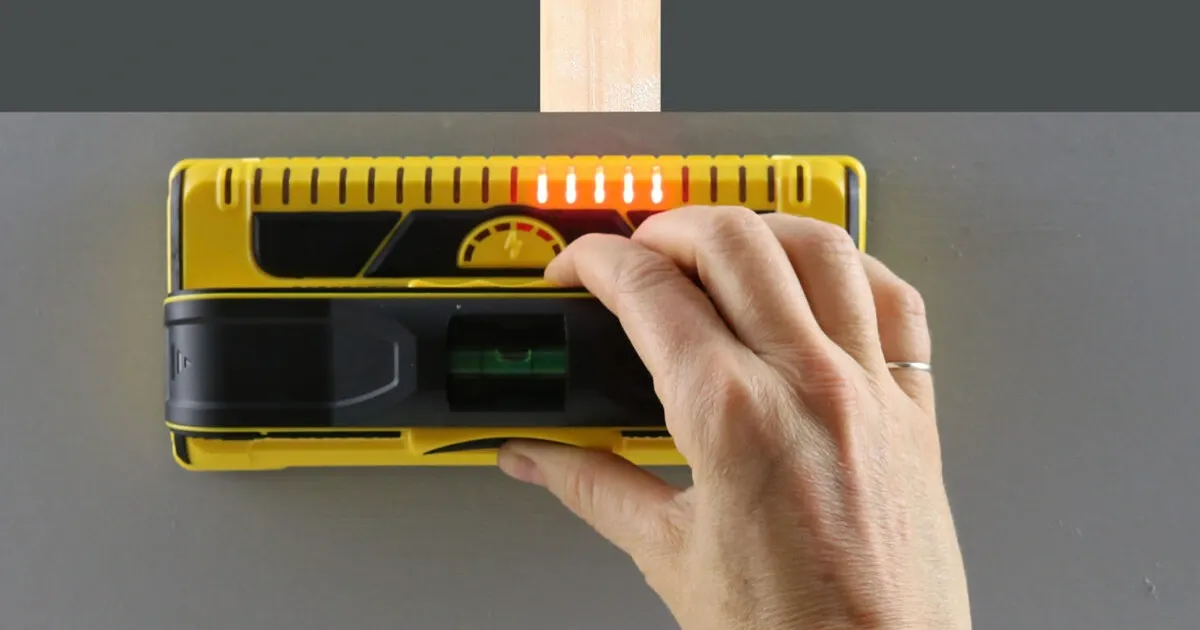
The Franklin Sensors ProSensor M210 is a stud finder with 13 sensors and a row of 21 LEDs that light up over the full width of a stud, not just one edge. The center LED turns green when you’re over the middle of the stud, so you know exactly where to drill. It detects wood and metal studs up to 1.7 inches deep, warns you about live AC wires, and adds a bubble level and a pencil slot.
It costs about $60, roughly three times as much as a basic edge-finding stud finder, and it’s one of the most popular stud finders on Amazon, with more than 6,500 ratings averaging 4.6 stars.
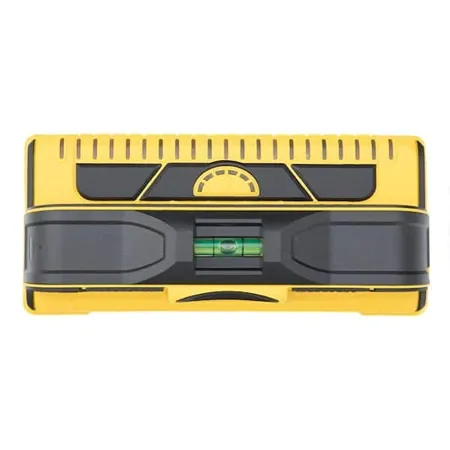
Franklin Sensors ProSensor M210
A 13-sensor stud finder with a 21-LED display, 1.7-inch detection depth, live wire warning, and a bubble level.
Quick Verdict
Buy the ProSensor M210 if you hang TVs, shelves, cabinets, or heavy mirrors on drywall and you want to see where a stud starts, ends, and centers in one pass, without calibrating or sliding back and forth. It’s fast, easy to read, and it finds both wood and metal studs.
Skip it if your walls are plaster and lath, thick tile, or multiple layers of drywall; the 1.7-inch depth and capacitive sensing struggle there, and Franklin’s 2.5-inch ProSensor MAX or a magnet that finds nails is a better match. And if you only hang a picture once a year, the cheaper ProSensor M70 does the same basic job.
Franklin ProSensor M210 specs
| Spec | Value | Note |
|---|---|---|
| Sensors | 13 | |
| Display | 21 LEDs | Green LED marks stud center |
| Detection depth | Up to 1.7 inches | Always on, one mode |
| Finds | Wood and metal studs | |
| Extras | Live AC wire meter, bubble level, pencil caddy | |
| Power | 2 AA batteries | Rechargeable AAs work |
| Calibration | None needed | |
| Weight | About 11 oz | |
| Price | About $60 |
How a 13-Sensor Stud Finder Works
Most electronic stud finders have one or two sensors. They measure the wall’s density as you slide them along, and they need to calibrate on an empty section of wall first. Start them over a stud, and they’ll read that spot as “empty,” then give confusing results.
The M210 uses a different approach. Its 13 capacitive sensors sit side by side across the bottom of the tool and read the wall at the same time. Instead of looking for one change in density, it compares all 13 readings and lights the LEDs that sit over denser material behind the drywall. That’s why you can press the button and start anywhere, including directly on top of a stud, and why it can show you the stud’s full width, plus double studs around doors and windows.
Using It
- Hold the M210 flat against the wall.
- Press and hold the button.
- Slide it slowly across the wall.
- Watch the LEDs. When a stud is under the tool, the LEDs over it light up; a standard 1.5-inch stud lights about five. When the middle LED turns green, you’re centered.
- Mark the stud through the pencil slot, and use the bubble level to mark a level line.
Because it shows the whole stud, you can mark both edges and drill in the center, where screws hold best. Confirm the first stud by finding the next one about 16 inches away (or 24 inches in some construction).
Live Wire Detection
The M210 includes a live wire meter that warns you when it senses an energized AC wire behind the wall. It’s a useful extra check, but understand its limits:
- It only senses live AC wiring. A wire that’s switched off, or a low-voltage cable like Ethernet or speaker wire, won’t trigger it.
- Wires inside metal conduit or behind metal studs may not be detected.
- Plumbing, gas lines, and ductwork aren’t detected by the wire meter.
Treat it as a warning, not a guarantee. Avoid drilling directly above or below outlets and switches, where wires usually run vertically, and turn off the circuit if you’re drilling near one.
Walls It Handles, and Walls It Doesn’t
The M210 does its best work on standard drywall over wood or metal studs, which covers most homes built in recent decades. Its 1.7-inch depth also gets through 5/8-inch drywall and many single-layer walls with paneling.
It has trouble with:
- Plaster and lath. Older plaster walls are dense and uneven, and the wood lath strips run horizontally across the studs, so capacitive sensors light up everywhere. A strong magnet that finds the nails holding the lath is often more reliable.
- Tile, stone, and backsplashes. These are thick and dense.
- Double drywall and soundproofed walls. These can exceed 1.7 inches.
- Foil-backed insulation or damp walls. These can confuse any capacitive sensor.
For thick walls, Franklin’s ProSensor MAX reaches 2.5 inches and has a second deep-scan mode for drywall, plaster, OSB, plywood, and tile.
ProSensor M210 vs. Other Franklin Stud Finders
| Model | Sensors | Depth | Extras | Price |
|---|---|---|---|---|
| ProSensor M70 | 7 | 1.5 in | Compact | About $22 |
| ProSensor M150 | 9 | 1.5 in | Live wire warning | About $40 |
| ProSensor 710+ | 13 | 1.6 in | Bubble level, ruler | Varies |
| ProSensor M210 | 13 | 1.7 in | Live wire meter, bubble level, pencil caddy | About $60 |
| ProSensor MAX | 13 (larger) | 2.5 in | Deep-scan mode for thick walls | About $119 |
The M70 is the best value for occasional use. It shows stud width with fewer sensors and has no wire warning. The M150 adds the wire warning. The M210 has the widest sensor array of the standard models, the deepest standard detection, and the bubble level, which makes it the best all-around pick for frequent DIY projects. The MAX is the one to get for plaster, tile, or layered walls.
Who Should Buy It, and Who Should Skip It
Buy it if you regularly hang heavy things on drywall, want to see stud edges and centers at a glance, and like having a wire warning and level built in.
Skip it if your walls are mostly plaster and lath or tile (get the MAX or a magnetic finder), or you only need a stud finder occasionally (the M70 is a fraction of the price).
Final Verdict
The Franklin Sensors ProSensor M210 is one of the easiest stud finders to use: no calibration, a clear display that shows the full width of each stud, and a green light at the center. Its live wire warning and bubble level are useful extras. On standard drywall it’s hard to beat; on old plaster or thick walls, step up to the ProSensor MAX.