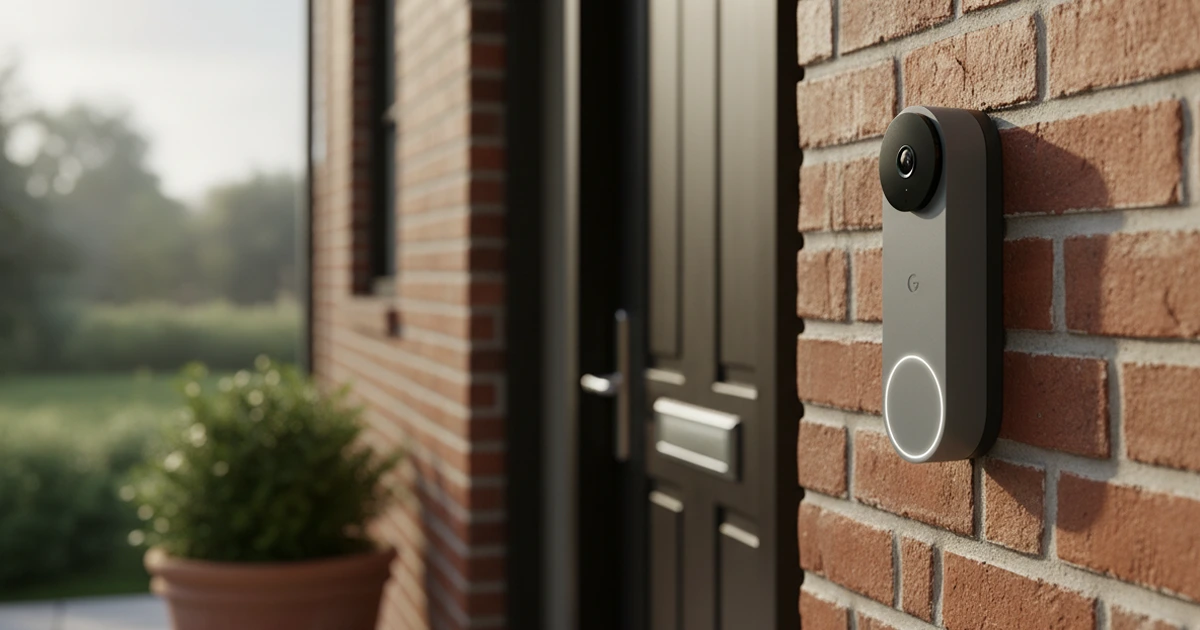

A smart doorbell camera is one of the simplest ways to make your home more secure and convenient. It lets you see who’s at your door from anywhere, helping you decide whether to answer, ignore, or just keep an eye on what’s happening outside. Whether you’re expecting a delivery or just want peace of mind while you’re away, these devices add an extra layer of awareness to your daily life.
Today’s top models go beyond basic motion detection. They can tell the difference between a person, a package, or a passing car, so you only get the alerts that matter. Many also offer continuous video recording, crisp image quality, and smart app integrations that make checking in effortless.
If you live in a home without existing doorbell wiring, battery-powered or hybrid models make setup easy while still offering the same level of detail and reliability. Between flexible storage options, smart alerts, and sleek designs, there’s a doorbell camera for every type of home and homeowner.
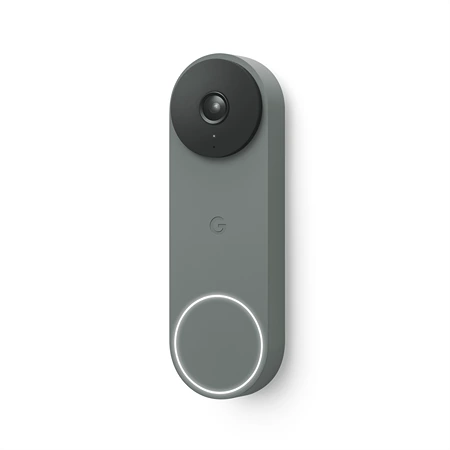
Google Nest Doorbell (Wired, 3rd Gen)
Best Overall Option
Delivers sharp video, smart alerts, and reliable wired power for round-the-clock home security and seamless Google Home integration.
The Google Nest Doorbell (Wired, 3rd Gen) is one of the strongest options for anyone who wants a fast, accurate, and highly capable wired doorbell camera. It sends motion alerts quickly, brings up a live view without much delay, and does a good job separating people, animals, vehicles, packages, and general motion. Its 2K video is detailed, and the wider 166-degree field of view with a 1:1 aspect ratio gives you a practical head-to-toe look at what is happening near your front door. It can also work with an existing chime, or you can pair it with a smart speaker for visitor announcements.
One of its biggest strengths is how much control it gives you over what gets recorded and what triggers alerts. You can create up to four activity zones, which makes it easier to focus on a driveway, porch, walkway, or package drop-off area while ignoring less useful motion nearby. That helps cut down on unnecessary notifications from passing cars or movement outside the areas you care about. The doorbell can also record motion outside those zones, so you still have flexibility if you want broader coverage.
The main catch is that the free plan is limited. Without a subscription, the doorbell stores only short 10-second clips that disappear after six hours, which may not be enough to capture a full visit or clearly show someone’s face. A Google Home Premium Standard plan unlocks longer clips, up to five minutes, and stores them for up to 30 days. That plan also supports an unlimited number of cameras, but it is still a meaningful added cost if you only need one doorbell camera.
Google also offers more advanced features through its paid plans, including familiar-face detection, garage door monitoring when the door is in view, AI-powered video history search, and more descriptive alerts. Some of those features sound useful, but they are not all equally reliable. Familiar-face detection may need a clear, close view to work well, and AI-generated descriptions can be inaccurate or overly detailed. For people who want everything recorded, the higher-tier plan adds 24/7 cloud recording for 10 days at a time, but most users will probably be better served by the standard motion-triggered recording plan.
From a privacy and security standpoint, Nest video is encrypted in transit and at rest, and face data is stored locally in the doorbell’s encrypted internal memory. Google may share certain data with approved partners or third-party apps when permission is granted, and recordings may be disclosed when legally required. Two-factor authentication is available, though not required. All things considered, the Google Nest Doorbell (Wired, 3rd Gen) is a polished, responsive, and feature-rich doorbell camera, but it makes the most sense for buyers who are comfortable paying for a subscription.
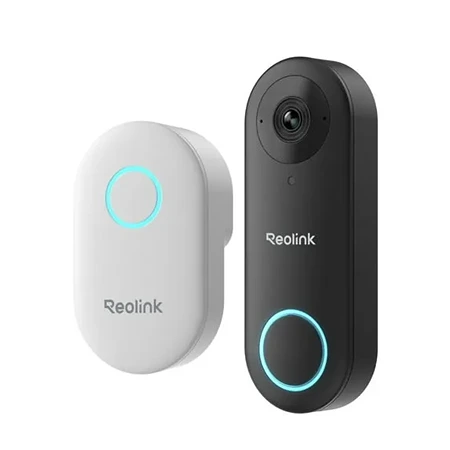
Reolink Video Doorbell
Best Runner Up
Wired 2K doorbell with dual-band 5G & 2.4GHz Wi-Fi, sharp video, smart detection, and free local storage with no monthly subscription fees.
The Reolink Video Doorbell earns its spot as the runner-up by delivering nearly everything you’d want from a wired smart doorbell without locking you into a subscription. It captures crisp 2K footage with a tall, wide field of view that frames visitors and packages clearly, and its wired power keeps the feed available around the clock. What sets it apart from most doorbells in this class is dual-band connectivity: it supports both 5GHz and 2.4GHz Wi-Fi, so it can ride a faster, less congested network for smoother live streaming and quicker load times when you open the app.
Reliable Wi-Fi makes a real difference in day-to-day use, and the Reolink takes advantage of it. Live views open promptly, motion alerts arrive within a few seconds, and the higher-bandwidth 5GHz band helps keep 2K streams sharp without the stutter that can plague 2.4GHz-only cameras on busy home networks. The doorbell also includes an indoor chime in the box, so you can hear visitors inside without buying extra accessories, and it can integrate with an existing wired chime if you prefer.
Storage is one of the Reolink’s strongest selling points. Footage records locally to a microSD card or to a Reolink Home Hub, meaning there are no recurring fees and your video stays inside your home. Smart detection can distinguish people from general motion to cut down on irrelevant alerts, and you can fine-tune detection zones and sensitivity within the app. For more advanced users, the camera supports RTSP and ONVIF, making it easy to fold into third-party network video recorders or local surveillance setups.
The trade-offs are familiar for the category. The Reolink leans on its own app and ecosystem rather than offering deep Google Home or Apple Home integration, so households built around those platforms may find it less seamless than the Nest. Smart detection is capable but not quite as polished as the package- and face-aware system on pricier models, and the design is more utilitarian than sleek. Even so, for anyone who wants dependable wired performance, strong video, and genuinely subscription-free storage, the Reolink Video Doorbell WiFi is an easy second recommendation behind the Nest.
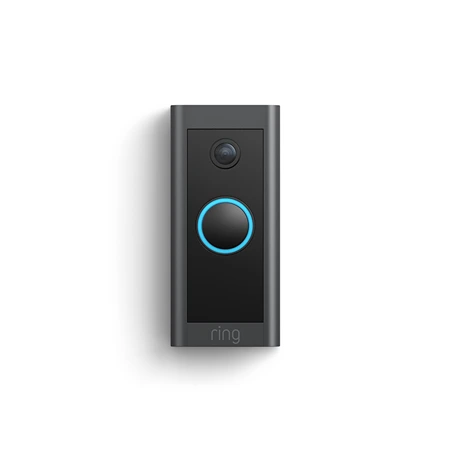
Ring Video Doorbell Wired
Best Budget Option
Compact and affordable, the Ring Video Doorbell Wired offers clear HD video, reliable motion alerts, and seamless integration with the Ring app.
The Ring Video Doorbell Wired is a compact and capable smart doorbell that focuses on essentials without unnecessary extras. It captures clear 1080p video and delivers fast, accurate motion alerts. With a 155-degree horizontal and 90-degree vertical field of view, it provides a wide perspective of your entryway, ensuring you can see both people and packages with ease. The streamlined design also makes it a great fit for tight spaces, as it’s noticeably smaller and slimmer than other Ring models while still maintaining a polished appearance.
Affordability is one of this model’s biggest strengths. It’s among the least expensive wired doorbells available and frequently goes on sale for an even lower price. While a subscription is required to record and store footage, the cost remains reasonable at around $5 per month or $50 per year, offering up to 180 days of video storage. This plan also unlocks advanced features like person detection and rich notifications that include video previews. For those who prefer not to pay for a subscription, the doorbell still supports live viewing and instant motion alerts, though recordings won’t be saved.
Because of its low cost, there are a few trade-offs to consider. The Ring Video Doorbell Wired doesn’t connect to existing mechanical chimes, and one isn’t included in the box. Instead, you’ll need to pair it with a Ring Chime, Ring Chime Pro, or an Amazon Echo smart speaker to hear notifications inside your home. It also lacks an angled mounting bracket, which can be purchased separately if you want to fine-tune your viewing angle. These additions increase the total cost slightly but are worth factoring in if you’re planning a full setup.
Communication is one area where this model shines. It’s the only doorbell among top competitors that allows you to talk to visitors instantly without pressing a microphone button. Once you tap “Go Live” in the app, you can speak freely, and audio comes through clearly on both ends. This simple and responsive feature makes interactions at the door feel natural and reliable. Motion-triggered notifications are equally fast, typically appearing within seconds, and recordings continue seamlessly if movement persists, avoiding the gaps sometimes seen in competing systems.
Subscribe to Product Bible
Stay updated with the latest product reviews, buying guides, and expert recommendations. Fresh advice on the best things we've researched, tested, and reviewed, sent to your inbox weekly.
Want to know more about how we handle your data or opt out of marketing emails? Check out our Privacy Policy. If you have any questions, we're always here to help.
Ring has made significant efforts to address security and privacy concerns from its past. Two-factor authentication is now mandatory for all Ring devices, ensuring stronger account protection. The app gives users granular control over privacy settings, including the ability to block out parts of the camera view through Privacy Zones, manage data sharing, and opt out of community features like the Neighbors network. Users can also view and manage linked services directly from the app’s Control Center. Although the model does not support end-to-end encryption, all video is encrypted during transmission and storage.
This doorbell’s smart-home integration is focused on Amazon’s ecosystem. It works seamlessly with Alexa and other Ring products but does not support Google Home or Apple Home. While this may limit compatibility for some households, users already within the Amazon ecosystem will find the integration intuitive and convenient, especially with the option to have Echo devices announce when someone is at the door.
The Ring Video Doorbell Wired remains a strong option for anyone looking for a reliable, budget-friendly camera with quick notifications and crisp video. It strips away premium extras in favor of dependable performance, clear communication, and solid motion detection. For homeowners who don’t mind pairing it with a separate chime or smart speaker, it’s one of the most accessible ways to add smart security and peace of mind to your front door without spending much.
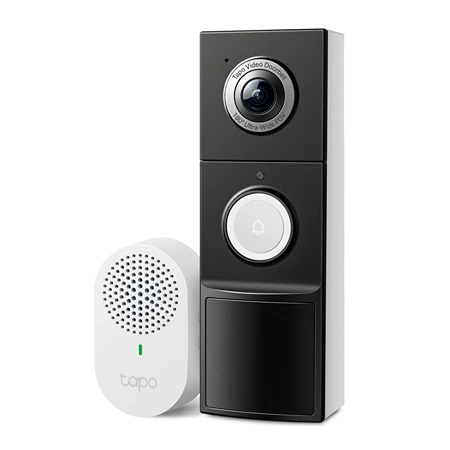
TP-Link Tapo D225
Best Battery Powered Option
Dual-power 2K doorbell with smart alerts, local storage, and a wide head-to-toe view.
The TP-Link Tapo D225 Video Doorbell Camera is a strong choice if you want a battery-powered doorbell camera without giving up too much in performance or flexibility. It records sharp 2K video, can tell the difference between general motion, people, pets, vehicles, and packages, and lets you decide which events should trigger alerts or recordings. It also gives you the option to store footage locally on a microSD card or use paid cloud storage, which makes it more flexible than many battery-operated models.
The Tapo D225 is especially useful if you want more control over what your doorbell pays attention to. In the app, you can create Detection Zones to focus on specific areas, such as a porch, walkway, or driveway, while ignoring less important motion nearby. You can also filter which types of events send notifications, so you can record cars, people, animals, or packages without necessarily getting alerted for every bit of movement. When someone presses the doorbell, the app can send a call-style alert that is easy to answer quickly, though you can switch this to a standard push notification if you prefer something less intrusive.
Storage is another major advantage. Local microSD recording keeps ongoing costs down and avoids relying entirely on cloud storage, though it does mean footage could be lost if the doorbell or card is stolen or damaged. For cloud backup, Tapo Care adds 30 days of video history and rich notifications with thumbnails for a monthly or annual fee. Battery life is also solid for this type of camera. TP-Link estimates up to eight months on a charge, but real-world battery life will depend on how much motion the camera sees and which features are turned on. For many homes, charging every few months is a reasonable expectation, though the whole doorbell has to be removed to recharge because the battery is not removable.
The biggest drawback is the design. The Tapo D225 is noticeably bulky, which is mostly due to the built-in battery, and it is not as sleek as some wired models. Its wide view can also create a fish-eye look, though that tradeoff helps capture a fuller head-to-toe view of visitors and packages. Color night vision is available through the LED ring, but standard black-and-white night vision may be more dependable in some situations. For privacy and security, locally stored video is encrypted when transmitted, cloud video is encrypted in transit and at rest, location data is recorded but not shared, and two-factor authentication is available, though not required. The TP-Link Tapo D225 is a capable, customizable battery-powered doorbell camera that works especially well for buyers who want local storage, detailed alerts, and strong features at a reasonable price.
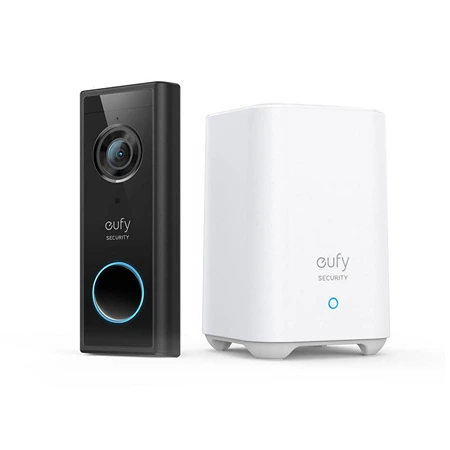
Eufy Security S220
Best for Local Storage
Battery-powered doorbell with crisp 2K video, no monthly fees, and secure local storage for easy home monitoring without cloud reliance.
The Eufy Security Video Doorbell S220 (Battery-Powered) offers one of the most flexible and privacy-focused smart doorbell setups available. Because it runs on a rechargeable battery, it can be installed virtually anywhere within Wi-Fi range, freeing you from the limitations of existing wiring. It’s an ideal choice for renters or homeowners who want an easy, noninvasive installation. Despite its simple setup, it provides sharp 2K video and reliable motion detection, delivering the core features most people expect from a smart doorbell without tying you to a cloud subscription.
A standout feature of the S220 is its built-in HomeBase hub, which stores video locally on a 16 GB hard drive. This means your recordings are kept inside your home rather than on remote servers, reducing privacy risks and eliminating the need for ongoing subscription costs. The HomeBase also acts as a chime, sounding an alert when the doorbell is pressed, and it can connect to existing mechanical chimes as well. For those who want cloud redundancy, Eufy offers an optional subscription plan that stores 1080p video online for $4 per month or $40 per year, ensuring you can access footage even during internet or power outages.
Battery life is one of the S220’s strongest advantages. Eufy claims up to six months on a single charge, but actual results will depend on motion activity and settings. In a moderately active environment, it typically lasts three to four months between charges, which is still excellent for a device capturing frequent motion events. The trade-off is that the battery is not removable, so you must take the entire unit down to recharge it, a process that takes several hours. For most users, the long intervals between charges make this a minor inconvenience.
Video quality is consistently strong, with detailed 2K footage that captures faces and objects clearly during the day and reliable night vision performance after dark. Audio is equally clear, providing smooth two-way communication through the app. However, its object detection is somewhat limited compared with higher-end options. The camera can distinguish between people and general motion, but accuracy can vary, occasionally mistaking animals or vehicles for people. These occasional misclassifications are not uncommon among battery-powered cameras, but they are worth noting if precision alerts are a priority.
The S220’s recording system strikes a practical balance between efficiency and performance. Each clip is capped at 60 seconds, and if motion continues, a new clip starts shortly after. Some gaps between clips may occur, though they are usually brief. The HomeBase’s local storage can hold roughly six months of video based on average use, allowing you to review and manage footage easily within the app without worrying about running out of space.
Privacy and security have been key areas of focus for Eufy. Even though the S220 supports fully local storage, push notifications with thumbnail previews are routed through Eufy’s AWS-based servers by default. For users who want a purely local setup, these thumbnail alerts can be turned off in favor of text-only notifications. When using local storage, Eufy does not have access to your recordings, and even with a cloud subscription, content will only be shared if legally required. The app also supports two-factor authentication for added account protection.
Eufy’s local-first approach is ideal for those who prefer to avoid recurring fees or rely less on cloud storage. The HomeBase system provides reliable performance, fast access to stored footage, and an additional layer of privacy control. While the AI detection and occasional video gaps may not suit every user, the overall package offers impressive value for its price and convenience.
The Eufy Security Video Doorbell S220 is best suited for users who prioritize easy installation, strong battery life, and secure local storage over premium cloud-dependent features. It’s a practical, well-rounded choice that delivers clear video, responsive notifications, and dependable operation with minimal ongoing cost.
Choosing the right doorbell camera ultimately comes down to your priorities. Some users value the convenience of wired power and constant recording, while others prefer the flexibility of a battery-powered model that can be installed anywhere. What matters most is finding a camera that balances reliability, video quality, and privacy in a way that fits your home and habits.
Modern doorbell cameras have evolved beyond simple motion alerts. They now serve as a central part of home security, offering advanced detection, flexible storage options, and seamless app control. Whether you want to keep an eye on deliveries, monitor activity while you’re away, or simply add peace of mind, today’s top models make it easier than ever to stay connected to what happens at your doorstep.
No matter which setup you choose, a good video doorbell should give you confidence and control. The best ones deliver clear footage, dependable notifications, and features that make daily life just a little more convenient.