A portable Bluetooth speaker should be easy to bring along without making music sound like an afterthought. Compact models work well in a kitchen, hotel room, or quiet patch of a park, while larger speakers provide the output needed for a backyard gathering. The useful middle ground depends on where you listen, how much weight you will carry, and whether the speaker needs to survive dust, rain, or a dip in the pool.
Sound quality and usable volume matter most, but battery life, controls, charging, and carrying design shape the experience just as much. Water ratings also need context: splash resistance, temporary immersion protection, and saltwater-oriented construction solve different problems. These picks cover distinct uses while keeping their tradeoffs clear, so you can choose the speaker that fits your routine instead of paying for features you will rarely use.
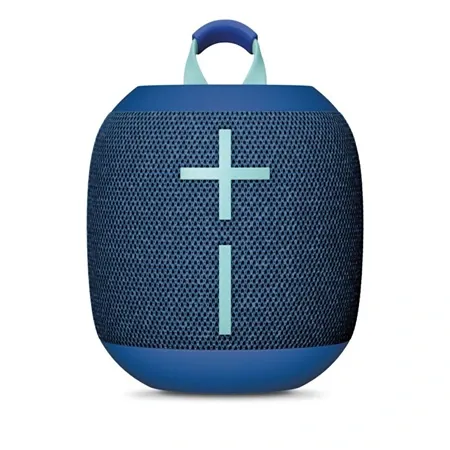
Best overall
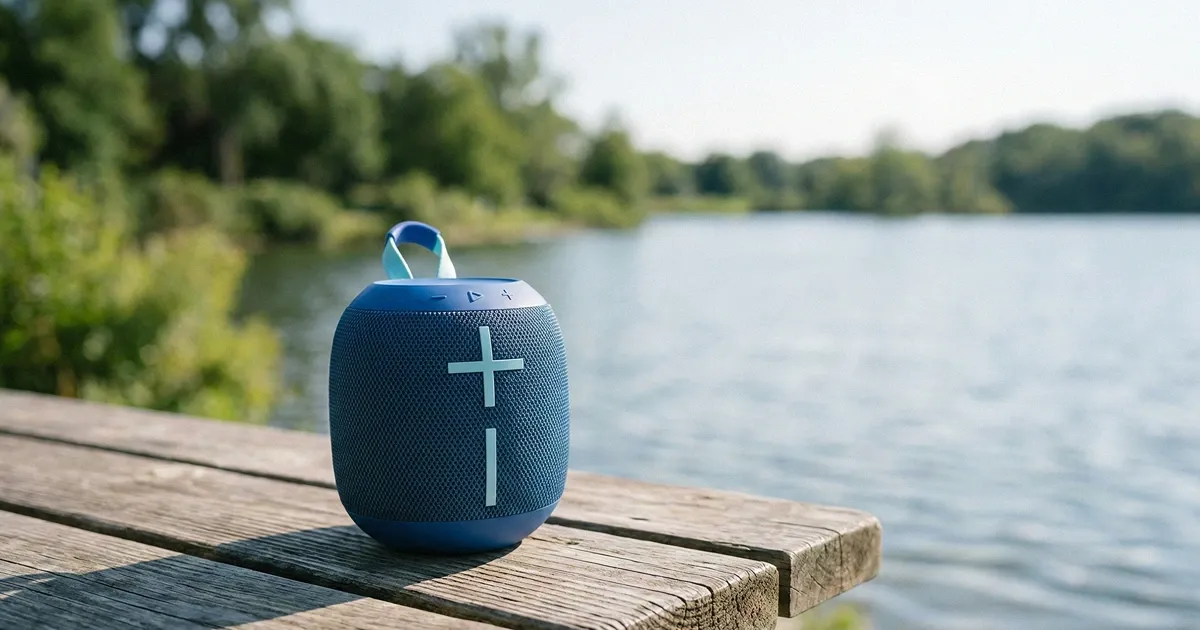
Ultimate Ears Wonderboom 4
A compact, balanced portable speaker with IP67 protection, simple controls, and enough battery life for a full day out.
The Ultimate Ears Wonderboom 4 is the easiest recommendation for most people because it balances sound, size, durability, and battery life without leaning too heavily in one direction. At about 420 grams and just over four inches tall, it is light enough for a day bag yet substantial enough to handle a kitchen, bedroom, hotel room, or small outdoor gathering. Its rounded body is not truly pocketable, but it remains an uncomplicated speaker to carry and place.
Two 40 mm active drivers give the Wonderboom 4 a broad, balanced presentation for its size. Vocals remain easy to follow, and the speaker can reach a useful volume without becoming as compressed as many compact alternatives. Deep bass is naturally limited by the small enclosure, so buyers expecting the scale of a larger boombox should look elsewhere. Outdoor Boost trades some low-end weight for more presence in open spaces, while Podcast mode puts extra emphasis on spoken voices.
The controls are deliberately simple, with large buttons for volume and playback plus onboard access to its sound modes. There is no companion app, which keeps setup friction low but also means there is no adjustable equalizer for reshaping the sound. Two units can be paired for broader coverage or stereo playback, although that requires buying a second Wonderboom 4.
An IP67 rating provides certified dust protection and temporary immersion resistance under the rated conditions, and the speaker is designed to float if it lands in water. Those qualities make it well suited to pools, campsites, and beach bags without turning it into a specialized water speaker. Ultimate Ears claims up to 14 hours of playback, enough to cover a long outing, though volume and listening conditions will affect the result.
There are still reasons to choose another model. The JBL Go 4 takes up much less room, the Soundcore Boom 2 Plus produces sound on a larger scale, and the Soundcore Boom 3i offers a more complete set of water-focused features. The Wonderboom 4 also lacks an auxiliary input and speakerphone function. For buyers who want one compact speaker that can move comfortably between home, travel, and ordinary outdoor use, however, its well-judged balance makes it the best overall choice.
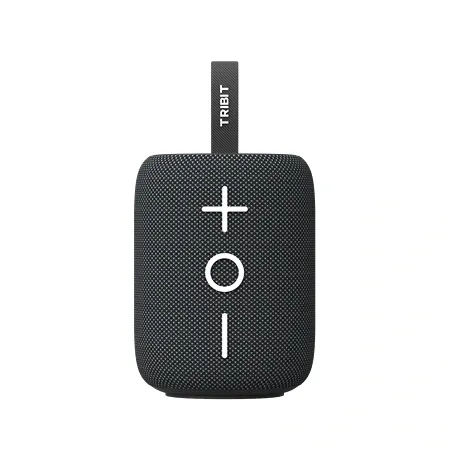
Best budget
Tribit StormBox Mini+
An affordable 12-watt speaker with app-based sound controls, IPX7 water resistance, and optional lighting.
Extra controls are often the first casualty of a tight budget, but the Tribit StormBox Mini+ retains enough flexibility to feel like more than a basic backup speaker. Its two 6-watt channels provide 12 watts of rated output, and the compact body is easy to move between a desk, patio table, and travel bag. It is not as tiny as the JBL Go 4, yet it offers a more substantial feature set for shoppers trying to keep the cost down.
The Mini+ can produce a fuller presentation than its price and dimensions might suggest, although its bass performance is not universally convincing. It works best at personal and small-room listening levels, where vocals and instruments do not have to compete with a large, noisy space. Buyers who prioritize forceful low bass or party-level output should spend more on a larger speaker rather than expecting a budget model to overcome its physical limits.
Tribit’s companion app adds sound presets and adjustable EQ, giving you a practical way to tame or emphasize parts of the mix. Bluetooth 5.4, stereo pairing with a second Mini+, and USB-C charging round out the useful features. Multicolor lights add a playful accent and can be switched off when a quieter look is preferable.
The IPX7 rating covers temporary immersion under specified conditions, but it does not include a certified dust-protection digit. At about 1.2 pounds, the Mini+ is also heavier than its name may imply, and its floating orientation is not ideal for listening while it is in the water. Tribit’s published battery estimates vary with volume and test conditions, so it is better to expect runtime to change considerably with loudness and lighting use than to rely on one headline figure.
Low price still brings compromises. The battery indication is less informative than a numerical display, the speaker is too small for deep bass, and the water rating is not as comprehensive as the protection offered by the Wonderboom 4 or Boom 3i. The StormBox Mini+ earns its budget designation by combining acceptable everyday sound, app control, and useful water resistance at the lower end of the category, not by matching more expensive speakers in every respect.
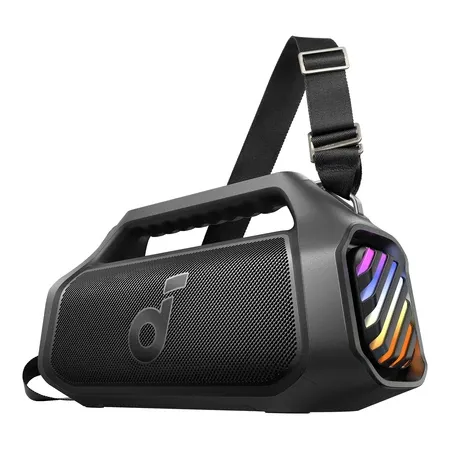
Best upgrade
Soundcore Boom 2 Plus
A large, bass-forward portable speaker with 100-watt standard output, app-based EQ, and IPX7 water resistance.
Open spaces quickly expose the limits of a compact speaker, which is where the Soundcore Boom 2 Plus makes its case. Its large cabinet delivers the scale and bass that suit backyards, campsites, and casual parties better than close-range listening on a desk. This is a specialist for buyers who put substantial output ahead of easy carry, rather than a broad upgrade for everyone.
Soundcore rates the Boom 2 Plus for 100 watts in standard use and up to 140 watts with BassUp 2.0 engaged. Two woofers and two tweeters produce a forceful, bass-forward presentation that stays composed at high volume. Vocals and finer details can recede when the low end is emphasized, and sound changes as you move away from the preferred listening angle, so it is better suited to energetic group listening than careful, balanced playback.
The Soundcore app’s custom EQ is genuinely useful for pulling back the default bass emphasis or adjusting the balance for different settings. Bluetooth 5.3 covers wireless playback, while a 3.5 mm input accommodates older or wired sources. Beat-synced lighting adds atmosphere at a gathering, two identical units can form a stereo pair, and the USB-C port can provide a modest 10-watt charge to another device.
At 17.4 inches wide and 8.38 pounds, this is portable in the boombox sense. The integrated handle and detachable shoulder strap help with short carries, but the Boom 2 Plus is far too large for traveling light. Soundcore advertises up to 20 hours of playback at 50 percent volume with BassUp and the lights off; louder, bass-heavy use can reduce that figure substantially. A certified 30-watt USB-C charger can refill the speaker in about three hours, but a wall charger is not included.
An IPX7 rating provides water-immersion protection under the specified conditions, and the speaker is designed to float. The X in that rating means there is no certified dust-protection level, an important limitation for beaches and dry campsites. Buyers who want a compact everyday speaker should stay with the Wonderboom 4, while the Boom 3i offers a more water-focused design at much lower weight. Choose the Boom 2 Plus when powerful bass and useful high-volume output matter enough to justify its bulk.
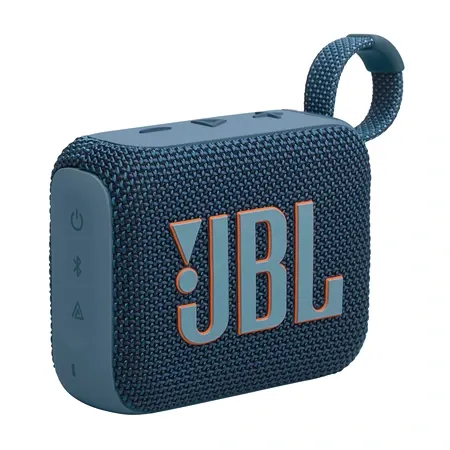
Best pocket
JBL Go 4
A 6.7-ounce IP67 speaker with a built-in carry loop, app-based EQ, and a form that fits into small bags and larger pockets.
When carrying the smallest possible speaker matters more than filling a large space, the JBL Go 4 is the most practical choice here. I own the Go 4 and use it while traveling, which is exactly where its compact design makes the most sense. It weighs about 6.7 ounces and measures roughly 3.7 by 3.0 by 1.7 inches, so it can disappear into a crowded day bag and fit into many coat pockets. The integrated loop also gives a carabiner or bag strap a secure attachment point.
That small enclosure produces a clear, lively sound at close range, making the Go 4 a natural fit for a desk, bathroom, hotel room, or tent. Bass has more punch than the dimensions might imply, but it cannot reach deeply or give bass-heavy music the weight of a larger speaker. Maximum volume follows the same pattern: it is useful for personal listening and quiet groups, not for overcoming conversation across a backyard.
Its IP67 rating adds certified dust protection and temporary immersion resistance under the specified conditions. That is unusually reassuring in a speaker this small because it may spend more time clipped to a bag or set down wherever space is available. The textured exterior should still be treated with reasonable care, and the USB-C port should be dry before charging.
JBL claims up to seven hours of playback in standard use. Playtime Boost can add up to two more hours by changing the speaker’s output, a reasonable option for spoken audio or background listening when battery life matters more than full sound. Those figures are modest beside larger speakers, but they reflect the Go 4’s much smaller battery and body.
The JBL Portable app provides EQ controls, and compatible Auracast-enabled JBL speakers can be linked for wider playback. Compatibility depends on the devices involved, so this should not be treated as universal multi-speaker support. The Go 4 is the right pick for travelers who value minimal weight and sturdy protection above bass and endurance; anyone who can spare more bag room will get fuller sound and longer battery life from the Wonderboom 4.
Best waterproof
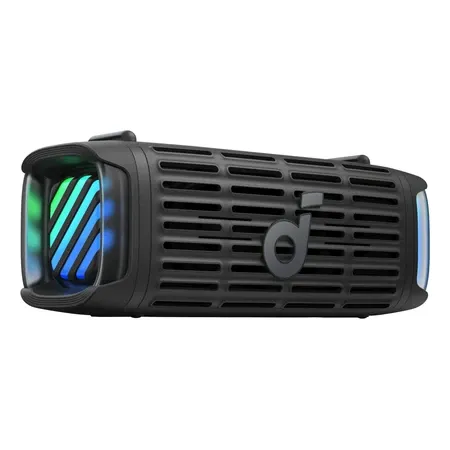
Soundcore Boom 3i
A 50-watt IP68 speaker designed for saltwater exposure, upright floating playback, and easier cleanup after outdoor use.
Water is not an occasional hazard for the Soundcore Boom 3i; it is the environment this speaker is designed around. Its combination of IP68 protection, saltwater-resistant construction, and upright floating playback makes it the most purposeful choice here for pools, beaches, boats, and paddle trips. The Wonderboom 4 is easier to carry for general use, but the Boom 3i offers a more complete feature set for buyers who expect regular exposure to water.
An IP68 rating provides certified dust protection and water resistance within the maker’s specified limits, with the USB port cover fully closed. The speaker is designed to keep playing in an upright position while floating, and its Buzz Clean mode vibrates the drivers to help expel water and debris. Soundcore also advertises resistance to a one-meter drop. These protections reduce worry around outdoor use, but they do not make every fall harmless or permit unlimited submersion.
The Boom 3i has 50 watts of rated output, giving it more scale than the pocket and compact picks while remaining much easier to carry than the Boom 2 Plus. One unit plays in mono, and its default tuning benefits from adjustment rather than sounding ideally balanced for every listener straight away. The Soundcore app provides customizable EQ, while BassUp 2.0 is available when more low-end emphasis suits the setting.
At 27.5 ounces and roughly 8.3 inches long, the Boom 3i remains reasonable to carry with its detachable strap, though it is not a throw-it-in-any-pocket design. Soundcore claims up to 16 hours of playback under controlled conditions with moderate volume, lights and BassUp off, and the default EQ. Bluetooth 5.3 supports SBC and AAC, and two source devices can stay connected, but there is no auxiliary input.
Saltwater resistance should not be mistaken for maintenance-free ocean use. Follow the care instructions after exposure and make sure the port area is clean and dry before charging. Buyers who rarely listen around water may prefer the smaller, more balanced Wonderboom 4, while listeners seeking more bass and output may accept the Boom 2 Plus’s greater weight. For frequent pool, beach, and boating use, the Boom 3i’s water-focused design makes its extra size worthwhile.
The right portable speaker is usually the one whose compromises line up with the way you listen. A small model is easier to keep nearby, but its bass, maximum volume, and battery capacity will be limited. A larger cabinet can sound more convincing outdoors, though the added weight matters every time it has to leave the house. Water protection deserves the same practical thinking, since a speaker used beside a sink needs less specialized protection than one regularly taken onto a boat.
Start with the size and output your usual setting demands, then compare battery life, carrying design, controls, and the exact environmental rating. Leave some margin for louder playback, which shortens runtime, and treat ports and charging areas carefully even on water-resistant models. A speaker that fits comfortably into your routine will get more use than one chosen for a headline specification you seldom need.