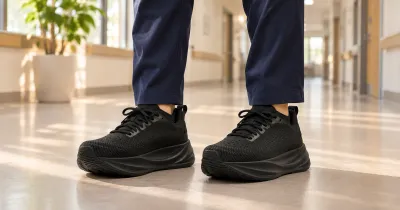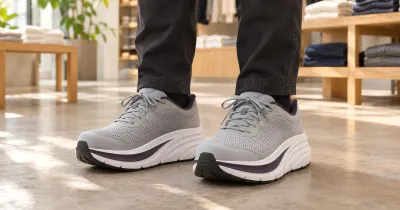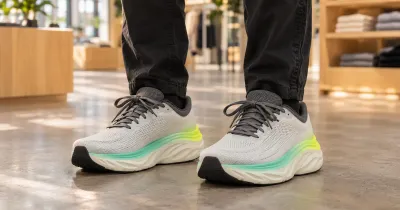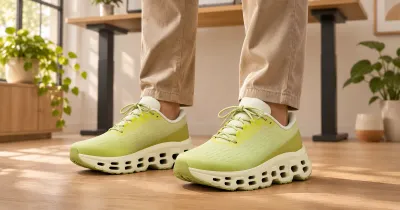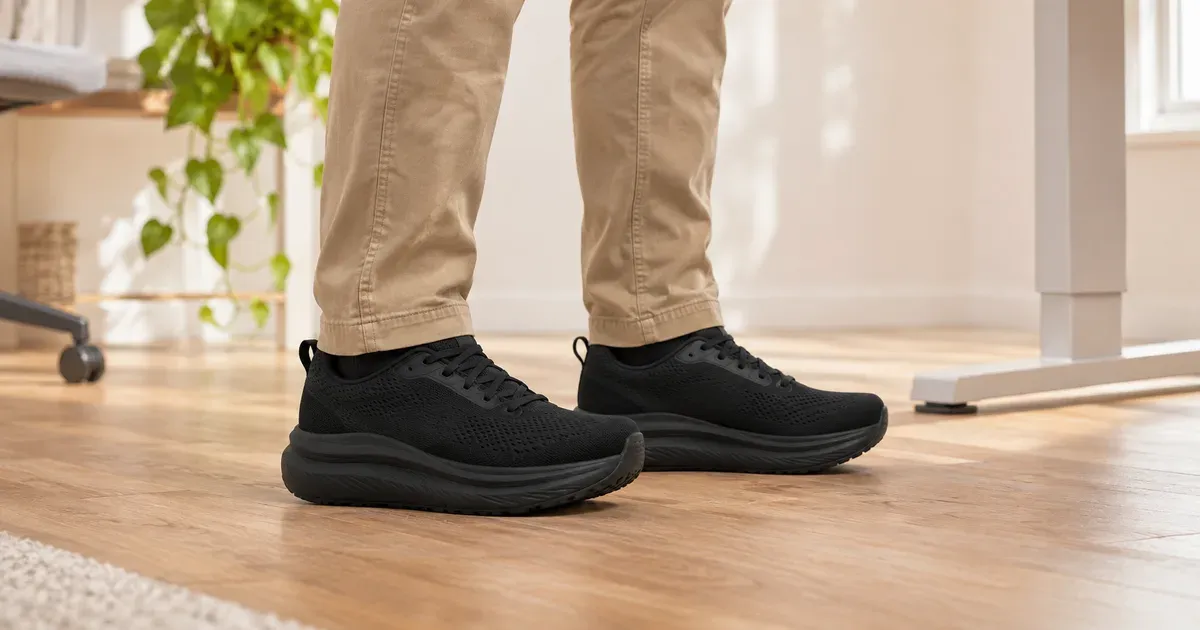
No shoe has been shown to prevent or relieve back pain from standing, and no systematic review covers the question. What the research does support is cushioning for foot and leg discomfort, and breaking up long stretches of standing. If you want the most cushioning for long shifts, the Hoka Bondi 9 ($140 on Hoka’s sale, regularly $175, on November 23, 2026) is our pick. The Brooks Ghost Max 4 ($165) suits orthotic wearers, the New Balance 1080v15 ($169.99) is the lighter cushioned option with four men’s widths, and the Dansko Professional ($140 to $155) is the rocker-sole clog many healthcare workers wear.
If your back hurts every shift, talk to a doctor or physical therapist. Shoes are a comfort decision; the habits further down matter as much.
What the Research Says
- Standing and back pain are linked, not proven cause and effect. A 2018 meta-analysis of 49 studies (88,158 workers) found that standing more than 4 hours a workday was associated with low-back symptoms, a pooled odds ratio of 1.31 (95% CI 1.10 to 1.56). The authors call their conclusions tentative, because most studies were cross-sectional (Coenen et al. 2018). An older review using causation criteria found it unlikely that standing alone causes back pain (Roffey et al. 2010).
- Insoles don’t prevent back pain. A 2009 systematic review found “strong evidence that insoles are not effective for the prevention of back pain” (Sahar et al.), and a 2014 meta-analysis found no significant effect for prevention (RR 0.78, 95% CI 0.50 to 1.23) or treatment (Chuter et al.).
- Rocker (“unstable”) shoes and custom orthotics showed moderate evidence for less disability in people who already have chronic low back pain: SMD 0.44 for unstable shoes and 0.52 for custom orthotics in a 2020 meta-analysis (Res Sports Med 2020). Those were patients, not standing workers, and prefabricated orthoses showed no significant pain effect in a 2026 meta-analysis rated low quality (Disabil Rehabil 2026).
- Cushioning helps discomfort and fatigue. A 2018 review found moderate evidence that cushioned insoles or softer flooring reduce discomfort and fatigue in people who stand at work (Speed et al.). It didn’t measure back pain.
- Moving helps. In lab studies, low-back symptoms became clinically relevant after about 71 minutes of uninterrupted standing, and after 42 minutes in people prone to pain; the authors suggest not standing still for more than about 40 minutes (Coenen et al. 2017). NIOSH’s reviewers concluded that shifting between standing, sitting and walking appeared best.
Back-Pain Picks Compared
| Shoe | Best for | Drop / heel | Weight (M / W) | Widths | APMA Seal (per APMA) | Maker price | Amazon, Nov 23 |
|---|---|---|---|---|---|---|---|
| Hoka Bondi 9 | Most cushioning | 5 mm | 10.50 / 9.30 oz | Regular, Wide, X-Wide | Yes | $140 (reg. $175) | $155.00 / $137.22 |
| Brooks Ghost Max 4 | Orthotic users | 6 mm | 10.3 / 9.2 oz | M: 1D, 2E, 4E · W: 1B, 1D, 2E | Yes | $165 | $150.00 (M) |
| New Balance 1080v15 | Lighter cushioned trainer | 6 mm | 9.2 oz (M) | M: B, D, 2E, 4E | Yes | $169.99 | $169.95 (M) |
| Dansko Professional | Rocker clog | 2 in heel | Not published | EU sizes; Wide Pro listings | Yes | $140–$155 | $139.95 (W) |
1. Hoka Bondi 9: Best Cushioning for Long Shifts
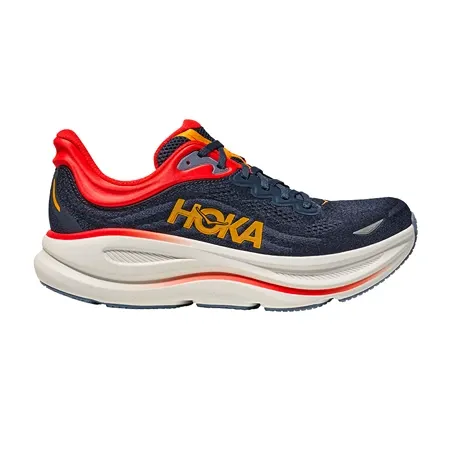
Most cushioning
Hoka Bondi 9
Hoka's most cushioned road shoe: supercritical EVA, a 5 mm drop, three widths and an APMA Seal.
The Bondi 9 is Hoka’s most cushioned road shoe, now with a supercritical EVA midsole and 2 mm more stack than the Bondi 8. It weighs 10.50 oz (men’s) and 9.30 oz (women’s), has a 5 mm drop and comes in Regular, Wide and X-Wide. APMA lists it. It makes no slip claim, so it’s for dry floors.
It was $140 at Hoka (20% off) and $155.00 men’s / $137.22 women’s on Amazon. Hoka’s 30-day guarantee covers worn shoes.
2. Brooks Ghost Max 4: Best for Orthotic Users
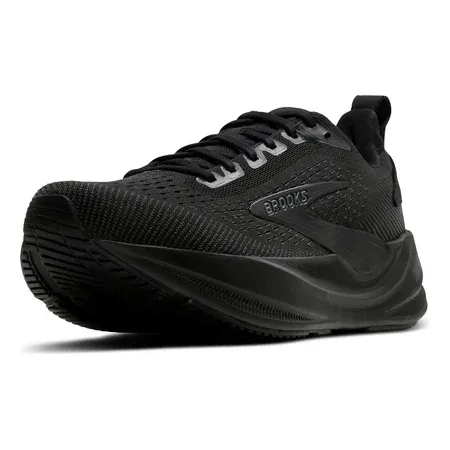
Best for orthotics
Brooks Ghost Max 4
Max-cushion Brooks with a 6 mm drop, extra room for orthotics, an APMA Seal and men's sizes to 4E.
If a clinician has prescribed orthotics for your back, the Ghost Max 4 is built with “extra room for orthotics”. It has a 6 mm drop, weighs 10.3 oz (men’s) and 9.2 oz (women’s), and comes in men’s 1D, 2E and 4E and women’s 1B, 1D and 2E. APMA lists it.
It’s $165 at Brooks (no discounts on current models) and the men’s was $150.00 on Amazon. Brooks’ 90-day promise covers worn shoes.
3. New Balance 1080v15: Best Lighter Cushioned Shoe
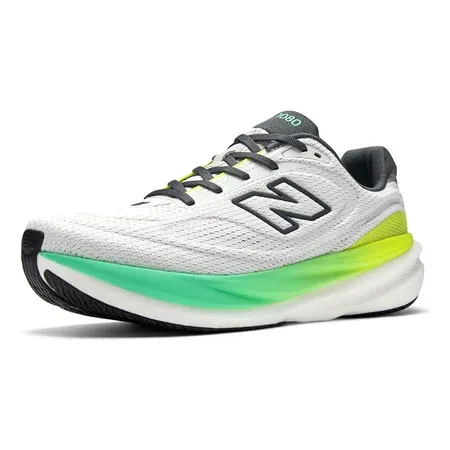
Best lighter cushioned shoe
New Balance 1080v15
New Balance's Infinion-foam trainer: 9.2 oz, 6 mm drop, men's B to 4E, APMA Seal. $169.95 on Amazon on Nov 23, 2026.
The 1080v15 moved to New Balance’s new Infinion foam, so it’s no longer called Fresh Foam X. It’s the lightest pick here at 261 g (9.2 oz) for men’s, with a 6 mm drop and men’s Narrow (B), Standard (D), Wide (2E) and X-Wide (4E). APMA lists it.
New Balance excludes it from promotions, so it’s $169.99 there; the men’s was $169.95 on Amazon, sold by Amazon. New Balance takes returns in new condition only.
4. Dansko Professional: Best Rocker Clog
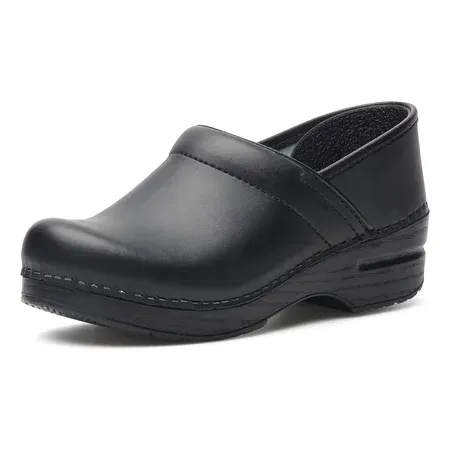
Best rocker clog
Dansko Professional
Dansko's stapled leather clog with a PU rocker bottom and an APMA Seal; no slip-resistance claim.
The rocker research above covers “unstable” shoes for people with chronic back pain, not clogs specifically, but the Professional is the best-known rocker-bottom work shoe. Dansko describes a “PU rocker bottom” that “promotes forward motion”, a 2 in heel and a 0.8 in platform. APMA lists Dansko’s stapled clogs, including the Professional, for men and women.
Dansko makes no slip-resistance claim for the Professional, so for wet floors get the XP 2.0 instead (see the best clogs for standing all day). It’s $140 to $155 at Dansko depending on leather, with some colors marked down for Black Friday; the women’s Black Box was $139.95 and the men’s $154.95 on Amazon. Dansko uses whole EU sizes, and returns must be unworn.
Habits That Help More Than Shoes
- Change position. Sit, walk or shift your weight at least every 40 minutes or so. A footrest or rail lets you raise one foot at a time.
- Stand on a mat where you stay in one spot. OSHA’s grocery guidelines say “Good quality anti-fatigue mats reduce back and leg fatigue.” See the best anti-fatigue mats.
- At a desk, alternate. A 2020 meta-analysis found prolonged standing at a desk didn’t reduce low back pain compared with sitting, while alternating sit-stand work reduced low-back discomfort slightly (SMD −0.23) (Work 2020; Agarwal et al. 2018). Our standing desk guide and shoes for standing desks cover that setup.
- Replace worn shoes. Compressed foam and smooth tread don’t do their job. See how often to replace work shoes.
For knee pain, see the best shoes for knee pain from standing. For the full roundup, see the best shoes for standing all day.
Sources
- Hoka Bondi 9
- Brooks Ghost Max 4
- New Balance 1080v15
- Dansko Professional, Dansko returns
- APMA Seal of Acceptance database
- Coenen et al. 2018, standing and low-back symptoms: PubMed 27884862
- Roffey et al. 2010: PubMed 20207335
- Sahar et al. 2009, insoles for back pain: PubMed 19359999
- Chuter et al. 2014: PubMed 24775807
- Orthotics and unstable shoes for chronic low back pain, 2020: PubMed 32954802
- Foot orthoses for low back pain, 2026: PubMed 40844962
- Speed et al. 2018: PubMed 29866322
- Coenen et al. 2017: PubMed 28863296
- Standing desks and low back pain, 2020: PubMed 33074206; Agarwal et al. 2018: PubMed 29115188
- NIOSH Science Blog on prolonged standing; OSHA Guidelines for Retail Grocery Stores (OSHA 3192)
FAQ
Can shoes cause back pain from standing?
No review shows that. Standing more than 4 hours a day is linked to low-back symptoms (OR 1.31), but the studies can’t show whether shoes play a part.
Do insoles help back pain?
There’s strong evidence they don’t prevent it. Custom orthotics showed moderate evidence for less disability in people who already have chronic low back pain, but prefabricated insoles showed no significant pain effect.
Are rocker-bottom shoes good for back pain?
A 2020 meta-analysis found moderate evidence that unstable rocker shoes reduce disability in chronic low back pain patients. That wasn’t tested in standing workers.
What helps back pain from standing all day?
Changing position at least every 40 minutes or so, standing on a mat, alternating sitting and standing at a desk, and cushioned shoes for foot and leg comfort.