
If you wake up with a stiff, sore neck, your pillow is the first thing worth checking. A pillow that’s too high bends your neck up toward the ceiling, one that’s too flat lets it sag toward the mattress, and either way your neck muscles spend the night holding an awkward angle. The best pillow for neck pain is the one that keeps your head level with your spine in the position you actually sleep in. That comes down mostly to height and shape, not to any special material.
Our top pick is the Coop Home Goods Original Adjustable Pillow. It’s filled with shredded memory foam that you can add or remove until the height is right for your shoulders and mattress, and it has more than 64,000 Amazon ratings averaging 4.5 stars, for about $89. If you sleep on your back or side and like a firmer, shaped pillow, the TEMPUR-Neck Pillow has a contoured curve and comes in three sizes. The Elviros Cervical Pillow is a contour pillow for under $40.
Our Picks at a Glance
| Pillow | Best for | Type | Price |
|---|---|---|---|
| Coop Original Adjustable | Most sleepers, any position | Adjustable shredded memory foam | About $89 (queen) |
| TEMPUR-Neck Pillow | Back and side sleepers who like firm support | Contoured memory foam, 3 sizes | About $104–$134 |
| Elviros Cervical Pillow | Trying a contour pillow cheaply | Contoured memory foam, 2 heights | About $36 |
| Purple Harmony | Latex, hot sleepers | Talalay latex core with gel grid, 3 heights | About $229 (standard) |
Best Overall: Coop Original Adjustable Pillow
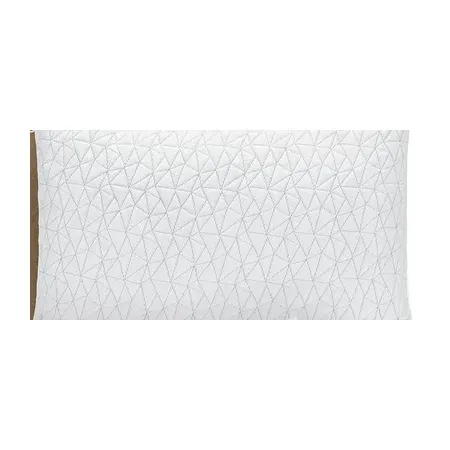
Best overall
Coop Home Goods Original Adjustable Pillow
Shredded memory foam fill you add or remove to set the height, with an extra bag of fill included.
The trouble with buying a pillow for neck pain is that the right height depends on your shoulder width, your sleeping position, and how much your mattress lets your shoulder sink in. You can’t know that from a product page. The Coop Original solves it by letting you change the height yourself. It’s filled with Coop’s blend of cross-cut memory foam and microfiber, and a zipper lets you pull fill out for a flatter pillow or pack in more for a higher one. An extra bag of fill comes in the box.
Shredded foam also moves. You can push more of it under your neck and less under your head, so the pillow supports the curve of your neck instead of just propping up your skull. Side sleepers usually keep most of the fill, back sleepers remove some, and stomach sleepers remove a lot.
The removable cover is a soft, breathable fabric made with bamboo-derived viscose, and the foam is CertiPUR-US and GREENGUARD Gold certified. Expect a mild new-foam smell for the first few days, and give the pillow a fluff now and then to keep the fill evenly spread. Coop offers a 100-night trial and a five-year warranty when you buy directly, so check return terms if you buy elsewhere.
Buy it if you’re not sure what height you need, or you switch positions during the night.
For more general-purpose pillows, including Coop’s cooler Eden, see our guide to the best bed pillows.
Best Contour: TEMPUR-Neck Pillow
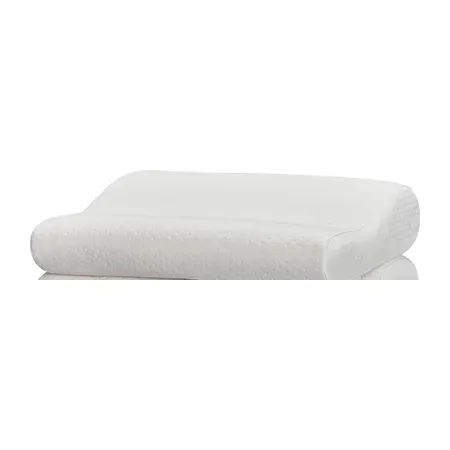
Best contour pillow
Tempur-Pedic TEMPUR-Neck Pillow, Medium
An extra-firm, contoured TEMPUR memory foam pillow in three sizes matched to your shoulder width.
A contour pillow, also called a cervical pillow, has a raised roll along one edge for your neck and a lower dip for your head. It’s the classic design physical therapists suggest for back sleepers, because it supports the natural curve of the neck instead of pushing the head forward.
The TEMPUR-Neck is the best-known contour pillow, molded from a single block of Tempur-Pedic’s dense, slow-responding memory foam in an extra-firm feel. It doesn’t flatten or shift through the night the way fiber and shredded pillows can. It comes in three sizes, all 20 by 12.5 inches:
| Size | Height | Shoulder width (base of neck to outer shoulder) |
|---|---|---|
| Small | 3.5 inches | Up to about 4 inches, or 4 to 6 inches for back sleepers |
| Medium | 4 inches | 4 to 6 inches for side sleepers, 6 to 10 inches for back sleepers |
| Large | 4.75 inches | 6 to 10 inches for side sleepers, or more than 10 inches |
Tempur-Pedic says to pick the smaller size if you fall between two. The cover is removable and machine washable, and the pillow has a five-year warranty.
The trade-offs: it’s firm, it takes a week or two to get used to, and the fixed shape suits people who stay on their back or side. It’s not a good choice for stomach sleepers or for anyone who likes to bunch up their pillow.
Buy it if you sleep mostly on your back or side and want firm, consistent support.
Best Budget Contour: Elviros Cervical Pillow
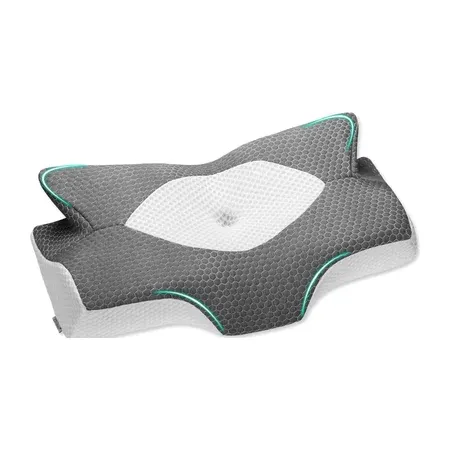
Best budget contour pillow
Elviros Cervical Memory Foam Pillow
A two-height contour memory foam pillow with arm cutouts and a washable cooling cover, for under $40.
If you’re not sure a contour pillow is for you, the Elviros is a cheap way to find out. It’s a medium-firm memory foam pillow, about 25 by 16 inches, with a different height on each long edge: about 3.9 inches on one side and 5.1 inches on the other. Flip it around to switch. The center is hollowed out to cradle your head, and the ends are shaped with cutouts so you can tuck an arm under the pillow when you sleep on your side.
The foam is CertiPUR-US certified, and the cover is a cool-feeling fabric that zips off for washing. Elviros notes that the shaped design can take two to four weeks to get used to, and that the foam has a slight smell for the first few days.
It has more than 3,000 Amazon ratings averaging 4 stars. Its unusual shape suits back and side sleepers who stay put; if you toss and turn, a simpler shape like the Coop is easier to live with.
Buy it if you want to try a contour pillow for under $40.
Best Latex: Purple Harmony Pillow
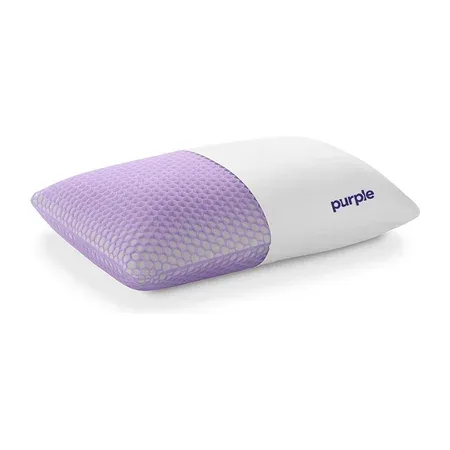
Best latex pillow
Purple Harmony Pillow, Medium, Standard
A Talalay latex core wrapped in Purple's cooling gel grid, in low, medium, and tall heights.
In clinical trials, latex (rubber) pillows have the most consistent results for neck pain of any pillow material (see the research below). Latex is springy rather than slow-sinking like memory foam, so it supports your head without letting it sink, and it holds its shape for years.
The Purple Harmony has a ventilated Talalay latex core wrapped in Purple’s honeycomb gel grid, which cushions your head and lets air flow through, so it’s one of the coolest-sleeping pillows you can buy. It comes in three heights: Low (5.5 inches) for back and stomach sleepers, and Medium (6.5 inches) or Tall (7.5 inches) for side sleepers. The cover is machine washable, and it has more than 7,000 Amazon ratings averaging 4.2 stars.
It’s expensive, at about $229 for a standard pillow, and its heights aren’t adjustable, so measure before you buy. Some find the bouncy feel strange at first.
Buy it if you want latex, sleep hot, or are tired of pillows that flatten.
How to Choose the Right Height
Loft, the height of the pillow when your head is on it, matters more than any other feature. The goal is for your nose to line up with the center of your chest and your neck to be roughly level with your spine, not tilted up or down.
| How you sleep | What you need | Typical loft |
|---|---|---|
| Side | A higher, firmer pillow that fills the gap between your ear and the mattress | 4 to 6 inches, higher for broad shoulders |
| Back | A lower pillow that supports the curve of your neck; contour pillows work well | 3 to 5 inches |
| Stomach | The thinnest pillow you can find, or none | Under 3 inches |
| Combination | An adjustable pillow you can mold as you turn | Varies |
A few adjustments:
- Soft mattress, lower pillow. Your shoulder sinks further into a soft mattress, so you need less height.
- Broad shoulders, higher pillow. Side sleepers with wide shoulders need more loft to keep the head level.
- Stomach sleeping is the hardest on your neck, because your head is turned to one side for hours. If your neck hurts, try training yourself to sleep on your side, with a pillow between your knees.
A simple check: lie in your usual position and have someone look at you from behind (side sleepers) or from the side (back sleepers). Your head shouldn’t be tipped toward the ceiling, the mattress, or your chest.
What the Research Says
The evidence on pillows for neck pain is limited but points in a consistent direction.
- A 2021 systematic review and meta-analysis of pillow trials found that latex (rubber) pillows modestly reduced neck pain compared with other pillows, along with waking symptoms and neck disability, and people liked them more. The effect on pain was small, and pillow type didn’t change sleep quality. The review also found that a pillow’s shape and height affected neck alignment more than its material (Chun-Yiu et al., 2021).
- A 2025 systematic review of five more recent trials, with 239 people with chronic neck pain, found only minor improvements in pain and no clear winner among latex, foam, and standard pillows. It concluded that a good pillow is a reasonable addition to treatment, not a treatment on its own (Ghosh et al., 2025).
In other words, no pillow is proven to cure neck pain, and the differences between pillow types are small. The most practical advice is to get the height right for your sleeping position, choose a pillow that keeps its shape, and give a new pillow a couple of weeks before judging it.
When to See a Doctor
Most neck pain comes from muscle strain and gets better within a few weeks. See a doctor if your neck pain:
- started after a fall, car accident, or other injury,
- comes with numbness, tingling, or weakness in your arms or hands,
- comes with fever, headache, or unexplained weight loss,
- is severe, getting worse, or hasn’t improved after a few weeks, or
- wakes you at night regardless of position.
A physical therapist can also check your sleeping position and recommend exercises, which have stronger evidence for chronic neck pain than any pillow.
Other Things That Help
- Replace old pillows. Fiber and down pillows flatten over a year or two. If yours stays folded when you fold it in half, it’s done.
- Watch your daytime posture. Hours of looking down at a phone or laptop strain the same muscles. Raise screens to eye level.
- Give it time. Your neck may feel different for a week or two after switching to a new shape or height, especially with a contour pillow.
How We Chose
We compared popular and highly rated pillows on adjustability and available heights, shape, firmness, how well they hold their shape over time, materials and certifications, washability, ratings, and price. We included a contour pillow, a budget contour option, and a latex pillow because those are the types studied in neck-pain trials, and an adjustable pillow because getting the height right is what matters most.
Pillows for Neck Pain FAQ
What type of pillow is best for neck pain?
One that keeps your head level with your spine in your sleeping position. Adjustable shredded-foam pillows make that easiest. In trials, latex pillows had a small edge over other materials, and contour pillows suit back sleepers.
Are cervical pillows good for neck pain?
They can help, especially back sleepers, by supporting the curve of the neck. They’re firm and shaped, so they take a week or two to get used to and don’t suit stomach sleepers.
What pillow height is best for neck pain?
Usually 4 to 6 inches for side sleepers, 3 to 5 for back sleepers, and under 3 for stomach sleepers. Use more height for broad shoulders and less on a soft mattress.
Can a pillow cause neck pain?
Yes. A pillow that’s too high, too flat, or has lost its shape can hold your neck at an angle for hours. If your neck is stiff in the morning and loosens up during the day, your pillow or sleeping position is a likely cause.
How long does it take to adjust to a new pillow?
Often a week or two, and up to four weeks for a contour pillow. Mild stiffness at first is common; sharp or worsening pain is a reason to switch back.
Is memory foam or latex better for neck pain?
Both can work. Latex is springier, cooler, and had slightly better results in trials. Memory foam molds more closely and feels softer. Height and shape matter more than the material.