The short answer: for gaming alone, the RTX 5090 laptop usually isn’t worth it. It has 10,496 CUDA cores against 7,680 and 24 GB of VRAM against 16 GB, but both chips share a 256-bit bus, 896 GB/s of bandwidth and the same power ceiling (175 W with Dynamic Boost in the biggest laptops). Independent testing puts the 5090 about 10 to 15 percent ahead, more at 4K and less at 1080p or in thin laptops. In the same laptop it costs $800 or more extra. The 5090 makes sense for AI, 3D rendering or video work that uses 24 GB.
Prices checked November 20, 2026, on Amazon and dell.com.
RTX 5080 vs. RTX 5090 Laptop Specs
| RTX 5080 Laptop | RTX 5090 Laptop | |
|---|---|---|
| CUDA cores | 7,680 | 10,496 (+37%) |
| VRAM | 16 GB GDDR7 | 24 GB GDDR7 |
| Memory bus | 256-bit | 256-bit |
| Memory bandwidth | 896 GB/s | 896 GB/s |
| GPU power range (Nvidia) | 80–150 W | 95–150 W |
| Highest maker TGP (with Dynamic Boost) | 175 W | 175 W |
| Boost clock | 1,500–2,287 MHz | 1,597–2,160 MHz |
| AI TOPS | 1,334 | 1,824 |
| Video encoders (NVENC, 9th gen) | 2 | 3 |
| DLSS 4.5 with Multi Frame Generation | Yes | Yes |
| Relative gaming performance | 100% | about 108–115% |
Same bus, same bandwidth, same power limit: the 5090’s extra cores run at lower clocks within the same 175 W budget, which is why the gaming gap is far smaller than 37 percent.
How Much Faster Is the RTX 5090 Laptop?
- Same laptop, two GPUs: independent testing of the same chassis with each chip found the RTX 5080 about 10 to 15 percent slower, with or without DLSS.
- Across many laptops: a multi-laptop average of in-game tests puts the 5090 about 15 percent ahead, from 9 percent in the mildest game to 29 percent in Cyberpunk 2077. Large synthetic benchmark databases show only about 8 percent (a G3D score of 28,417 against 26,373 in November 2026).
- In frames: a game at 60 fps on an RTX 5080 runs at roughly 66 to 69 fps on an RTX 5090.
- Resolution: the 5090 pulls furthest ahead at 4K (external monitor or a 4K panel); at 1080p and 1200p the difference mostly disappears.
- Thin laptops: in slim 16-inch machines the 5090 is power-limited, and some tests found a thin RTX 5090 laptop losing individual games to a thicker RTX 5080 laptop. In one 30-test comparison, a 4.6 lb Razer Blade 16 with an RTX 5090 beat a 5.5 lb Gigabyte AORUS Master 16 with an RTX 5080 in only 22 of the 30 tests. The 5080 laptop won Assassin’s Creed Mirage at 1080p by 145 fps to 120, and in half of the games the 5090 won, it was ahead by 6 fps or less.
- Against desktops: even the RTX 5090 Laptop is roughly level with, or behind, a desktop RTX 5070 in many games. A laptop is the price of portability, not a desktop replacement at this tier.
Which Laptops Offer Each GPU
| Laptop (2026 model unless noted) | RTX 5080 | RTX 5090 |
|---|---|---|
| ASUS ROG Strix Scar 18 | 175 W | 175 W |
| ASUS ROG Strix Scar 16 (2025) | 175 W | 175 W |
| ASUS ROG Zephyrus G16 GU606 | 160 W | 160 W |
| Lenovo Legion Pro 7i Gen 10 | 175 W | 175 W |
| Razer Blade 16 | 165 W | 165 W |
| Razer Blade 18 | up to 175 W | up to 175 W |
| HP HyperX OMEN MAX 16 (Intel) | offered | up to 175 W GPU |
| Gigabyte AORUS Master 16 Gen 2 | offered | offered |
| Alienware 16 Area-51 / 18 Area-51 | offered | offered |
Price Gap in the Same Laptop
| Laptop | RTX 5080 | RTX 5090 | Gap |
|---|---|---|---|
| ASUS ROG Strix Scar 18 (2026), Amazon | $4,199.99 | $4,999.99 | $800 |
| Razer Blade 16 (2026), 64 GB, Amazon | $4,699.99 (1 TB) | $5,599.99 (2 TB) | $900 |
| Alienware 18 Area-51, dell.com | $4,349.99 | about $5,049–$5,149 | about $700–$800 |
| Alienware 16 Area-51, dell.com | from $3,899.99 | $6,649.99 | $2,750 (higher configs) |
How much extra is the RTX 5090 worth?
With the rest of the laptop the same, the 5090 adds roughly 10 to 15 percent more frames and 8 GB more VRAM:
| RTX 5090 premium over the same RTX 5080 laptop | Verdict |
|---|---|
| Under $300 | Get the 5090 |
| $300–$500 | The 5090 for 4K play or 24 GB workloads |
| $500–$900 | The 5080 for gaming |
| Over $900 | The 5080 unless you need 24 GB of VRAM |
Which Should You Buy?
- RTX 5080 for gaming at any resolution, including 4K. You get 85 to 90 percent of the 5090’s frame rate for $700–$900 less.
- RTX 5090 if you run local AI models, 3D rendering or 8K video that needs more than 16 GB of VRAM, or you want the fastest laptop regardless of price. Buy it in a thick 175 W laptop like the Strix Scar 18 or Legion Pro 7i, not a slim one.
Best value at the top
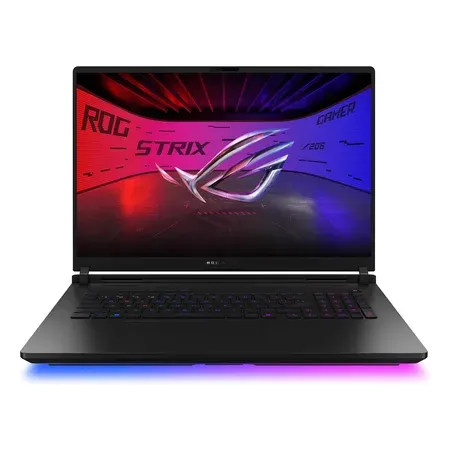
ASUS ROG Strix Scar 18 (2026, RTX 5080)
RTX 5080 at 175 W, Core Ultra 9 290HX Plus, 18-inch 4K 240 Hz mini-LED, 32 GB. $4,199.99 on Nov 20, sold by Amazon.
Same laptop with RTX 5090
ASUS ROG Strix Scar 18 (2026, RTX 5090)
RTX 5090 (24 GB) at 175 W, Core Ultra 9 290HX Plus, 18-inch 4K 240 Hz mini-LED, 32 GB. $4,999.99 on Nov 20, sold by Amazon.
16-inch RTX 5090
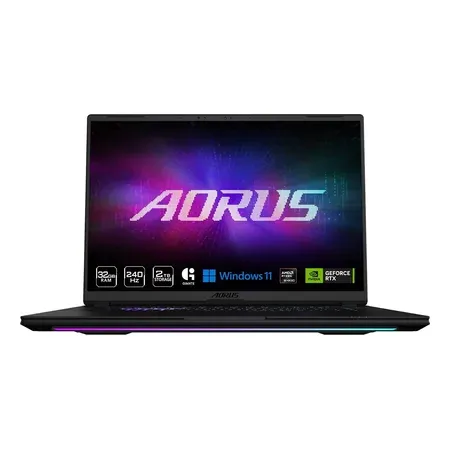
Gigabyte AORUS Master 16 Gen 2 (RTX 5090)
RTX 5090 with Ryzen 9 9955HX3D, 16-inch 2560x1600 240 Hz OLED. $4,599.99 on Nov 20, sold by Amazon.
RTX 5080 vs. RTX 5090 Laptop FAQ
How much faster is the RTX 5090 laptop than the RTX 5080 laptop?
About 10 to 15 percent in games in independent same-chassis testing. The gap is largest at 4K and small at 1080p.
Can an RTX 5080 laptop beat an RTX 5090 laptop?
Yes, in some games. A thick, well-cooled RTX 5080 laptop can outrun a thin RTX 5090 laptop that runs hotter or at lower power. Compare the laptops’ GPU wattage, not just the chip names.
Why is the RTX 5090 laptop only slightly faster?
Both chips have the same 256-bit bus, 896 GB/s of bandwidth and 175 W power ceiling. The 5090’s 37 percent more cores run at lower clocks to stay inside the same power.
Is the RTX 5090 laptop as fast as a desktop RTX 5090?
No. The desktop RTX 5090 has 21,760 CUDA cores, 32 GB on a 512-bit bus and a 575 W rating; the laptop chip has 10,496 cores. The laptop 5090 performs closer to a desktop RTX 5070.
Who should buy an RTX 5090 laptop?
People who need 24 GB of VRAM away from a desk: local AI models, 3D rendering and heavy video work. For gaming, the RTX 5080 gives nearly the same experience for much less.