Buy OLED if you play dark, cinematic or fast games and can spend about $400 to $650: the MSI MAG 271QPX QD-OLED (360Hz, 1440p) was $499.99 on Amazon on November 23, 2026, and MSI covers burn-in for 3 years. Buy IPS if you want the most refresh rate per dollar, leave static windows on screen for hours, or game under $250: the Alienware AW2726DL (280Hz, 1440p IPS) was $179.99. OLED pixels switch off for true black and change state in about 0.03ms; IPS is an LCD with a backlight, so blacks glow slightly, but it can’t burn in and costs a third as much at the same resolution.
OLED vs. IPS at a Glance
| OLED gaming monitor | IPS gaming monitor | |
|---|---|---|
| How it makes light | Each pixel emits its own light | LCD panel lit by a backlight |
| Black level | Pixels turn off; VESA True Black tiers require 0.0005 cd/m² black | Backlight always on; DisplayHDR 400 allows 0.4 cd/m² black |
| Typical response time (maker figure) | 0.03ms GtG (0.02ms on LG’s 2026 panels) | 1ms GtG on fast IPS |
| 1440p refresh rates on sale | 240Hz to 540Hz | 180Hz to 300Hz |
| Burn-in risk | Yes, from long static images; most makers now cover it | No |
| Typical 27-inch 1440p price, Nov 23, 2026 | $280 to $800 | $140 to $260 |
| Example | MSI MAG 271QPX QD-OLED, $499.99 | Alienware AW2726DL, $179.99 |
The Example Models, Side by Side
| MSI MAG 271QPX QD-OLED | Alienware AW2726DL | |
|---|---|---|
| Size / resolution | 26.5” 2560x1440 | 27” 2560x1440 |
| Panel | QD-OLED | IPS |
| Refresh rate | 360Hz | 280Hz |
| Response time (maker) | 0.03ms GtG | 1ms |
| HDR certification | DisplayHDR True Black 400 | None listed |
| Ports | DP 1.4a, 2x HDMI 2.1, USB-C (15W) | HDMI, DP 1.4 |
| Warranty | 3 years including burn-in | 3-year Advanced Exchange (Alienware) |
| Price on Nov 23, 2026 | $499.99 on Amazon (list $579.99) | $179.99 on Amazon and dell.com |
The Differences That Matter
Contrast and HDR. An OLED pixel that is off emits no light, which is why VESA runs a separate DisplayHDR True Black scale for OLEDs with a 0.0005 cd/m² black limit. The entry LCD tier, DisplayHDR 400, allows 0.4 cd/m² black, a 1,300:1 contrast ratio and edge-lit dimming. In a dark game scene, that is the difference between a black sky and a gray one. IPS monitors that want real HDR need a mini-LED backlight; see mini-LED vs. OLED.
Motion. OLED makers list 0.03ms gray-to-gray response, and LG lists 0.02ms on the 27GX790B. Fast IPS panels list about 1ms. Some IPS makers quote MPRT (a strobed blur figure) instead of GtG; the two aren’t comparable, so check which one a spec sheet uses.
Refresh rate per dollar. IPS still wins here. The AW2726DL runs 280Hz at $179.99, and Samsung’s Odyssey G5 G53F (27” QHD IPS, 200Hz) was $169.99. The cheapest QD-OLED on Dell’s site, the Alienware AW2726DM (240Hz QHD), was $279.99 on dell.com, with 200 nits typical and 400 nits peak and HDMI limited to 120Hz. For what the extra hertz buy, see 144Hz vs. 240Hz.
Burn-in. OLED can retain static images such as taskbars and HUDs. Makers now warranty it, but terms differ: MSI covers burn-in for 3 years on its OLEDs, Dell covers it for 3 years on Alienware QD-OLEDs, ASUS for 36 months on most models (24 months on a named list), and Samsung says burn-in “at normal usage” is covered within its warranty. LG’s 2-year OLED warranty “covers the OLED panel” without naming burn-in. IPS has no burn-in to worry about, which matters for a monitor that also shows spreadsheets eight hours a day.
Brightness on a full white screen. OLEDs dim large bright areas. Dell lists 200 nits typical for the AW2726DM; LG Display says its 2026 Primary RGB Tandem 2.0 panels reach up to 1,500 nits only as a peak. Bright rooms and all-day documents favor IPS.
Panel types inside OLED. QD-OLED (Samsung Display) and WOLED (LG Display) differ in subpixel layout and coatings; see QD-OLED vs. WOLED.
Prices on November 23, 2026
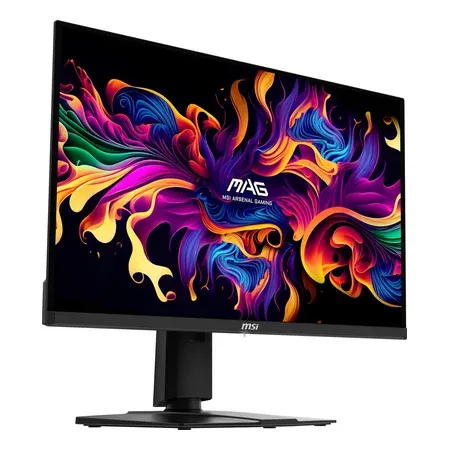
The OLED pick
MSI MAG 271QPX QD-OLED
26.5-inch 1440p QD-OLED, 360Hz, True Black 400, 3-year burn-in warranty. $499.99 on Amazon on Nov 23, 2026.
Check the model name: the MAG 271QPX QD-OLED E2 looks the same but runs at 240Hz, not 360Hz.
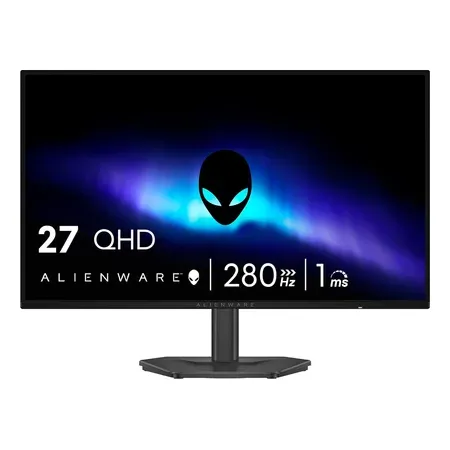
The IPS pick
Alienware AW2726DL
27-inch 1440p IPS at 280Hz with a 3-year Alienware warranty. $179.99 on Amazon on Nov 23, 2026.
Which Should You Buy?
- OLED if most of your play is single-player, HDR or dark games, or competitive games where motion clarity matters, and the monitor isn’t also your all-day office screen. Budget $400 or more for a 360Hz model.
- IPS if you’re under $250, game in a bright room, or keep static windows open for long stretches. At $179.99, the 280Hz AW2726DL costs $20 less than Dell’s own 144Hz S2725DC.
Our best gaming monitors guide has picks across both types, and 1440p vs. 4K for gaming covers resolution.
OLED vs. IPS FAQ
Is OLED better than IPS for gaming?
For contrast and response time, yes: OLED pixels turn fully off and switch in about 0.03ms. IPS is cheaper at the same refresh rate, gets brighter on full white screens and can’t burn in.
Will an OLED gaming monitor burn in?
It can, from static elements shown for long periods. MSI, Dell/Alienware and most ASUS OLEDs carry 3-year warranties that cover burn-in; check the specific model’s warranty before buying.
Is a 240Hz OLED better than a 360Hz IPS?
For clarity in motion, OLED’s near-instant pixel response often matters more than the extra hertz on an LCD, but the IPS will have no burn-in risk and costs less. The 144Hz vs. 240Hz guide covers frame times.
Is IPS good enough for HDR?
Not on its own. Most IPS gaming monitors carry no VESA tier or DisplayHDR 400, which allows 0.4 cd/m² black. For real HDR, look at OLED (True Black tiers) or a mini-LED LCD certified DisplayHDR 1000.
Sources
- VESA: DisplayHDR performance criteria
- MSI: MAG 271QPX QD-OLED specifications
- MSI: 3-year burn-in warranty for MSI OLED monitors
- Dell: Alienware 27 280Hz gaming monitor AW2726DL
- Dell: Alienware 27 240Hz QD-OLED AW2726DM
- Dell: Alienware monitor support services and warranty
- ASUS: OLED monitor burn-in warranty FAQ
- LG: 27GX790B UltraGear OLED