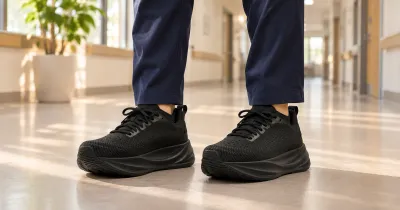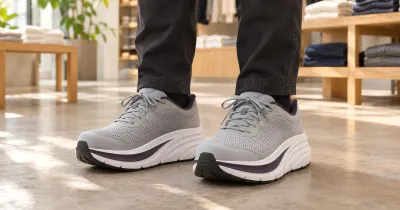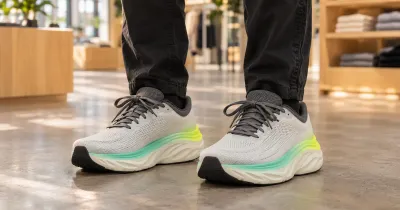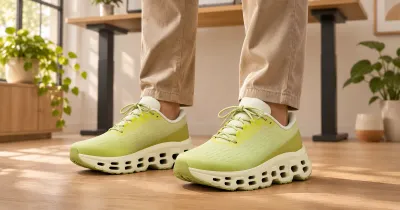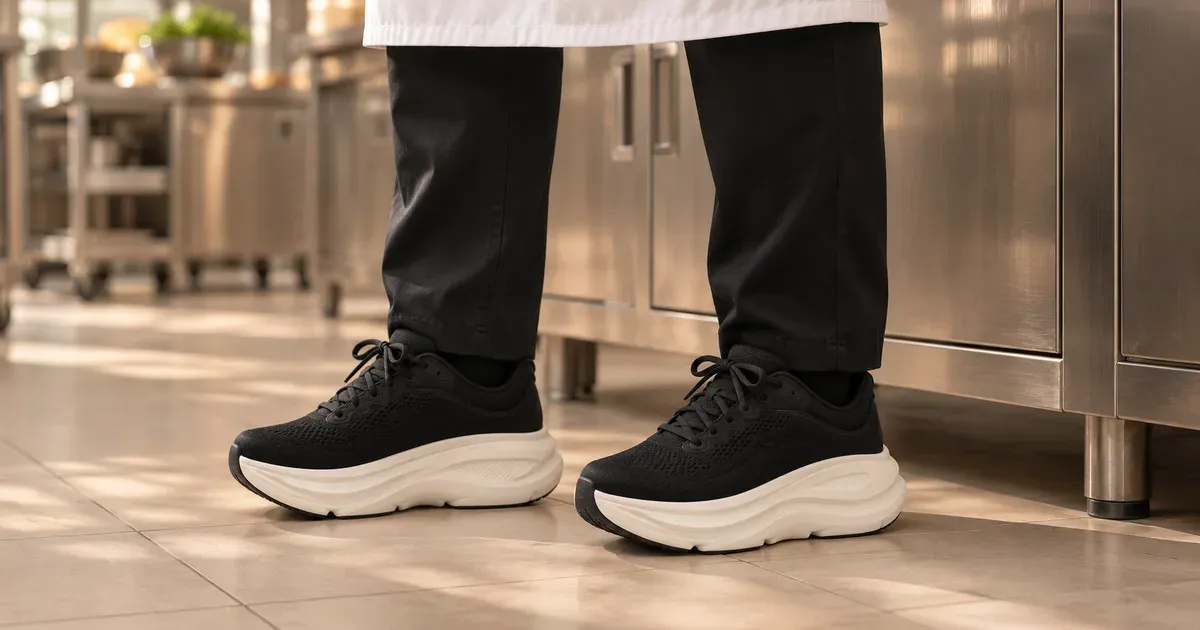
Cushioning helps with discomfort and fatigue, but the evidence is about cushioned floors and insoles, not cushioned shoes. A 2018 systematic review found moderate evidence that softer flooring or cushioned insoles reduce discomfort and fatigue in standing workers. No trial has tested max-cushion shoes like the Hoka Bondi 9 or Brooks Ghost Max 4 for standing, and a 2026 review suggests firmer soles for standing still and softer ones for walking. No review shows any shoe reduces back pain from standing, and only one trial supports supportive shoes for knee osteoarthritis.
The Evidence at a Glance
| Question | Best evidence | What it found | Quality |
|---|---|---|---|
| Does cushioning reduce discomfort and fatigue when standing? | Speed et al., 2018, systematic review of 10 studies | Softer flooring or cushioned insoles reduce discomfort and fatigue; limited evidence insoles beat mats | Moderate; no pooled effect size |
| Soft or firm soles for standing? | 2026 systematic review | Soft soles reduce impact and fatigue but support less; hard soles add stability but can cause local pressure. Suggests harder soles for standing and softer for walking | Narrative synthesis, no effect sizes |
| Athletic vs work shoes | 2026 crossover lab study, 20 people standing 2 hours | Foot discomfort was 46% higher in occupational footwear than in athletic shoes | One small lab study |
| Do shoes reduce back pain from standing? | No review covers it | Insoles don’t prevent back pain (strong evidence, 2009) | — |
| Knee osteoarthritis | Paterson et al., 2021, RCT of 164 people | Stable supportive shoes beat flat flexible shoes for walking pain by 1.1 points on an 11-point scale | Single RCT; no systematic review |
| Plantar heel pain | Whittaker et al., 2018, 19 RCTs | Insoles beat sham at 7–12 weeks (SMD −0.27); custom no better than off-the-shelf | Moderate, small effect |
What “Cushioning Helps” Actually Means
The 2018 review pooled studies of anti-fatigue mats, softer floors and cushioned insoles. They measured discomfort and fatigue, not injuries or long-term pain, and the designs were too different to combine into one number. That supports a cushioned layer under your feet on hard floors. It doesn’t say how much foam is best, and it didn’t test shoes.
The 2026 footwear review adds a twist: very soft soles may trade support for comfort. Its authors suggest firmer soles when you stand in one place and softer soles when you walk, and they found semi-rigid arch supports can cause discomfort. It had no meta-analysis, so treat it as a direction.
Back Pain
Standing more than 4 hours a workday is linked to low-back symptoms (pooled OR 1.31, 95% CI 1.10–1.56), though the authors call that “tentative” and an earlier review found it unlikely standing alone causes back pain. No review tests whether cushioned shoes reduce it. For insoles, a 2009 review found “strong evidence that insoles are not effective for the prevention of back pain”. Rocker-soled “unstable” shoes and custom orthotics show low to moderate evidence for people who already have chronic back pain (2020 meta-analysis), but that’s patients, not standing workers. More in the best shoes for back pain from standing.
Knee Pain
In a 2021 trial of 164 people with knee osteoarthritis who wore their assigned shoes at least 6 hours a day for 6 months, stable supportive shoes reduced walking pain by 1.1 points on an 11-point scale compared with flat flexible shoes, and caused fewer side effects (15% vs 32%). A 2016 trial found a specially designed “unloading” shoe was no better than ordinary walking shoes. Neither tested standing, and no study tests Hoka, Brooks or any consumer brand for knee pain. See the best shoes for knee pain from standing.
Heel Pain
No systematic review covers “plantar fasciitis shoes”. For insoles, the best meta-analysis found a small medium-term pain benefit over sham (SMD −0.27) that the authors say may not be clinically important, and no difference between custom and off-the-shelf orthoses. A lab study of 29 women found a 14-mm-drop shoe cut peak heel pressure about 15% compared with a 4-mm shoe, but it measured pressure, not pain. See the best shoes for plantar fasciitis when standing.
What Helps Most: Moving
NIOSH’s reviewers concluded that changing between standing, sitting and walking appeared to work best, and a review of lab studies found low-back symptoms set in after about 71 minutes of uninterrupted standing (42 minutes in people prone to pain). Its authors suggest breaking up standing at about 40 minutes. Shoes, insoles, mats and compression socks are all ways to make the standing you can’t avoid more comfortable.
If You Want a Cushioned Shoe
Pick a shoe that fits, with a stable base, and give yourself a return window. Brooks (90 days) and Hoka (30 days, 60 for members) both take back shoes you’ve worn.
| Shoe | Weight (M / W) | Heel drop | Widths | APMA Seal | Price (Nov 23, 2026) |
|---|---|---|---|---|---|
| Hoka Bondi 9 | 10.50 / 9.30 oz | 5 mm | Regular, Wide, X-Wide | Yes | $140 at Hoka (reg. $175) |
| Brooks Ghost Max 4 | 10.3 / 9.2 oz | 6 mm | Men’s 1D, 2E, 4E; women’s 1B, 1D, 2E | Yes | $165 at Brooks; $150 on Amazon |
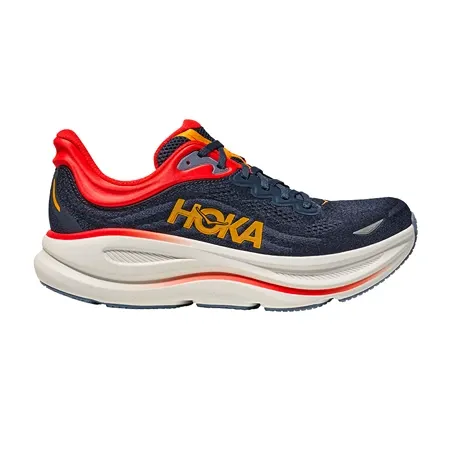
Most cushioned hoka
Hoka Bondi 9 (Women's)
Hoka's max-cushion road shoe: 5 mm drop, three widths and the APMA Seal of Acceptance.
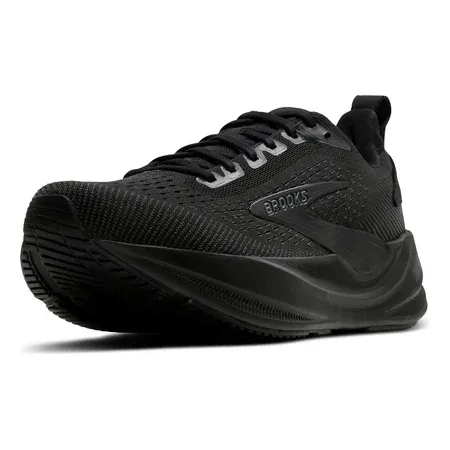
Most cushioned brooks for walking and standing
Brooks Ghost Max 4 (Men's)
6 mm drop, up to 4E wide for men, room for orthotics and the APMA Seal of Acceptance.
The APMA Seal of Acceptance means a panel of podiatrists reviewed what the maker submitted; APMA says it “is not an endorsement” and doesn’t test products. For more picks, see the best shoes for standing all day and Hoka Bondi vs. Clifton.
Sources
- Speed et al., Applied Ergonomics 2018
- Safety and Health at Work 2026; Ergonomics 2026
- Coenen et al., BJSM 2018 and Gait Posture 2017; Roffey et al., Spine J 2010
- Sahar et al., Spine 2009; Res Sports Med 2020
- Paterson et al., Ann Intern Med 2021; Hinman et al., Ann Intern Med 2016
- Whittaker et al., BJSM 2018; J Foot Ankle Res 2025
- NIOSH Science Blog: prolonged standing
- Hoka Bondi 9, Brooks Ghost Max 4, APMA Seal database
FAQ
Do cushioned shoes help with standing all day?
Cushioning under the feet has moderate evidence for less discomfort and fatigue, from studies of mats and insoles. No trial has tested cushioned shoes themselves for standing.
Are softer shoes better for standing?
Not necessarily. A 2026 systematic review suggests firmer soles for standing still and softer soles for walking, since very soft soles support less.
Do Hoka shoes reduce back or knee pain?
No study tests Hoka or any named brand for back or knee pain. One trial found stable supportive shoes beat flat flexible shoes for knee osteoarthritis pain.
What helps most when you stand all day?
Changing position. NIOSH’s reviewers found moving between standing, sitting and walking appeared best, and lab studies suggest breaking up standing at about 40 minutes.