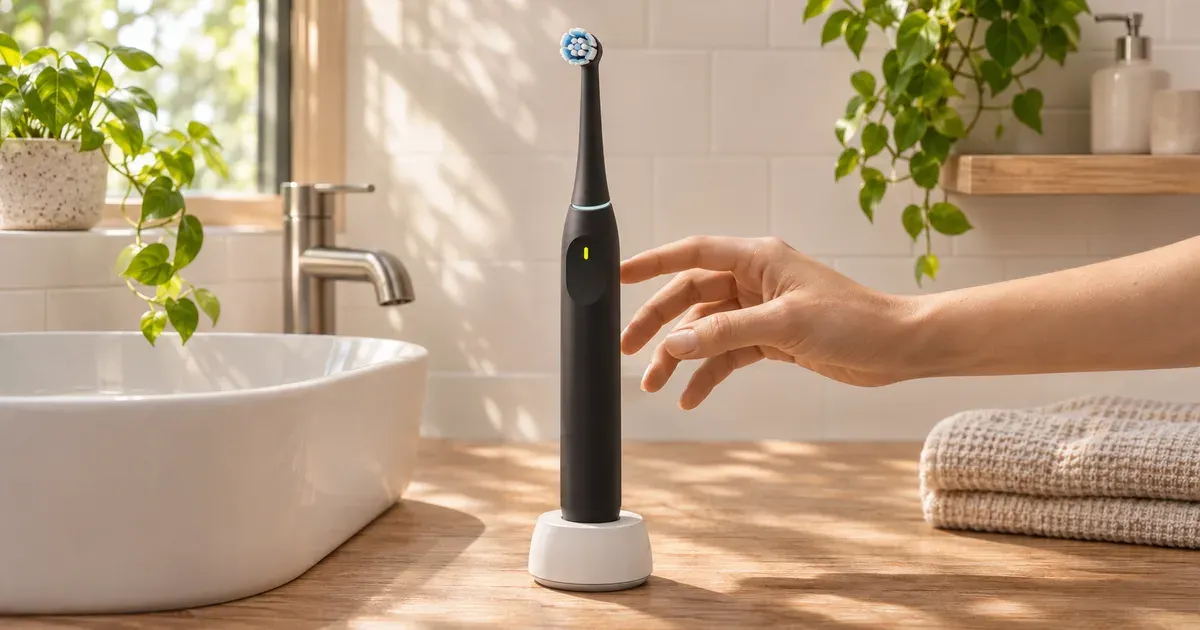
There’s no evidence that electric toothbrushes cause gum recession. A 2026 systematic review of 10 randomized trials found no difference in recession between powered and manual brushes (mean difference −0.03 mm), and the trials that exist lean slightly in favor of powered brushes. The certainty is very low, so this is “no sign of harm”, not proof of safety. What the ADA says does matter is how you brush: soft bristles and gentle pressure “may help reduce the risk of gingival injury”. A brush with a pressure sensor, like the Oral-B iO Series 2 ($49.99 on Amazon on November 24, 2026), warns you or slows down when you press too hard.
What the Research Shows
| Study | What it looked at | Finding | Certainty |
|---|---|---|---|
| Molina et al. 2026, systematic review and meta-analysis | 10 randomized trials, powered vs. manual | No difference in recession at 6 or 12 months: −0.03 mm (95% CI −0.07 to 0.02). A trend toward fewer gum abrasions with powered brushes, but inconsistent | Very low |
| Rajapakse et al. 2007, systematic review | Does toothbrushing cause recession? | Evidence “inconclusive”; brushing force, frequency and bristle hardness suggested as factors | Not graded |
| Sutor et al. 2025, randomized trial | 87 people with existing recession, 36 months, oscillating-rotating brush with micro-vibrations vs. manual | Recession changed −0.10 mm with the powered brush vs. +0.17 mm with manual (p = 0.013); 10.6% vs. 25.5% of sites worsened by 1 mm or more; no difference in side effects | Single trial |
| Cochrane 2014, 56 trials | Powered vs. manual | Side effects were “localised and only temporary” | Moderate (main outcomes) |
The 36-month trial used an iO-type oscillating brush; it’s one study, not a review, so treat it as supportive rather than settled.
What no review covers
- Pressure sensors: no systematic review tests whether they prevent gum damage.
- Sensitive teeth: no systematic review covers electric brushes for tooth sensitivity. A 2026 review found no clear link between bristle stiffness and sensitivity (2 studies, very low certainty) and suggests technique and force matter more (PubMed 42965111).
- Oscillating vs. sonic for gums: no review compares the two types for recession or gum injury. For plaque and gingivitis, oscillating-rotating brushes have a small edge; see oscillating vs. sonic toothbrushes.
How to Avoid Hurting Your Gums
The ADA’s advice applies to any brush:
- Use soft bristles. Both Oral-B and Philips sell gentler heads, such as Oral-B’s iO Gum & Sensitive and Philips’ S2 Sensitive.
- Use light pressure. Hold the brush gently against the teeth and gumline and guide it from tooth to tooth.
- Use a gentle mode if your gums are tender. Many brushes have one, such as Oral-B’s Sensitive and Super Sensitive or Sonicare’s Sensitive and Gum Health modes. These are comfort settings, not treatments.
- Replace worn heads every 3 months (Oral-B and Philips) or every 3 to 4 months (ADA). See how often to replace electric toothbrush heads.
If your gums bleed, hurt or keep receding, see a dentist to find the cause.
What Pressure Sensors Do
The sensors differ in how they tell you, according to maker pages:
| Brush | What happens when you press too hard | Amazon price, Nov 24, 2026 |
|---|---|---|
| Oral-B iO Series 2 | Slows down and signals red | $49.99 |
| Oral-B iO Series 3 | Visible alert | $59.99 |
| Oral-B iO Series 5 to 9 | Too hard or too soft feedback (iO7: red, white or green light) | $79.99 and up |
| Oral-B Pro 1000 | Stops pulsations (Amazon listing) | $49.94 |
| Sonicare 4100 (HX3681/23) | Handle vibrates | $29.96 |
| Sonicare 5950 (HX7130/03) | Haptic pulse | $59.96 |
| Sonicare 6100, 6500, 7100/7300 | Purple light ring + vibration + sound | $99.96 and up (7300) |
| Sonicare 9900 Prestige | Light ring; SenseIQ adjusts intensity automatically | $249.96 |
If you know you press hard, a brush that slows down on its own (iO Series 2) or adjusts itself (Prestige 9900) acts without you having to notice a light.
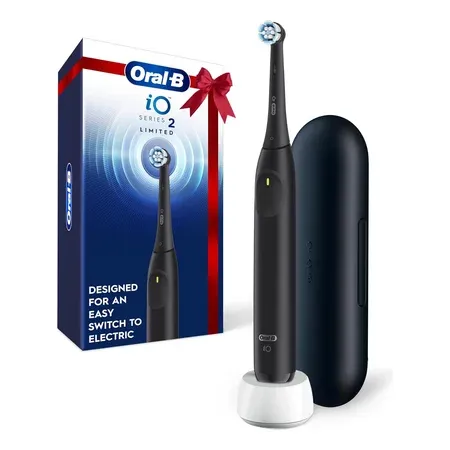
Best for people who press hard
Oral-B iO Series 2
Slows down automatically when you press too hard, with gentle modes and a 4-week battery (Oral-B). $49.99 on Nov 24.
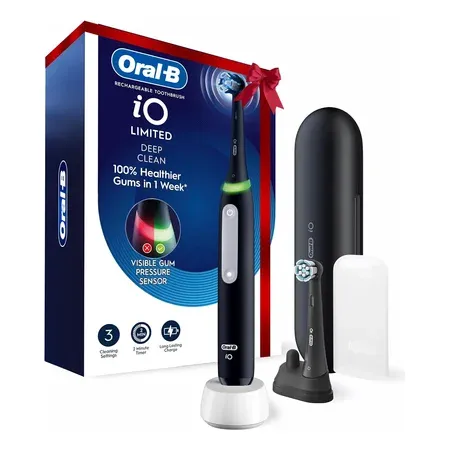
Visible pressure alert
Oral-B iO Series 3
3 modes including Sensitive, a visible pressure alert, 2 heads and a travel case. $59.99 on Nov 24, 2026.
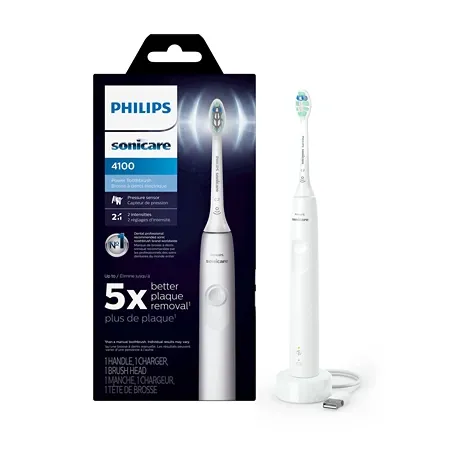
Cheapest brush with a pressure sensor
Philips Sonicare 4100 (HX3681/23)
Sonic brush whose handle vibrates when you press too hard; 2 intensities and a 14-day battery. $29.96 on Nov 24.
Sources
- Molina et al. 2026, recession with powered vs. manual brushes (PubMed 42071338)
- Rajapakse et al. 2007, toothbrushing and recession (PubMed 17953693)
- Sutor et al. 2025, 36-month trial (PubMed 38863249)
- Cochrane: powered vs. manual toothbrushing (PubMed 24934383)
- Molina et al. 2026, bristle stiffness and sensitivity (PubMed 42965111)
- ADA Oral Health Topics: Toothbrushes
- Oral-B iO Series 2
- Philips Sonicare 4100 Series HX3681/23
FAQ
Can an electric toothbrush cause receding gums?
No review shows that. A 2026 review of 10 trials found no difference in recession between powered and manual brushes, with very low certainty, and a 36-month trial found less recession worsening with an oscillating powered brush.
Is it bad to press hard with an electric toothbrush?
The ADA says soft bristles and gentle pressure may help reduce the risk of gum injury. Many electric brushes, including $30 models like the Sonicare 4100, have a sensor that warns you or slows down.
Do pressure sensors protect your gums?
They tell you when you press too hard, which follows the ADA’s advice, but no systematic review has tested whether they prevent gum damage.
Is an electric toothbrush safe for receding gums?
Nothing in the research suggests it makes recession worse. Use a soft or sensitive head and light pressure, and ask your dentist about the cause of the recession.