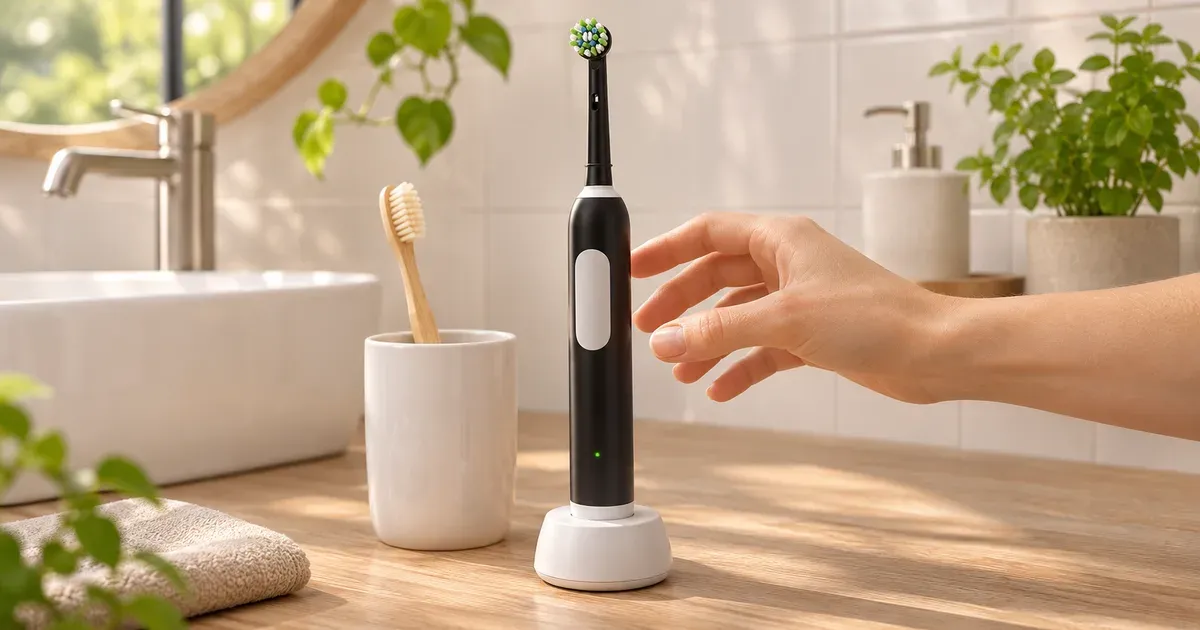
Yes, but by a modest margin. The Cochrane review of 56 trials found that powered toothbrushes removed 11% more plaque than manual brushes over 1 to 3 months and 21% more after 3 months, and reduced gingivitis by 6% and 11%, with moderate-quality evidence. The authors call the clinical importance “unclear”, and the American Dental Association says “either manual or powered toothbrushes can be used effectively”. An electric brush is worth it if you want an easier, more consistent clean; a $30 model like the Sonicare 4100 gets you the benefit.
What the Evidence Shows
Cochrane 2014 (Yaacob et al., PubMed 24934383) is the largest review: 56 trials, 51 of them meta-analysed, with 4,624 participants. It’s the newest Cochrane version.
| Outcome | 1 to 3 months | More than 3 months |
|---|---|---|
| Plaque | 11% less (SMD −0.50, 40 trials) | 21% less (SMD −0.47, 14 trials) |
| Gingivitis | 6% less (SMD −0.43) | 11% less (SMD −0.21) |
| Evidence quality | Moderate | Moderate |
- Results varied a lot between trials (I² of 82 to 86%).
- Rotation-oscillation brushes (the round-headed type) had the most trials and a significant benefit at both time points.
- Side effects were “localised and only temporary”.
Children: a 2020 review of 9 randomized trials found powered brushes removed more plaque than manual brushes in children, with moderate-certainty evidence (PubMed 32847667).
Braces: a 2017 review of 9 trials found low-quality evidence of a short-term benefit in gum inflammation and bleeding (PubMed 29173855), and a 2021 network meta-analysis found less plaque and bleeding with powered brushes in patients with brackets (PubMed 33029794).
Gum recession: a 2026 review of 10 trials found no difference between powered and manual brushes (mean difference −0.03 mm, very low certainty) (PubMed 42071338). Electric brushes don’t cause recession; see can an electric toothbrush damage your gums.
Which type of electric brush: oscillating-rotating brushes have a small edge over sonic in several reviews. See oscillating vs. sonic toothbrushes.
What no review covers
No systematic review covers electric toothbrushes for sensitive teeth, whitening, or older adults specifically. A 2017 trial in elderly people found no added benefit from a powered brush, but it’s a single study (PubMed 28550864). The ADA says people with dexterity problems, including some older adults, people with disabilities, children and people with braces, “may find a powered toothbrush easier to use”.
Electric vs. Manual at a Glance
| Electric | Manual | |
|---|---|---|
| Plaque removal | 11% to 21% more (Cochrane) | Effective with good technique |
| Gingivitis | 6% to 11% less (Cochrane) | Effective with good technique |
| Two-minute timer | Built in on nearly every model | No |
| Pressure warning | On most models over about $30 | No |
| Upfront cost | About $20 to $60 for a good one | A few dollars |
| Yearly head or brush cost | About $20 to $30 for standard heads | A few dollars for 4 brushes |
| Replace every | 3 months (Oral-B, Philips) | 3 to 4 months (ADA) |
Yearly costs use Oral-B and Philips maker-store pack prices on November 24, 2026: Oral-B standard heads come to $20 to $27 a year, iO heads about $30, and Sonicare C2 heads $23 to $30. See how often to replace electric toothbrush heads.
Who Benefits Most
- People who rush or skip spots: the built-in timer and 30-second pacing keep you brushing the full two minutes.
- People who brush too hard: most electric brushes over about $30 warn you with a light, a vibration or by slowing down.
- People with braces or limited dexterity: the ADA names both groups, and the braces reviews show a short-term benefit.
- Kids: the children’s review found better plaque removal with powered brushes.
If you already brush two minutes twice a day with a soft manual brush and gentle pressure, the gain is smaller.
Affordable Electric Toothbrushes
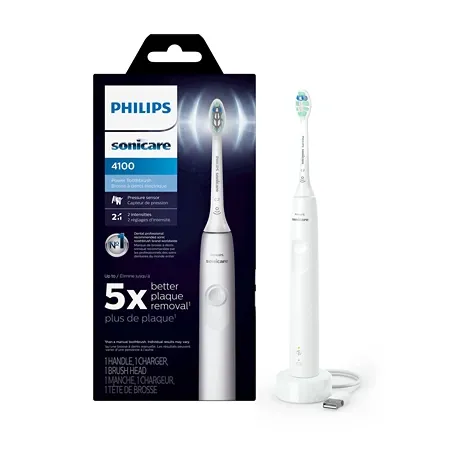
Best first electric toothbrush
Philips Sonicare 4100 (HX3681/23)
Sonic brush with a 2-minute timer, 30-second pacing, a pressure alert and a 14-day battery. $29.96 on Nov 24, 2026.
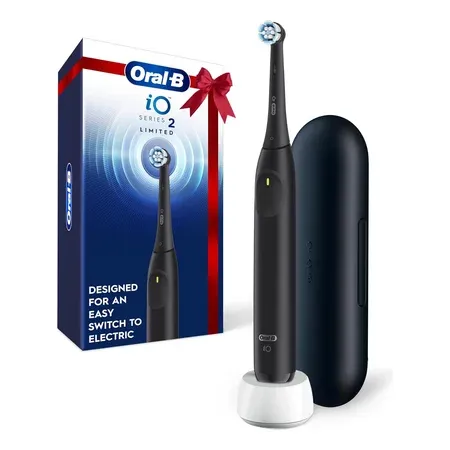
Cheapest iO, ADA seal
Oral-B iO Series 2
Oscillating-rotating iO brush that slows down when you press too hard. Oral-B rates it at 4 weeks per charge. $49.99.
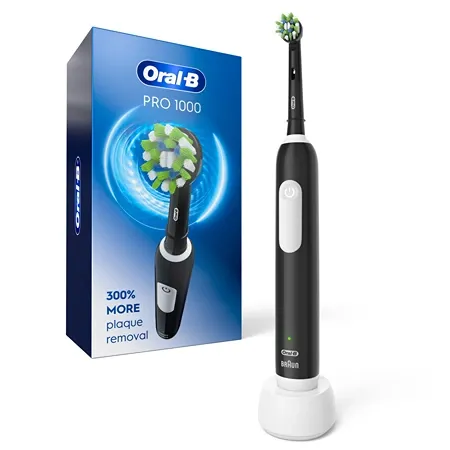
Cheapest replacement heads
Oral-B Pro 1000
Round oscillating head, pressure control and 30-second pacing. Oral-B standard heads cost $20 to $27 a year. $49.94.
More picks are in our best electric toothbrushes guide.
Sources
- Cochrane: powered vs. manual toothbrushing for oral health (PubMed 24934383)
- Davidovich et al. 2020, children (PubMed 32847667)
- Al Makhmari et al. 2017, braces (PubMed 29173855)
- Sivaramakrishnan et al. 2021, braces (PubMed 33029794)
- Molina et al. 2026, gum recession (PubMed 42071338)
- Trial in elderly people, 2017 (PubMed 28550864)
- ADA Oral Health Topics: Toothbrushes
- MouthHealthy: Toothbrushes
- Philips Sonicare 4100 Series HX3681/23
- Oral-B iO Series 2
FAQ
Do dentists recommend electric toothbrushes?
The American Dental Association says “either manual or powered toothbrushes can be used effectively” and notes that people with dexterity problems or braces may find a powered brush easier. Its Seal of Acceptance covers both kinds.
How much better is an electric toothbrush?
In the Cochrane review, powered brushes removed 11% more plaque short term and 21% more after 3 months, and reduced gingivitis by 6% and 11%. The evidence is moderate quality.
Can a manual toothbrush be as good as an electric one?
It can clean effectively with good technique: two minutes, twice a day, soft bristles and gentle pressure. Electric brushes make that easier with timers and pressure warnings.
Is a cheap electric toothbrush good enough?
Yes. The Cochrane benefit applies to powered brushes in general. A $30 brush with a timer and pressure sensor covers the features that matter.