A boot that feels good on a dry workshop floor can be the wrong purchase for a muddy site. Start with the requirements of the job: a protective toe, waterproof construction, and an appropriate outsole matter more than a familiar brand name. A moc-toe seam describes the shape of a boot, not the protection inside it. Three of the four pairs here have soft toes, so check your employer’s footwear requirements before choosing one.
For work on concrete, we favor cushioning, a secure fit, and soles that can be replaced when the uppers still have life left. For outdoor use, tread and water protection deserve more attention. These picks cover different versions of that decision, from an affordable waterproof steel-toe boot to repairable leather pairs for dry conditions. Spending more can buy better repair options and materials, but it doesn’t automatically buy the safety features your job requires.
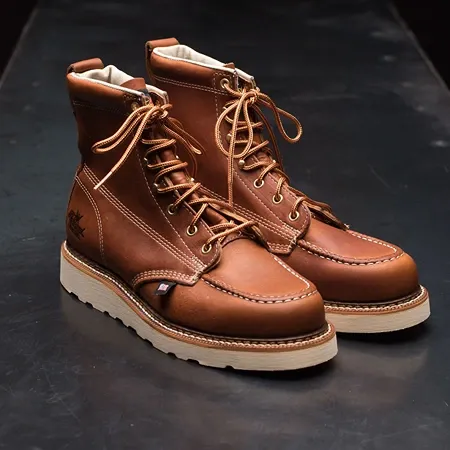
Best overall
Thorogood American Heritage
The soft-toe 814-4200 combines a MAXWear wedge, replaceable cushioning, and Goodyear storm welt construction for dry work.
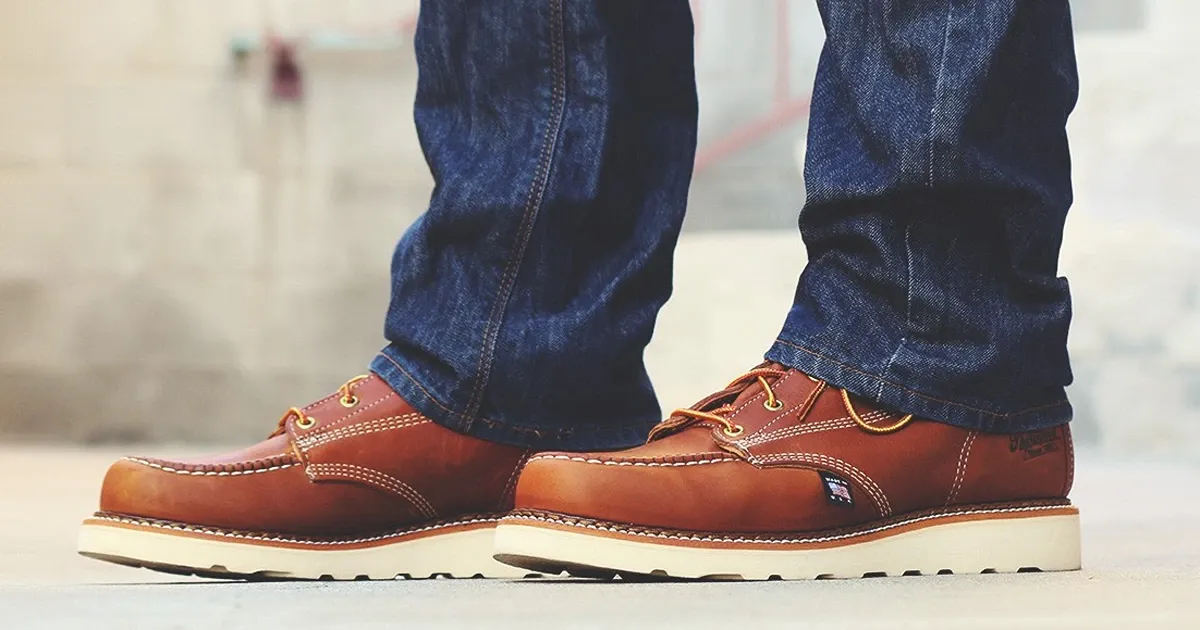
For dry work where a safety toe isn’t required, the Thorogood American Heritage offers the most useful balance here of cushioning, repairability, and price. This recommendation is specifically the 6-inch tobacco 814-4200. It has a soft toe and no waterproof lining; the steel-toe 804-4200 is a separate model, even though the two look similar.
The MAXWear Wedge outsole suits work on hard, mostly flat ground. Underfoot, a removable shock-absorbing footbed sits above a Poron cushion insole, while a composite shank provides support. That layered cushioning is the appeal for someone who spends much of the day standing or walking on concrete. The shallow wedge tread is a less convincing choice for loose ground and deep mud.
Goodyear storm welt construction gives this boot a practical advantage over cheaper cemented pairs: a worn sole needn’t mean replacing the whole boot. The full-grain tobacco leather and unlined interior keep the design straightforward. Cleaning and conditioning the uppers matters if you intend to pay for a resole later; repairability is only useful while the rest of the boot remains sound.
Fit deserves more care than a blanket instruction to order half a size down. D and EE widths are available, and reports of comfort vary with toe room and instep fit. The cushioning doesn’t make an incorrectly sized boot forgiving. Try the boots with your work socks and check for pressure at the toes and moc seam before committing to a full shift.
This is a midpriced work boot, with a substantial upfront cost compared with the CAT. It is made in the USA with domestic and globally sourced components, and its value rests on the combination of replaceable soles and everyday comfort. Choose it when those benefits matter more than waterproofing. If protective toes are mandatory, the linked soft-toe model is off the shortlist regardless of how well it fits.
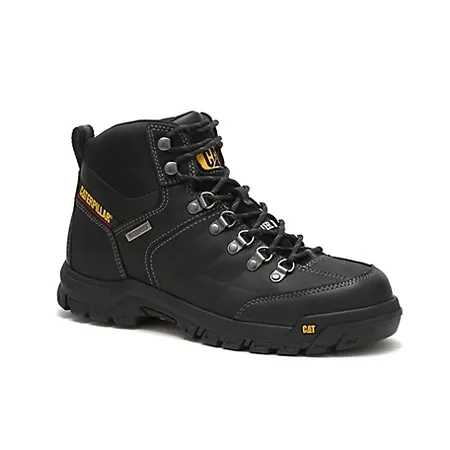
Best budget
CAT Threshold
Waterproof steel-toe boots with a cushioned ERGO midsole and slip-resistant outsole, at a lower price than the repairable leather picks.
The CAT Threshold puts more of a limited budget toward protective features. The linked Waterproof Steel Toe version combines a protective toe, sealed waterproof construction, and a slip-resistant outsole for much less than the other picks. Discounts vary by size and color, so its budget designation doesn’t depend on every pair staying below $100.
CAT lists impact and compression protection and electrical-hazard protection to ASTM F2413-18. Those are specific capabilities, not a promise that the boot meets every site’s rules. Check the marking on the pair you buy against the requirements for your job. There is also a soft-toe Threshold, so pay attention to the version selected when ordering.
The full-grain leather upper, padded collar, and flexible ERGO midsole make this a more approachable first work boot than its price might suggest. Independent wear reports favor its cushioning and roomy fit. That room can be useful with work socks, but narrow feet may move around inside it; tightening the laces won’t necessarily fix excess width through the forefoot.
The cost saving comes partly from cemented construction. Unlike the welted and stitchdown boots here, the Threshold isn’t a purchase to plan around repeated resoles. Waterproofing also deserves realistic expectations. It has a waterproof build, but reports of leakage mean we’d choose something else for work that involves prolonged standing water. Inspect worn seams and soles instead of assuming the original protection lasts indefinitely.
As an entry-level steel-toe pair or an occasional-use backup, the Threshold makes sense. You get useful cushioning and protection without the expense of a repairable premium boot. For heavy daily use, weigh the lower purchase price against the likelihood of replacing the entire pair when the sole or upper wears out.
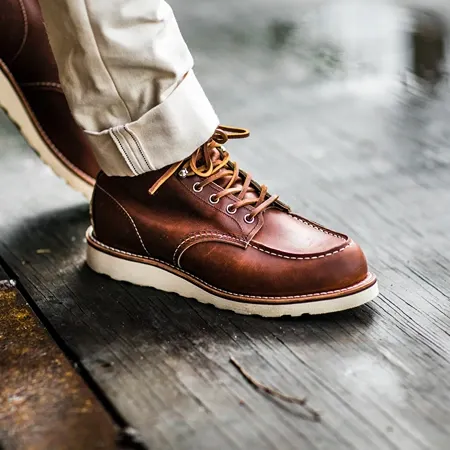
Best traction upgrade
Red Wing Heritage Moc Lug
The Roughneck 8146 pairs Briar Oil Slick leather with a Vibram Lug TC-4 outsole and a resoleable Goodyear leather welt.
The reason to choose the Red Wing Heritage Moc Lug is underneath it. This is the Roughneck 8146 in Briar Oil Slick leather, with a Vibram Lug TC-4 outsole. Its deeper tread makes it the traction upgrade over the wedge-soled picks for dirt and uneven ground. Check for the 8146 model and lug sole when buying; the similar-looking Classic Moc with a Traction Tred wedge is a different boot. For a head-to-head on the two moc toes, see our Thorogood vs. Red Wing comparison.
That recommendation has a boundary. The Roughneck is a soft-toe Heritage boot, not a safety-toe replacement for industrial work, and its water-resistant leather isn’t a waterproof membrane. Nor does an aggressive tread guarantee grip on wet tile or ice. It suits outdoor chores and general wear where a lug sole is useful and certified toe protection isn’t required.
Beneath the traditional appearance is a repairable construction worth paying for if you like this kind of boot. Red Wing uses a Goodyear leather welt, triple stitching, and a steel shank. The leather footbed offers a firmer starting point than the removable cushioned inserts in the Thorogood and Danner. Expect a different feel, rather than more cushioning simply because the Roughneck costs more.
Break-in and sizing are the main buying complications. The No. 23 last gives the forefoot room, but owner experiences still vary, particularly around the heel and instep. Budget time for shorter initial wears, and don’t treat painful pressure as proof that you picked the right size. An in-person fitting is especially useful here, before the soles show enough wear to complicate a return.
The extra money makes sense for someone who wants the lugged outsole, traditional leather construction, and option to resole. Clean dirt out of the tread and care for the uppers to keep that repair option worthwhile. For a day spent entirely on smooth concrete, the softer wedge options are easier to justify; the Roughneck earns its place when your day includes unpaved ground.
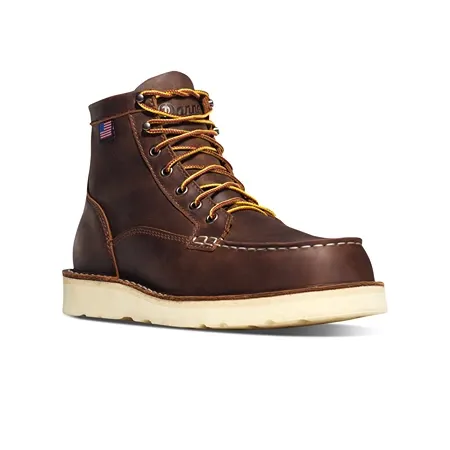
Best for warm weather
Danner Bull Run
The unlined, non-waterproof Bull Run 15563 combines an OrthoLite footbed and Danner Wedge sole for dry, warm-weather work.
Hot, dry work is where the Danner Bull Run makes its strongest case. The brown 6-inch Moc Toe, style 15563, uses unlined full-grain leather without insulation or a waterproof membrane. That simpler upper suits buyers who want less material around their feet in warm conditions. It’s a plain-toe model, so this recommendation applies to jobs that permit one.
Comfort comes from a removable OrthoLite footbed and the Danner Wedge outsole. The sole is designed for oil and slip resistance on work surfaces, with cushioning that makes sense on concrete and workshop floors. Its shallow tread is a compromise on mud and steep, loose ground. This is a boot for relatively even footing, rather than a substitute for a lugged outdoor pair.
Don’t buy it on the assumption that it needs no break-in. Some wearers find it comfortable quickly, while others report stiffness and rubbing during the first several wears. The unlined build is the dependable reason to consider it for warm weather; instant comfort isn’t. Try the available widths with your usual socks and leave time to assess the fit before wearing it for a long shift.
Danner makes this model in the USA with imported components and uses stitchdown construction. The boot is eligible for paid recrafting, including sole work, subject to its condition. Because the leather edge forms part of that construction, damage there can limit repair options. Keeping the upper in good condition matters as much as replacing a worn tread.
The Bull Run occupies a similar price tier to the Thorogood, so choose between them on fit and the kind of upper you prefer. Danner’s unlined design is appealing for warm, dry days, but the lack of waterproofing is a real limitation when the weather turns. It belongs on a shortlist for workshop use and fair-weather work, with enough time allowed for break-in.
Before ordering, check the exact toe type and waterproof specification, then try the boots with the socks you’ll actually wear. A comfortable soft-toe boot is still the wrong purchase if your site requires protective footwear. Likewise, a lug sole and water-resistant leather solve different problems from a waterproof lining. Match each feature to a condition you regularly encounter.
Treat fit and maintenance as part of the price. Use an indoor try-on to catch pressure points, follow the leather-care instructions, and inspect the tread as it wears. A repairable boot can justify its higher cost when the upper fits well and remains sound, but paying for resoles won’t rescue a pair that was uncomfortable from the start.