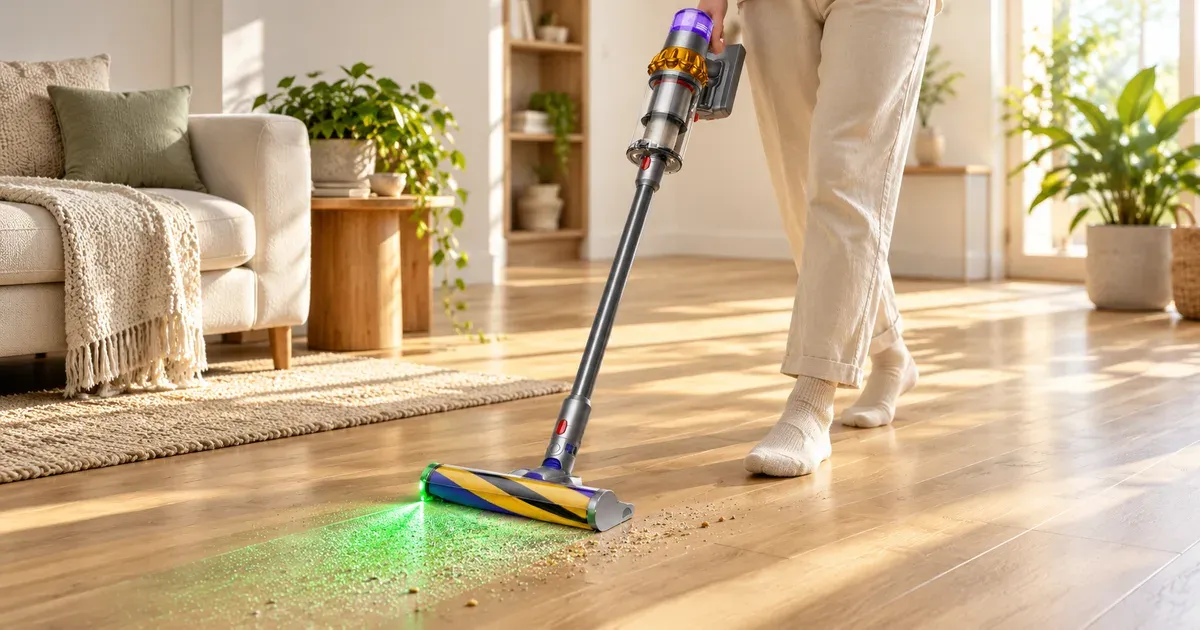
Hardwood looks easy to clean, but it has its own problems. A stiff, fast-spinning brush bar, the kind built to dig into carpet, tends to fling crumbs and grit across a bare floor instead of picking them up, and gritty debris dragged under a hard plastic head can leave fine scratches in the finish. Hard floors also show every bit of fine dust, and they have gaps between boards where dirt collects.
The best vacuums for hardwood use a soft roller, a felt-lined suction head, or a brush bar you can turn off, along with soft wheels and strong suction close to the floor.
Our top pick is the Dyson V15 Detect. Its Fluffy Optic head is a soft, felt-covered roller that sweeps up fine dust and large crumbs in the same pass, and a green light at floor level shows dust you’d otherwise miss. It also comes with a second head for rugs. If your home is mostly bare floors and you’d rather have a corded vacuum, the Miele Classic C1 Pure Suction is a quiet, suction-only canister that’s gentle on wood. On a budget, the Shark Navigator Lift-Away NV352 costs about $160 and lets you switch off its brush roll.
Our Picks at a Glance
| Vacuum | Best for | Type | Price |
|---|---|---|---|
| Dyson V15 Detect | Most homes with hardwood and rugs | Cordless stick, soft roller head | About $650 |
| Miele Classic C1 Pure Suction | Mostly hard floors, allergies | Corded, bagged canister | About $305 |
| Shark Navigator Lift-Away NV352 | Budgets, mixed floors | Corded upright, brush roll shutoff | About $160 |
| Roborock Q7 M5+ | Daily dust between cleanings | Robot vacuum and mop, self-emptying | About $250 |
Best Overall: Dyson V15 Detect
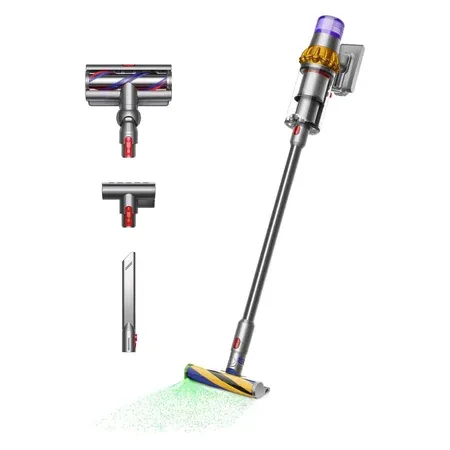
Best overall
Dyson V15 Detect
A cordless stick with a soft Fluffy Optic head that lights up dust on hard floors, plus a motorized head for rugs.
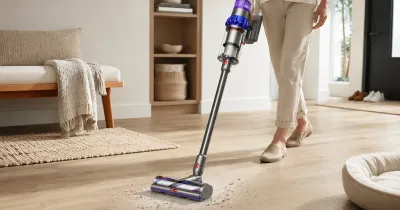
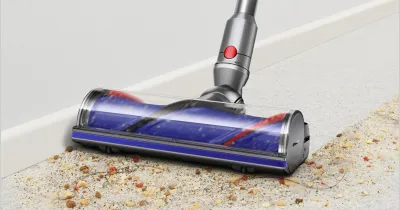
The Fluffy Optic cleaner head is the reason to buy the Dyson V15 Detect for hardwood. Instead of stiff bristles, it has a soft roller covered in nylon felt, with a few stiffer carbon-fiber filaments woven in to pick up fine dust. The soft roller grabs large debris like cereal and kitty litter rather than batting it across the room, and it polishes the floor rather than scraping it.
The head also projects a green light across the floor at a low angle, which makes fine dust, crumbs, and pet hair visible on wood. It sounds like a gimmick until you see how much dust is sitting on a floor that looked clean. A sensor in the wand counts and sizes the particles it picks up and shows them on the screen, and in auto mode the vacuum raises suction when it finds more dirt.
For rugs, swap to the included Digital Motorbar head, which has a stiffer brush bar and a comb that cuts hair off the bar as you vacuum. Dyson’s filtration traps 99.99% of particles as small as 0.3 microns, and the battery runs up to 60 minutes in its lowest setting, much less in boost.
It’s expensive, and the small bin needs emptying often in a large house. If you’re shopping between cordless models, our guide to the best cordless stick vacuums compares the V15 with Shark and Levoit alternatives.
Buy it if you have mostly hard floors with a few rugs and want a cordless vacuum you’ll grab every day.
Best Canister: Miele Classic C1 Pure Suction
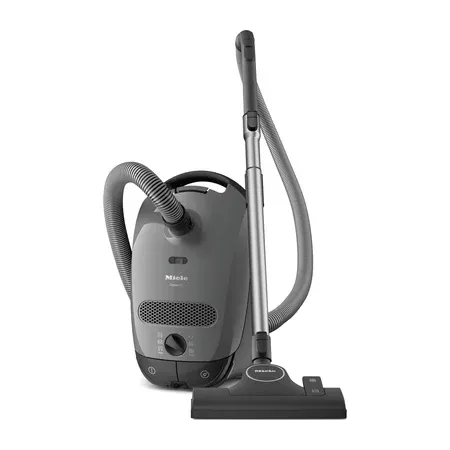
Best canister vacuum
Miele Classic C1 Pure Suction
A bagged, suction-only canister with six power settings and a floor head with retractable bristles for hard floors.
A suction-only canister is the most traditional choice for wood floors, and the Miele Classic C1 Pure Suction is the one to get. There’s no spinning brush at all. The floor head has a strip of soft bristles you lower with a foot switch for hard floors and raise for low rugs, and suction does the rest, including pulling dirt out of the gaps between boards.
The canister body follows you on wheels, so the head itself is light, low, and easy to push under beds and furniture. A dial sets six suction levels, from gentle for curtains and area rugs with fringe to full power for bare floors. It’s also quieter than most uprights.
It’s a bagged vacuum. Dust stays sealed in the bag when you empty it, which is a real advantage for allergy sufferers, and Miele’s AirClean filtration keeps fine dust from blowing back out. Bags cost a few dollars each and typically last a few weeks.
It’s corded, it doesn’t do much for thick carpet (Miele’s Turbo Team version adds a small turbine brush for that), and storing a canister and hose takes more room than a stick. With more than 7,500 ratings averaging 4.4 stars on Amazon, it’s a well-proven machine.
Buy it if your home is mostly hardwood or tile and you want a quiet, durable, gentle vacuum.
Best Budget: Shark Navigator Lift-Away NV352
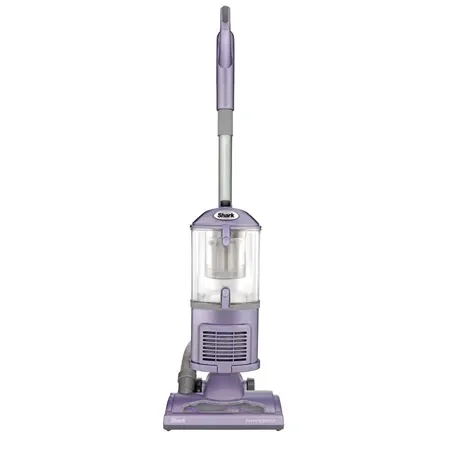
Best budget
Shark Navigator Lift-Away NV352
A corded HEPA upright with a brush roll shutoff for bare floors and a canister that lifts off for stairs.
The Shark Navigator Lift-Away NV352 is one of the best-selling vacuums on Amazon, with more than 31,000 ratings averaging 4.4 stars, and it works well on mixed floors for about $160. The key feature for hardwood is a switch that turns off the brush roll for bare floors, so it cleans with suction instead of scattering debris. Turn the brush back on for rugs and carpet.
The canister lifts off the base so you can carry it up stairs or clean under furniture with the hose. It has a HEPA filter and a sealed design that keeps dust inside, and the bagless bin is large compared with a cordless stick.
It’s corded, heavier than a stick vacuum at about 13 pounds, and its hard-plastic floor head is less refined than the Dyson’s soft roller. Keep the brush roll off on wood and check that no grit is stuck under the head.
Buy it if you want one inexpensive vacuum for hardwood, rugs, and stairs.
Best Robot: Roborock Q7 M5+
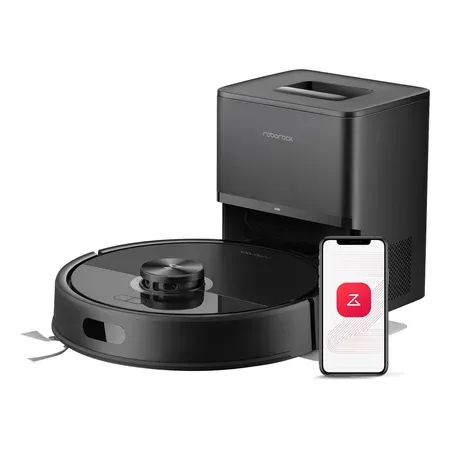
Best robot vacuum
Roborock Q7 M5+
A self-emptying LiDAR robot vacuum and mop that keeps dust off hard floors between regular vacuuming.
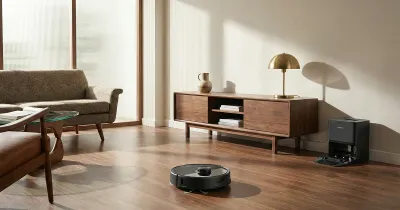
Hardwood shows dust within a day or two, which makes it a great fit for a robot vacuum. The Roborock Q7 M5+ maps your home with LiDAR, cleans room by room on a schedule, and empties itself into a dock bag that holds up to seven to nine weeks of debris. Its main brush is designed to resist hair tangles.
It also mops, with three water settings. On wood, use the lowest setting, and skip mopping entirely on unfinished, oiled, or waxed floors. A robot won’t replace a full vacuuming, since it misses corners and doesn’t do stairs, but it keeps grit from building up between cleanings. For more options, see our guide to the best robot vacuums.
Buy it if you want hard floors to stay dust-free with no daily effort.
What Makes a Vacuum Good for Hardwood
- A soft roller or no brush. Soft, felt-covered rollers (Dyson’s Fluffy heads, and similar heads from Shark, Dreame, and others) or suction-only floor heads pick up both fine dust and larger debris without flinging it. A stiff carpet brush should be switched off on bare floors.
- Soft wheels and a smooth head. Rubber or soft-coated wheels and a head without exposed hard edges are less likely to mark the floor. Check the wheels now and then for embedded grit.
- Strong suction at the floor. Hardwood has gaps between boards, and fine dust settles into them. A head that sits close to the floor and seals well pulls dirt out of the seams.
- Good filtration. Hard floors don’t trap dust like carpet does, so dust goes back into the air easily. HEPA or sealed filtration matters, especially with allergies.
- Easy edge cleaning. Dust collects along baseboards on hard floors. A head that cleans close to its edges, plus a crevice tool, helps.
What to Avoid
- Stiff beater bars on bare wood. They scatter debris and can drag grit across the finish.
- Hard plastic wheels with worn or missing rubber. These can scuff softer woods like pine and walnut.
- Steam mops. The National Wood Flooring Association advises against steam cleaners and wet-mopping on wood floors, because heat and standing water can damage the finish and swell the boards.
- Too much water. Vacuum-mop combos and robot mops are fine on most sealed hardwood if you use little water and wipe up puddles, but check your floor maker’s care instructions first.
A slim, hard-floor-only vacuum like the Dyson PencilVac is another option for small homes with no rugs. It’s very light and slips under low furniture, but its tiny bin, short runtime, and price make it hard to recommend over the V15 for most people.
How to Keep Hardwood From Scratching
The main enemy of a wood floor’s finish is grit, the sand and small stones tracked in on shoes, which acts like sandpaper underfoot.
- Vacuum often, ideally a couple of times a week in busy areas, or run a robot daily.
- Put mats at every entrance, inside and out, and consider a shoes-off rule.
- Add felt pads to chair and table legs, and replace them when they wear down or pick up grit.
- Use rugs with a non-slip pad made for hardwood in high-traffic spots.
- Clean with a barely damp microfiber mop and a cleaner your floor maker recommends, not oil soaps, vinegar, or ammonia.
How We Chose
We compared popular, well-reviewed vacuums for floor-head design (soft rollers, suction-only heads, and brush roll shutoffs), suction and edge cleaning, filtration, how they handle the rugs that most hardwood homes also have, ease of use, owner ratings, and price. We included a cordless stick, a canister, a budget upright, and a robot, since each suits a different kind of home. For a broader look at every type, see our guide to the best vacuum cleaners.
Hardwood Floor Vacuum FAQ
What type of vacuum is best for hardwood floors?
One with a soft roller head or no brush roll at all. Cordless sticks with soft roller heads, like the Dyson V15 Detect, and suction-only canisters, like the Miele Classic C1 Pure Suction, are the best choices.
Can a vacuum scratch hardwood floors?
It can if grit gets trapped under a hard plastic head or worn wheels, or if a stiff brush bar spins on the floor. Use a soft roller or turn the brush off, and check wheels and the head for embedded debris.
Should I turn off the brush roll on hardwood?
Yes, if your vacuum has a stiff carpet brush. It scatters debris and can scuff the finish. Soft roller heads are designed to spin on hard floors and don’t need to be turned off.
Is a Dyson good for hardwood floors?
Yes. Dyson’s Fluffy and Fluffy Optic soft roller heads are among the best floor heads for hardwood, and the green light on Detect models shows fine dust on wood.
Can I use a robot mop on hardwood?
On sealed hardwood, yes, with the lowest water setting. Don’t mop unfinished, waxed, or oiled floors, and check your flooring’s care instructions.
How often should I vacuum hardwood floors?
Once or twice a week for most rooms, and more often in entryways and kitchens. Frequent vacuuming removes grit before it can scratch the finish.