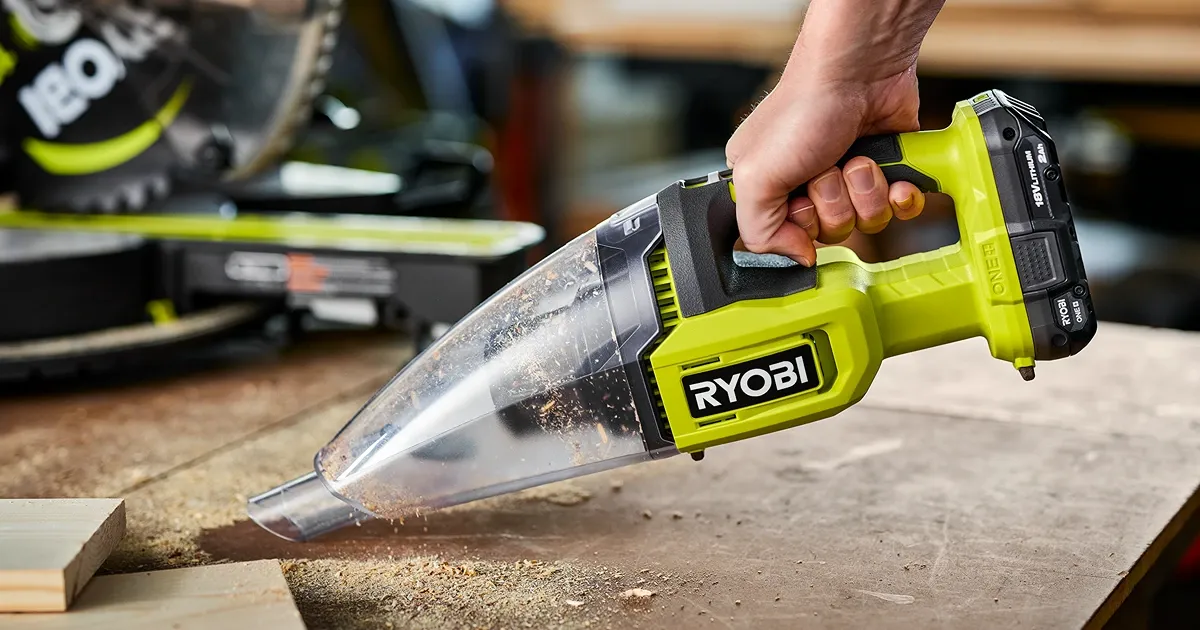
A handheld vacuum succeeds when it is close enough, charged enough, and easy enough to empty that a small mess never becomes a larger chore. Raw suction matters, but so do weight at the wrist, nozzle reach, filter maintenance, and whether the battery can be replaced after years of use.
We compared current specifications with broad testing and owner experience on crumbs, fine dust, upholstery, pet hair, and vehicle carpet. These models take different approaches to power and portability, so the best choice depends on whether the vacuum will handle quick kitchen spills or prolonged, deeply embedded cleanup.
Best overall
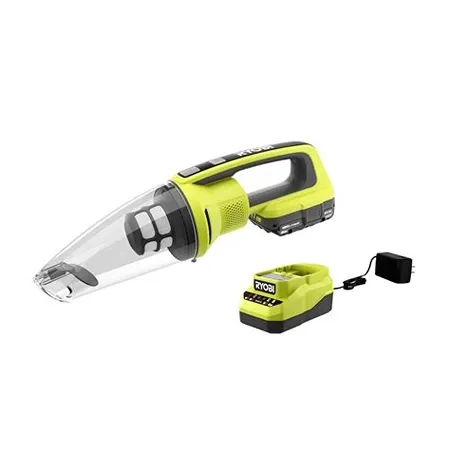
Ryobi 18V One+ Performance
Strong suction, removable battery, and a large dustbin for quick cleanups and ongoing use.
Tool-battery bulk becomes an advantage on the Ryobi 18V One+ Performance Hand Vacuum Kit. Its strong single-speed airflow handles cereal, grit, and fine debris without reserving useful suction for a short-lived boost mode. The body looks more workshop than kitchen, but cleaning ability is the reason to tolerate the bright housing.
Ryobi’s removable 18V One+ battery is the defining ownership feature. A depleted pack can be swapped instead of tethering the whole vacuum to a charger, and households already invested in One+ tools can share batteries. Runtime and weight vary with pack capacity, so the largest battery is not automatically the most comfortable choice.
The roughly 2.8-cup bin is unusually generous for a handheld and needs fewer interruptions during a car clean. Its filter is washable, and the container opens without an elaborate sequence. Fine dust still clings to the filter and seals, so tapping it outdoors and allowing washed parts to dry completely preserves airflow.
Crevice and brush tools broaden its reach, although kit contents and tool-only listings differ. The thick plastic feels durable, common wear parts are replaceable, and the vacuum carries a three-year limited warranty. Availability can be uneven because Ryobi’s primary U.S. retail channel is Home Depot, even when marketplace listings appear elsewhere.
The battery at the rear makes the vacuum tiring for smaller hands or sensitive wrists, and the body neither stands neatly nor disappears into a drawer. Replacement packs are also expensive if no One+ ecosystem already exists. For repeated household and vehicle cleanup, though, serviceable batteries, a large bin, and sustained suction form a more practical package than a sleeker sealed appliance.
Best budget
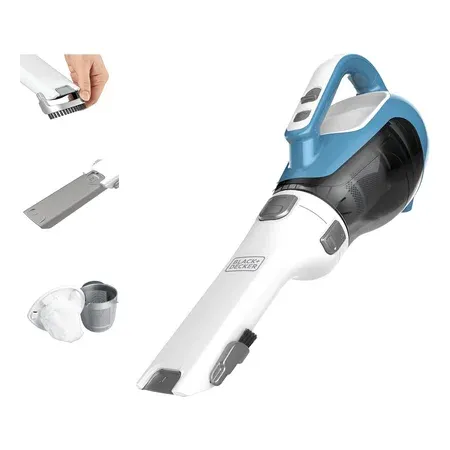
BLACK+DECKER Dustbuster AdvancedClean
A light, inexpensive cordless hand vacuum with cyclonic action, a pull-out crevice tool, and a washable bowl.
The BLACK+DECKER Dustbuster AdvancedClean replaces the Dustbuster Blast we used to recommend, which is no longer sold on Amazon. It’s one of the best-selling hand vacuums on Amazon, with more than 100,000 ratings, and at about $60 it’s cheap enough to keep wherever small spills happen.
It runs on a built-in 16V MAX lithium-ion battery, and its cyclonic action spins debris away from the filter to help keep suction steady. A rotating slim nozzle reaches into tight spots, a pull-out crevice tool gets between cushions and along shelves, and a flip-up brush helps with dusting.
Suction is fine for crumbs, coffee grounds, dust, and pet hair on hard surfaces and upholstery, but deep carpet grit and hair woven into car carpet will expose its light-duty motor. The translucent, washable bowl shows when it’s time to empty, and the filter needs regular cleaning to keep performance up. Capacity and runtime are modest, so it’s best for quick cleanups rather than detailing a whole car.
The battery isn’t removable, so avoid storing it in a hot garage. For quick everyday messes, it’s the easiest way to avoid hauling out a full-size vacuum. If you regularly clean pet hair, stairs, or vehicles, a stronger model is worth the extra money.
Best upgrade
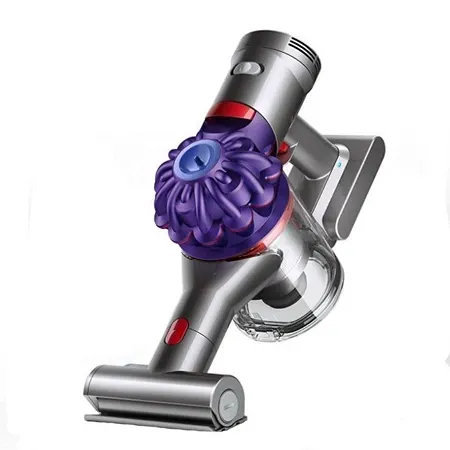
Dyson Car + Boat
Engineered for high-suction power and portability, this Dyson handheld vacuum is perfect for quick cleanups in your car, boat, or other tight spaces.
The Dyson Car+Boat Handheld Vacuum is effectively the proven V8 motor unit reconfigured without a floor wand. That heritage gives it up to 115 air watts of suction, two power modes, and far more authority on vehicle carpet than a conventional dustbuster. It is compact relative to a stick vacuum, not especially light relative to other handhelds.
Dyson rates runtime at up to 50 minutes under favorable low-power conditions, while motorized tools and Max mode shorten it substantially. The 0.54-liter bin supports a meaningful cleaning session, and the hygienic ejector pushes debris downward instead of requiring fingers inside. Hair and fine dust can still lodge around the shroud and seals.
The mini motorized tool is the key accessory for pet hair, fabric seats, and carpeted cargo areas. A crevice tool reaches between seats, and a combination brush handles vents and trim. Included tools can vary by country and retailer, so a low listing price should be checked against the full bundle.
At roughly 4.2 pounds, the machine becomes tiring when held at arm’s length, and its long motor body can be awkward in a tight footwell. The battery is charged in place rather than swapped like Ryobi’s, and Max mode trades endurance for its impressive pickup. Noise and exhaust are also more noticeable in an enclosed car.
The premium makes sense for embedded dirt, frequent pet transport, or owners who want stick-vacuum power without storing another wand and floorhead. It is excessive for countertop crumbs and too expensive to excuse infrequent use. Its two-year limited warranty is ordinary, so long runtime and motorized cleaning must justify the price rather than longevity guarantees.
Keep the vacuum where the mess occurs, but not in a hot car or damp garage. Empty the bin before debris reaches the maximum line, clear hair from powered brushes, and wash only the parts the manual identifies as washable; reinstalling a damp filter can damage performance and create odors.
Ergonomics are as important as test-bench pickup. A heavier machine that completes a car in fewer passes may be easier overall, while a light vacuum wins for repeated overhead and countertop work. Try the grip if possible, and favor replaceable batteries and available filters when long-term ownership matters.