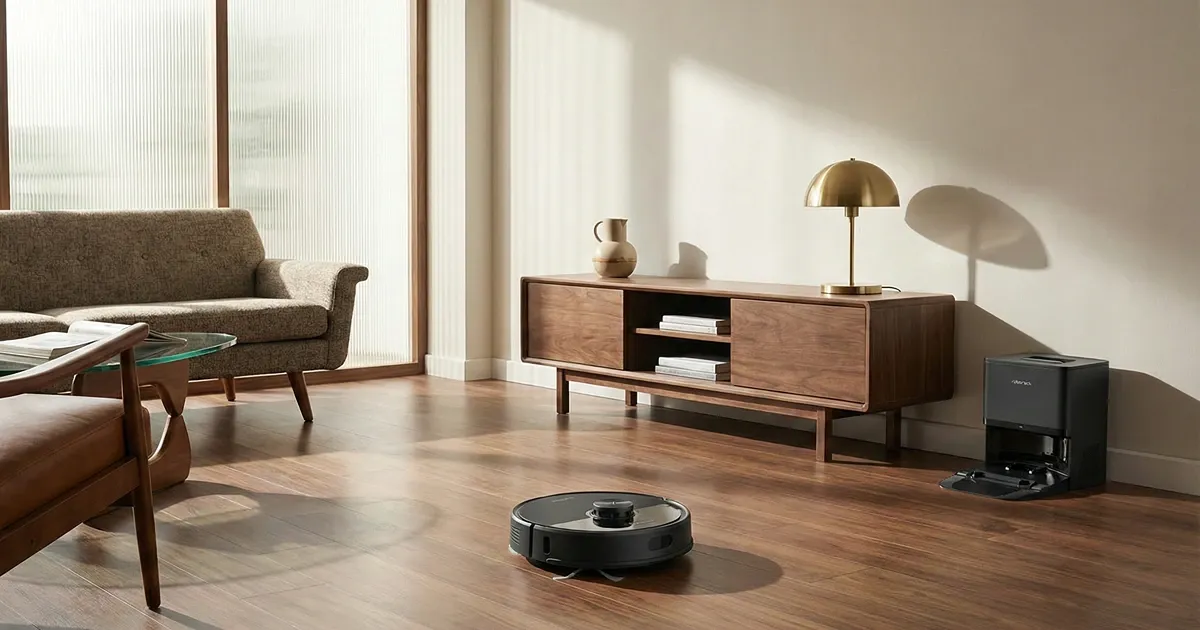
The hardest part of choosing a robot vacuum is no longer finding one that can map a room. The useful differences now show up in how well a robot handles carpet, hair, cables, thresholds, and wet messes, plus how much maintenance its dock actually removes. A large suction number alone tells you very little about whether the machine will finish a run without help.
It also helps to be honest about the job. A good robot keeps dust, crumbs, and pet hair from accumulating between deeper cleanings. It does not eliminate the need for a conventional vacuum, and even an expensive model works better when charging cables, socks, and lightweight rugs are out of its path.
Our picks cover four distinct needs rather than four versions of the same machine. The Eufy Omni C28 is the best balance of capable mopping and manageable cost, while the Tapo RV30 Max Plus delivers self-emptying convenience on a tighter budget. Roborock’s Qrevo Edge 2 is the upgrade for carpet-heavy homes, and the Dreame X60 Max Ultra Complete is the specialist choice for pet hair, low furniture, and unusually tall thresholds.
Best overall
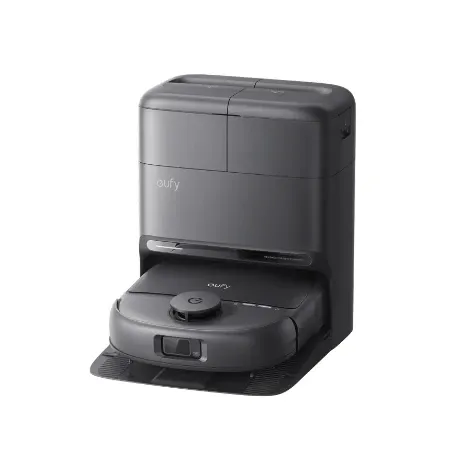
Eufy Omni C28
A full vacuum-and-mop system with a self-cleaning roller, strong pickup, and dock.
The Eufy Omni C28 is our favorite pick because it brings a genuinely useful mopping system into a price range below most flagship robots. Its dock empties the dustbin, washes and dries the mop, and refills the robot’s water tank. That is a meaningful step up from models that merely drag a damp pad across the floor.
Eufy’s HydroJet system uses a roller mop that is continually rinsed and scraped as the robot moves. Clean water reaches the floor while dirty water is collected instead of being spread through the next room. The design is especially well suited to sealed hard floors and routine kitchen messes, though dried, sticky spills can still require a second run or a manual pass.
Vacuuming is capable rather than class-leading. The C28 combines 15,000 Pa of claimed suction with a split, detangling main brush that resists collecting long hair. It handles everyday dust, crumbs, and pet hair well on hard floors and low rugs, but a carpet-heavy home still gives the more powerful Roborock an advantage.
Its lidar navigation creates orderly routes and supports multiple saved maps, room-specific cleaning, no-go zones, and schedules in the Eufy app. The robot does not rely on an RGB camera, which may appeal to privacy-conscious buyers. The tradeoff is less confident recognition of small floor clutter, so cords and socks should be picked up before a run.
The 5-in-1 dock keeps most of the unpleasant maintenance contained and is relatively compact for an all-in-one station. Its 3-liter dust bag is rated for up to 75 days between changes, depending on the home. You will still need to refill clean water, empty dirty water, and occasionally clean the tray, and the mop-drying fan is audible during its long drying cycle.
Choose the C28 for a mixed-floor home where mopping matters as much as vacuuming and you want to avoid flagship pricing. Skip it if your floors are usually cluttered or most of the cleaning area is thick carpet. Within those limits, it provides the best balance of cleaning ability, dock automation, and cost in this group.
Best budget
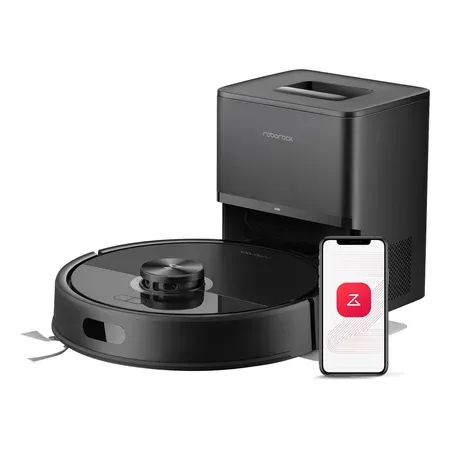
Roborock Q7 M5+
An inexpensive self-emptying robot vacuum and mop with 10,000 Pa suction and anti-tangle brushes.
The Roborock Q7 M5+ replaces the Tapo RV30 Max Plus we used to recommend, which is no longer sold on Amazon. It’s the budget pick for dependable scheduled vacuuming and a self-emptying dock without paying for a mop-washing station, for about $250. With more than 25,000 Amazon ratings, it’s also one of the best-selling robot vacuums.
Roborock rates it at 10,000 Pa of suction, and it’s most convincing on hard floors and low-pile carpet, where regular runs keep dust, crumbs, and hair under control. Its anti-tangle main brush and side brush resist long hair wrapping around them, a common chore with cheaper robots.
The RockDock Plus empties the robot into a sealed 2.7-liter bag that Roborock says lasts 7 to 9 weeks. Unlike our premium picks, the dock doesn’t wash a mop, refill water, or dry anything.
Mopping is basic: the robot drags a damp cloth with three water-flow settings, which is fine for a light wipe but not for scrubbing stains. If clean kitchen and bathroom floors are your priority, spend more on one of the models with spinning or roller mops.
The Roborock app supports saved maps, room cleaning, no-go zones, and schedules. Obstacle recognition is limited compared with camera-equipped flagships, so cords, socks, and pet bowls can still interrupt a run. For reasonably tidy floors and vacuum-first maintenance with infrequent emptying, it’s the best value we’ve found.
Best upgrade
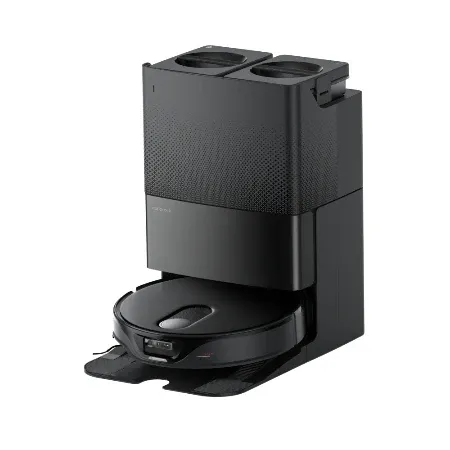
Roborock Qrevo Edge 2
A slim premium robot with excellent carpet pickup, anti-tangle brushes, and a hot-water dock.
The Roborock Qrevo Edge 2 is the upgrade pick for homes that need stronger carpet cleaning without giving up serious mopping. Its 25,000 Pa suction rating is only one part of the story. The DuoDivide main brush guides hair toward the intake instead of winding it around a roller, and independent testing has shown especially strong embedded-debris and long-hair performance.
At 3.14 inches tall, the Qrevo Edge 2 can reach below more beds, cabinets, and sofas than a conventional lidar-turret robot. Roborock achieves this with a navigation sensor that retracts when the robot enters a low space. Its room coverage is efficient, and the mature Roborock app makes it easy to divide rooms, set floor-specific routines, adjust suction and water, and build targeted cleaning schedules.
Two spinning mop pads provide more agitation than a passive cloth, while an extending mop reaches closer to baseboards and furniture edges. The pads can lift 12 millimeters over carpet. Back at the dock, the system empties debris, refills water, washes the pads with hot water, and dries them with warm air.
This is still not the best robot for a home scattered with small objects. Its obstacle recognition can miss cords, socks, and other low-profile hazards that some competing flagships avoid more consistently. Its 240-milliliter onboard bin is also small, making the self-emptying dock important in a home with shedding pets.
Threshold capability is another boundary. The Edge 2 is rated for steps around 20 millimeters, which is fine for ordinary transitions but well behind the Dreame’s lifting chassis. Measure tall room dividers before buying rather than assuming a premium robot can cross them.
The Qrevo Edge 2 earns its higher price through carpet pickup, hair management, a polished app, and a capable mop dock. It is the one to choose when the Eufy’s value matters less than getting more dirt out of rugs. Buyers with mostly hard floors or modest cleaning needs can save substantially with the C28.
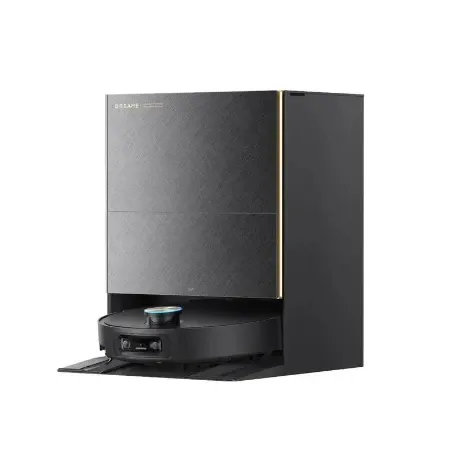
Best for pets and uneven floors
Dreame X60 Max Ultra
A flagship robot built for pet hair, low furniture, tall thresholds, and highly automated mopping.
The Dreame X60 Max Ultra Complete is not the sensible default for most homes. It is the specialist pick for difficult layouts, heavy shedding, and buyers willing to pay for the most automated dock in this guide. Its headline features solve real problems, but the large station and flagship price are substantial commitments.
Dreame pairs 35,000 Pa of claimed suction with two main brushes designed to separate hair from debris. The combination is exceptionally effective on pet hair, including hair pressed into carpet, while an extending side brush and mop improve coverage along walls. The dock also has separate floor-cleaning and pet-odor solution compartments, a thoughtful addition for multi-pet homes.
The retracting lidar sensor keeps the robot to a slim 3.13-inch profile, and its extendable legs are the more unusual advantage. Dreame rates the X60 to cross two-stage obstacles up to 3.47 inches, allowing it to enter rooms that stop nearly every conventional robot. That does not mean it can climb a staircase, but it is far better equipped for deep transitions, door tracks, and layered thresholds.
Dual cameras and active illumination help the robot identify small objects and work in dark spaces. Its dock empties the bin, refills the robot, meters cleaning solution, washes the mop pads at up to 212 degrees Fahrenheit, and dries them afterward. The automation is extensive, though the sizable tanks and dock need more floor space than the Eufy station.
There are practical frustrations despite the hardware. The dock can consume water quickly, and the removable mop pads may come loose around some lightweight rugs. The cameras also make the X60 a less comfortable choice for buyers who do not want image sensors moving through the home, even with the usual privacy controls.
Choose the X60 when pet hair and difficult thresholds are not edge cases but daily obstacles. Its ability to fit under low furniture is a further advantage. For a conventional single-level home, the Roborock offers most of the premium experience for less, and the Eufy remains the smarter value.
Start with your floor plan, not the suction figure. Tall thresholds point to the Dreame, a lot of carpet favors the Roborock, and mostly hard floors make the Eufy’s roller mop especially attractive. A tidy, vacuum-first home can get nearly all the daily convenience it needs from the Tapo.
Then decide how much dock maintenance you are actually willing to pay to remove. A self-emptying station saves you from handling dust, while an all-in-one station also trades manual mopping for dirty-water tanks, clean-water refills, and periodic tray cleaning. No dock is truly maintenance-free.
Whichever model you choose, clear cords and lightweight clutter before scheduled runs and keep a conventional vacuum for stairs, upholstery, and occasional deep cleaning. Robot vacuums are at their best as consistent maintenance machines, and the right one can make clean floors the default rather than a weekend project.