The short answer: the Razer Blade 16 (2026) has the best OLED gaming laptop screen for most buyers who can afford it. It’s a 2560×1600 240 Hz OLED rated VESA DisplayHDR TrueBlack 1000, in a 4.6 lb body, and was $3,499.99 on Amazon with an RTX 5070 Ti on November 20, 2026. The best value is the Alienware 16X Aurora: a 240 Hz OLED and a 115 W RTX 5060 for $1,699.99 on Amazon that day. The cheapest OLED gaming laptop worth buying is the Lenovo Legion 5a (2026), with a 165 Hz OLED and 32 GB at the same $1,699.99.
Prices checked November 20, 2026.
OLED Gaming Laptops Compared
| Laptop | OLED panel | Brightness (maker) | GPU options | Price (Nov 20) |
|---|---|---|---|---|
| Razer Blade 16 (2026) | 16” 2560×1600, 240 Hz | TrueBlack 1000, 1,100 nits HDR | RTX 5070 Ti, 5080, 5090 (165 W) | from $3,499.99 (Amazon) |
| Lenovo Legion Pro 7i Gen 10 | 16” 2560×1600, 240 Hz | 500 nits typical, 1,100 peak | RTX 5070 Ti, 5080, 5090 (up to 175 W) | lenovo.com |
| HP HyperX OMEN MAX 16 | 16” 2.5K, 240 Hz, 0.2 ms | 500 / 1,100 nits | up to RTX 5090 (175 W) | hp.com |
| Alienware 16 Area-51 | 16” 2560×1600, 240 Hz | 620 nits HDR | RTX 5080, 5090 (175 W) | from $3,899.99 (Dell) |
| Alienware 16X Aurora | 16” 2560×1600, 240 Hz | 620 nits HDR | RTX 5060, 5070, 5070 Ti (up to 115 W) | $1,699.99 with RTX 5060 (Amazon) |
| ASUS ROG Zephyrus G16 (2026) | 16” 2560×1600, 240 Hz | — | RTX 5060 to 5090 (115–160 W) | asus.com |
| MSI Stealth 16 AI+ | 16” QHD+, 240 Hz | — | RTX 5070 Ti | $2,634.15 (Amazon) |
| Lenovo Legion 7a (16”, Gen 11) | 16” 2560×1600, 240 Hz | TrueBlack 1000 | RTX 5070 12 GB | lenovo.com |
| ASUS ROG Zephyrus G14 (2026) | 14” 2880×1800, 120 Hz | — | RTX 5060 to 5080 (100–130 W) | asus.com |
| Razer Blade 14 | 14” 2880×1800, 120 Hz | — | up to RTX 5070 (115 W) | razer.com |
| Lenovo Legion 5a / 5i (15”, Gen 11) | 15.3” 2560×1600, 165 Hz | 500 nits, HDR True Black 1000 (5i) | RTX 5060, up to 5070 | $1,699.99, 5a (Amazon) |
| ASUS TUF Gaming F16 (2026) | 16” 2.5K, 165 Hz | — | RTX 5060, 5070 (115 W) | asus.com |
”—” means the maker doesn’t headline a brightness figure for that panel.
The Best OLED Gaming Laptops
Best overall: Razer Blade 16 (2026)
The Blade 16 pairs the best-rated OLED in a thin laptop with a 14.9 mm aluminum body. VESA’s TrueBlack 1000 tier is the highest OLED HDR rating, and Razer quotes 1,100 nits in HDR. Razer moved the 2026 model to Intel’s Core Ultra 9 386H and rates the RTX 5080 and 5090 versions at 165 W. Memory is soldered LPDDR5X, up to 64 GB.
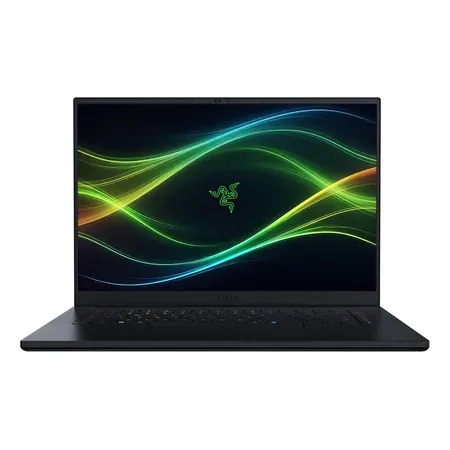
Best OLED gaming laptop overall
Razer Blade 16 (2026), RTX 5070 Ti
16-inch 2560x1600 240 Hz OLED (TrueBlack 1000), RTX 5070 Ti, Core Ultra 9 386H, 32 GB, 1 TB. $3,499.99 on Amazon on Nov 20.
Best value 240 Hz OLED: Alienware 16X Aurora
Amazon had the 16X Aurora with an RTX 5060 and Core Ultra 7 270HX Plus for $1,699.99 on November 20, $1,000 below Dell’s own price for that configuration. You get a 16-inch 240 Hz OLED rated 620 nits in HDR, G-Sync, a 96 Wh battery and a GPU allowance of up to 115 W.
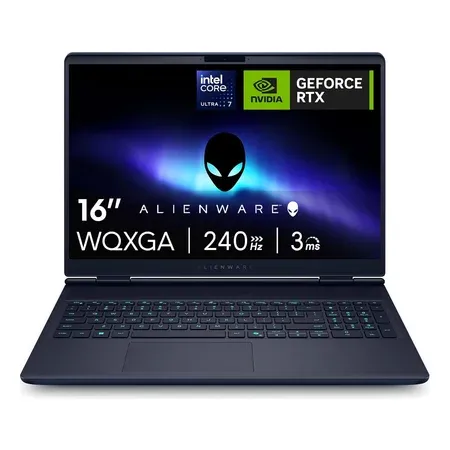
Best value 240 hz OLED
Alienware 16X Aurora, RTX 5060
16-inch 240 Hz OLED, up to 115 W RTX 5060, Core Ultra 7 270HX Plus, 96 Wh battery. $1,699.99 sold by Amazon on Nov 20.
Best smaller OLED: Lenovo Legion 5a (2026)
The 2026 Legion 5a has a 15.3-inch 2560×1600 OLED at 165 Hz, a 115 W RTX 5060, a Ryzen 7 250 and 32 GB of DDR5, at 4.1 lb. Lenovo rates the matching Legion 5i Gen 11 panel at 500 nits, 100% DCI-P3 and HDR True Black 1000.
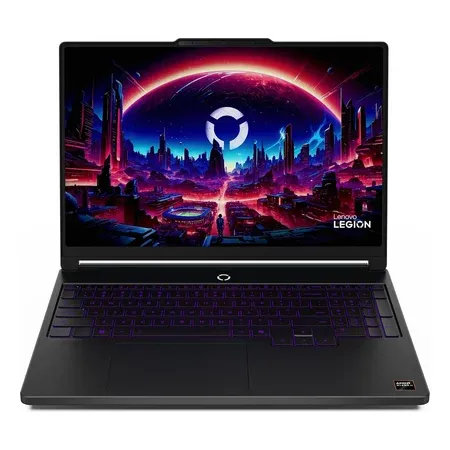
Best smaller OLED
Lenovo Legion 5a (2026), RTX 5060
15.3-inch 2.5K 165 Hz OLED, 115 W RTX 5060, Ryzen 7 250, 32 GB DDR5, 1 TB. $1,699.99 sold by Amazon on Nov 20.
Best OLED for performance: Lenovo Legion Pro 7i Gen 10
The Legion Pro 7i combines a 240 Hz OLED (500 nits typical, 1,100 peak) with up to a 175 W RTX 5090, two memory slots and a 99.9 Wh battery option. It’s heavier than the Blade 16 (from 5.67 lb), but faster at the same GPU.
Best OLED with an RTX 5070 Ti for less: MSI Stealth 16 AI+
At $2,634.15 sold by Amazon, the Stealth 16 AI+ gives you a 240 Hz QHD+ OLED, an RTX 5070 Ti, a Core Ultra 9 386H and 32 GB, almost $900 less than the Blade 16 with the same GPU.
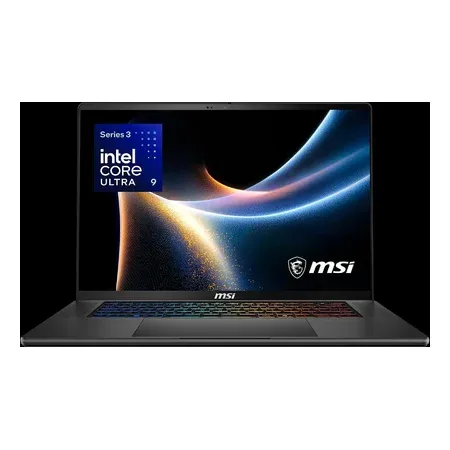
Cheapest RTX 5070 ti OLED
MSI Stealth 16 AI+, RTX 5070 Ti
16-inch QHD+ 240 Hz OLED, RTX 5070 Ti, Core Ultra 9 386H, 32 GB DDR5, 1 TB. $2,634.15 sold by Amazon on Nov 20.
Best 14-inch OLED: ASUS ROG Zephyrus G14 (2026)
The G14’s 2880×1800 OLED runs at 120 Hz, slower than the 16-inch 240 Hz panels but sharper per inch. It comes with up to an RTX 5080 at 130 W in a 3.3–3.5 lb body.
OLED vs. Mini-LED vs. IPS on a Gaming Laptop
- OLED: per-pixel black, near-instant pixel response (HP quotes 0.2 ms), excellent motion clarity. Full-screen brightness is lower than mini-LED, and static elements can wear the panel over time.
- Mini-LED: brightest HDR, no burn-in risk, but blooming around bright objects and slower pixels. See the best mini-LED gaming laptops.
- IPS: cheapest; the highest refresh rates (300 Hz on the Strix G16 and G18, Alienware 18 Area-51) are IPS.
Burn-In
OLED panels age unevenly when the same bright image stays on screen for long periods: taskbars, HUDs, desktop icons. Gaming laptop makers ship pixel-shift and screen-dimming features in their control software, and Windows dark mode, auto-hiding the taskbar and a short screen-off timer all help. If you leave one static app on screen for hours a day, mini-LED or IPS is the safer pick.
OLED Gaming Laptop FAQ
Are OLED gaming laptops worth it?
For most people, yes. OLED gives the best contrast and motion clarity in a laptop, and 240 Hz OLEDs now start around $1,700.
What’s the cheapest OLED gaming laptop?
On November 20, 2026, the Lenovo Legion 5a (2026) and the Alienware 16X Aurora were both $1,699.99 on Amazon with an RTX 5060. The Alienware has the faster 240 Hz panel.
Do OLED gaming laptops get burn-in?
They can, with long hours of static content. Mixed gaming and video use is low risk; use dark mode and an auto-hiding taskbar.
Which OLED gaming laptop has a 240 Hz screen?
The Razer Blade 16, Lenovo Legion Pro 7i and Legion 7a, Alienware 16X Aurora and 16 Area-51, ASUS Zephyrus G16, HP HyperX OMEN MAX 16 and MSI Stealth 16 AI+.
Is OLED better than mini-LED for gaming?
For motion and dark scenes, yes. Mini-LED is brighter for HDR and has no burn-in risk.
Sources
- Razer Blade 16
- Lenovo PSREF: Legion Pro 7 16IAX10H (PDF)
- Lenovo Legion 5i Gen 11 (15” Intel)
- Lenovo Legion CES 2026 announcement
- Dell: Alienware 16X Aurora and Alienware 16 Area-51
- HP HyperX OMEN MAX 16 (Intel, 2026)
- ASUS ROG Zephyrus G16 (2026) specs and Zephyrus G14 (2026) specs
- VESA DisplayHDR True Black