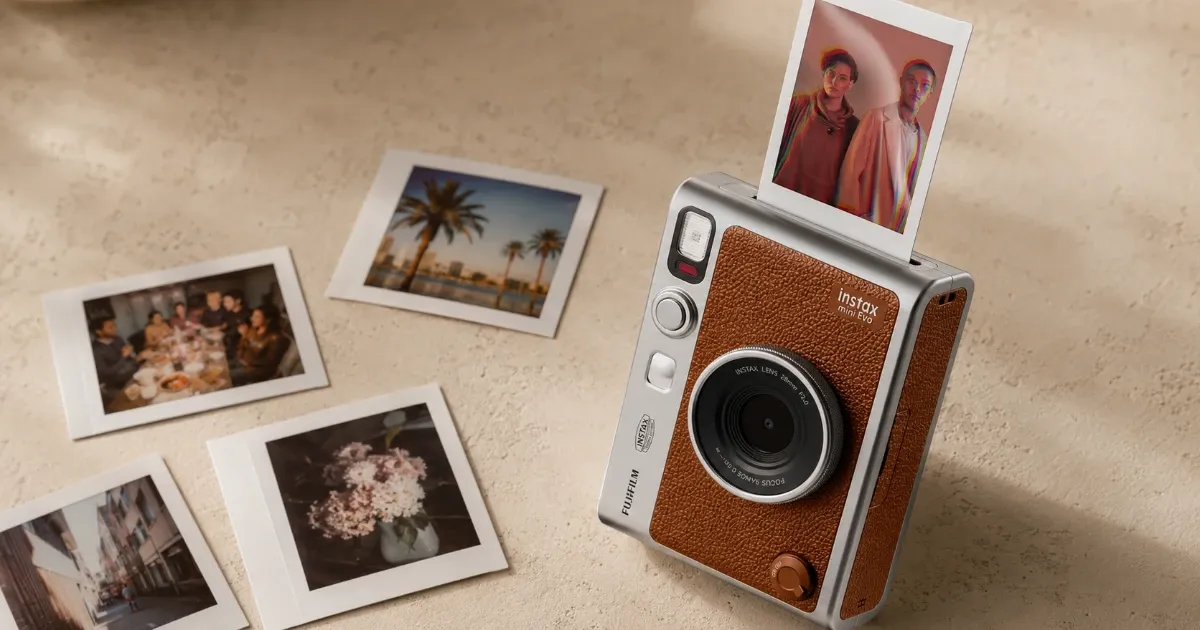
Instant cameras are fun because the photo is physical and a little unpredictable. That also makes choosing one harder. Every press of the shutter uses a paid sheet of film, and you will not know exactly how the picture looks until it develops. Start with the print size you want, what you are comfortable spending on film, and how much control you want over each shot.
Film format matters more than most camera specifications because it determines both the size of the print and the cost of every photo. When we checked US prices on September 3, 2026, Instax Mini film was about $0.80 per shot, Instax Wide was about $1.40, and Polaroid i-Type was about $2.12. Sales and multipacks can lower those prices, but Mini is still the easiest format to pass around at a party without worrying about every shot.
Next, decide whether you want a fully analog camera or a hybrid model with a screen. Analog cameras preserve the surprise, along with the occasional wasted frame. A hybrid lets you preview photos and print only the ones you like, though its digital files will not replace a capable phone or one of the best mirrorless cameras. Our picks include both styles and three film formats, so the right one depends on what you want the finished photo to look like.
Best overall
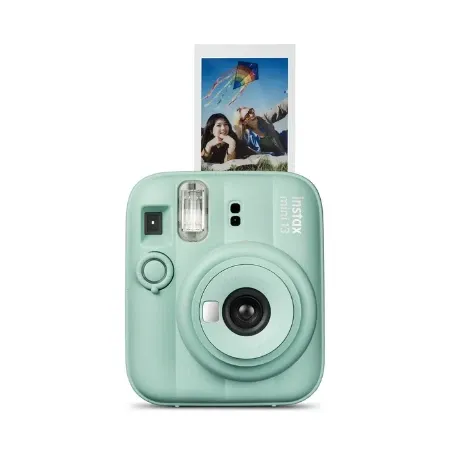
Fujifilm Instax Mini 13
A simple Mini-format camera with close-up framing, a selfie mirror, and two timer settings for groups.
The Fujifilm Instax Mini 13 is the instant camera most people can hand to a friend without an explanation. The camera shown here is the Dreamy Purple version. Twist the lens to turn it on, frame the picture, and press the shutter. Its simple controls, widely available film, and useful timer make it a good match for parties, travel, and gifts.
Instax Mini film produces a 62 by 46 mm image inside the familiar white border. It is too small for a group portrait you plan to hang on a wall, but the finished print fits easily in a wallet or place card. Mini film was also the cheapest option when we checked, which matters when guests will take several photos home at the end of the night.
The 60 mm lens focuses from 0.3 meters to infinity, with a close-up setting for subjects between 0.3 and 0.5 meters away. In that mode, the viewfinder corrects for the difference between what you see and what the lens records. A small mirror beside the lens helps with selfies. You still need to frame close subjects carefully, but the correction makes it easier to keep them centered.
Two-second and 10-second timers are the Mini 13’s most useful distinction from the older Mini 12. The shorter setting helps with selfies, while the longer one gives the photographer time to join a group. Two AA alkaline batteries power the camera, and Fujifilm rates a pair for about 100 exposures. If they run out during a trip or event, replacements are easy to find.
Those simple controls leave little room to correct a difficult scene. The flash fires with every exposure and cannot be turned off, and there is no exposure compensation. Strong sunlight can leave a frame looking washed out. If you want to control the flash or adjust brightness before shooting, the Mini 13 will feel restrictive.
The Mini 13 is still new, so it does not have the long ownership record of the Mini 12. Fujifilm provides a one-year limited US warranty for qualifying Instax cameras bought from an authorized dealer, but long-term durability is still an open question.
Buy the Mini 13 when the camera will circulate among people who care more about getting into the picture than controlling the picture. A discounted Mini 12 remains the sensible value alternative if a timer will never be used. For a broad audience, though, the timer, corrected close-up view, replaceable batteries, and manageable film cost make the Mini 13 the easiest recommendation.
Best hybrid
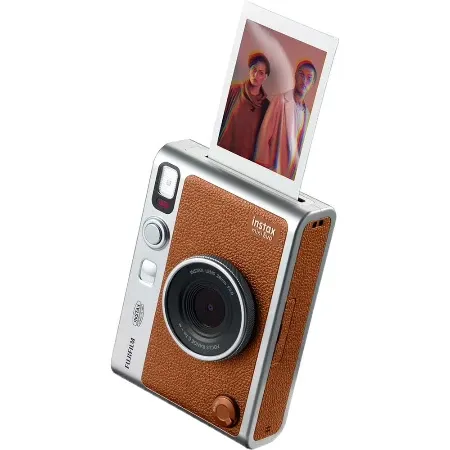
Fujifilm Instax Mini Evo
A hybrid Mini camera that previews shots, prints selected keepers, makes reprints, and doubles as a phone printer.
Film feels less precious when you can catch a blink before wasting a print. The Fujifilm Instax Mini Evo captures photos digitally, then lets you choose which ones to print on Instax Mini film. This listing is for the current black version with USB-C. That preview screen is what makes the Mini Evo worth buying over a standard analog model.
The Mini Evo can print the same photo more than once, so everyone in the picture can take home a copy. Bluetooth also turns it into a printer for phone photos. Both features are handy at events and on trips, where recreating a good group shot may not be possible.
Physical dials combine 10 lens effects with 10 film effects, and the controls include exposure compensation, suppressed flash, slow synchronization, and two timer settings. The autofocus lens covers subjects from 10 cm to infinity. You get more control than a basic analog camera without having to think about focus zones before every shot.
Its digital side has firm limits. The roughly 5-megapixel captures look appropriate on a small Instax print, but they cannot match the detail or processing of a current phone camera. The screen can also be hard to read in bright sunlight. Treat the Mini Evo as a selective instant printer with a built-in camera, not as the only digital camera worth carrying.
The phone app is less flexible than it first appears. You need it for phone printing and remote shooting, and it can transfer only camera photos that have already been printed. You cannot copy every unprinted original to your phone. Internal storage holds roughly 45 images, so frequent shooters should add a microSD card.
Fujifilm rates the internal battery for about 100 prints, but it is not removable. Earlier versions of the Mini Evo used Micro-USB, while the linked model uses USB-C. Check the charging port before buying a different color or bundle, especially if you want to travel with one cable.
The Mini Evo costs much more than an automatic analog Mini. In return, it wastes less film, makes duplicate prints, and prints photos from a phone. Choose it if you like instant photography but hate paying for every missed expression.
Best for large prints
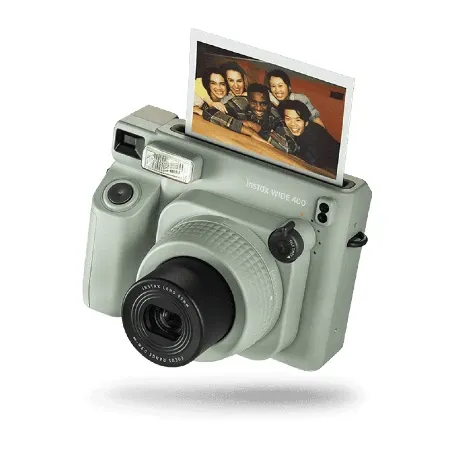
Fujifilm Instax Wide 400
A large-format analog Instax camera with a mechanical timer, tripod socket, and included close-up attachment.
Small instant prints lose their charm when six faces are squeezed into one narrow frame. The Fujifilm Instax Wide 400 uses a 99 by 62 mm image area, the largest Instax format in this guide. We linked the Sage Green version. Its larger frame works better for groups, landscapes, and table photos at events, while the analog design keeps the camera simpler and less expensive than a hybrid model.
That extra room comes with a camera measuring 162 by 98 by 123 mm and weighing 616 grams before batteries, film, and accessories. At that size, it belongs in a bag, not a coat pocket. The broad body makes sense when the finished print is the priority, but it is cumbersome for casual sightseeing or a crowded dance floor.
The lens has separate settings for subjects from 0.9 to 3 meters and from 3 meters to infinity. Close-ups require the included attachment, which covers 0.4 to 0.5 meters and adds a selfie mirror. Carrying and fitting that piece is fussy, and viewfinder offset still makes precise close framing harder than it looks.
A lever on the body sets a mechanical timer for 4, 6, 8, or 10 seconds. The timer and tripod socket make it easy for the photographer to join a group photo. Four AA alkaline batteries are rated for about 100 exposures, and you never need an app to use the camera.
Beyond the timer, the controls are limited. The flash fires automatically on every exposure and cannot be disabled, and there is no exposure compensation. You cannot correct the settings when the camera misreads a scene, so an overexposed or poorly framed photo still uses a relatively expensive sheet of film.
Wide film was about $1.40 per shot when we checked, compared with roughly $0.80 for Mini. The hybrid Wide Evo can preview photos and print only the keepers, but the camera itself costs much more and adds another layer of controls. The Wide 400 makes more sense if you care most about getting a larger print from a straightforward analog camera.
The Wide 400 needs its own bag once you add the close-up attachment, spare batteries, and film. That is a fair compromise for group shots and wide scenes that would feel cramped on Mini film. Buy it when you know the larger print will be worth carrying the bulkier camera.
Best for classic polaroid prints
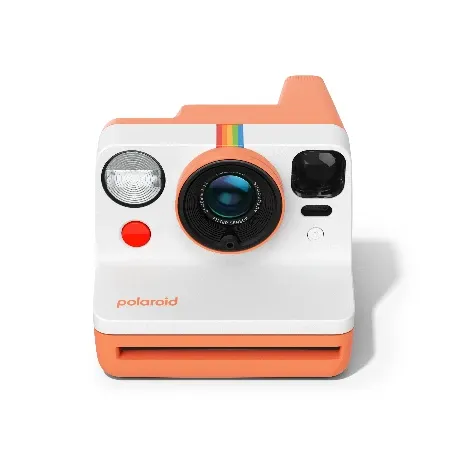
Polaroid Now Generation 3
A standalone Polaroid camera for large square i-Type or 600 prints, with a timer, double exposure, and tripod socket.
Some buyers specifically want the large square print and distinctive look of Polaroid film. The Polaroid Now Generation 3 is the simplest current camera for getting that result. The Arctic Blue option linked here is camera-only and does not include film. Choose it for the Polaroid look and slower process, not for sharper or more consistent photos than Instax.
Both i-Type and 600 film produce a 79 by 79 mm image on the classic 107 by 88 mm sheet. Each pack contains eight exposures. When we checked prices, i-Type film cost about $2.12 per shot, making it the most expensive format in this guide. A print also takes about 10 to 15 minutes to develop and should be kept out of bright light during that time.
The camera uses two focus zones, one covering 0.4 to 1.3 meters and another running from 1 meter to infinity. The zone-focus system is easy to use but less precise than autofocus. Film age, storage, temperature, light during development, and shooting technique can all affect the result, so a bad photo does not always have one obvious cause.
On-body controls include a self-timer and double exposure, and there is a tripod socket for planned group shots or other fixed setups. The internal battery charges over USB-C and is rated for as many as 15 film packs. The camera works without a phone, which keeps the shooting process simple and screen-free.
The Now is bulky for a simple camera, and mistakes get expensive quickly. Results can be less predictable than Instax, especially while you learn the focus distances and how to handle the film. Some people enjoy that unpredictability. Others will see it as needless waste when all they want are evenly exposed party photos.
The Now+ Generation 3 uses the same film and adds app-based manual and aperture-priority controls. It is the better choice for careful tripod work or anyone who wants more control through a phone. The basic Now costs less and works on its own, which better suits the simple point-and-shoot appeal of Polaroid film.
Choose the Now Generation 3 because you already like what Polaroid film does, not because the camera wins a checklist. The larger square frame, slow reveal, and single original feel different from Instax Mini. Make sure you are comfortable with the film cost and inconsistent results before buying.
Choose the film before the camera. Mini costs less and travels easily, Wide gives groups and broad scenes more space, and Polaroid offers the largest square image here with the most expensive and demanding process. A missing timer may occasionally annoy you, but the wrong film format affects every photo you take.
For an analog camera, decide how much control you actually want. Automatic settings are convenient when the camera will be passed around, but several of these models give you no way to turn off the flash or correct a difficult scene. A hybrid loses some of the surprise in exchange for fewer wasted prints and easy copies. That trade makes sense if wasted film bothers you more than using a screen.
Whichever format you choose, buy fresh film from a reliable seller and follow the storage and development directions. Keep the camera within its stated focus range, and expect to waste a few shots while you learn it. The best instant camera is the one whose film you can afford to use often.