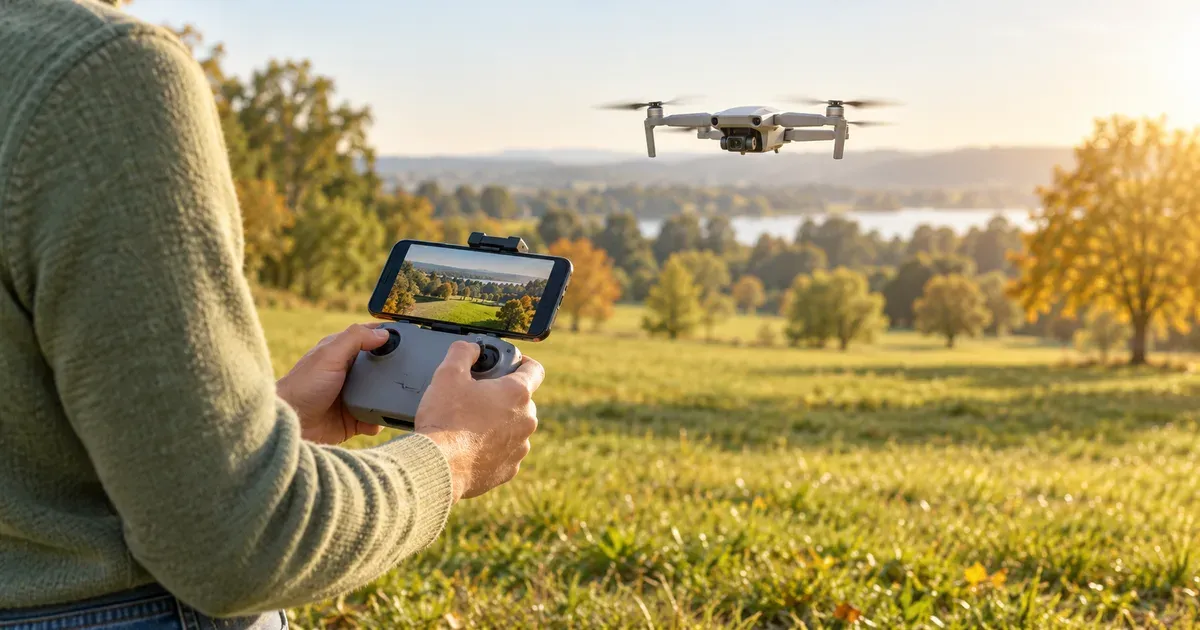
Flying a drone is much easier than it used to be. Good beginner drones use GPS to hold their position in the air when you let go of the sticks, take off and land with one tap, and fly themselves home if the signal drops or the battery runs low. The hard part now is choosing one that’s easy to learn on, takes good pictures, and doesn’t drag you into paperwork.
The single most useful spec for a beginner is weight. Drones under 250 grams don’t need FAA registration when flown for fun, are easy to pack, and are less dangerous if something goes wrong. Every camera drone here is under that limit.
Our top pick is the DJI Mini 4K (about $389 for the two-battery combo). It has a 3-axis gimbal for smooth 4K video, DJI’s excellent app and automatic flight modes, and up to about 31 minutes per battery. For less money, the Potensic Atom (about $250) has a real gimbal and 4K video too. If you just want effortless videos of yourself, the DJI Neo ($169) launches from your palm and follows you without a controller.
Our Picks at a Glance
| Drone | Best for | Weight | Camera | Price |
|---|---|---|---|---|
| DJI Mini 4K | Most beginners | Under 249 g | 4K/30, 3-axis gimbal | About $389 (combo) |
| Potensic Atom | Beginners on a budget | Under 249 g | 4K/30, 3-axis gimbal | About $250 |
| DJI Neo | Selfie videos, no controller needed | 135 g | 4K/30, stabilized | $169 |
| Holy Stone Mini Drone | Learning to fly, kids | Tiny, indoor | None | About $40 |
Best Overall: DJI Mini 4K
Best overall
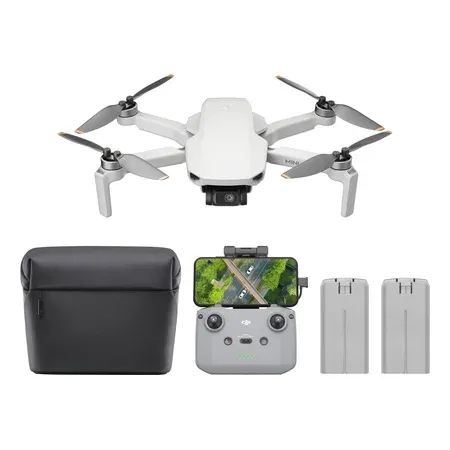
DJI Mini 4K Combo
An easy, sub-249 g 4K drone with a 3-axis gimbal, GPS return to home, and two batteries.
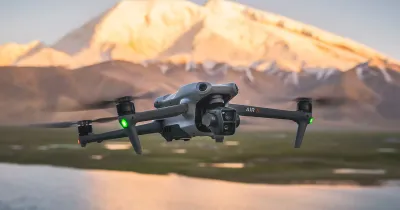
The DJI Mini 4K is DJI’s simplest camera drone, and it’s the easiest way to get good aerial photos and video on your first try. It weighs under 249 grams, so recreational pilots don’t have to register it, and it folds to about the size of a phone.
Its 3-axis mechanical gimbal keeps video smooth even in a breeze, and it records 4K/30 video and 12-megapixel photos. GPS holds it steady in the air, one tap takes off or lands it, and return to home brings it back automatically if it loses signal or runs low on battery. DJI rates it for winds up to about 38 km/h, and each battery for about 31 minutes. The combo we link includes two batteries, which is worth it, since real flights end sooner than rated times.
The DJI Fly app is the most polished drone app for beginners, with in-app tutorials and QuickShots that fly cinematic moves like Dronie, Helix, and Rocket on their own. Android users should know the app is no longer on Google Play; you download it from DJI’s website.
It has no obstacle sensors, so practice in open spaces, away from trees. Its smaller camera sensor is best in daylight.
Buy it if you want the best balance of ease, camera quality, and price.
Best Budget: Potensic Atom
Best budget
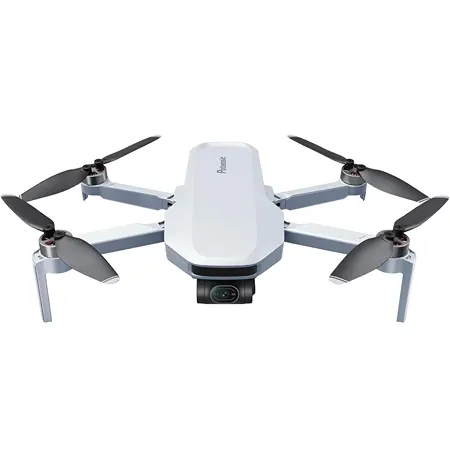
Potensic Atom
A sub-249 g GPS drone with a 3-axis gimbal, 4K/30 video, 32-minute flights, and tracking.
The Potensic Atom is the cheapest drone we’d recommend for photos and video. For about $250, it has the features that matter most: it’s under 249 grams, has a real 3-axis gimbal (most cheap drones don’t), records 4K/30 video and 12-megapixel photos on a Sony sensor, and flies for up to 32 minutes per battery. GPS hovering and return to home make it forgiving, and it can track a subject and fly QuickShots.
Its transmission range of up to 6 km is shorter than DJI’s, its app is less refined, and image quality is a step below the Mini 4K. Like the Mini 4K, it has no obstacle sensing. It’s sold by Amazon and supported by Potensic, with more than 4,000 Amazon ratings averaging 4.5 stars.
The newer Atom 2 (about $300) upgrades to a larger 1/2-inch sensor, 48-megapixel photos, and up to 10 km of range.
Buy it if you want a gimbal-stabilized 4K drone for the least money, or you’d rather avoid DJI’s US uncertainty.
Easiest to Fly: DJI Neo
Easiest to fly
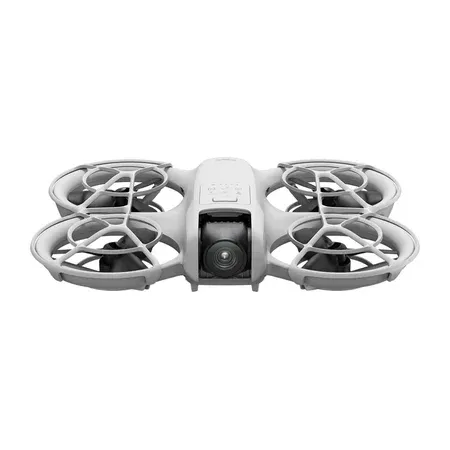
DJI Neo
A 135 g selfie drone that takes off from your palm, follows you, and films 4K with no controller needed.
The DJI Neo is barely a drone you have to fly at all. At 135 grams, it’s light enough to slip in a jacket pocket. Press a button and it lifts off from your palm, then follows you, circles you, or flies one of several automatic shots while recording stabilized 4K/30 video, and lands back in your hand. You can also steer it with the phone app, voice commands, or an optional controller.
Full propeller guards make it much safer around people than an open-propeller drone, which is why it’s popular with families and travelers. It stores footage internally, so there’s no memory card to forget.
It’s not a photography drone. Battery life is short, at well under 20 minutes per flight, and it struggles in wind. Like other DJI drones, you activate it with the DJI Fly app, which Android users download from DJI’s website.
Buy it if you want hands-free video of yourself hiking, biking, or at the beach, without learning to fly.
Best Practice Drone: Holy Stone Mini Drone
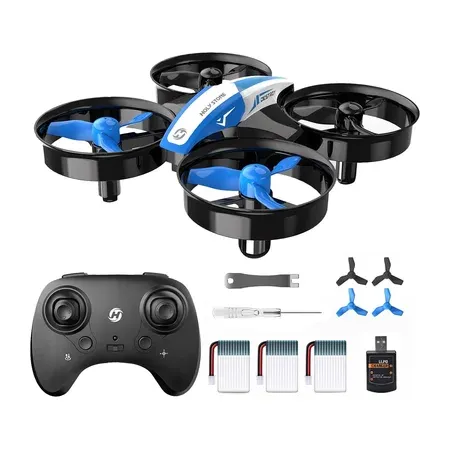
Best practice drone
Holy Stone Mini Drone
A tiny indoor drone with propeller guards, altitude hold, and three batteries, for learning the sticks.
GPS drones are so automated that they don’t teach you much about actually flying. A tiny practice drone does. This Holy Stone mini drone has fully guarded propellers, an altitude-hold mode so it hovers at a steady height, a headless mode that keeps controls relative to you rather than the drone, and three batteries for about 20 minutes of flying in total, for about $40. It has more than 16,000 Amazon ratings averaging 4.2 stars.
It has no camera and no GPS, so it drifts and needs constant small corrections, which is exactly what builds the stick skills that save a real drone when GPS or sensors can’t help. Fly it indoors or in a calm backyard. It’s also a great first drone for kids.
Buy it if you want to practice cheaply before flying a $400 camera drone, or you’re buying for a child.
Is It Still OK to Buy a DJI Drone in the US?
Yes, with caveats. In December 2025, the FCC added DJI to its Covered List, so it no longer authorizes new DJI models for sale in the US. DJI drones authorized before then, including the Mini 4K and Neo, can still be sold and flown legally, and drones you already own are unaffected.
In practice, DJI drones on Amazon now come from third-party sellers rather than DJI itself, so check the seller’s rating and warranty terms, and expect stock to thin out over time. Avoid listings for newer DJI models that never officially launched in the US, like the Mini 5 Pro, which come from importers without DJI’s US support. If you’d rather avoid the issue entirely, the Potensic Atom is sold and supported normally.
FAA Rules for Beginners
- Pass TRUST. Every recreational pilot must take the FAA’s free, online Recreational UAS Safety Test and carry proof. It takes about 30 minutes.
- Under 250 grams, no registration for recreational flying. Heavier drones must be registered ($5 for three years) and broadcast Remote ID.
- Stay under 400 feet in uncontrolled airspace and keep the drone within your own line of sight.
- Check where you can fly with the FAA’s B4UFLY app or a similar tool. Airspace near airports needs authorization, which the app can often grant instantly, and flying in national parks is generally banned.
- Don’t fly over crowds or moving cars, and respect people’s privacy.
- Flying for money, including paid photography, requires a Part 107 remote pilot certificate.
Tips for Your First Flights
- Practice in a big, open field with no trees, power lines, or people, on a calm day.
- Calibrate and wait for GPS. Let the drone lock onto satellites and record its home point before takeoff.
- Set the return-to-home altitude above the tallest trees and buildings nearby, so it doesn’t fly into them on the way back.
- Start slow. Use the beginner or cine mode, keep it close, and practice hovering, slow turns, and landing.
- Watch the wind and battery. Small drones drift in gusts, and wind drains batteries faster. Head back with 30% left.
- Keep your eyes on the drone, not just the screen, especially when it’s flying toward you or sideways.
The most common beginner crashes come from flying into trees, flying out of sight, and taking off before GPS has locked.
How We Chose
We compared popular beginner drones sold in the US on weight and registration requirements, stabilization and camera quality, GPS hovering and return-to-home, ease of use and app quality, flight time, safety features like propeller guards, US availability and support, owner ratings, and price. We included a practice drone because learning manual control makes every later drone safer to fly. For more capable camera drones, see our guide to the best photography drones.
Drones for Beginners FAQ
What is the best drone for a beginner?
The DJI Mini 4K for most people. It’s under 249 grams, smooth and stable thanks to its gimbal and GPS, and easy to fly with DJI’s app. The Potensic Atom is a cheaper alternative.
Do I need a license to fly a drone?
Not for recreational flying. You need to pass the FAA’s free TRUST test and carry proof, and register drones 250 grams or more. Flying for money requires a Part 107 certificate.
Do I need to register a drone under 250 grams?
Not if you fly only for fun. Drones under 250 grams flown commercially still need registration.
How much should I spend on a first drone?
About $250 to $400 gets a stable, gimbal-stabilized 4K drone like the Potensic Atom or DJI Mini 4K. Under $100, drones are fun toys for practice but take poor video.
Can kids fly drones?
Yes, with supervision. A small indoor drone with propeller guards is the best way to start. Kids flying outdoors must follow the same FAA rules, including the TRUST test.
How long does a drone battery last?
Small camera drones fly for about 20 to 30 minutes in real conditions, less in wind or cold. A combo with extra batteries is worth it.