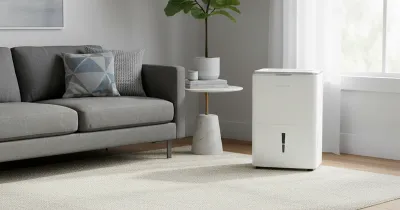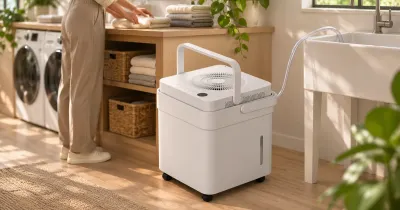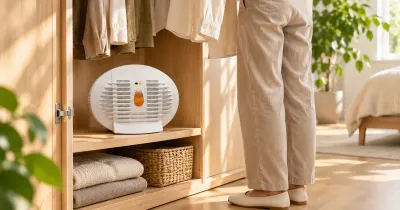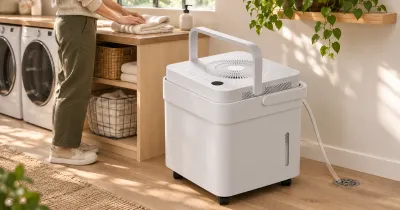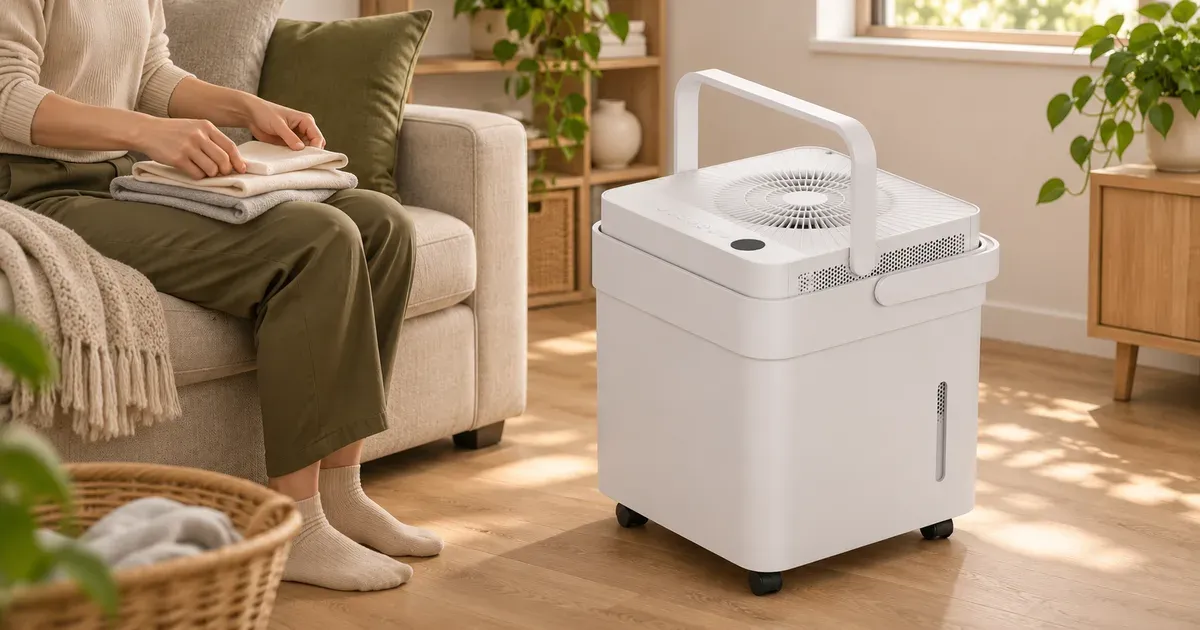
For most basements, get the Midea Cube 50-pint with pump: Energy Star rates the Cube 50 at 49.67 pints a day on DOE’s current test, and the built-in pump can push water up to a sink or out a window, for $229.99 on Amazon on November 23, 2026. If you have a floor drain, the Midea EasyDry 50 ($208.99, 49.74 pints) does the same job by gravity hose for less. The Frigidaire FHDD5034Y1 ($269) and LG PuriCare DT501BKR0 ($289.99) are the Wi-Fi alternatives. For a crawl space, the AlorAir Sentinel HD55S ($518.93) adds automatic defrost and a 6-year warranty.
Basements need two things: capacity and a way to drain without emptying a bucket twice a day. Every portable here is rated on DOE’s Appendix X1 test, which runs at 65°F, closer to basement conditions than the old 80°F test. That’s why today’s “50-pint” units replaced what used to be sold as 70-pint units. Energy Star’s own conversion says an old 70-pint rating is about 40 to 45 new pints (what size you need).
Basement Dehumidifiers Compared
| Model | DOE pints/day (Energy Star) | Room claim (maker) | Pump / drain | Energy Star | Noise | Amazon, Nov 23, 2026 |
|---|---|---|---|---|---|---|
| Midea Cube 50 with pump (MAD50PS1QWT) | 49.67 | 4,500 sq ft | Built-in pump | Yes | Not listed | $229.99 |
| Midea EasyDry 50 (MAD50C1AWS) | 49.74 | 4,500 sq ft | Gravity drain hose | Yes | Not listed | $208.99 |
| Frigidaire FHDD5034Y1 | 49.71 | Not listed | Gravity drain hose | Yes | Not listed | $269.00 |
| LG PuriCare DT501BKR0 | 49.81 | Not listed | Gravity drain hose | Yes | 40 dB | $289.99 |
| Black+Decker BDM50PWCDA | 49.95 | Not listed | Built-in pump | Yes | Not listed | $299.99 |
| AlorAir Sentinel HD55S | 36.33 | Not listed | Not listed | Yes | Not listed | $518.93 |
| Midea Cube 20 (MAD20S1QWT) | 20.16 | 1,500 sq ft | Not listed | Yes | Not listed | $152.98 |
| AprilAire E070 | Not on the list (AprilAire: 70 pints) | 2,200 sq ft | Not listed | No | Not listed | $1,358.99 |
DOE pints are from Energy Star’s dehumidifier list (Version 6.0, effective October 1, 2025). Room-size claims have no standard behind them; Energy Star sizes by how damp the space is instead (table below). Energy Star lists the Cube’s -A and -B versions; the Amazon listing reads MAD50PS1QWT.
1. Midea Cube 50-Pint With Pump: Best for Most Basements
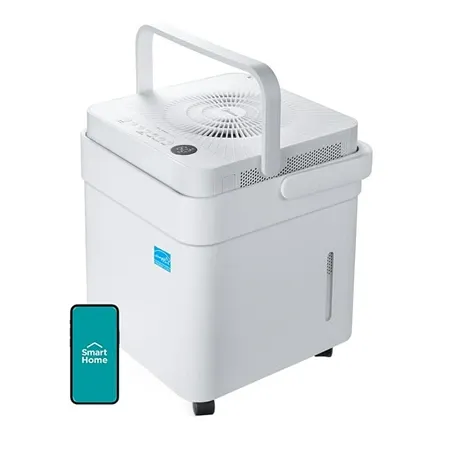
Best for most basements
Midea Cube 50 Pint with Pump
49.67 DOE pints a day, built-in pump, Energy Star certified, collapsible cube design. $229.99.
The Cube’s selling point is the pump: it lifts water to a sink or window, so you don’t need a floor drain. Energy Star rates the 50-pint Cube at 49.67 DOE pints a day. Midea claims 4,500 sq ft. The body collapses for storage. Midea’s store listed it at $299.99 but out of stock on November 23, while Amazon had it for $229.99. Midea’s warranty field reads 1 year. The no-pump Cube (MAD50S1QWT) was also $229.99, so the pump costs nothing extra here. The full review is is the Midea Cube worth it?
2. Midea EasyDry 50: Best Value With a Floor Drain
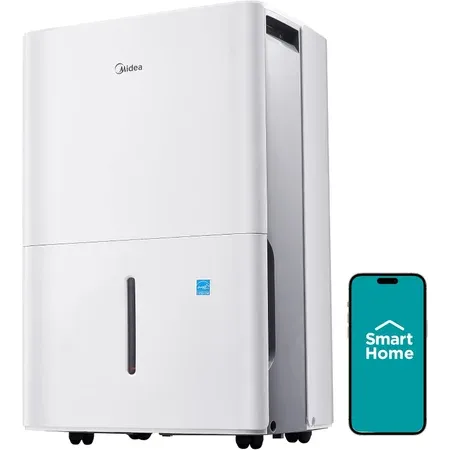
Best value with a floor drain
Midea EasyDry 50 Pint (MAD50C1AWS)
Energy Star lists 49.74 DOE pints a day. Tower design with a drain hose outlet, no pump. $208.99.
The EasyDry is a conventional tower: 49.74 DOE pints on Energy Star’s list, no pump, and a hose outlet for a floor drain. Midea’s own store had it at $189 (regular $259.99), lower than Amazon’s $208.99 on November 23.
3. Frigidaire FHDD5034Y1: Best Frigidaire
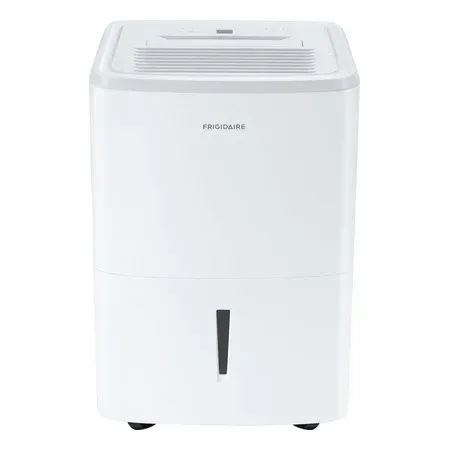
Best frigidaire
Frigidaire FHDD5034Y1 50-Pint Wi-Fi
Energy Star lists 49.71 DOE pints a day. Wi-Fi, gravity drain hose, no pump. $269 on Amazon.
Energy Star lists the FHDD5034Y1 at 49.71 pints. It has Wi-Fi and drains by gravity hose. Frigidaire’s pump model is now the FHDP5033Y1 (49.95 pints, $299 at Frigidaire but out of stock); the older FFAP5033W1 is discontinued. Frigidaire’s warranty is 1 year parts and labor. For the head-to-head, see Midea Cube vs. Frigidaire.
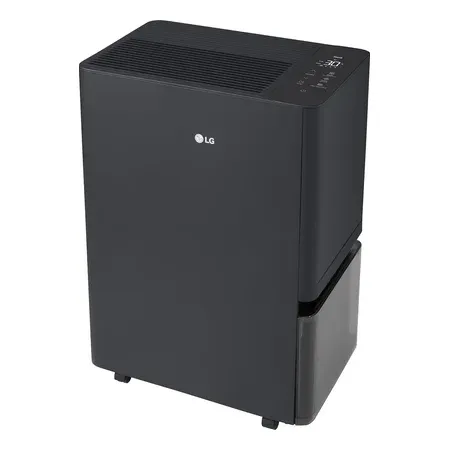
4. LG PuriCare Sonoran DT501BKR0: Best Published Noise Rating
Best published noise rating
LG PuriCare DT501BKR0
Energy Star lists 49.81 DOE pints a day. LG rates it at 40 dB, with a 14.3-pint bucket and drain hose.
The DT501BKR0 is LG’s PuriCare Sonoran 50-pint, a frequent top pick for basements in 2026. LG is one of the few makers that publishes a noise figure: 40 dB. Energy Star lists the DT501BKR0 at 49.81 pints, and LG says it delivered about 50 pints in Boost Mode under DOE’s 65°F, 60% RH conditions. The bucket holds 14.3 pints, and it has a drain hose connection. LG doesn’t mention a pump, so it needs a floor drain or sump below hose level. It’s $289.99 on Amazon and LG, $60 more than the Midea Cube with pump for the same 50-pint class, which is why it’s fourth here: buy it over the Midea if you have a drain and want the published 40 dB rating and Wi-Fi. For a finished basement where people sit, see the quietest dehumidifiers.
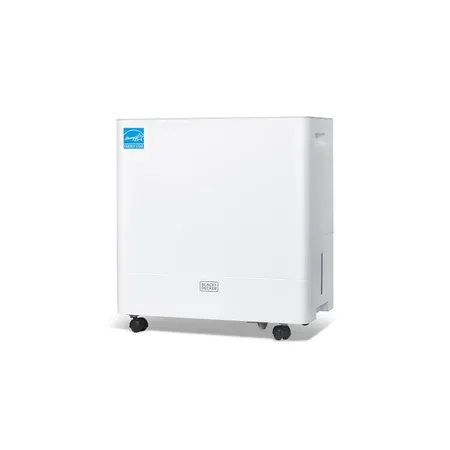
5. Black+Decker BDM50PWCDA: Pump Alternative
Pump alternative
Black+Decker 50-Pint with Pump (BDM50PWCDA)
Energy Star lists 49.95 DOE pints a day for the pump model. Built-in pump for a sink or window.
Energy Star lists the BDM50PWCDA at 49.95 pints, the highest here. Like the Cube, it has a built-in pump. It costs $70 more than the Midea on Amazon, and Amazon showed only one in stock on November 23. Black+Decker dehumidifiers are made under license, and no maker product page with room size, noise or warranty was available.
Two other pump models come up often. TCL’s 50-pint pump unit is Energy Star listed as the W50D9P3 (49.66 pints); on Amazon on November 23, 2026 the TCL pump listing was the older W50D9P2, which isn’t on the current list and was only sold by a third-party seller at $259.99. Frigidaire’s FHDP5033Y1 (49.95 pints, Wi-Fi, pumps up to a sink or window) was out of stock at Frigidaire ($299) and had no seller on Amazon.
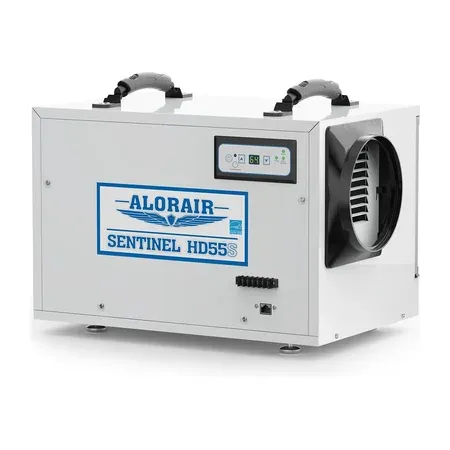
6. AlorAir Sentinel HD55S: Best for Crawl Spaces and Cold Basements
Best for crawl spaces and cold basements
AlorAir Sentinel HD55S
Energy Star lists 36.33 DOE pints a day. Automatic defrost, MERV-1 filter, 6-year limited warranty.
AlorAir sells the HD55S for crawl spaces and basements, with automatic defrost and a 6-year limited warranty (the first 2 years full coverage). The Amazon title says “120 pints”, but Energy Star lists it at 36.33 DOE pints. That’s a different test, so don’t compare it with the 50-pint portables on that number. It’s $518.93 on Amazon. See the best crawl space dehumidifiers for more.
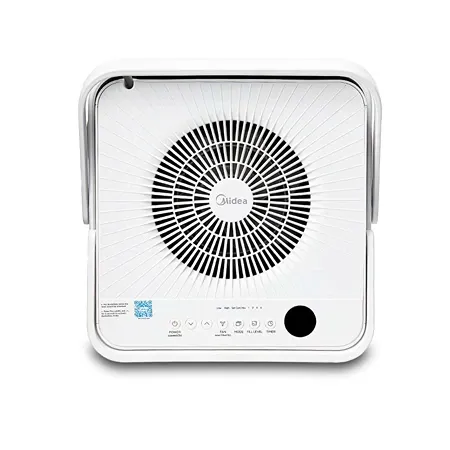
7. Midea Cube 20: For a Small, Mildly Damp Basement
For a Small, mildly damp basement
Midea 20 Pint Cube
Energy Star lists 20.16 DOE pints a day. Collapsing Cube design with a large tank. $152.98.
For a single finished basement room that’s only musty, the Cube 20 is enough: Energy Star lists it at 20.16 DOE pints a day, which matches Energy Star’s 20 to 30 pints for a moderately damp space (50% to 75% humidity) under 2,000 sq ft. It uses the same collapsing tank design as the Cube 50. It was $152.98 on Amazon on November 23, 2026, $77 less than the Cube 50 with pump. It’s too small for a whole basement that stays damp, and the listing doesn’t mention a pump, so you’ll empty the tank or run a hose to a floor drain.
8. AprilAire E070: For a Permanent Whole-Basement Setup
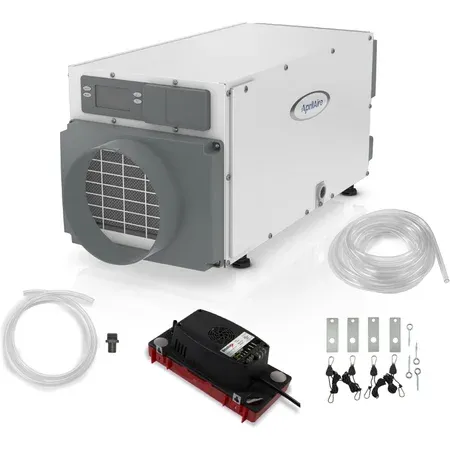
For a permanent Whole-Basement setup
AprilAire E070
AprilAire rates it at 70 pints a day for crawl spaces and basements up to 2,200 sq ft. Sold through HVAC pros. $1,358.99.
The E070 is a different kind of machine: a professional-grade unit that AprilAire rates at up to 70 pints a day for crawl spaces, basements and whole houses up to 2,200 sq ft, and that can tie into AprilAire’s Healthy Air System. AprilAire sells it through HVAC installers. That 70-pint figure isn’t comparable with the DOE pints above: the E070 isn’t on Energy Star’s current list (AprilAire’s E080, E100 and E130 are, at 65, 85 and 105 pints). It was $1,358.99 on Amazon on November 23, 2026, about six times the Midea Cube with pump, so it makes sense only for a basement that’s damp year-round where you want a permanent, professionally installed unit.
What Size Dehumidifier for a Basement?
There’s no standard for dehumidifier “square feet.” Energy Star sizes by dampness:
| Space under 2,000 sq ft | DOE pints per day |
|---|---|
| Moderately damp (50–75% RH) | 20–30 |
| Very damp (75–90% RH) | 25–40 |
| Wet (90–100% RH) | 30–50 |
Over 2,000 sq ft, Energy Star suggests 30+, 40+ and 50+. Most damp basements land on a 35- or 50-pint unit. EPA recommends keeping indoor humidity below 60%, ideally 30% to 50%, to control mold, and drying water damage within 24 to 48 hours (EPA).
A dehumidifier doesn’t fix water coming in. No systematic review shows dehumidifiers prevent mold or mold allergy, and in the one year-long randomized trial in 76 homes, a dehumidifier lowered humidity but didn’t cut dust mites more than the control groups (PubMed). Fix gutters, grading and leaks first. Not sure whether you need one at all? See dehumidifier vs. air purifier.
Check Old Basement Units for Recalls
Basements are where old dehumidifiers end up, and the biggest recalls in the category were fire hazards:
- Gree (Kenmore, GE, SoleusAir and others, made 2011–2014): about 1.56 million units, re-recalled August 16, 2023, after earlier recalls of about 2.5 million (CPSC).
- Midea-made (50+ brands including Frigidaire, GE, Honeywell, Alen, Winix and Keystone, sold 2003–2013): about 3.4 million units, recalled November 2, 2016 (CPSC; model lookup at recallrtr.com/dehumidifier).
- New Widetech (Honeywell DH45W/DH50W, Whirlpool WDH70EAPW, Danby, Amana and others, sold 2009–2017): about 2 million units, recalled August 4, 2021 (CPSC).
No CPSC recall was found for the current Midea Cube, Frigidaire’s 2019-and-later models, LG’s Sonoran or AlorAir. Midea’s 2025 recall covered window air conditioners, not dehumidifiers. For Black Friday prices on all of these, see dehumidifier Black Friday deals.
Sources
- Energy Star certified dehumidifiers, dehumidifier sizing and testing and capacity
- Midea dehumidifiers
- LG PuriCare DT501BKR0
- AprilAire E070
- Frigidaire dehumidifiers
- AlorAir Sentinel HD55S
- EPA, A Brief Guide to Mold, Moisture and Your Home
- CPSC recalls 23262, 17024 and 21174 (linked above)
FAQ
What size dehumidifier do I need for a basement?
For a basement under 2,000 sq ft, Energy Star suggests 25 to 40 DOE pints if it’s very damp and 30 to 50 if it’s wet. A 50-pint unit like the Midea Cube covers most basements.
Do I need a dehumidifier with a pump?
Only if there’s no floor drain below the unit. A pump pushes water up to a sink or out a window; otherwise a gravity hose to a floor drain works and costs less.
What humidity should a basement be?
EPA recommends below 60%, ideally 30% to 50%. Set the dehumidifier to about 45% to 50% and check with a hygrometer.
Is a 70-pint dehumidifier better than a 50-pint?
Old 70-pint ratings used an 80°F test. Energy Star’s conversion puts an old 70-pint unit at about 40 to 45 pints on today’s test, so today’s 50-pint units are not smaller.