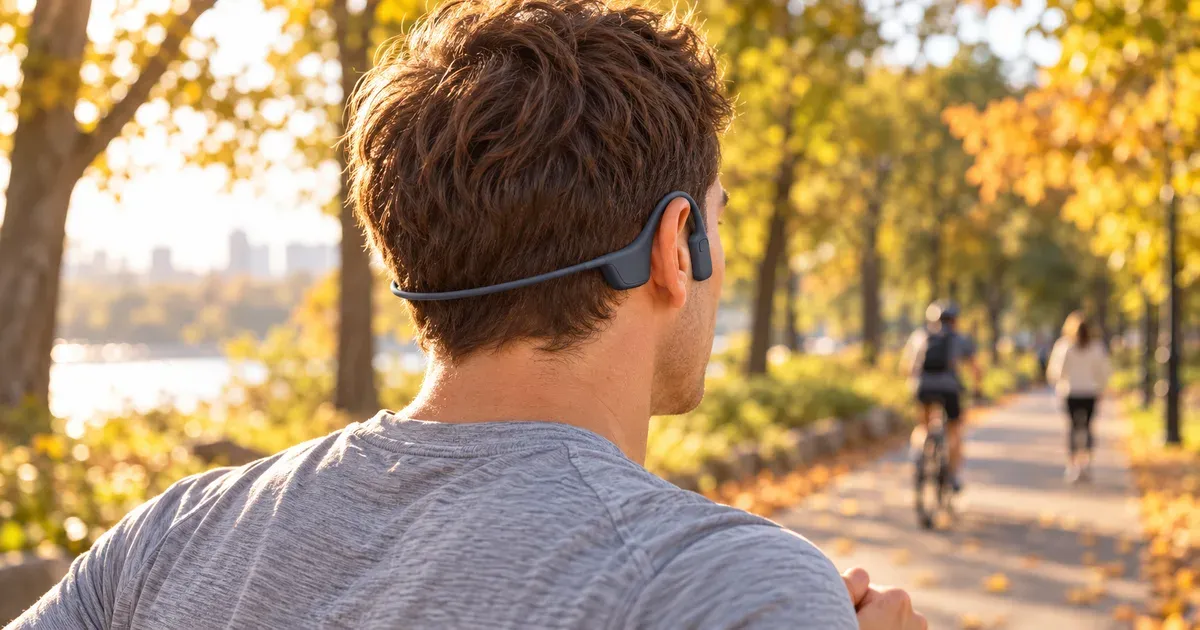
Bone conduction headphones sit on your cheekbones, just in front of your ears, instead of in or over them. Small transducers vibrate against the bone, and those vibrations reach your inner ear directly. Your ear canals stay open, so you hear cars, bikes, and people calling your name while your music plays. That’s why runners, cyclists, and walkers love them, along with people who find earbuds uncomfortable.
Our top pick is the Shokz OpenRun Pro 2. It pairs bone conduction for vocals and detail with small air-conduction speakers for bass, so it sounds fuller than older bone conduction headphones, and it runs about 12 hours on a charge, for about $180. The Shokz OpenRun ($130) is the proven, fully waterproof workhorse, the Shokz OpenMove ($80) is the cheapest good pair, and the Shokz OpenSwim Pro has built-in MP3 storage for swimming.
Our Picks at a Glance
| Headphones | Best for | Battery | Water resistance | Price |
|---|---|---|---|---|
| Shokz OpenRun Pro 2 | Best sound, long runs | 12 hours | IP55 (sweat, rain) | About $180 |
| Shokz OpenRun | Heavy sweat, rain | 8 hours | IP67 | About $130 |
| Shokz OpenMove | Walks, commutes, a first pair | 6 hours | IP55 | About $80 |
| Shokz OpenSwim Pro | Swimming and triathlon training | 9 hours | IP68 | About $230 |
Best Overall: Shokz OpenRun Pro 2
Best overall
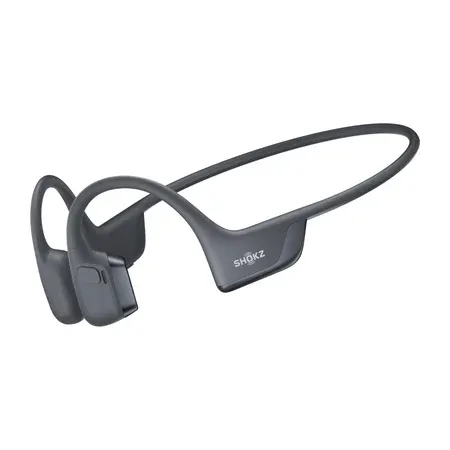
Shokz OpenRun Pro 2
Bone conduction plus air-conduction bass drivers, 12-hour battery, USB-C charging, and multipoint.
The big weakness of bone conduction is bass: vibrating a cheekbone can’t move much air, so older models sound thin. The OpenRun Pro 2 fixes most of that with dual drivers. Bone conduction handles the mids and highs, and a small air-conduction speaker aimed at each ear adds low end. Music sounds noticeably fuller than on the OpenRun, especially at running pace with traffic around you.
It weighs about 30 grams, with a flexible nickel-titanium band that wraps behind your head and stays put through runs, gym sessions, and bike rides. Battery life is rated at 12 hours, and a five-minute charge gives about two and a half hours of listening. It charges by USB-C, a welcome change from Shokz’s older magnetic cables, and connects to two devices at once. Dual microphones with noise reduction keep calls clear in wind.
The Shokz app has EQ modes, including a Volume Boost mode for noisy streets and a Classic mode for pure bone conduction sound. It’s rated IP55, which handles sweat and rain but not submersion, and the air-conduction drivers leak a little more sound than pure bone conduction at high volume. There’s also an OpenRun Pro 2 Mini with a shorter band for smaller heads.
Buy it if you want the best-sounding bone conduction headphones for running and everyday wear.
Best Value: Shokz OpenRun
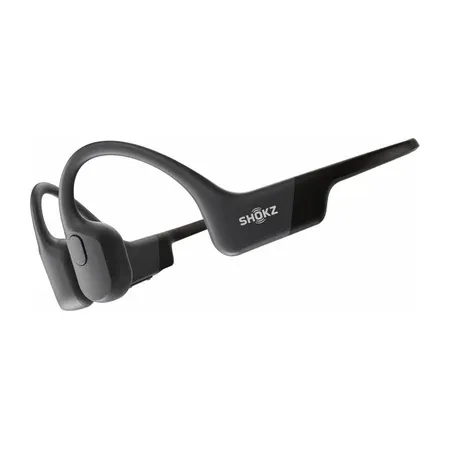
Best value
Shokz OpenRun
Light, IP67 waterproof bone conduction headphones with 8-hour battery and a 10-minute quick charge.
The OpenRun has been the default running headphone for years, with more than 27,000 Amazon ratings averaging 4.5 stars. It uses pure bone conduction, so it has less bass than the Pro 2, but voices, podcasts, and audiobooks come through clearly, and it leaks very little sound.
Its big advantage over the Pro 2 is IP67 water resistance, meaning it’s fully sweatproof and survives a dunk, which matters if you sweat heavily or run in downpours. Shokz still says it isn’t made for swimming. The battery runs about eight hours, and a 10-minute quick charge gives about an hour and a half. It charges on a magnetic proprietary cable, so don’t lose it. A Mini size is available.
Buy it if you mainly listen to podcasts and audiobooks, sweat a lot, or want to save $50.
Best Budget: Shokz OpenMove
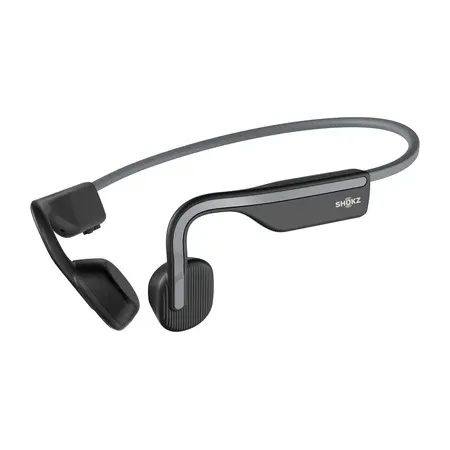
Best budget
Shokz OpenMove
Shokz's entry-level bone conduction headphones, with a 6-hour battery and USB-C charging.
The OpenMove is Shokz’s entry-level model and the cheapest bone conduction headphones we’d recommend, at about $80. It has the same wraparound design and open-ear awareness, a six-hour battery, and USB-C charging, with more than 24,000 Amazon ratings averaging 4.4 stars.
It’s a little bulkier than the OpenRun, sounds thinner, and is rated only for sweat and splashes, so it’s best for walks, commutes, the gym, and easy runs rather than long races. Cheaper no-name bone conduction headphones are everywhere on Amazon, but many have poor fit, weak batteries, and heavy vibration; the OpenMove is worth the small premium.
Buy it if you want to try bone conduction without spending much.
Best for Swimming: Shokz OpenSwim Pro
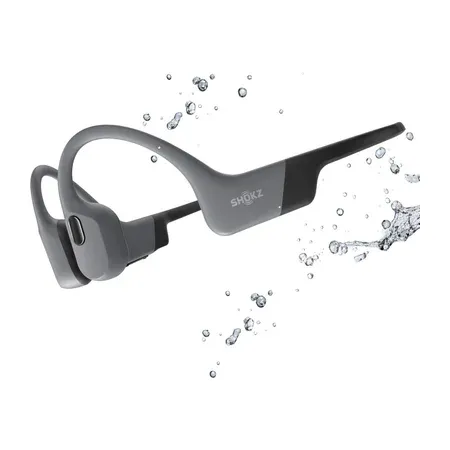
Best for swimming
Shokz OpenSwim Pro
IP68 waterproof bone conduction headphones with 32 GB of MP3 storage for the pool and Bluetooth on land.
Bluetooth doesn’t travel through water, so swimming headphones need music stored on the headphones themselves. The OpenSwim Pro has 32 GB of storage, enough for about 8,000 songs, and switches to Bluetooth when you’re on land, so the same pair works for runs and bike rides. That makes it a good fit for triathletes.
It’s rated IP68 and can be submerged to 2 meters for 2 hours. The thin band fits under a swim cap and alongside goggles, and battery life is about nine hours. Wearing earplugs with bone conduction headphones in the pool makes music noticeably louder and clearer, since they block the water noise.
You’ll need to load MP3 files from a computer; streaming-service downloads from Spotify or Apple Music don’t transfer. It’s also the most expensive pair here.
Buy it if you swim laps and want music in the pool.
How Bone Conduction Works
Normally, sound travels through your ear canal and vibrates your eardrum. Bone conduction skips that step: transducers resting on your cheekbones vibrate, and the vibration travels through the bones of your skull directly to the cochlea, the inner ear. You’ve experienced it whenever you’ve heard your own voice sound deeper than it does on a recording.
The trade-offs:
- Bass is weaker than in earbuds, and sound gets thinner in loud traffic. Dual-driver models like the OpenRun Pro 2 help.
- Some sound leaks at high volume, so people next to you in a quiet office or library may hear it.
- You may feel a tickle at high volume, especially with bass-heavy music.
- They don’t block noise. On a plane or a loud train, you’ll want noise-canceling earbuds instead.
Bone Conduction vs. Open-Ear Earbuds
Open-ear earbuds, like the Shokz OpenFit and Bose Ultra Open Earbuds, also leave your ears open, but they use tiny speakers that sit just outside your ear canal instead of vibrating your cheekbones. They usually sound richer, especially in the bass, and they’re two separate pieces with a charging case, like regular earbuds. Bone conduction headphones are more secure for hard running, have no case to carry, and leak a little less sound. For in-ear options, see our guide to the best wireless earbuds.
Are Bone Conduction Headphones Safe?
For awareness, they’re safer than earbuds. Hearing traffic, bike bells, and other people is the main reason to use them outdoors.
For hearing, volume still matters. Bone conduction bypasses the eardrum, but sound still reaches the inner ear, which is where noise-induced hearing damage happens. Keep the volume moderate, and take breaks. The World Health Organization’s general advice for safe listening is to keep personal audio below 60% of maximum volume and limit how long you listen at high volume.
For racing, check the rules. Many running races allow headphones, but some ban them, and USA Triathlon prohibits headphones of any kind, including bone conduction, during sanctioned races.
Some people with conductive hearing loss, where sound has trouble passing through the outer or middle ear, find bone conduction headphones clearer than earbuds. They aren’t hearing aids, so talk to an audiologist about your specific hearing.
Fit Tips
- Position the transducers on the bone just in front of your ear, not on the ear itself. A slight forward tilt often sounds clearer.
- Try the Mini size if the band sticks out behind your head or bumps your collar or a hood. Shokz’s site has a sizing guide.
- Wear them with glasses and helmets: the thin hooks fit alongside most frames and helmet straps, but put them on first, under the helmet straps.
- Wear earplugs to boost volume in noisy places like the gym or pool, at the cost of hearing your surroundings.
How We Chose
We compared the most popular bone conduction headphones on sound quality, comfort and fit during exercise, battery life and charging, water resistance, microphones, multipoint Bluetooth, and owner ratings. Shokz has dominated this category for years, and its lineup covers every price and use, so all four picks are Shokz. Suunto’s Wing 2 and Sonic and H2O Audio’s TRI 2 are alternatives; the Wing 2 adds LED safety lights for night runs.
Bone Conduction Headphones FAQ
Are bone conduction headphones worth it?
For running, cycling, and walking outdoors, yes. They let you hear traffic and people around you while you listen. For music on a plane or in a noisy gym, regular earbuds sound better.
Do bone conduction headphones sound good?
They sound good for podcasts, audiobooks, and most music, but they have less bass than earbuds. Dual-driver models like the Shokz OpenRun Pro 2 sound fuller.
Can other people hear my bone conduction headphones?
At low and moderate volume, barely. At high volume in a quiet room, people near you can hear some sound.
Can you swim with bone conduction headphones?
Only with a fully waterproof model that stores music, like the Shokz OpenSwim Pro, since Bluetooth doesn’t work underwater.
Do bone conduction headphones damage hearing?
They can if they’re too loud, just like any headphones, because the sound still reaches your inner ear. Keep the volume moderate.
Can you wear bone conduction headphones with glasses?
Yes. The hooks sit alongside most glasses frames, and they also fit with bike helmets and sunglasses.