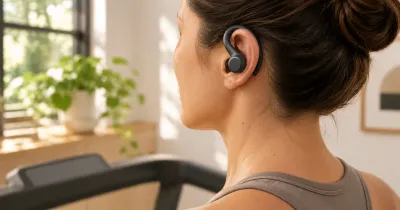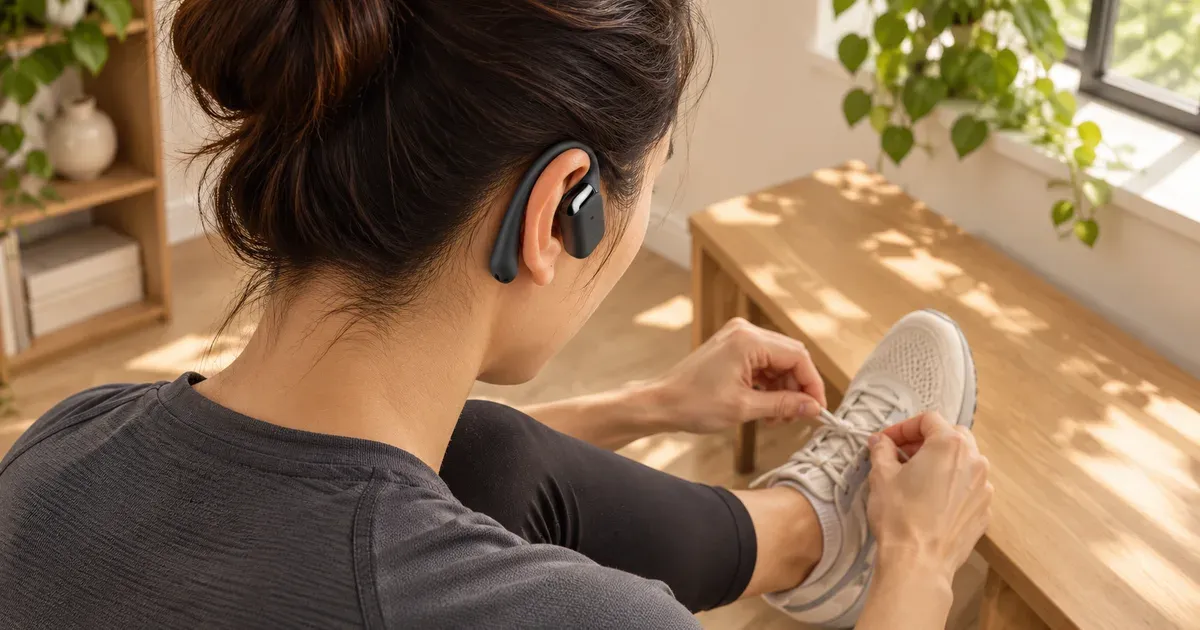
In-ear earbuds are better for most listening: they seal the ear canal, so they block noise, support real noise cancelling and keep bass intact on a bus or plane. Open-ear earbuds are better when you need to hear what’s around you, for running or cycling near traffic, at an office desk, or if ear tips hurt. On November 23, 2026, the best in-ear deal was the AirPods Pro 3 at $149; the best open-ear picks were the Bose Ultra Open Earbuds (2nd Gen) at $249, the Shokz OpenFit Air 2 at $89.95 and the Soundcore AeroFit 2 at $69.99.
Open-Ear vs. In-Ear at a Glance
| In-ear (sealed) | Open-ear | |
|---|---|---|
| How it sits | Tip inside the ear canal | Outside the canal: clip on the ear, hook over it, or bone conduction on the cheekbone |
| Noise cancelling | Yes, on most mid-range and flagship models | Rare; Shokz OpenFit Pro has open-ear noise reduction, and Soundcore AeroFit 2 Pro has an ANC mode |
| Hearing surroundings | Through a transparency mode | Always, with nothing in the ear |
| Bass and detail in noisy places | Stronger, because of the seal | Weaker; traffic and wind mask quiet passages |
| Sound leakage | Low | Higher at high volume; Sony’s LinkBuds Clip has a Sound Leakage Reduction mode |
| Comfort | Depends on finding the right tip size | No pressure in the canal |
| Fit during sport | Tips, wings or earhooks | Hooks, clips or a neckband hold them |
Open-Ear Types
- Clip-on (cuff): a small bud sits at the ear-canal opening, held by a clip on the outer ear. Bose Ultra Open Earbuds, Sony LinkBuds Clip, Shokz OpenDots 2.
- Earhook (air conduction): a speaker rests just outside the canal, held by a hook over the ear. Shokz OpenFit 2+ and OpenFit Air 2, Soundcore AeroFit 2.
- Bone conduction: pads on the cheekbones pass vibrations to the inner ear, connected by a band behind the head. Shokz OpenRun, OpenRun Pro 2 and OpenSwim. Of Shokz’s range, only the OpenRun, OpenMove, OpenSwim and OpenComm lines are bone conduction; the OpenFit and OpenDots models are air conduction. See the best bone conduction headphones.
AirPods 5 are a middle case: Apple calls their fit open-ear because they have no tips, but they sit in the outer ear, and both models have noise cancelling. See AirPods Pro 3 vs. AirPods 5.
Specs Compared
| Bose Ultra Open Earbuds (2nd Gen) | Sony LinkBuds Clip | Shokz OpenDots 2 | Shokz OpenFit Air 2 | Soundcore AeroFit 2 | AirPods Pro 3 (in-ear) | Sony WF-1000XM6 (in-ear) | |
|---|---|---|---|---|---|---|---|
| Type | Clip-on | Clip-on | Clip-on | Earhook | Earhook | In-ear | In-ear |
| Amazon, Nov 23, 2026 | $249 | $148 | $139.95 | $89.95 | $69.99 | $149 | $248 |
| Battery (with case) | 9 h (28.5 h) | 9 h (37 h) | 10 h (40 h) | 8 h (36 h) | 10 h (42 h) | 8 h with ANC (24 h) | 8 h with ANC (24 h) |
| Water rating | IPX4 | IPX4 | IP57 buds, IP54 case | IP55 | IP55 | IP57 | Not given in Help Guide |
| Weight per bud | About 6 g | Not stated | 6.4 g | 7.2 g | 10 g | 5.55 g | 6.5 g |
| Noise cancelling | No | No | No | No | No | Yes | Yes |
| Multipoint | Yes (2) | Yes | Not stated | Not stated | Yes | Not listed by Apple | Yes (2) |
Specifications are from Bose, Sony’s LinkBuds Clip announcement, Shokz’s launch posts, Soundcore, Apple and Sony’s WF-1000XM6 Help Guide. Bose’s 9 hours drops to 5 hours with Immersive Audio or Auto Volume on.
Choose Open-Ear If
- You run or cycle on roads. You hear cars, bikes and people without switching modes. Shokz says only its OpenSwim models are made for swimming; the IP67 OpenRun and OpenRun Air 2 are not for swimming.
- You wear them all day at a desk and need to hear colleagues or a doorbell.
- Ear tips are uncomfortable or you get sore ears from in-ear buds.
Choose In-Ear If
- You commute or fly. Only sealed earbuds block engine and traffic noise well, and most add noise cancelling. See earbuds vs. headphones for noise cancelling.
- You want full bass and detail at moderate volume. Open-ear designs lose bass in noise; Shokz adds a separate air-conduction speaker to the OpenRun Pro 2 for that reason.
- You listen in quiet shared spaces such as a library or a bed next to a partner, where open-ear sound can leak.
- You want the most features for the money: at $149, the AirPods Pro 3 add noise cancelling, IP57, a heart rate sensor and Hearing Aid features.
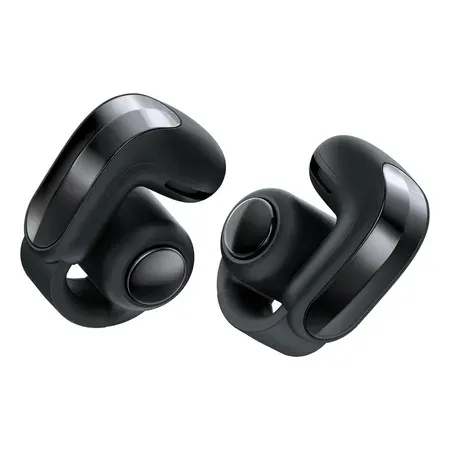
Best Open-Ear earbuds
Bose Ultra Open Earbuds (2nd Gen)
$249 on Nov. 23, 2026 (was $299). Clip-on fit, 9 hours per charge, IPX4, aptX Adaptive and a wireless case.
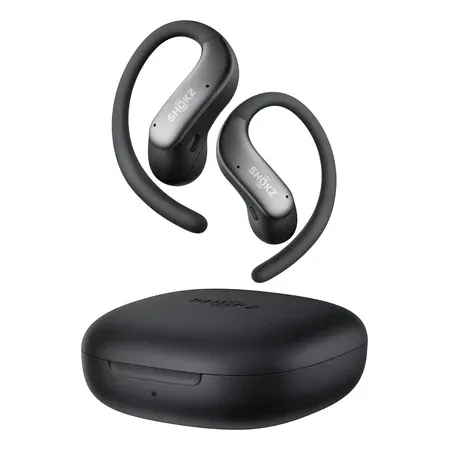
Best Open-Ear for running
Shokz OpenFit Air 2
$89.95 on Nov. 23, 2026 (was $129). Earhook fit, 7.2 g per bud, IP55 and 36 hours with the case.
Best cheap Open-Ear earbuds
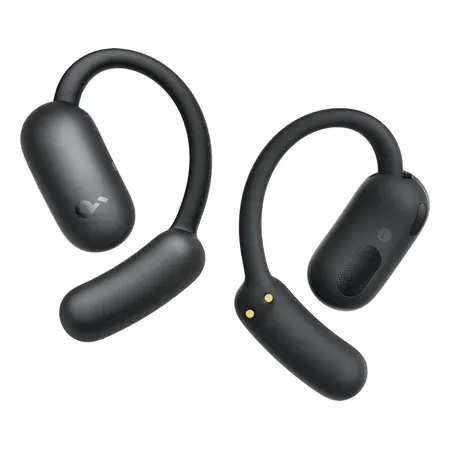
Soundcore AeroFit 2
$69.99 on Nov. 23, 2026 (was $129.99). Four-level adjustable hooks, IP55, multipoint and 42 hours with the case.
Best bone conduction
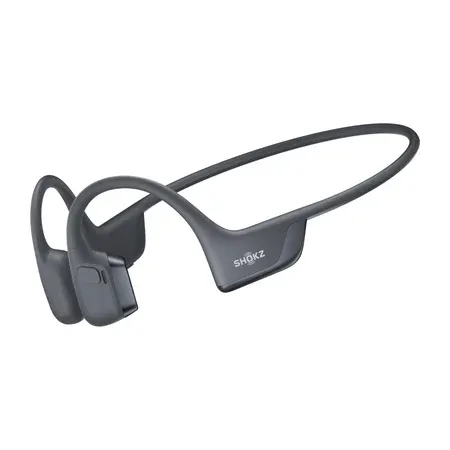
Shokz OpenRun Pro 2
$124.95 on Nov. 23, 2026 (was $179.95). Bone conduction plus an air-conduction bass speaker, with a Mini size.
Best In-Ear earbuds deal
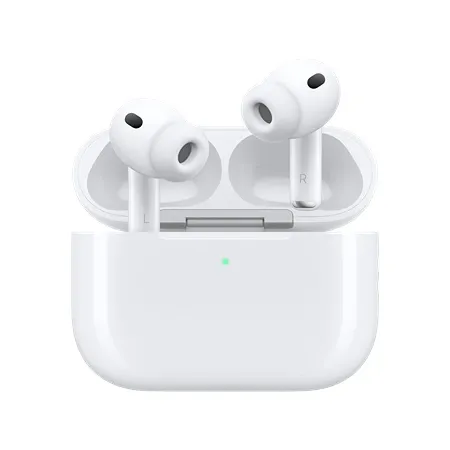
Apple AirPods Pro 3
$149 on Nov. 23, 2026 (was $249). Sealed silicone tips in five sizes, noise cancelling, Transparency mode and IP57.
More picks are in the best open-ear earbuds, best earbuds for running and Shokz OpenRun Pro 2 vs. OpenFit 2. Sale prices are in the Shokz Black Friday sale and earbuds Black Friday deals.
Sources
FAQ
Are open-ear earbuds better than in-ear?
For hearing your surroundings and comfort, yes. For blocking noise, bass and noise cancelling, in-ear earbuds are better, because they seal the ear canal.
Are open-ear earbuds safer for running?
They let you hear traffic and people without switching modes, which is why many runners and cyclists use them. In-ear earbuds with a transparency mode let some outside sound in, but the seal still blocks more.
Do open-ear earbuds have noise cancelling?
Most don’t. The Shokz OpenFit Pro has open-ear noise reduction and the Soundcore AeroFit 2 Pro has an ANC mode; the Bose Ultra Open Earbuds, Sony LinkBuds Clip and Shokz OpenDots 2 have none.
Do open-ear earbuds leak sound?
More than in-ear earbuds, especially at high volume, since nothing seals the ear. Sony’s LinkBuds Clip includes a Sound Leakage Reduction mode for that reason.
Are bone conduction and open-ear the same thing?
No. Bone conduction headphones, such as the Shokz OpenRun line, send vibrations through the cheekbones. Most open-ear earbuds, including the Shokz OpenFit and OpenDots, Bose Ultra Open and Soundcore AeroFit, play sound through the air just outside the ear canal.