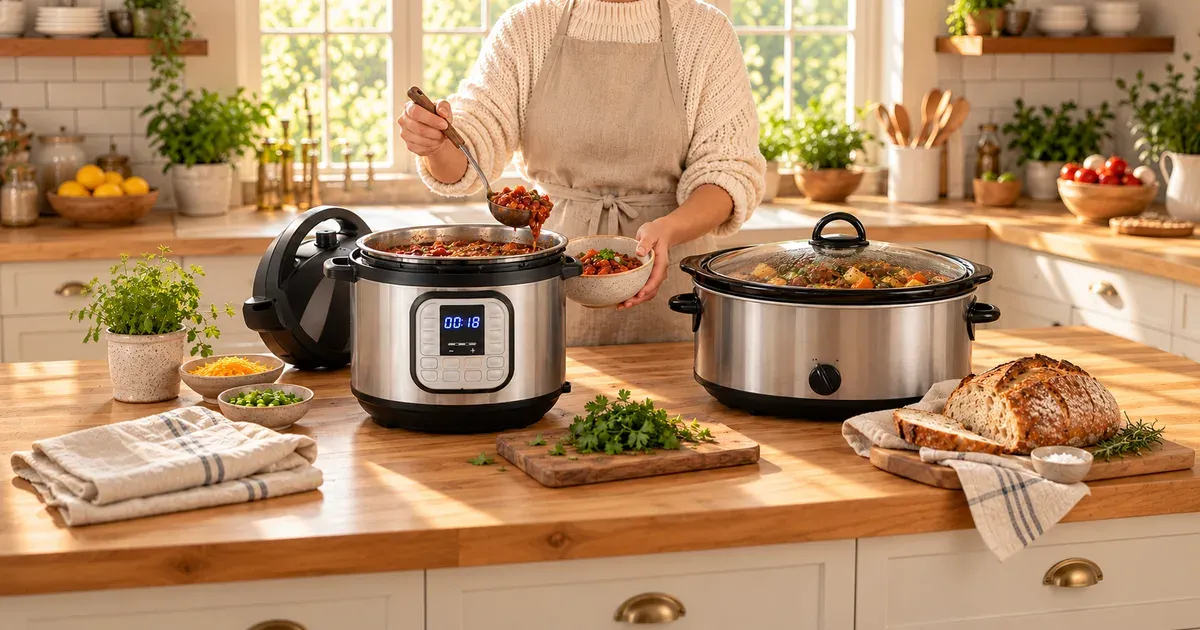
An Instant Pot is an electric pressure cooker that also slow cooks, sautés, steams, and makes rice and yogurt. A Crock-Pot is a slow cooker: a ceramic pot in a heated base that cooks food gently for hours. Both make stews, chili, pot roast, and pulled pork with almost no effort. The difference is time: an Instant Pot gets dinner done in about an hour, while a Crock-Pot takes all day.
The short answer: buy an Instant Pot if you decide what’s for dinner at 5 p.m., you want dried beans, rice, and stock without planning ahead, or you want one appliance that does many jobs. Buy a Crock-Pot if you like to start dinner in the morning and come home to it, you want the best slow-cooker results, or you want the simplest and cheapest option. If you cook big batches for crowds, a 7-quart Crock-Pot holds more for less money.
Instant Pot vs. Crock-Pot at a glance
| Spec | Instant Pot Duo | Crock-Pot slow cooker |
|---|---|---|
| What it is | Electric pressure cooker and multi-cooker | Slow cooker |
| Pot roast or chili | About 1 to 1.5 hours, including pressurizing | 6 to 10 hours |
| Functions | Pressure cook, slow cook, sauté, steam, rice, yogurt, warm | Slow cook on low or high, keep warm |
| Browning | Yes, sauté in the same pot | No, brown in a pan first |
| Slow cooking | Works, but heats only from the bottom | Its specialty |
| Inner pot | Stainless steel | Glazed ceramic stoneware |
| Typical size | 6 quarts (also 3 and 8) | 6 to 7 quarts (many sizes) |
| Price | About $90 to $110 | About $35 to $95 |
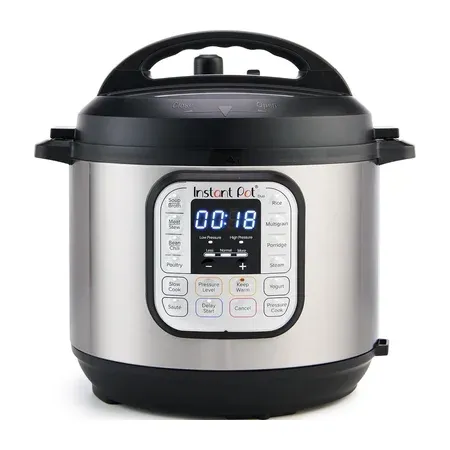
Best instant pot for most people
Instant Pot Duo 6 Qt
The classic 7-in-1 pressure cooker with 13 one-touch programs and a stainless pot with a tri-ply bottom.
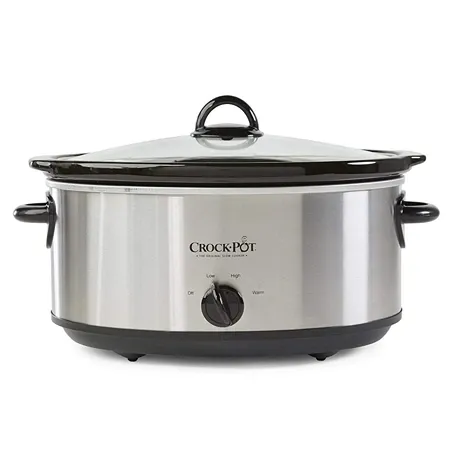
Best Crock-Pot for most people
Crock-Pot 7 Quart Oval
A simple, roomy 7-quart slow cooker with low, high, and warm settings and dishwasher-safe stoneware.
How They Work
A slow cooker heats a heavy ceramic crock from the sides and bottom and holds food just below a simmer for hours. The low, steady heat breaks down tough cuts of meat and melds flavors, and there’s no way for anything to burn as long as there’s liquid in the pot. A basic Crock-Pot has three settings: low, high, and warm.
A pressure cooker seals the pot so steam can’t escape. Pressure builds, which raises the boiling point of water from 212°F to roughly 240°F, so food cooks much faster. Tough cuts that need 8 hours in a slow cooker turn tender in under an hour. When it’s done, you release the pressure with a switch or let it drop on its own, which takes 10 to 30 minutes.
An Instant Pot adds a heating element and programs that let the same pot sauté, steam, slow cook, make rice and yogurt, and keep food warm.
Speed
This is the Instant Pot’s big advantage. Typical times, including the time it takes to come up to pressure and release it:
| Dish | Instant Pot | Crock-Pot |
|---|---|---|
| Beef chili | About 1 hour | 6 to 8 hours on low |
| Pot roast (3 lb chuck) | About 1.5 hours | 8 to 10 hours on low |
| Pulled pork | About 1.5 to 2 hours | 8 to 10 hours on low |
| Dried black beans, unsoaked | About 1 hour | 6 to 8 hours, soaked |
| Chicken stock | About 1.5 hours | 8 to 12 hours |
| White rice | About 20 to 25 minutes | Not practical |
A slow cooker’s long cook time isn’t a flaw if you’re out all day: you start it at breakfast and dinner is ready when you walk in. An Instant Pot can also delay a start, but with raw meat sitting in the pot, food safety limits how long that delay should be.
Flavor and Texture
Both make tender stews and braises. There are real differences, though:
- Browning. An Instant Pot can sear meat and soften onions in the same pot before pressure cooking, which builds flavor and saves a dish. With a basic Crock-Pot you brown in a skillet first or skip it.
- Reduction. Neither lets much liquid evaporate, so sauces can come out thin. An Instant Pot can simmer on sauté afterward to reduce them. With a Crock-Pot, you take the lid off for the last hour or thicken with cornstarch.
- Long-simmered flavor. Some cooks find slow-cooked dishes deeper and more melded. Others can’t tell the difference in a chili or curry. Pressure cooking is especially good at extracting flavor for stocks.
- Delicate food. Vegetables and lean meat can overcook quickly under pressure, while a slow cooker on low is more forgiving of timing.
Is the Instant Pot a Good Slow Cooker?
It’s a decent one, not a great one. An Instant Pot heats only from the bottom, and many cooks find its slow cook setting runs cooler and slower than a traditional slow cooker’s. Its slow cook mode has Less, Normal, and More settings instead of low and high. Many recipe developers suggest using Normal or More for recipes written for a slow cooker’s low setting, and adding some time.
The pressure lid works for slow cooking with the valve set to venting, but many owners buy Instant’s glass lid, sold separately, so they can see the food. If slow cooking is what you’ll do most, a dedicated slow cooker does it better and costs less.
Beans, Rice, and Grains
The Instant Pot wins easily. It cooks dried beans without soaking in about an hour, makes rice, quinoa, and steel-cut oats on one-touch programs, and turns out yogurt overnight.
Beans are also a safety issue. Raw red kidney beans contain a natural toxin that’s destroyed only by boiling. The FDA warns that undercooked kidney beans can cause severe stomach upset, and that slow cookers may not get hot enough to destroy the toxin. If you slow cook kidney beans, soak and boil them for at least 10 minutes first, or use canned beans. A pressure cooker gets hot enough on its own.
Size and Capacity
Both come in many sizes, but the sweet spots differ:
- Instant Pot: the 6-quart suits most households of up to about six people. The 3-quart is for one or two, and the 8-quart for big families and batch cooking. A pressure cooker can only be filled about two-thirds full, or halfway for beans and grains, so its usable capacity is less than its size.
- Crock-Pot: slow cookers can be filled to about two-thirds to three-quarters, and the popular 7-quart oval fits a 6- to 7-pound roast or a whole chicken and feeds a crowd. Oval shapes fit roasts and ribs better.
For potlucks, game days, and parties, a large slow cooker with a locking lid is easier to carry and serve from.
Ease of Use and Safety
A Crock-Pot is as simple as appliances get: add food, turn the dial, walk away. There’s nothing to learn and nothing to go wrong, and the stoneware and lid go in the dishwasher.
An Instant Pot has a learning curve. You need to understand natural vs. quick release, the “burn” warning that appears when there isn’t enough thin liquid on the bottom, and how to adjust recipes. Modern Instant Pots are safe, with a locking lid that won’t open under pressure and several backup safety systems, but the steam release can startle you, and the sealing ring holds onto smells.
Power Use
Both are efficient compared with an oven. The 7-quart manual Crock-Pot is rated at 210 watts, so a full day on low uses well under 2 kWh. The Instant Pot Duo is rated at 1,000 watts, but it only runs at full power while heating up and then cycles to hold pressure, and the whole cook is much shorter. Either costs pennies per meal.
Price
- Instant Pot Duo 6-quart: about $110 list, often $80 to $90 on sale. The Instant Pot Pro adds a flatter stovetop-safe pot, quieter steam release, and more programs for about $170.
- Crock-Pot 7-quart manual: about $36. Programmable Crock-Pots with timers and locking lids run about $60 to $100.
Which Should You Buy?
Buy an Instant Pot if:
- You often cook dinner on short notice
- You cook dried beans, rice, grains, or stock
- You want to brown and cook in one pot
- You’d use one appliance for several jobs and want to free up counter space
Buy a Crock-Pot if:
- You like to start dinner in the morning and have it ready in the evening
- Slow cooking is all you need, and you want the best results at the lowest price
- You cook big batches for parties or a large family
- You want something anyone in the house can use without learning it
Plenty of kitchens have both. If you already own one, the other fills a different gap.
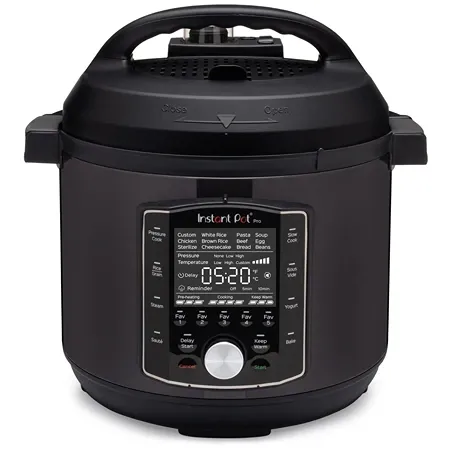
Best upgrade instant pot
Instant Pot Pro
A 10-in-1 Instant Pot with 28 programs, a stovetop-safe inner pot, and a quieter steam release.
For more options, see our Instant Pot Pro review and our guide to the best slow cookers. If you’d rather braise in the oven, a Dutch oven does both stovetop browning and low, slow cooking.
Instant Pot vs. Crock-Pot FAQ
Can an Instant Pot replace a Crock-Pot?
Mostly. It slow cooks, but it heats only from the bottom and many cooks find it slower and less even than a dedicated slow cooker. If slow cooking is your main use, a Crock-Pot does it better.
Is food from an Instant Pot as good as a slow cooker?
For most stews, chili, curries, and braises, yes. Pressure-cooked meat is just as tender. Some people prefer the flavor of long slow cooking, and delicate vegetables can overcook under pressure.
Which is healthier, an Instant Pot or a Crock-Pot?
Neither is meaningfully healthier. Both cook with moist heat and little added fat. Pressure cooking’s shorter time may keep slightly more of some vitamins, but what you cook matters far more.
Can you use Crock-Pot recipes in an Instant Pot?
Yes, with changes. For pressure cooking, cut the liquid, because almost none evaporates, and use a pressure cooking time for that cut of meat. For slow cooking, use the Normal or More setting and expect it to take a little longer.
Is a Crock-Pot cheaper to run than an Instant Pot?
They’re both cheap. A slow cooker draws little power over many hours, and an Instant Pot draws more power for a much shorter time. Either costs pennies per meal.
Is a Crock-Pot a pressure cooker?
A standard Crock-Pot isn’t. Crock-Pot does sell a multi-cooker with pressure cooking, but most Crock-Pots are classic slow cookers.