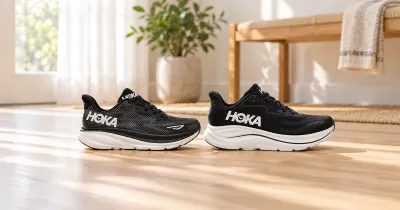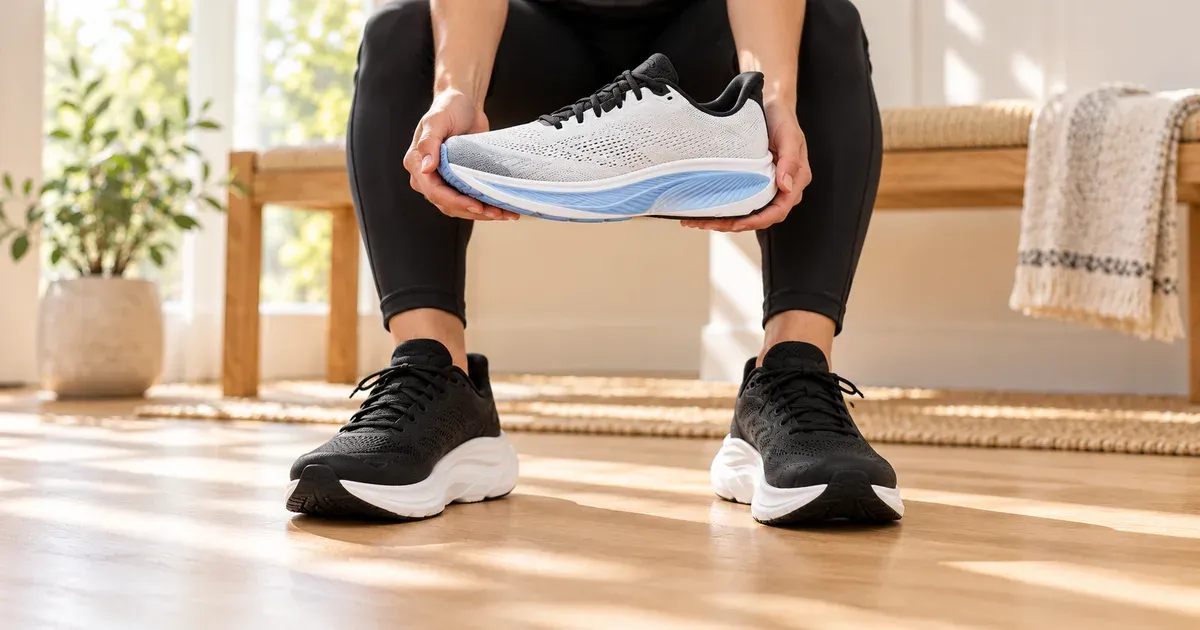
Hoka and Brooks make the best-selling cushioned running shoes in the US, and their lineups line up almost model for model: a daily trainer, a max-cushion shoe, and a stability shoe at nearly the same prices. The difference is in how they feel. Hoka shoes sit on thick, soft foam with a lower heel-to-toe drop and a pronounced rocker that rolls you forward. Brooks shoes feel more like a traditional running shoe, with a higher drop, a more flexible forefoot, and a slightly firmer, more balanced ride.
The short answer: buy Hoka if you want maximum cushioning and a rolling, protective ride, especially for walking, standing all day, or easy miles. Buy Brooks if you want a more traditional feel, a higher heel drop, or a narrow or extra-wide size, since Brooks offers four widths in its core models. For a first pair, the Hoka Clifton 11 and Brooks Ghost 18 are both safe picks.
Hoka vs. Brooks at a glance
| Spec | Hoka | Brooks |
|---|---|---|
| Ride | Thick, soft foam with a rocker that rolls you forward | Balanced, more traditional feel with a flexible forefoot |
| Heel-to-toe drop | 5 to 8 mm on core models | 6 to 10 mm on core models |
| Daily trainer | Clifton 11, $155, 8 mm drop | Ghost 18, $150, 10 mm drop |
| Max cushion | Bondi 9, $175, 5 mm drop | Glycerin 23, $175, 8 mm; Ghost Max 4, $165, 6 mm |
| Stability | Arahi 9, $155, 8 mm drop | Adrenaline GTS 25/26, $155, 10 mm drop |
| Max stability | Gaviota 6, $180 | Glycerin GTS 23, $180 |
| Widths | Regular, wide, extra wide | Narrow, medium, wide, extra wide on Ghost and Adrenaline |
| Best for | Walking, standing, recovery runs, max protection | Daily running, runners who like a higher drop |
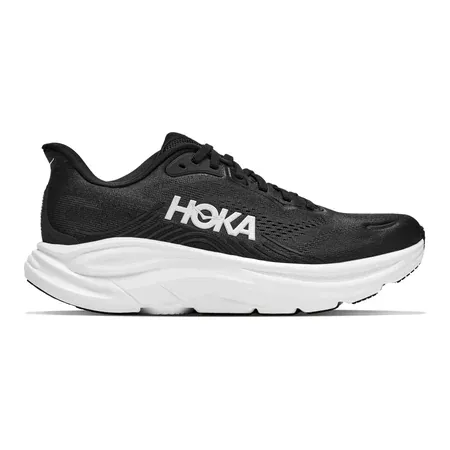
Best hoka for most people
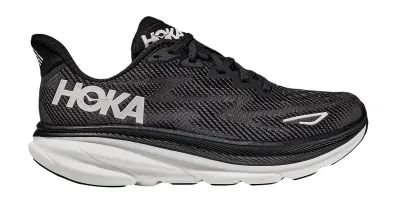
Hoka Clifton 11
Hoka's soft, light daily trainer with an 8 mm drop, for running, walking, and all-day wear.
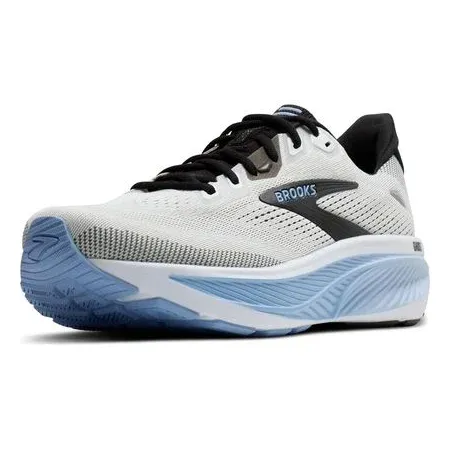
Best brooks for most people
Brooks Ghost 18
Brooks' balanced daily trainer with a 10 mm drop and four widths, from narrow to extra wide.
How Hoka and Brooks Shoes Feel Different
Hoka built its name on “maximalist” shoes: very tall stacks of soft, light foam and a rocker-shaped sole, which Hoka calls MetaRocker. The rocker means the shoe doesn’t need to bend much. Your foot rolls from heel to toe instead, which is why so many people who walk or stand all day like Hokas. The trade-off is that some runners find them a little disconnected from the ground, and the soft, high platform can feel less stable on uneven surfaces.
Brooks shoes have a more conventional shape. Most of its core models use nitrogen-infused DNA LOFT v3 foam, which is soft but not mushy, and a forefoot that flexes more naturally. The result is a ride most runners describe as smooth and predictable rather than bouncy or rolling. Brooks has added rocker shapes to some models, like the Ghost Max 4, but its best-sellers still feel like classic running shoes.
If you’ve tried one brand and loved it, you’ll probably like that brand’s other shoes, because the feel carries across each lineup.
Heel-to-Toe Drop
Drop is the height difference between the heel and the forefoot. A higher drop puts less strain on the calves and Achilles and suits heel strikers. A lower drop spreads the load more evenly and tends to suit midfoot strikers.
- Hoka: Bondi 9, 5 mm; Gaviota 6, 6 mm; Clifton 11 and Arahi 9, 8 mm
- Brooks: Ghost Max 4, 6 mm; Glycerin 23, 8 mm; Ghost 18 and Adrenaline GTS, 10 mm
Brooks’ daily trainers have the higher drops. If you’re coming from a traditional running shoe or have tight calves, a Brooks will feel more familiar. Hoka’s lower-drop shoes take a little more getting used to if you’ve worn 10 to 12 mm shoes for years.
Daily Trainers: Hoka Clifton 11 vs. Brooks Ghost 18
| Hoka Clifton 11 | Brooks Ghost 18 | |
|---|---|---|
| Price | $155 | $150 |
| Weight (men’s) | 9.97 oz | 10.2 oz |
| Drop | 8 mm | 10 mm |
| Feel | Soft, light, rocker | Balanced, flexible, traditional |
| Widths | Regular, wide, extra wide | Narrow, medium, wide, extra wide |
These are each brand’s best-selling shoe and the one most people should start with. The Clifton 11 is a touch lighter and softer and rolls forward on its rocker. The Ghost 18 has the higher drop and a more traditional, flexible ride, and it comes in a narrow width, which Hoka doesn’t offer. Both work for easy and long runs, walking, and everyday wear.
Our Hoka Clifton 9 vs. Clifton 10 comparison covers how the Clifton has changed across versions.
Max Cushion: Hoka Bondi 9 vs. Brooks Glycerin 23 and Ghost Max 4
| Hoka Bondi 9 | Brooks Glycerin 23 | Brooks Ghost Max 4 | |
|---|---|---|---|
| Price | $175 | $175 | $165 |
| Weight (men’s) | 10.5 oz | 10.6 oz | 10.3 oz |
| Drop | 5 mm | 8 mm | 6 mm |
| Feel | Most protective, wide, rocker | Plush but bouncier | Soft, wide, rocker |
The Bondi 9 is the most cushioned shoe either brand makes for everyday use. Its wide base keeps that tall stack stable, which makes it a popular choice for long shifts on hard floors and for walking. It’s a pick in our guide to the best shoes for standing all day.
Brooks splits this category in two. The Glycerin 23 is the premium running shoe: plush, with a higher 8 mm drop and a more traditional shape than the Bondi, at the same $175. The Ghost Max 4 is Brooks’ answer to the Bondi, with a wide, high, rocker-shaped sole and a lower 6 mm drop, aimed at walkers and people on their feet all day. It costs $10 less than the Bondi.
If you want to compare Hoka’s two cushioned shoes first, see Hoka Bondi vs. Clifton.
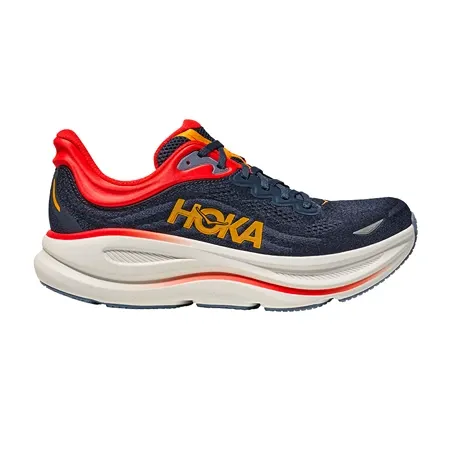
Most cushioned for walking and standing
Hoka Bondi 9
Hoka's most cushioned road shoe, with a wide, stable base and a 5 mm drop.
Most cushioned brooks for running
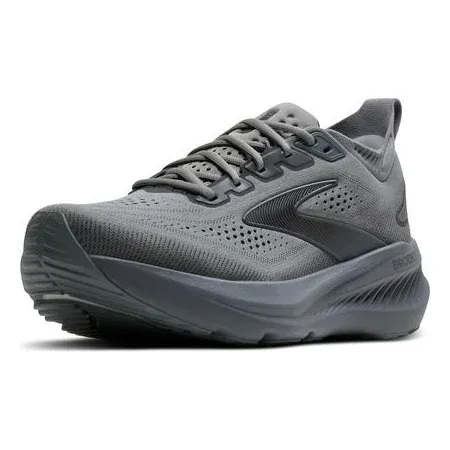
Brooks Glycerin 23
Brooks' plushest running shoe, with an 8 mm drop and DNA LOFT v3 foam.
Stability Shoes: Hoka Arahi 9 vs. Brooks Adrenaline GTS
| Hoka Arahi 9 | Brooks Adrenaline GTS 25 | |
|---|---|---|
| Price | $155 | $155 (GTS 26) |
| Weight (men’s) | 10.0 oz | 10.6 oz |
| Drop | 8 mm | 10 mm |
| Support system | H-Frame | GuideRails, raised sidewalls at the heel |
Stability shoes help if your feet roll inward (overpronate) or your ankles and knees get tired over long runs. Both brands avoid the stiff, heavy “motion control” feel of older stability shoes.
The Arahi 9 uses Hoka’s new H-Frame, which Hoka designed to limit inward roll without overcorrecting your stride; earlier Arahis used a J-Frame. The Adrenaline GTS uses Brooks’ GuideRails, which act like bumpers that keep the heel and knee from drifting too far. The Adrenaline has been one of the best-selling stability shoes for years, and its higher 10 mm drop suits heel strikers. The Adrenaline GTS 26 goes on sale November 1, 2026 at $155, so the GTS 25 is likely to be discounted.
For more support, Hoka’s Gaviota 6 and Brooks’ Glycerin GTS 23 are both $180 max-stability shoes.
Best stability shoe
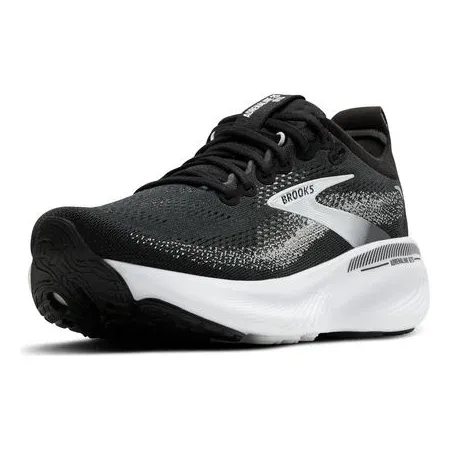
Brooks Adrenaline GTS 25
Brooks' best-selling stability shoe, with GuideRails support, a 10 mm drop, and four widths.
Fit and Widths
Brooks has the edge if your feet are narrow or very wide. The Ghost 18 and Adrenaline GTS come in narrow, medium, wide, and extra wide. Hoka’s Clifton 11 and Bondi 9 come in regular, wide, and extra wide, with no narrow option.
Both brands generally run true to size in length. Hokas tend to feel roomier in the forefoot than they used to, and the Clifton 10 and later have a wider toe box than earlier Cliftons. If you’re between sizes or switching brands, try both on in the afternoon, when your feet are at their largest, and leave about a thumb’s width of space in front of your longest toe.
Price and Durability
Prices are nearly identical. The daily trainers are $150 to $155, the max-cushion shoes $165 to $175, and the stability shoes $155 to $180. Both brands release new versions about once a year, so the previous model is often $20 to $40 off on Amazon and at running stores. Hoka.com offers 60-day returns.
Expect roughly 300 to 500 miles from either brand’s daily trainers before the foam feels flat. Very soft, tall foams like the Bondi’s can lose their bounce sooner if you run fast or heavy, but they still protect your feet well for walking.
Which Should You Buy?
Buy Hoka if:
- You want the softest, most protective ride
- You walk a lot or stand all day on hard floors
- You like a rocker that rolls you forward
- You prefer a lower 5 to 8 mm drop
Buy Brooks if:
- You want a traditional running-shoe feel
- You’re a heel striker or have tight calves and want a 10 mm drop
- You need a narrow or extra-wide width
- You want a long-running stability shoe like the Adrenaline GTS
Also considering On? Our Hoka vs. On Cloud comparison covers the Cloud 6, Cloudsurfer, and Cloudmonster.
Hoka vs. Brooks FAQ
Is Hoka or Brooks better for walking?
Hoka, for most people. The Bondi 9 and Clifton 11 have thick cushioning and a rocker sole that makes long walks and standing easier on the feet. Brooks’ Ghost Max 4 is the closest Brooks equivalent.
Is Hoka or Brooks better for plantar fasciitis?
Both make shoes that podiatrists often recommend for heel pain, mainly because of their cushioning and support. The Hoka Bondi 9 and Brooks Ghost Max 4 are the most cushioned options. If heel pain persists, see a podiatrist.
What is the Brooks equivalent of the Hoka Clifton?
The Brooks Ghost 18. Both are each brand’s neutral daily trainer at about $150 to $155. The Ghost has a higher 10 mm drop and a more traditional feel, while the Clifton is softer with a rocker.
What is the Brooks equivalent of the Hoka Bondi?
The Brooks Ghost Max 4 is closest in purpose, with a wide, high, rocker-shaped sole for walking and standing. The Glycerin 23 is Brooks’ most cushioned shoe for running.
Do Hoka and Brooks fit the same?
Both generally fit true to size in length. Brooks offers more widths on its core models, including narrow. Hokas tend to feel a little roomier in the toe box on current models.
Which lasts longer, Hoka or Brooks?
They’re similar. Expect about 300 to 500 miles of running from either brand’s daily trainers. Softer, taller foams can feel flat a little sooner.