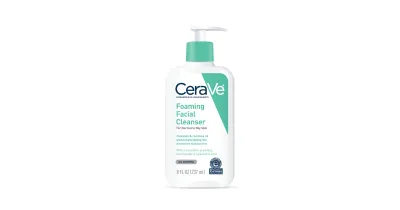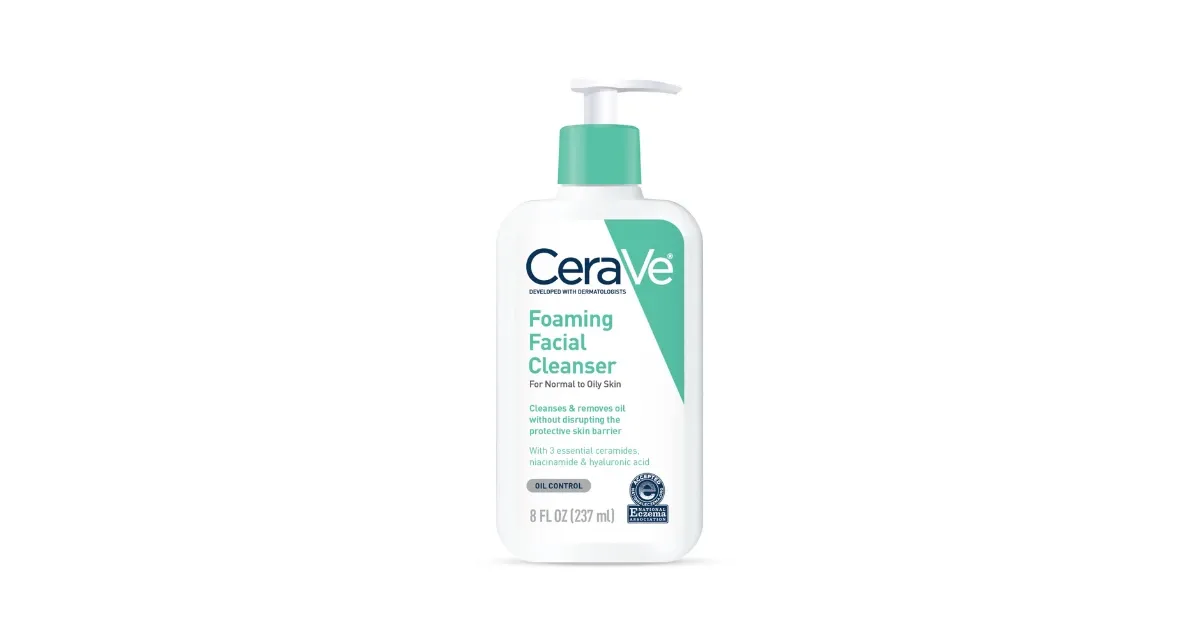
CeraVe Foaming Facial Cleanser is a clear gel face wash for normal to oily skin. It foams up with water, removes oil, sunscreen, and everyday makeup, and it’s fragrance-free. What separates it from a basic drugstore foaming wash is what CeraVe adds to the formula: three ceramides, niacinamide, and hyaluronic acid, all aimed at keeping the skin barrier intact while you remove oil.
It’s sold in sizes from a 3 oz travel tube up to a 19 oz pump bottle, which costs about $17 on Amazon. That makes it one of the cheapest cleansers per ounce from a dermatologist-developed brand.
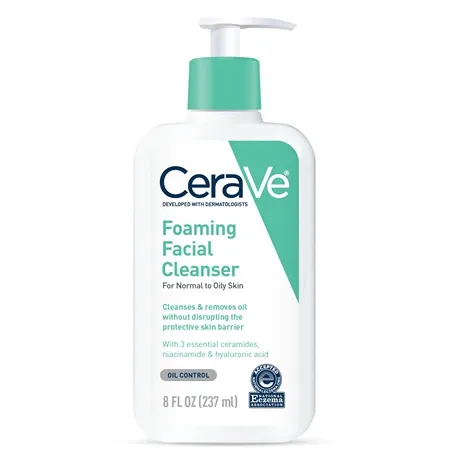
CeraVe Foaming Facial Cleanser
A fragrance-free gel cleanser with three ceramides, niacinamide, and hyaluronic acid for normal to oily skin.
Quick Verdict
Buy CeraVe Foaming Facial Cleanser if your skin is normal, combination, or oily and you want a face wash that feels like it actually removes oil, without the tight, squeaky feeling harsher foaming cleansers leave. It’s inexpensive, widely available, fragrance-free, and works fine alongside retinoids, acids, or acne treatments used elsewhere in your routine.
Skip it if your skin is dry or easily irritated (CeraVe’s own Hydrating Facial Cleanser is the better fit), if you avoid parabens (it contains methylparaben and propylparaben), or if you want a cleanser that treats acne by itself. It has no salicylic acid or benzoyl peroxide.
CeraVe Foaming Facial Cleanser specs
| Spec | Value | Note |
|---|---|---|
| Type | Gel-to-foam face wash, rinse-off | |
| Skin type | Normal to oily | Per CeraVe |
| Key ingredients | Ceramides NP, AP, and EOP; niacinamide; hyaluronic acid | Plus glycerin and cholesterol |
| Cleansing agents | Cocamidopropyl hydroxysultaine, sodium lauroyl sarcosinate, sodium methyl cocoyl taurate | No sodium lauryl or laureth sulfate |
| Ingredients | 24 | Current US list on CeraVe.com |
| Free of | Fragrance, oil, sulfates | Contains parabens |
| Sizes | 3 oz tube to 19 oz pump bottle | |
| Price | About $17 for 19 oz | Amazon |
Ingredients and What They Do
CeraVe Foaming Facial Cleanser has 24 ingredients. The current US list on CeraVe’s site is:
Aqua/Water, Cocamidopropyl Hydroxysultaine, Glycerin, Sodium Lauroyl Sarcosinate, PEG-150 Pentaerythrityl Tetrastearate, Niacinamide, PEG-6 Caprylic/Capric Glycerides, Sodium Methyl Cocoyl Taurate, Propylene Glycol, Ceramide NP, Ceramide AP, Ceramide EOP, Carbomer, Methylparaben, Sodium Chloride, Sodium Lauroyl Lactylate, Cholesterol, Disodium EDTA, Propylparaben, Citric Acid, Tetrasodium EDTA, Hydrolyzed Hyaluronic Acid, Phytosphingosine, Xanthan Gum.
Here’s what the important ones do:
- Cocamidopropyl hydroxysultaine, sodium lauroyl sarcosinate, and sodium methyl cocoyl taurate. These are the cleansing agents, and they’re why the gel foams. All three are considered mild. None of them is sodium lauryl sulfate (SLS) or sodium laureth sulfate (SLES), the stronger surfactants behind the stripped feeling some foaming cleansers leave.
- Glycerin. The third ingredient. It’s a humectant that holds water in the outer layer of the skin, which offsets some of the dryness that washing causes.
- Niacinamide. A form of vitamin B3, used in moisturizers and serums for redness and barrier support. CeraVe says it helps calm skin. In a rinse-off product it’s on your face for under a minute, so think of it as a supporting ingredient, not a treatment.
- Ceramides NP, AP, and EOP, with cholesterol and phytosphingosine. Ceramides are lipids that make up a large part of the skin’s outer barrier, and cholesterol is another barrier lipid. This trio of ceramides is CeraVe’s signature, and it shows up across the brand’s cleansers and moisturizers.
- Hydrolyzed hyaluronic acid. A humectant like glycerin, present in a small amount near the end of the list.
- PEG-150 pentaerythrityl tetrastearate and carbomer. Thickeners that give the cleanser its gel texture.
- Methylparaben and propylparaben. Preservatives. More on these below.
Who It’s For
CeraVe makes this cleanser for normal to oily skin, and that’s where it works best:
- Oily skin that gets shiny by midday
- Combination skin with an oily T-zone
- Acne-prone skin that’s using a separate acne treatment
- Anyone who wears sunscreen daily and wants it fully removed at night
- People who sweat a lot from exercise or hot weather
It’s also popular with people whose skin isn’t especially oily but who simply prefer a cleanser that lathers. If that’s you and your face feels tight 10 minutes after washing, switch to a non-foaming cleanser.
Who Should Skip It
Dry or flaky skin. Even mild foaming surfactants remove more of the skin’s own oil than a cream or lotion cleanser does. For dry skin, CeraVe Hydrating Facial Cleanser, La Roche-Posay Toleriane Hydrating Gentle Cleanser, or Vanicream Gentle Facial Cleanser are better choices.
People who avoid parabens. The formula uses methylparaben and propylparaben as preservatives. Regulators in the US and EU consider both safe at the low concentrations used in cosmetics, and parabens are rarely a cause of skin allergy. But if you’d rather avoid them, Cetaphil’s Daily Facial Cleanser and La Roche-Posay’s Toleriane Purifying Foaming Cleanser are paraben-free.
People with a propylene glycol allergy. It’s on the list. Propylene glycol is a common humectant that’s fine for most people, but it does cause allergic contact dermatitis in a small share of users.
Is It Good for Acne?
CeraVe Foaming Facial Cleanser is non-comedogenic, so it’s not formulated to clog pores, and it’s gentle enough to use with prescription retinoids or benzoyl peroxide without adding much irritation. That makes it a sensible cleanser for acne-prone skin.
It doesn’t treat acne itself, though. It has no salicylic acid, benzoyl peroxide, or other acne active. The American Academy of Dermatology’s general advice for acne-prone skin is to wash twice a day and after sweating with a gentle, non-abrasive cleanser, and to avoid scrubbing. This cleanser fits that advice. If you want the cleanser to do some of the work, CeraVe’s Acne Control Cleanser uses 2% salicylic acid, and its Acne Foaming Cream Cleanser uses 4% benzoyl peroxide.
Does It Remove Makeup?
It removes light makeup: tinted moisturizer, everyday foundation, powder, and regular sunscreen. It isn’t a makeup remover, and CeraVe doesn’t sell it as one. For waterproof mascara, long-wear foundation, or water-resistant sunscreen, use a cleansing balm, oil, or micellar water first, then follow with this cleanser as a second step. Keep it away from your eyes, since foaming cleansers sting.
How to Use It
CeraVe’s directions are simple:
- Wet your face with lukewarm water. Hot water dries skin out.
- Pump a small amount into your hands, or apply it directly, and massage it over your face in gentle circles. It will foam as you go.
- Rinse well and pat dry with a clean towel.
- Follow with a moisturizer. Even oily skin benefits from a light one.
You can use it in the morning, at night, or both. If your skin feels tight after twice-daily use, use it only at night and rinse with water in the morning.
CeraVe Foaming vs. Other Foaming Cleansers
| Cleanser | Skin type (per maker) | Key ingredients | Parabens | Fragrance |
|---|---|---|---|---|
| CeraVe Foaming Facial Cleanser | Normal to oily | 3 ceramides, niacinamide, hyaluronic acid | Yes | None |
| Cetaphil Daily Facial Cleanser | Normal to oily | Glycerin, disodium laureth sulfosuccinate | No | Buy the Fragrance Free version |
| La Roche-Posay Toleriane Purifying Foaming | Normal to oily, sensitive | Ceramide NP, niacinamide, glycerin | No | None |
| CeraVe Hydrating Facial Cleanser | Normal to dry | 3 ceramides, hyaluronic acid | Yes | None |
Cetaphil Daily Facial Cleanser is the closest rival. It’s also a gel for normal to oily skin, but it skips parabens and ceramides, and its milder sulfosuccinate surfactant only sounds like a sulfate. Buy the Fragrance Free version; the original has a masking fragrance. Choose Cetaphil if you want a paraben-free wash; choose CeraVe if you want ceramides in your cleanser. Our CeraVe vs. Cetaphil comparison covers both brands’ cleansers in detail.
La Roche-Posay Toleriane Purifying Foaming Cleanser is a paraben-free alternative made for oily skin that’s also sensitive. It costs a little more per ounce. It’s a good pick if CeraVe’s formula stings or you want to avoid parabens.
CeraVe Hydrating Facial Cleanser is the same brand’s non-foaming lotion cleanser for dry skin. If you like CeraVe but find the foaming version drying, it’s the easy switch. If you’re deciding between CeraVe and Vanicream, our Vanicream vs. CeraVe guide compares them.
For more options across skin types, see our best facial cleansers guide, where CeraVe Foaming is our pick for oily skin.
Who Should Buy It, and Who Should Skip It
Buy it if your skin is normal, combination, or oily; you want a cleanser that lathers and removes sunscreen; you use acne treatments or retinoids and need a mild wash alongside them; or you want a large, inexpensive bottle that lasts months.
Skip it if your skin is dry or reactive, you avoid parabens or propylene glycol, or you want a one-step makeup remover or an acne-treating cleanser.
This cleanser has no benzoyl peroxide, so it wasn’t part of the benzene class action against CeraVe’s acne washes, which a federal judge dismissed in September 2026. Our CeraVe lawsuit explainer covers which products were named.
Final Verdict
CeraVe Foaming Facial Cleanser does what a foaming cleanser for oily skin should: it lathers, removes oil and sunscreen, and rinses clean, while its sulfate-free surfactants and ceramides keep it gentler than the average drugstore foaming wash. It’s cheap, fragrance-free, and easy to find.
If your skin is oily or combination, it’s one of the easiest cleansers to recommend. If your skin is dry or you’re avoiding parabens, CeraVe Hydrating, La Roche-Posay Toleriane, or Cetaphil Daily are better matches.